

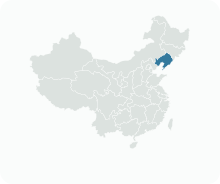
Get to know Baita District
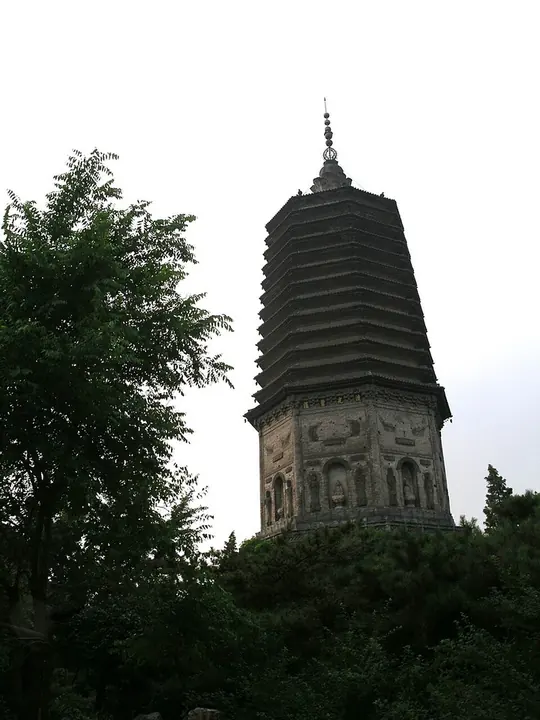
Photo adjustments
Full frame retained; proportionally resized and converted to WebP. No retouching or changes to the photographed subject. Card displays may crop the view.
- Administrative area
- District · 市辖区
- Part of
- Liaoyang
- Chinese name
- 白塔区
- Local areas
- District guide
Area & population
- Area in the source
- 29.80 km²
- Population · 2020 census
- 359,401
- Administrative seat
- Wensheng Subdistrict
Source: cited geographic source, as of the dates shown.
History
The district government traces the city more than 2,300 years back to Xiangping, which it describes as the earliest city in northeast China with a recorded administrative status confirmed by archaeology. The district was created in 1948 and named after the pagoda. An old city moat survives, the district has a provincial historic and cultural quarter, and it promotes a set of eight "new-era views", among them Pinghu Yanyue (平胡宴月) and Guanmiao Xizhao (关庙夕照).
What to see
The White Pagoda is a solid octagonal brick pagoda with dense eaves, 70.3 metres high, coated in white lime. Its date is disputed: temple steles of 1590 and 1842 attribute it to the Han, a pagoda inscription found in 1922 points to a Jin-dynasty reliquary tower for the mother of Emperor Shizong, finished in 1189, and a 1423 stele is read as placing it in the Liao. It once stood in Guangyou Temple (广佑寺), which Russian troops burned in 1900; a park was laid out around it in 1908. It became a national protected site in 1988. The district government calls it one of China's six famous pagodas, and Guangyou Temple, first founded in the Han, stands in the district.
Liaoyang Museum (辽阳博物馆), at 2 Zhongxin Road (中心路), opened on 1 October 1985 and moved to a new traditional-style building in 2009. Most of its more than 6,000 objects come from local excavations, with a focus on the Han, Liao–Jin and Ming–Qing periods; the treasures include the Wang Erlie (王尔烈) birthday screen and a Goryeo celadon pillow inlaid with chrysanthemums. Its old home, the 1921 villa of the banker Peng Xian (彭贤), next door, now houses a folk museum and a gallery of Han–Wei tomb murals.
Other sights listed by the district include the Han–Wei mural tombs, a national protected site; the former home of Wang Erlie, whom the district calls the talented scholar of the northeast, now a museum; and a memorial hall for the novelist Cao Xueqin (曹雪芹).
Sources for this guide
白塔概览-白塔区网站欢迎您! · Baita District People's Government, Liaoyang
辽阳白塔 · Wikipedia (Chinese) · CC BY-SA 4.0
辽阳博物馆 · Wikipedia (Chinese) · CC BY-SA 4.0
Original English written from the listed sources and checked sentence by sentence against quoted extracts by a separate reviewer. Updated 2026-09-26.
Explore Baita District
Core places to explore, with English and Chinese names.
Places to explore around Baita District
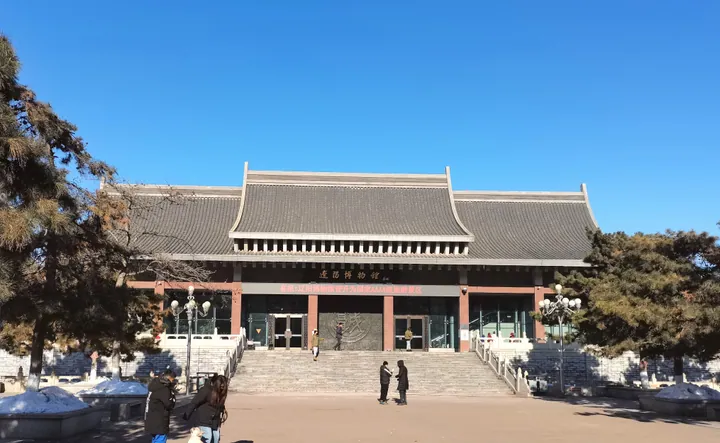 The front facade of Liaoyang Museum, Baita District, Liaoyang · 辽宁辽阳市白塔区辽阳博物馆正立面 Source-recorded photograph date: 2024-01-07 12:54:38.
Liaoyang Museum辽阳博物馆
Liaoyang's city museum: Han, Liao-Jin and Ming-Qing finds from local digs, a Han-Wei mural hall and the 1921 Peng Mansion folk museum.
Read the place guide →The White Pagoda in Liaoyang, photographed in 2005 · 辽阳白塔 Photograph date recorded by the source: Aufgenommen 2005.White Pagoda (Liaoyang)辽阳白塔
Liaoyang's White Pagoda is a solid octagonal brick tower whose thirteen closely spaced eaves rise above Baita Park. Its white surface makes the profile striking at a distance, but the lower carved details deserve a slower look…
Read the place guide →Plan your visit
Getting there
Baita District covers the centre of Liaoyang. Search for 白塔区 in a map app to find stations and your accommodation.
Where to stay →Build your route
Liaoyang Museum and White Pagoda (Liaoyang) are both listed here. The linked place guides have entrance and visit details.
Continue with Liaoyang →More in Liaoyang
Sources & geographic information
Administrative names and parent areas: Official geographic directory · Reference date 2026-09-06.
Some facts checked against 辽阳白塔 — Wikipedia contributors, CC BY-SA 4.0.
Some facts checked against 辽阳博物馆 — Wikipedia contributors, CC BY-SA 4.0.
Photo: Liaoyang Museum · 红烧腰果 · CC BY 4.0. Full frame retained; proportionally resized and converted to WebP. No retouching or changes to the photographed subject. Card displays may crop the view.

Photo: White Pagoda (Liaoyang) · Martin Kiechle · CC BY-SA 3.0. Full frame retained; proportionally resized and converted to WebP. No retouching or changes to the photographed subject. Card displays may crop the view.

Map data © OpenStreetMap contributors. Pins mark approximate centres, not entrances or boundaries.