

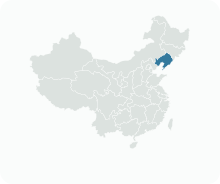
Get to know Dashiqiao
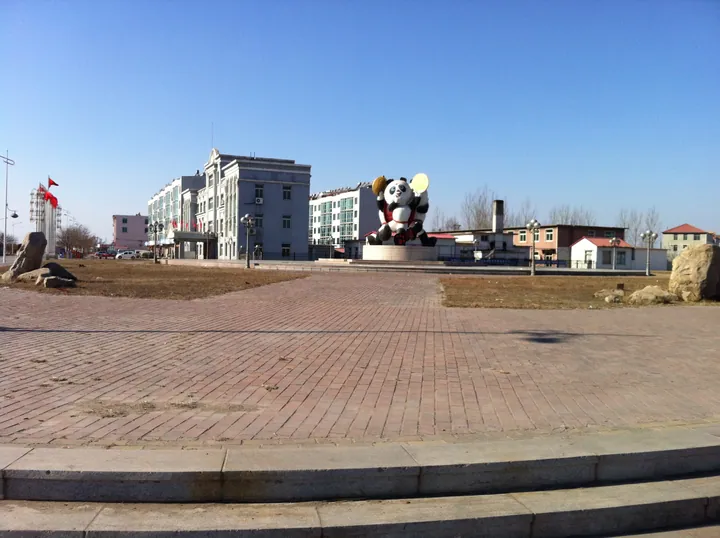
Photo adjustments
Full frame retained; proportionally resized and converted to WebP. No retouching or changes to the photographed subject. Card displays may crop the view.
- Administrative area
- County-level city · 县级市
- Part of
- Yingkou
- Chinese name
- 大石桥市
- Local areas
- County-level city guide
Area & population
- Area in the source
- 1,610.00 km²
- Population · 2020 census
- 607,098
Source: cited geographic source, as of the dates shown.
Setting and landscape
The land slopes from the east down to the north-west. The west is the flat alluvial plain of the Liao, in places only about 2 metres above sea level; the east is made up of outliers of the Qian Mountains (千山), with Laojiaoding (老轿顶山) on the eastern border reaching 1,033 metres. The Daqing River (大清河) and its branches cross the east and centre; the city government explains the name, "great clear river", by the sandy, stony beds that keep the water clear.
The city government counts 27 kinds of minerals, among them magnesite, talc and boron ore, and gives proven magnesium-ore reserves of 4.456 billion tonnes. It records that the first magnesium-mining enterprise of the People's Republic, Anshan Steel's Dashiqiao magnesium mine works, started work here.
History and sights
The Jinniushan site (金牛山遗址), 8 km south-west of the city, is an Early Palaeolithic site and a national key heritage site, listed in 1988. In 1984 a Peking University team led by Lü Zun'e (吕遵谔) recovered 58 human fossils there, including a skull, now known as Jinniushan Man (金牛山人), together with fossils of animals such as sabre-toothed cats and giant deer.
The city government also points to Baolin Temple (宝林禅寺) in Zhoujia town (周家镇), founded in the Tang dynasty, and a Ming beacon tower on Houlashan (后砬山). Panlong Mountain (蟠龙山), described by the city as its back garden, has a summit viewing platform, a sports ground and maple-lined paths. Jianyi town (建一镇) promotes its rhododendrons and old trees, and its Huangyakou (黄丫口) campsite has hosted the city's rural food festival.
The modern city dates from 28 November 1992, when Yingkou County (营口县) was abolished and replaced by Dashiqiao.
Getting oriented
Dashiqiao borders Haicheng (海城) to the north, Xiuyan (岫岩) to the east and Gaizhou (盖州) to the south, with Panjin (盘锦) across the river to the north-west. Dashiqiao railway station is a first-class station, and the Harbin–Dalian railway, the Harbin–Dalian high-speed line and the Shenyang–Dalian expressway run through the city. The city government puts Yingkou port 20 km away.
Highlights
- Jinniushan site 金牛山遗址: Early Palaeolithic site where Jinniushan Man was found in 1984; national key heritage site since 1988.
- Baolin Temple 宝林禅寺: Chan temple in Zhoujia town, founded in the Tang dynasty.
- Panlong Mountain 蟠龙山: City park with a summit viewing platform and autumn maples.
- Huangyakou 黄丫口: Campsite in Jianyi town where the city's second rural food festival opened.
Sources for this guide
城市概况 · Dashiqiao City People's Government
人文历史 · Dashiqiao City People's Government
金牛山遗址 · Wikipedia (Chinese) · CC BY-SA 4.0
桥见“丰”景 | 走,到蟠龙山去赏秋! · Dashiqiao City People's Government (Dashiqiao Rongmei)
乡村美食季 香爆“舌尖上的镁都” · Dashiqiao City People's Government (Dashiqiao Rongmei)
Original English written from the listed sources and checked sentence by sentence against quoted extracts by a separate reviewer. Updated 2026-09-25.
Explore Dashiqiao
Core places to explore, with English and Chinese names.
Dashiqiao 大石桥市
Plan your visit
Getting there
Dashiqiao is about 25 km in a straight line from central Yingkou. Search for 大石桥市 in a map app to find stations and your accommodation.
Where to stay →More in Yingkou
Sources & geographic information
Administrative names and parent areas: Official geographic directory · Reference date 2026-09-06.
Some facts checked against 金牛山遗址 — Wikipedia contributors, CC BY-SA 4.0.
Map data © OpenStreetMap contributors. Pins mark approximate centres, not entrances or boundaries.