

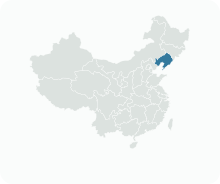
Get to know Zhanqian District
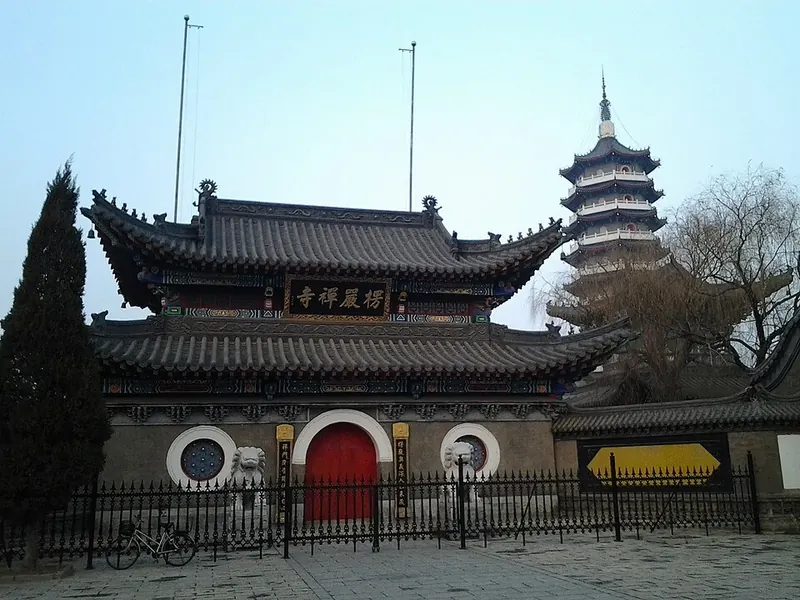
Photo adjustments
Full frame retained; proportionally resized and converted to WebP. No retouching or changes to the photographed subject. Card displays may crop the view.
- Administrative area
- District · 市辖区
- Part of
- Yingkou
- Chinese name
- 站前区
- Local areas
- District guide
Area & population
- Area in the source
- 70.40 km²
- Population · 2020 census
- 261,439
- Administrative seat
- Xinjian Subdistrict
Source: cited geographic source, as of the dates shown.
History
In the early Qing the western part of today's district was a settlement called Dongyingzi (东营子). After Yingkou replaced Niuzhuang (牛庄) as a treaty port in 1861, Britain, France, the United States, Japan, Russia and other powers opened consulates near its Sanyi Temple (三义庙), and Western trading houses and banks gathered there. The Qing set up the Shanhai customs house, known as the East Customs (东海关), in 1864.
In 1899 Russia carried a branch of the Chinese Eastern Railway from Dashiqiao (大石桥) to Niujiatun (牛家屯) and built a station and wharf there. Russian troops occupied Yingkou in 1900; after the Russo-Japanese War of 1904 Japan laid out a 'new town' (新市街) here for its settlers. The district took its present name in 1957.
What to see
Lengyan Temple (楞严禅寺), a Chan Buddhist monastery built in 1931, is counted with Jile Temple in Harbin, Banruo Temple in Changchun and Ci'en Temple in Shenyang among the 'four great Chan monasteries of the Northeast'. It is a Liaoning provincial heritage site, and its Lengyan Pagoda was completed in 1997.
The former Russian consulate (营口俄国领事馆旧址) began in 1900 as the Russian civil administration office, built with materials from the demolished daotai's yamen and the West Battery barracks. It is a single-storey European-style brick building with a domed two-storey attic at its north end, listed as a national key cultural relic in 2013 and now houses a school-history museum of Yingkou Senior High School. The district government also names the botanical garden and a weather station over a century old as local landmarks.
Getting oriented
Yingkou railway station is in the district, and the city's main east–west avenues, Liaohe Street (辽河大街), Xinxing Street (新兴大街) and Bohai Street (渤海大街) among them, cross it. The main shopping areas are around Wanda and the Dongsheng market (东升市场). The Laobian District government places Zhanqian to its west.
Highlights
- Lengyan Temple 楞严禅寺: Chan monastery of 1931, one of the four great Chan monasteries of the Northeast; provincial heritage site.
- Former Russian consulate 营口俄国领事馆旧址: Russian civil administration building of 1900 with a domed attic; national key cultural relic since 2013.
- Yingkou railway station 营口火车站: The city's railway station, inside the district.
Sources for this guide
站前概况 · Zhanqian District People's Government, Yingkou
站前区 · Wikipedia (Chinese) · CC BY-SA 4.0
营口俄国领事馆旧址 · Wikipedia (Chinese) · CC BY-SA 4.0
楞严禅寺 · Wikipedia (Chinese) · CC BY-SA 4.0
老边区概况 · Laobian District People's Government, Yingkou
Original English written from the listed sources and checked sentence by sentence against quoted extracts by a separate reviewer. Updated 2026-09-26.
Explore Zhanqian District
Core places to explore, with English and Chinese names.
Zhanqian District 站前区
Plan your visit
Getting there
Zhanqian District is about 6 km in a straight line from central Yingkou. Search for 站前区 in a map app to find stations and your accommodation.
Where to stay →More in Yingkou
Sources & geographic information
Administrative names and parent areas: Official geographic directory · Reference date 2026-09-06.
Some facts checked against 站前区 — Wikipedia contributors, CC BY-SA 4.0.
Some facts checked against 营口俄国领事馆旧址 — Wikipedia contributors, CC BY-SA 4.0.
Some facts checked against 楞严禅寺 — Wikipedia contributors, CC BY-SA 4.0.
Map data © OpenStreetMap contributors. Pins mark approximate centres, not entrances or boundaries.