


Get to know Minhe Hui and Tu Autonomous County
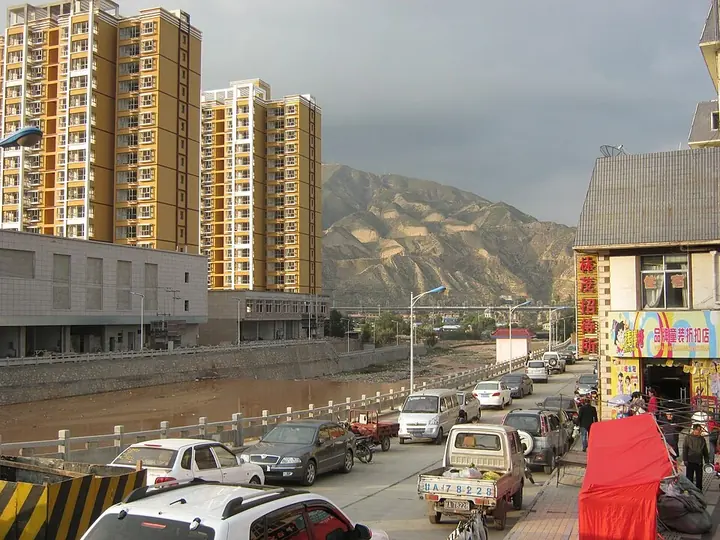
Photo adjustments
Full frame retained; proportionally resized and converted to WebP. No retouching or changes to the photographed subject. Card displays may crop the view.
- Administrative area
- Autonomous county · 自治县
- Part of
- Haidong
- Chinese name
- 民和回族土族自治县
- Local areas
- Autonomous county guide
Area & population
- Area in the source
- 1,891.00 km²
- Population · 2020
- 326,964
- Administrative seat
- Chuankou
Source: cited geographic source, as of the dates shown.
History
The Lajia site (喇家遗址) at Lajia village in Guanting (官亭镇) is a Qijia culture (齐家文化) settlement from about 4,000 years ago and a nationally protected heritage site. Its advanced culture and sudden destruction have earned it the name "Pompeii of the East"; the remains of 32 people who died unnatural deaths were found in eight of its houses. Researchers disagree on the cause, proposing an earthquake with flooding, a landslide that dammed the Yellow River and then burst, or an earthquake followed by rainstorm mudflows. A pottery bowl from the site held noodles; analysis by the Chinese Academy of Sciences and the Institute of Archaeology of the Chinese Academy of Social Sciences found them to be made mainly of foxtail millet with some broomcorn millet.
Minhe County reported directly to the province until 1978, when it was placed under Haidong Prefecture, and it became a Hui and Tu autonomous county on 6 November 1985.
Festivals and Tu culture
The Sanchuan (三川) area around Guanting in the south-east is the main Tu settlement in the county. Its Nadun festival (纳顿节), on the national intangible-heritage list since 2006, is found only among the Tu of Sanchuan; "nadun" means "games" in the Tu language. More than seventy villages in seven townships, including Guanting and Zhongchuan (中川), hold it in turn in harvest order, moving from lower to upper Sanchuan, starting at Songjia village on the 12th day of the seventh lunar month and ending on the 15th of the ninth, 63 days later. The main day has three parts: the huishou (会手) dance, masked nuo dances and the "fala" (法拉) shaman dance; the festival also takes in the worship of Erlang Shen (二郎神) and Guan Yu (关公). The China Intangible Cultural Heritage Network dates its origin to the mid-Yuan dynasty.
At Lunar New Year Guanting holds its fire-flower festival (火花节). Haidong Daily describes shehuo (社火) folk performances, lion and dragon dances and bamboo-horse performances from the 15th to the 29th of the first lunar month, a Nadun mask dance, and a drum dance from Heyan village (河沿村) that won a performance award at Qinghai's first ethnic-minority games.
Getting oriented
Minhe borders Yongdeng County and Lanzhou's Honggu District to the north-east and Yongjing to the east, all in Gansu; Jishishan (积石山) in Gansu faces it across the Yellow River to the south. Xunhua, Hualong and Ledu lie to the west and north.
Highlights
- Lajia site 喇家遗址: Nationally protected Qijia culture settlement of about 4,000 years ago, destroyed by a sudden disaster; millet noodles were found in a bowl there.
- Tu Nadun festival 纳顿节: National intangible heritage: a 63-day harvest festival of masked dances held village by village across Sanchuan.
- Guanting fire-flower festival 火花节: Lunar New Year festival of shehuo, drum and Nadun mask dances in Guanting.
Sources for this guide
民和回族土族自治县 - 维基百科,自由的百科全书 · Chinese Wikipedia · CC BY-SA 4.0
喇家遗址 - 维基百科,自由的百科全书 · Chinese Wikipedia · CC BY-SA 4.0
土族纳顿节 - 中国非物质文化遗产网·中国非物质文化遗产数字博物馆 · China Intangible Cultural Heritage Network (national list)
【民和县】火花节一场传承土族文化的精彩盛宴 · Haidong Municipal People's Government (Haidong Daily report)
Minhe Hui and Tu Autonomous County - Wikipedia · English Wikipedia · CC BY-SA 4.0
Original English written from the listed sources and checked sentence by sentence against quoted extracts by a separate reviewer. Updated 2026-09-26.
Explore Minhe Hui and Tu Autonomous County
Core places to explore, with English and Chinese names.
Places to explore around Minhe Hui and Tu Autonomous County
 Lajia Site Museum ·
 Plan your visit
Getting there
Minhe Hui and Tu Autonomous County is about 40 km in a straight line from central Haidong. Search for 民和回族土族自治县 in a map app to find stations and your accommodation.
Where to stay →Build your route
Start with Lajia Site Museum. The linked place guides have entrance and visit details.
Continue with Haidong →More in Haidong
Sources & geographic information
Administrative names and parent areas: Official geographic directory · Reference date 2026-09-06.
Some facts checked against 民和回族土族自治县 — Wikipedia contributors, CC BY-SA 4.0.
Some facts checked against 喇家遗址 — Wikipedia contributors, CC BY-SA 4.0.
Some facts checked against Minhe Hui and Tu Autonomous County — Wikipedia contributors, CC BY-SA 4.0.
Photo: Lajia Site Museum · Source photographer · License not provided. EXIF orientation normalized; resized without changing aspect ratio; converted to WebP. No subject edits.
Map data © OpenStreetMap contributors. Pins mark approximate centres, not entrances or boundaries.