


Get to know Licheng District
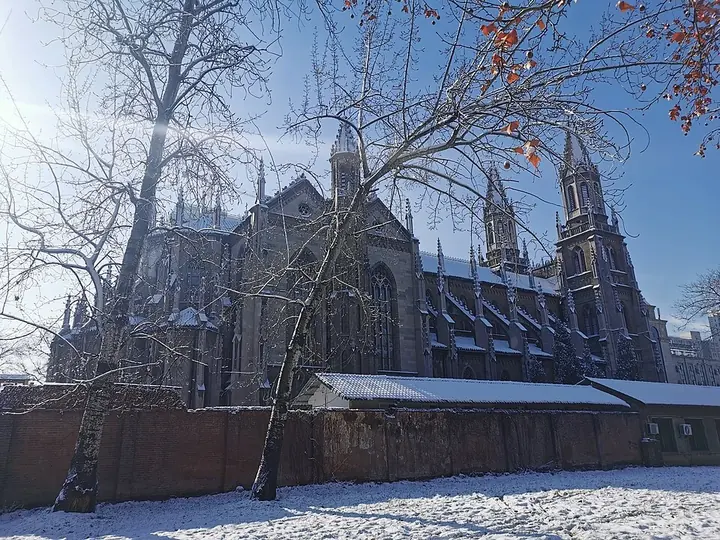
Photo adjustments
Full frame retained; proportionally resized and converted to WebP. No retouching or changes to the photographed subject. Card displays may crop the view.
- Administrative area
- District · 市辖区
- Part of
- Jinan
- Chinese name
- 历城区
- Local areas
- District guide
Area & population
- Area in the source
- 1,303.88 km²
- Population · 2018
- 1,033,500
Source: cited geographic source, as of the dates shown.
Setting and landscape
Low mountains of 500 to 976.2 m make up 67 percent of the district, mainly around Liubu (柳埠), Xiying (西营) and southern Gangou (港沟); Tizi Mountain (梯子山) in Xiying is the highest point, and the valleys between form the "three streams and ten great gorges" (三川十大峪). The three streams, the Jinxiu (锦绣川), Jinyang (锦阳川) and Jinyun (锦云川), gather in Wohushan Reservoir (卧虎山水库), and they also feed the city's spring groups. North of the Jiaoji railway lies plain; beyond the Xiaoqing River (小清河) it is Yellow River alluvium, turned over to rice in the 1980s. The Yellow River runs 31.21 km through the district.
History
People have lived here for more than 5,000 years, and in the Spring and Autumn period the border between Qi (齐) and Lu (鲁) ran through the area. Licheng County was founded in 153 BC; under the Western Jin the seat of Jinan commandery moved into it, and in 1376 the Shandong provincial government moved here from Qingzhou (青州). When Jinan city was carved out of the county in 1929, Licheng was left with the surrounding suburbs. Its seat moved to Wangsheren (王舍人) in 1936 and to the Hongjialou (洪家楼) area in 1958.
What to see
Hongjialou Catholic Church (洪家楼天主教堂), built in 1905 in Gothic style, has two front bell towers about 60 m high and has been a provincial protected site since 1995; the old campus of Shandong University lies just to the north. Huashan (华山) is a lone peak counted first of the "nine specks of Qi smoke" (齐烟九点); the classic painting Autumn Colours on the Que and Hua Mountains (鹊华秋色图) shows Licheng's scenery.
The Daxinzhuang site (大辛庄古文化遗址) near Wangsheren is a large Shang dynasty site with thick deposits, provincially protected since 1977. The Song poet Xin Qiji (辛弃疾) was born in 1140 in Sifengzha village (四风闸村), in Yaoqiang (遥墙), where restoration of the hometown site began in 1996 to a design with a stone gateway, a stele pavilion and a 2.8 m statue. In the southern mountains, run by Jinan's Southern Mountain Area committee and called the provincial capital's back garden, the Four Gates Pagoda (四门塔) is a national key protected site.
Highlights
- Hongjialou Catholic Church 洪家楼天主教堂: Gothic church of 1905 with twin bell towers about 60 m high; provincial protected site.
- Huashan 华山: Lone peak counted first of the 'nine specks of Qi smoke'.
- Daxinzhuang site 大辛庄古文化遗址: Shang dynasty settlement, provincially protected since 1977.
- Xin Qiji's hometown 辛弃疾故里: Birthplace of the Song poet in Sifengzha village, where restoration of the hometown site began in 1996.
- Four Gates Pagoda 四门塔: National key protected site in the southern mountains.
Sources for this guide
历城概况_济南市历城区人民政府 · Licheng District People's Government, Jinan
地形地貌_济南市历城区人民政府 · Licheng District People's Government, Jinan (from the 2023 Licheng Yearbook)
辖区河流_济南市历城区人民政府 · Licheng District People's Government, Jinan (from the 2023 Licheng Yearbook)
大辛庄古文化遗址_济南市历城区人民政府 · Licheng District People's Government, Jinan
洪家楼天主教堂_济南市历城区人民政府 · Licheng District People's Government, Jinan
辛弃疾故里_济南市历城区人民政府 · Licheng District People's Government, Jinan
历城区 - 维基百科,自由的百科全书 · Wikipedia (Chinese) · CC BY-SA 4.0
Original English written from the listed sources and checked sentence by sentence against quoted extracts by a separate reviewer. Updated 2026-09-23.
Explore Licheng District
Core places to explore, with English and Chinese names.
Licheng District 历城区
Plan your visit
Getting there
Licheng District is about 6 km in a straight line from central Jinan. Search for 历城区 in a map app to find stations and your accommodation.
Where to stay →More in Jinan
Sources & geographic information
Administrative names and parent areas: Official geographic directory · Reference date 2026-09-06.
Some facts checked against 历城区 — Wikipedia contributors, CC BY-SA 4.0.
Map data © OpenStreetMap contributors. Pins mark approximate centres, not entrances or boundaries.