


Get to know Sishui County
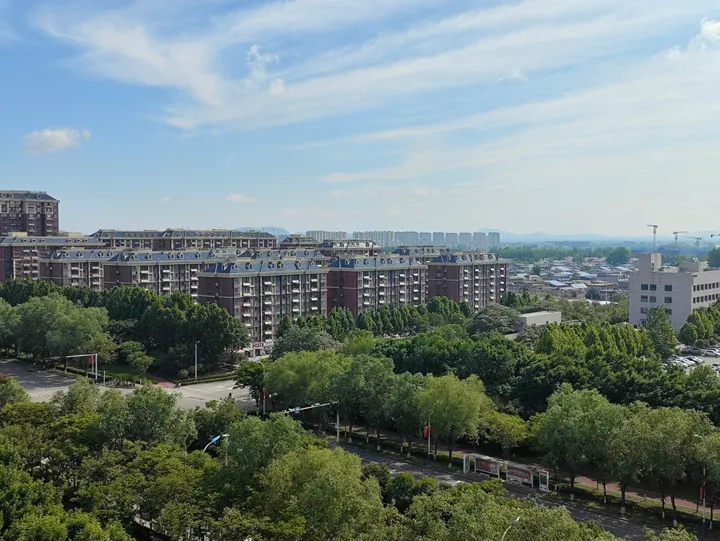
Photo adjustments
Full frame retained; proportionally resized and converted to WebP. No retouching or changes to the photographed subject. Card displays may crop the view.
- Administrative area
- County · 县
- Part of
- Jining
- Chinese name
- 泗水县
- Local areas
- County guide
Area & population
- Area in the source
- 1,118.11 km²
- Population · 2017
- 552,300
Source: cited geographic source, as of the dates shown.
Setting and landscape
The land is high to the north and south and low in the centre, tilting from east to west. Low mountains and hills cover both flanks, with 561 hilltops, eleven of them above 500 metres, and the flat valley floor of the Si lies between them. The river crosses the whole county from east to west for 52 kilometres and gathers 32 main and tributary streams. Brown earth covers the granite and metamorphic hills, while cinnamon soils cover the limestone hills south of the river.
The Si rises in the Meng Mountains (蒙山) in Xintai (新泰), flows through the Hezhuang Reservoir (贺庄水库) into Sishui and then turns west, cutting a narrow, winding bed through hill country before continuing past Qufu (曲阜) to Nanyang Lake (南阳湖). It was once counted among the 'four watercourses and eight streams' of ancient China and was historically the largest tributary of the Huai (淮河).
History
Under the Shang the area was the state of Bianming (卞明国); under the Zhou and Qin it was Bian (卞邑), a town of Lu. The Han made it Bian County (卞县), and the Sui renamed it Sishui. Old texts link the legendary rulers Fuxi, Shennong, Shaohao, Yao, Shun and Yu to the area. Nishan (尼山), the birthplace of Confucius south of Qufu, belonged to Sishui in his day, which is why Sishui is called the 'sage's source' (圣源). Its literary claims include Confucius's sigh over flowing water, 'it passes like this, never ceasing day or night', and lines on the Si by Li Bai (李白) and Zhu Xi (朱熹).
What to see
Bian Bridge (卞桥), at Bianqiao, is a three-arch stone bridge of unknown origin, rebuilt in 1181 under the Jin. It is 25 metres long with a central span of 4.5 metres and was added to the national heritage list in 2006.
Highlights
- Si River 泗河: Crosses the county east to west for 52 kilometres; once the Huai's largest tributary.
- Bian Bridge 卞桥: Three-arch stone bridge rebuilt in 1181; national heritage site since 2006.
Sources for this guide
泗水县人民政府 自然环境 自然环境 · Sishui County People's Government
泗水县 - 维基百科,自由的百科全书 · Wikipedia (Chinese) · CC BY-SA 4.0
泗河 - 维基百科,自由的百科全书 · Wikipedia (Chinese) · CC BY-SA 4.0
卞桥 - 维基百科,自由的百科全书 · Wikipedia (Chinese) · CC BY-SA 4.0
Original English written from the listed sources and checked sentence by sentence against quoted extracts by a separate reviewer. Updated 2026-09-23.
Explore Sishui County
Core places to explore, with English and Chinese names.
Sishui County 泗水县
Plan your visit
Getting there
Sishui County is about 65 km in a straight line from central Jining. Search for 泗水县 in a map app to find stations and your accommodation.
Where to stay →More in Jining
Sources & geographic information
Administrative names and parent areas: Official geographic directory · Reference date 2026-09-06.
Some facts checked against 泗水县 — Wikipedia contributors, CC BY-SA 4.0.
Some facts checked against 泗河 — Wikipedia contributors, CC BY-SA 4.0.
Some facts checked against 卞桥 — Wikipedia contributors, CC BY-SA 4.0.
Map data © OpenStreetMap contributors. Pins mark approximate centres, not entrances or boundaries.