


Get to know Linzi District

Photo adjustments
Full frame retained; EXIF orientation normalized, proportionally resized to at most 800 pixels and converted to WebP. No generated pixels or subject changes. Cards may crop the display.
- Administrative area
- District · 市辖区
- Part of
- Zibo
- Chinese name
- 临淄区
- Local areas
- District guide
Area & population
- Area in the source
- 663.70 km²
- Population · 2014
- 614,976
Source: cited geographic source, as of the dates shown.
Setting and landscape
The ground is higher in the south and lower in the north, ranging from 420 metres down to 31 metres above sea level; low hills give way to plains, which cover about 72 per cent of the district. The Zi River (淄河) flows north through the east of the district, and the Wu River (乌河), rising on the north side of Huangshan (黄山), a hill in the south-centre of the district, crosses the north-west. Neighbours are Qingzhou (青州) to the east, Zichuan (淄川) to the south, and Zhangdian (张店) and Huantai (桓台) to the west. Since 1974 the district seat has been Xindian (辛店), on the Jiaozhou–Jinan railway.
History
Finds at the Houli (后李) culture site put settlement here at about 8,000 years ago. From Jiang Taigong's (姜太公) enfeoffment around 1045 BC until the Qin conquest of 221 BC, Linzi was the Qi capital; the Strategies of the Warring States (战国策) describes streets where carriage hubs knocked and shoulders rubbed. Guan Zhong (管仲) served as chancellor here, Confucius came to hear the Shao music (韶乐), and the Jixia Academy (稷下学宫) drew the Hundred Schools to lecture and debate, with Xunzi (荀子) among its heads. On 15 July 2004 FIFA recognised Linzi as the birthplace of football through cuju (蹴鞠), played here over 2,300 years ago. Linzi became a district of Zibo in 1969.
What to see
The Old City of Qi at Linzi (临淄齐国故城) lies in Qidu town (齐都镇). A palace city in the south-west corner adjoins a larger outer city for officials, commoners and merchants; the walls total about 21.3 kilometres, and rammed-earth stretches still stand 5 to 6 metres high. Duke Huan's Terrace (桓公台), a 14-metre palace platform, survives, and an excavated outlet under the wall passes water through 15 stone openings too small for people. The city became a national key protected site on 4 March 1961, and in 2006 the old Qi capital and the Qi royal tombs joined China's World Heritage tentative list.
The Linzi Chinese Ancient Chariot Museum (临淄中国古车博物馆), opened in 1993 in Qiling subdistrict (齐陵街道), stands over a Spring and Autumn chariot pit at Houli, one of China's ten major archaeological finds of 1990. Its pit hall shows 10 real chariots and 38 horses in a row, and the galleries hold 19 reconstructed chariots of different periods. The Tian Qi royal tombs (田齐王陵) and the Tonglin site (桐林遗址) are also national key protected sites.
Highlights
- Old City of Qi at Linzi 临淄齐国故城: Walled capital of Qi with a palace city, standing rammed-earth walls and a stone drainage outlet; national key site since 1961.
- Duke Huan's Terrace 桓公台: 14-metre rammed-earth palace platform in the north-west of the old palace city.
- Linzi Chinese Ancient Chariot Museum 临淄中国古车博物馆: Built over a Spring and Autumn pit with 10 chariots and 38 horses; opened 1993.
- Tian Qi royal tombs 田齐王陵: Royal tombs of the Tian Qi rulers, a national key protected site.
Sources for this guide
临淄区人民政府 走进临淄 临淄概述 · Linzi District People's Government, Zibo
临淄区人民政府 自然地理 · Linzi District People's Government, Zibo
临淄区人民政府 重点文物保护单位 临淄齐国故城 · Linzi District People's Government, Zibo
临淄区人民政府 临淄的博物馆 临淄中国古车博物馆 · Linzi District People's Government, Zibo
临淄区 - 维基百科,自由的百科全书 · Wikipedia (Chinese) · CC BY-SA 4.0
Original English written from the listed sources and checked sentence by sentence against quoted extracts by a separate reviewer. Updated 2026-09-23.
Explore Linzi District
Core places to explore, with English and Chinese names.
Places to explore around Linzi District
 Qi Culture Museum · 齐文化博物馆
Qi Culture Museum齐文化博物馆
The Qi Culture Museum (齐文化博物馆) in Linzi District, Zibo, is a general museum of the ancient state of Qi, built on the basis of the former Qi Capital City Site Museum. It covers 35,000 square metres and holds more than 30,000 objects, of which over 4,100 items and sets are shown.
Read the place guide →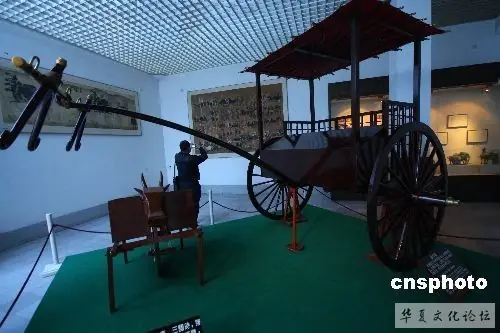 Linzi Ancient Chariot Museum · 临淄古车博物馆
Linzi Ancient Chariot Museum临淄古车博物馆
The Linzi China Ancient Chariot Museum (临淄古车博物馆) stands on the east bank of the Zi River at Houli, in Qiling Subdistrict, Linzi District, Zibo. It was built over a Spring and Autumn period pit of sacrificed chariots and horses and combines that excavation with galleries on the history of the Chinese vehicle.
Read the place guide →Plan your visit
Getting there
Linzi District is about 20 km in a straight line from central Zibo. Search for 临淄区 in a map app to find stations and your accommodation.
Where to stay →Build your route
Qi Culture Museum and Linzi Ancient Chariot Museum are both listed here. The linked place guides have entrance and visit details.
Continue with Zibo →More in Zibo
Sources & geographic information
Administrative names and parent areas: Official geographic directory · Reference date 2026-09-06.
Some facts checked against 临淄区 — Wikipedia contributors, CC BY-SA 4.0.
Photo: Qi Culture Museum · Source photographer · License not provided. EXIF orientation normalized; resized without changing aspect ratio; converted to WebP. No subject edits.

Photo: Linzi Ancient Chariot Museum · Source photographer · License not provided. EXIF orientation normalized; resized without changing aspect ratio; converted to WebP. No subject edits.
Map data © OpenStreetMap contributors. Pins mark approximate centres, not entrances or boundaries.