

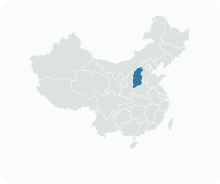
Get to know Yuxian
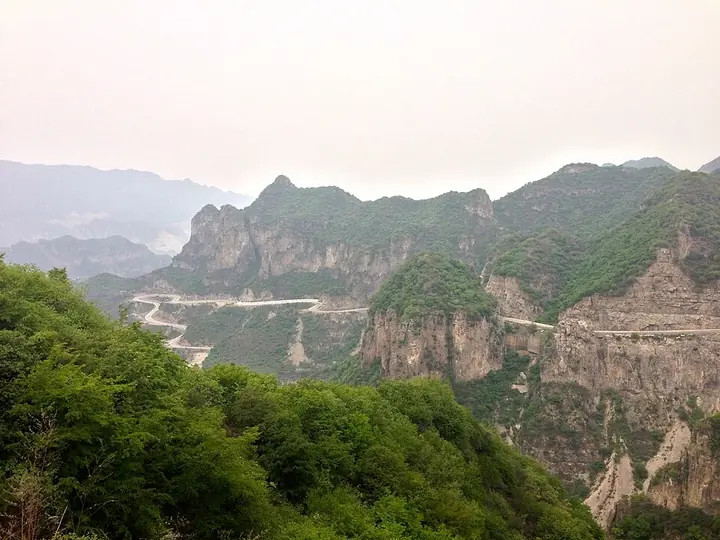
Photo adjustments
Full frame retained; proportionally resized and converted to WebP. No retouching or changes to the photographed subject. Card displays may crop the view.
- Administrative area
- County · 县
- Part of
- Yangquan
- Chinese name
- 盂县
- Local areas
- County guide
What to see
Cangshan is a national 4A scenic area. The legend of the Zhao Orphan (赵氏孤儿传说) was entered on the third national intangible-heritage list in 2011, with Yuxian as the submitting county. It tells how Cheng Ying (程婴) and Gongsun Chujiu (公孙杵臼) rescued Zhao Wu (赵武) after Duke Jing of Jin had some three hundred members of the Zhao family killed. They hid him on Mount Yu (盂山), today's Cangshan, for 15 years while villagers brought food and water. The story first appears in the Zuo Zhuan and the Records of the Grand Historian. On the mountain the heritage entry names the Cave of the Hidden Orphan (藏孤洞), the Baoen Shrine (报恩祠) and the Yugu Garden (育孤园), and says local people came to worship Zhao Wu as the "King of Cangshan" (藏山大王). In 2024 the scenic area premiered an open-air performance of the story, watched along the path up the mountain, which China News Service describes as the first production of its kind in Shanxi.
Cangshan Shrine (藏山祠), in Cangshan village east of Changchi town, is a Ming-to-Qing building complex listed as a national key protected monument in 2013. The scenic area also keeps a large iron bell cast in 1124, under the Northern Song, which has been a provincial protected relic since 1965.
Behind the county government offices in Xiguan village, Xiushui town, stands the main hall of Sansheng Temple (三圣寺), known locally as the West Temple and dedicated to the Three Sages of the Huayan school. The temple was founded in 1064 and rebuilt under the Jin; only this five-bay hall survives, spared because it served as a township assembly hall, and it keeps a Jin-period style. It became a national key protected monument in 2019. The county has six such national listings in all, including the Dawang Temple (大王庙), the Fujun Temple (府君庙) and two temples to Mount Tai at Potou (坡头泰山庙) and Yubei (盂北泰山庙).
Getting oriented
Yangquan North station, on the Shijiazhuang–Taiyuan passenger railway, is inside the county, and national road 239 passes through. The county government names hele noodles (饸饹面) as a Yuxian specialty.
Highlights
- Cangshan 藏山: National 4A scenic area tied to the Zhao Orphan legend, a national intangible heritage item since 2011.
- Cangshan Shrine 藏山祠: Ming-to-Qing buildings, a national key protected monument since 2013.
- Main hall of Xiguan Sansheng Temple 西关三圣寺大殿: Temple founded in 1064; the surviving hall keeps a Jin-period style and was nationally listed in 2019.
Sources for this guide
盂县 · Wikipedia (Chinese) · CC BY-SA 4.0
藏山景区暑期惠民活动拉动文旅热 · Yuxian People's Government
藏山祠 · Wikipedia (Chinese) · CC BY-SA 4.0
西关三圣寺大殿 · Wikipedia (Chinese) · CC BY-SA 4.0
赵氏孤儿传说 · China Intangible Cultural Heritage Network (ihchina.cn)
山西首部山林实景剧《赵氏孤儿传说——再回藏山》亮相阳泉 · China News Service
Original English written from the listed sources and checked sentence by sentence against quoted extracts by a separate reviewer. Updated 2026-09-26.
Explore Yuxian
Core places to explore, with English and Chinese names.
Places to explore around Yuxian
 AI illustration · AI
 Plan your visit
Getting there
Yuxian is about 30 km in a straight line from central Yangquan. Search for 盂县 in a map app to find stations and your accommodation.
Where to stay →Build your route
Start with Mount Cangshan. The linked place guides have entrance and visit details.
Continue with Yangquan →More in Yangquan
Sources & geographic information
Administrative names and parent areas: Official geographic directory · Reference date 2026-09-06.
Some facts checked against 盂县 — Wikipedia contributors, CC BY-SA 4.0.
Some facts checked against 藏山祠 — Wikipedia contributors, CC BY-SA 4.0.
Some facts checked against 西关三圣寺大殿 — Wikipedia contributors, CC BY-SA 4.0.
Map data © OpenStreetMap contributors. Pins mark approximate centres, not entrances or boundaries.