

Photo adjustments
Full frame retained; proportionally resized and converted to WebP. No retouching or changes to the photographed subject. Card displays may crop the view.
Explore the region
About China Port Museum
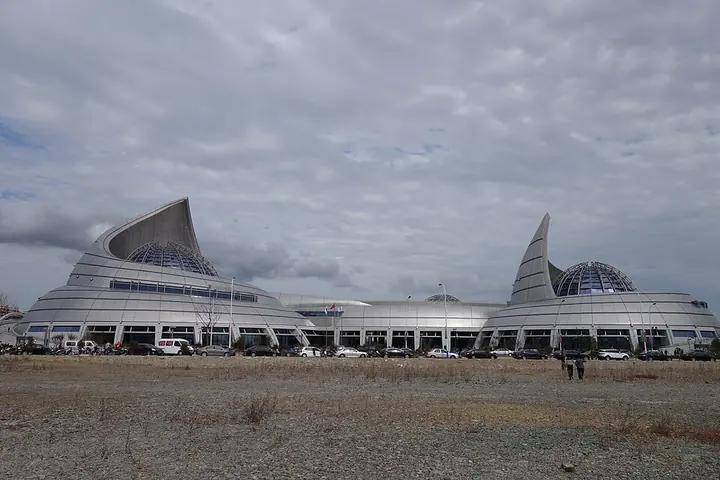
Its paired, shell-like forms and sail-like glass-and-steel roof make the building part of the subject. Inside, port-history displays provide context for the modern technology galleries, which explain loading equipment and harbour layouts; underwater archaeology adds a different view of objects recovered from the sea. Choose a sequence through history and technology before adding specialist spaces according to the current gallery plan.
Preparations for the museum began in 2008. In 2010, the project was combined with a national base for underwater cultural-heritage protection, and the two facilities were developed together. The museum opened on 16 October 2014, became a national second-grade museum (国家二级博物馆) in 2018 and advanced to national first-grade museum (国家一级博物馆) status in December 2020.
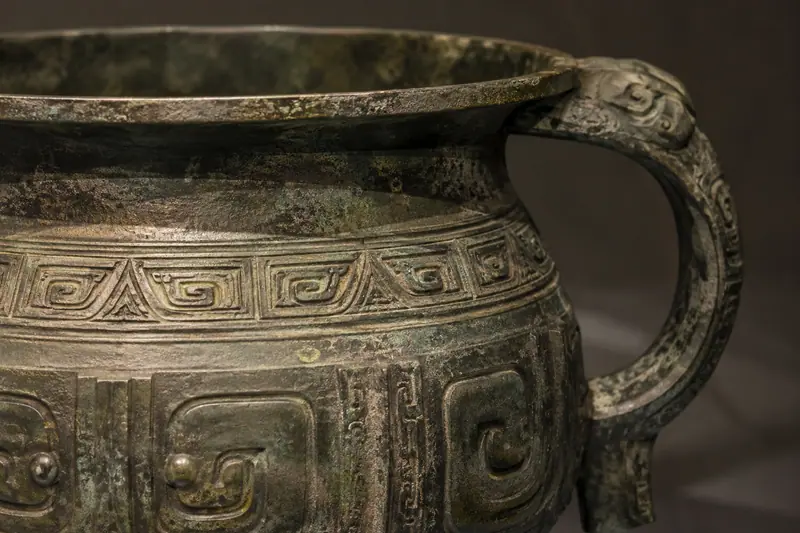
The collections were assembled through acquisitions from ports and associated cities, supplemented by underwater archaeological material. A Warring States bronze vessel from Hepu (合浦) depicts feathered figures engaged in boat racing. The underwater archaeology exhibition includes equipment and objects recovered from shipwrecks, together with a partly open restoration room that explains the conservation of excavated vessels.
What to look for
- The paired shell-like building forms and sail-like roof interpret a maritime setting.
- Port-history and modern-technology galleries compare trade, loading equipment and harbour organization.
The surrounding area
A coastal city chapter centered on maritime food, Tianyi Pavilion and Moon Lake.
Location & getting there
Getting to China Port Museum
Approach the museum at 6 Gangbo Road in Chunxiao, Beilun District, Ningbo. This is outside central Ningbo, so plan the onward local connection to the museum itself.
Combine your visit
A suggested sequence linking the specific features of this visit.
-
Museum exterior
Identify the maritime references in the building forms.
-
Port-history galleries
Establish how harbours developed around trade.
-
Modern port-technology galleries
Compare the historical account with loading systems and harbour layouts.
This order is editorial. Confirm access and any transfers between stops; it does not establish a walking route, same-day connection or common admission ticket.
Find China Port Museum
中国港口博物馆 · 宁波市
The pin marks the area, not the entrance.
More places nearby
Approximate straight-line distances between map pins, not travel distances.
Tiantong Temple 天童寺
13 km awayTiantong Temple occupies a wooded setting below Taibai Peak east of Ningbo. Its rebuilt Ming-and-Qing-style ensemble runs through the mountain gate and Heavenly Kings Hall toward the Mahavira Hall, with bell and drum towers to…
View guide →Ashoka Temple 阿育王寺
18 km awayNingbo’s Temple of King Ashoka centres on the veneration of a relic traditionally associated with the Buddha. The main axis moves past a release-life pond and the Heavenly Kings Hall toward the Mahavira Hall and Hall of Sarira…
View guide →Opium War Relics Park 舟山鸦片战争遗址公园
33 km awayThe Opium War Relics Park on Zhoushan’s Zhushan commemorates the fighting at Dinghai through a hillside memorial landscape. The Three Commanders square and sculptures provide an outdoor focus, while Sanzhong Shrine and the…
View guide →Sources & visit information
The sources below support the place-specific description and arrival information. Suggested combinations are editorial planning ideas; confirm current opening, entry arrangements and transport services for your date.
Visitor information adapted and edited from Wikipedia contributors, “中国港口博物馆” · CC BY-SA 4.0. Source revision 92922581.
Visitor information adapted and edited from Wikivoyage contributors, listing “China Port Museum” · CC BY-SA 4.0.
Background paragraphs translated and condensed from Wikipedia contributors, "中国港口博物馆", Chinese Wikipedia · CC BY-SA 4.0. Source revision 92922581.