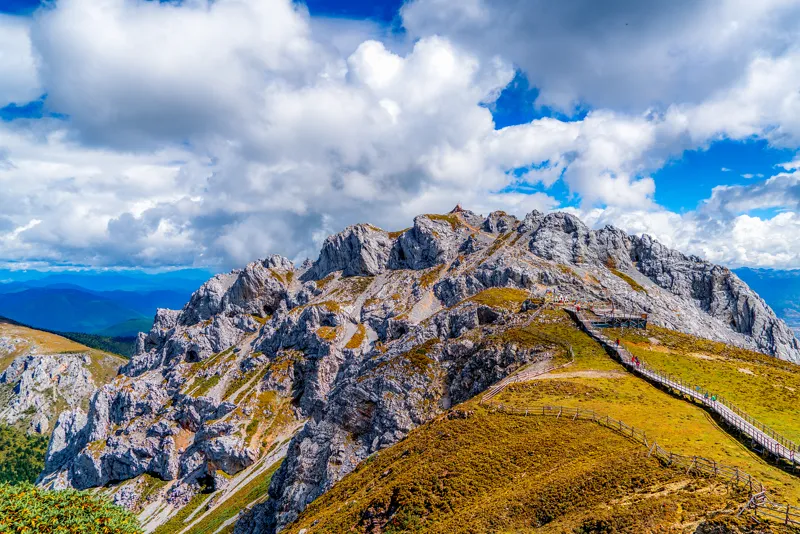
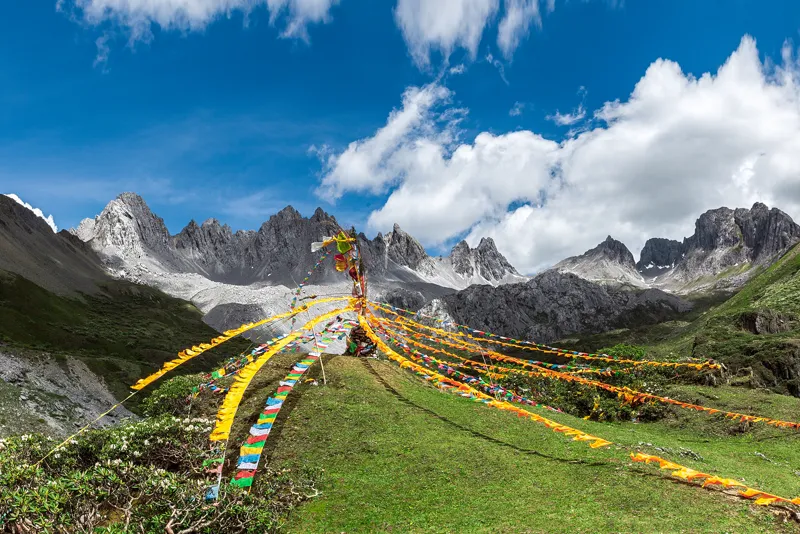
Shangri-La (Xianggelila) is a county-level city and the seat of Diqing Tibetan Autonomous Prefecture in northwestern Yunnan. It is worth a stay because a rebuilt Tea Horse Road town, a hillside Tibetan Buddhist monastery and a highland lake-and-forest park offer three different ways into the city, rather than one interchangeable sightseeing zone.
Dukezong Ancient City and Guishan · Shangri-LaPhoto credit
Shangri-La at a glance
Population
186,412Resident population, entire city (2020 census) · 2020Seventh national census; 40.39% lived in urban areas. No later year-end figure was published by the city.Source ↗
Income per person
49,388Mean annual disposable income per person, urban residents · 2025 · CNYUrban (49,388) and rural (15,731) figures only, with no all-resident figure.Source ↗
Languages & dialects
Mandarin, with Tibetan and other local languages widely spoken in villages.Source ↗
Geography
In the Hengduan Mountains on the south-eastern edge of the Tibetan Plateau, where Yunnan, Sichuan and Tibet meet; the town is at about 3,300 m.Source ↗
Elevation
Not available on a comparable basis
Province / region
YunnanCounty-level city (seat of Diqing Tibetan Autonomous Prefecture)
Map & places
Explore Shangri-La
Browse places and sight guides by category, or choose a area below the map to see its location and boundary.
SHANGRI-LA
Showing 12 places12 mapped
No matching places. Try a shorter name or another category.
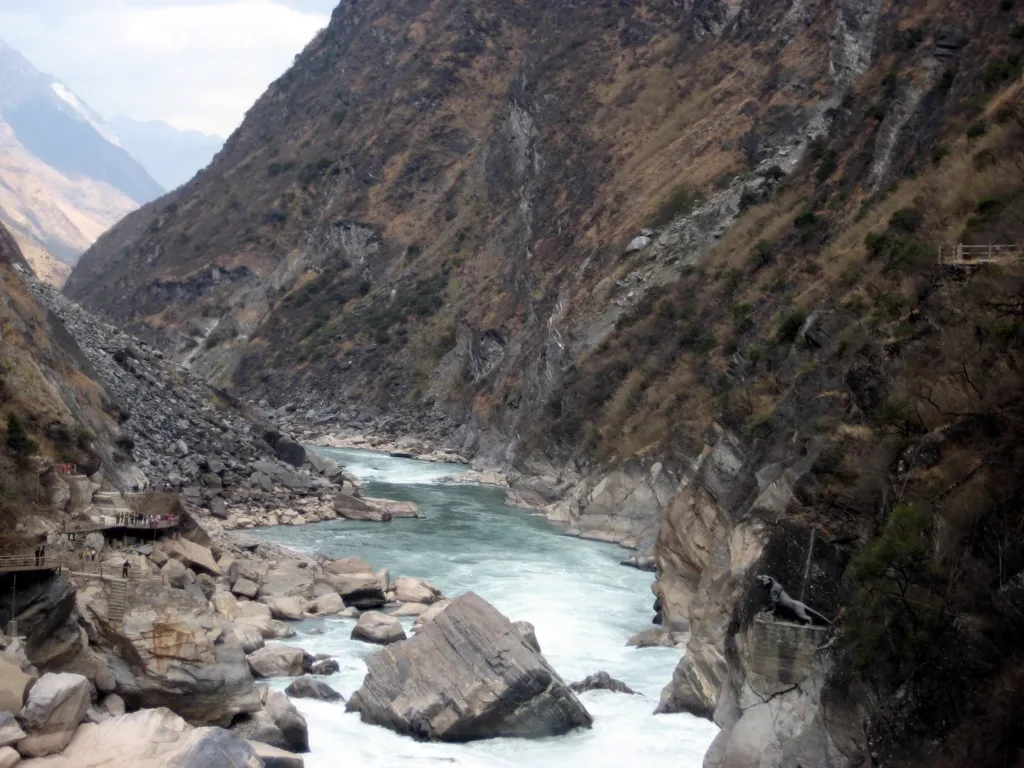
The managed Shangri-La-side Upper Gorge brings you to the narrowest part of the Jinsha River, where water splits around Tiger Leaping Stone between Yulong Snow Mountain and Haba Snow Mountain. It is a focused sightseeing visit, not permission to enter the unopened Middle Gorge, Lower Gorge or High Trail.
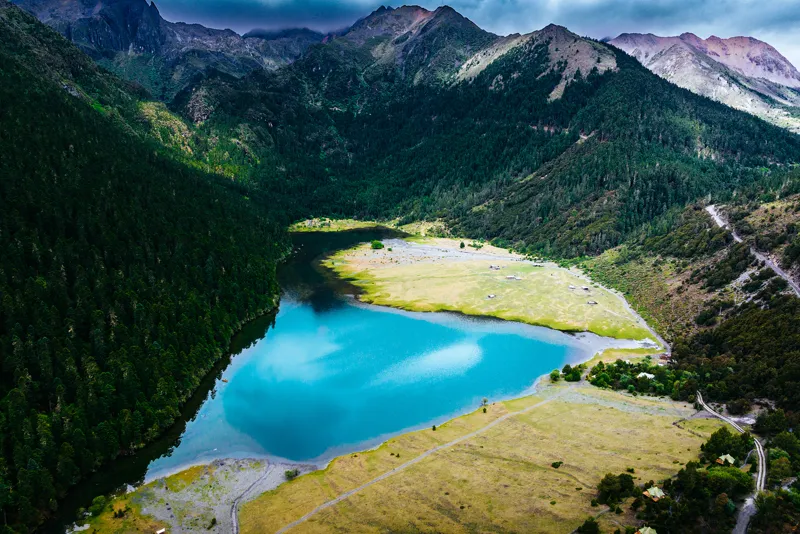
Potatso National Park is a highland landscape of lakes, wetland, forest and subalpine pasture near Shangri-La. A visit is most rewarding when you treat it as a managed nature route: check which sections are open, walk the Shudu Lake boardwalk if operating, and leave enough time for the return coach or a pre-arranged car.
Ganden Sumtseling Monastery (Songzanlin) is an active Gelugpa monastery built up a hillside north of Shangri-La, where a good visit combines a distant reading of its layered silhouette with a respectful look at halls, murals, and religious art.
Balagezong is a managed mountain scenic area in Nixi Township, Shangri-La, where the road itself leads through steep canyon country to Bala village, a natural pyramid-shaped stupa, the Shangri-La Grand Canyon and Echo Wall. A 2026 self-drive product lets visitors choose between driving into the core or using the scenic area's sightseeing service, subject to current operating conditions.
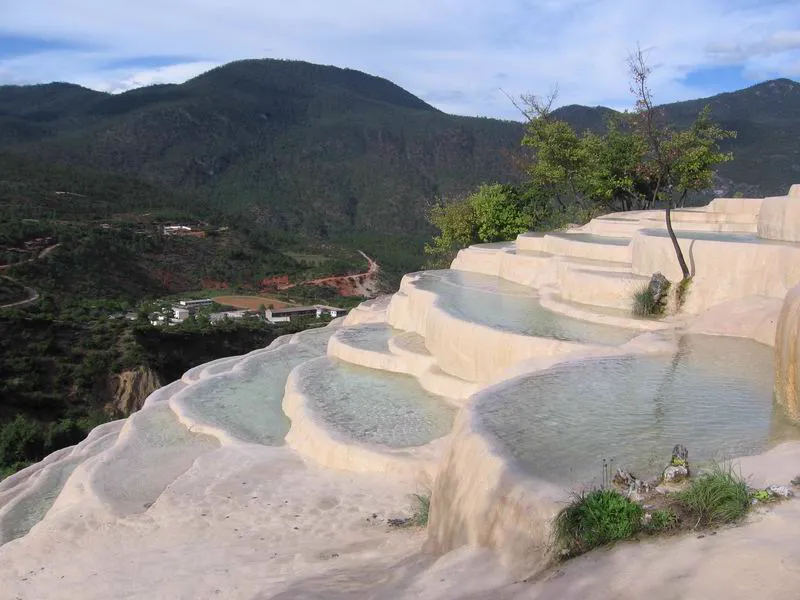
Baishuitai is a stepped cold-spring travertine formation in Baidi Village, Sanba Naxi Township, about 100 km from Shangri-La’s urban centre. Its shallow mineral pools are also presented locally as a Naxi Dongba cultural origin site, so the visit works best as a slow geological walk rather than a quick photo stop.
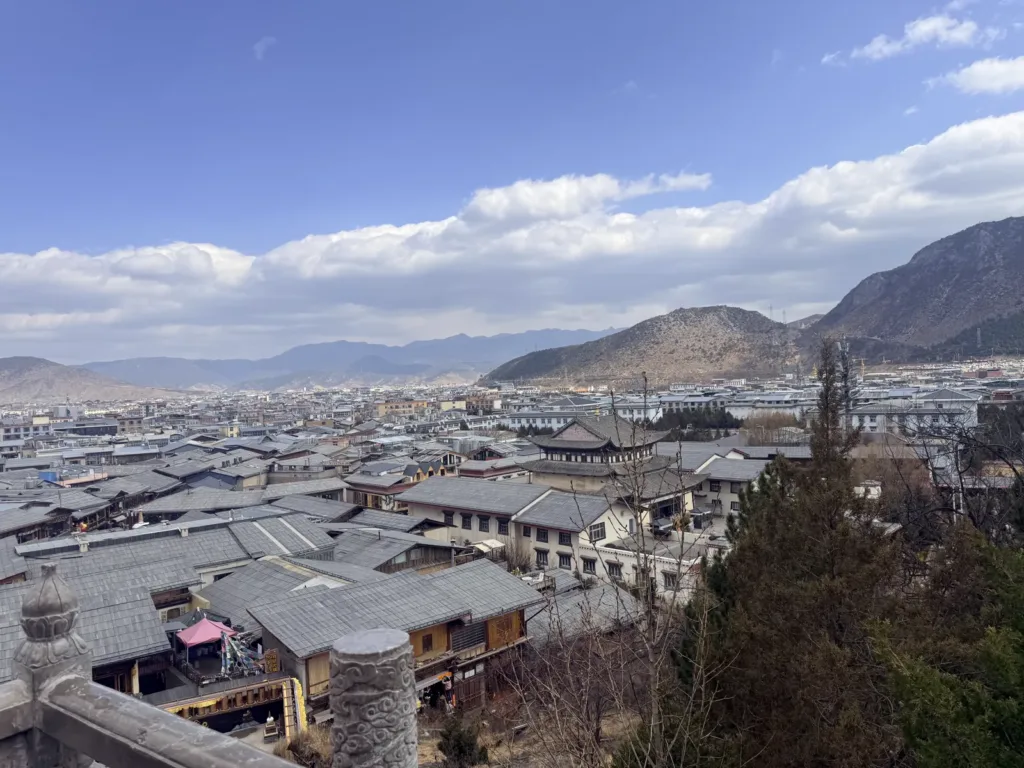
Dukezong Ancient City is Shangri-La’s lived-in Tibetan historic quarter, where Tea Horse Road history, Moonlight Square, Guishan Park and hands-on cultural experiences meet everyday streets.
A mountain south-west of town reached by cableway, with views over the Napa grassland and towards Meili and Haba on clear days; check cableway notices for wind and weather closures.
8
Trip.Best #8
Wudi Lake无底湖
★ 4.5 / 5 · Trip.com 香格里拉市
A forest lake in Geza Township north of town, visited for its autumn colours; access is by road only, so check conditions before going.
9
Trip.Best #9
Abuji Cuo阿布吉措
★ 4.5 / 5 · Trip.com 香格里拉市
A high lake and meadow in Xiaozhongdian south of town, reached on a hiking trail; go with a guide or local operator and check access first.
10
Trip.Best #10
Haba Snow Mountain哈巴雪山
★ 4.8 / 5 · Trip.com 香格里拉市
A 5,396 m peak above the north bank of Tiger Leaping Gorge; climbs start from Haba village and need a licensed guide.
Shangri-La travel guides
In-depth articles and itineraries for planning your time in Shangri-La.
SOON
Itinerary
3 days in Shangri-La: a first-timer's itinerary
How to split your days between the essential sights, neighbourhood walks and a relaxed evening, with transport tips between each stop.
Coming soon
SOON
Food
Where to eat in Shangri-La
Local dishes worth seeking out, how to order and what to expect.
Coming soon
SOON
Transport
Getting around Shangri-La by metro and taxi
Cards, apps and station tips for moving between sights.
Coming soon
SOON
Day trip
Day trips from Shangri-La
Plan the outward and return journeys and visiting time before mapping out your day.
Nixi Clay Pot Chicken links a locally associated chicken with Nixi black pottery: expect a lightly seasoned, slow-cooked broth and meat eaten with chilli dipping sauce, while allowing for kitchen-to-kitchen variation.
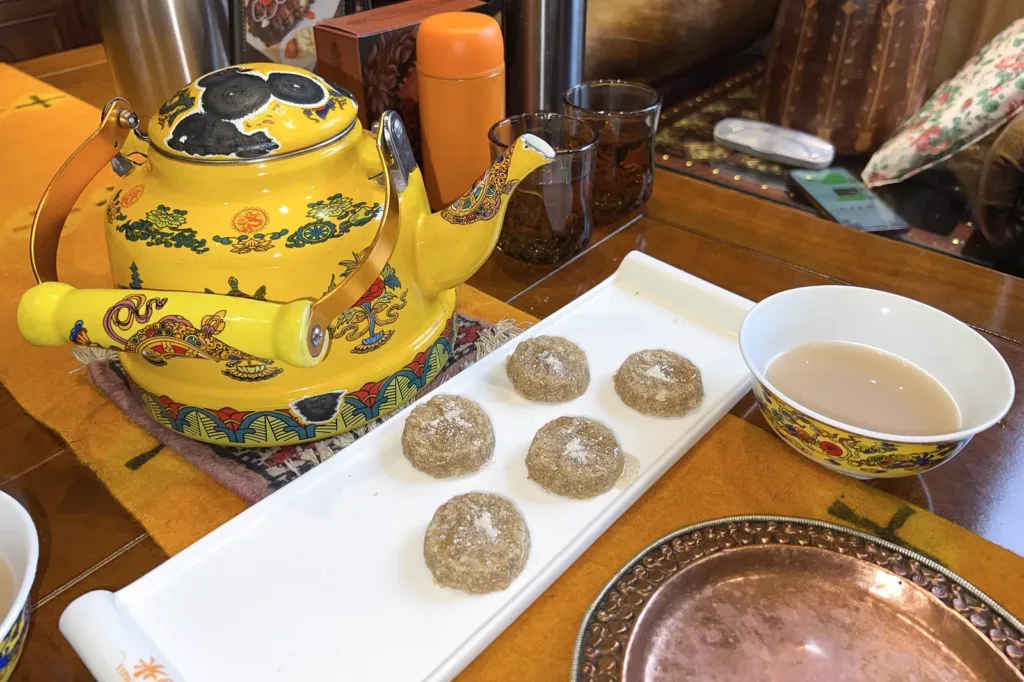
In Diqing, tsampa (糌粑) is a Tibetan staple made from roasted highland barley flour, usually worked with butter tea and sometimes dried cheese or sugar into small hand-shaped portions. It is worth trying for the contrast between toasted grain and rich tea, and for the way a simple bowl shows how local food fits high-altitude pastoral life.
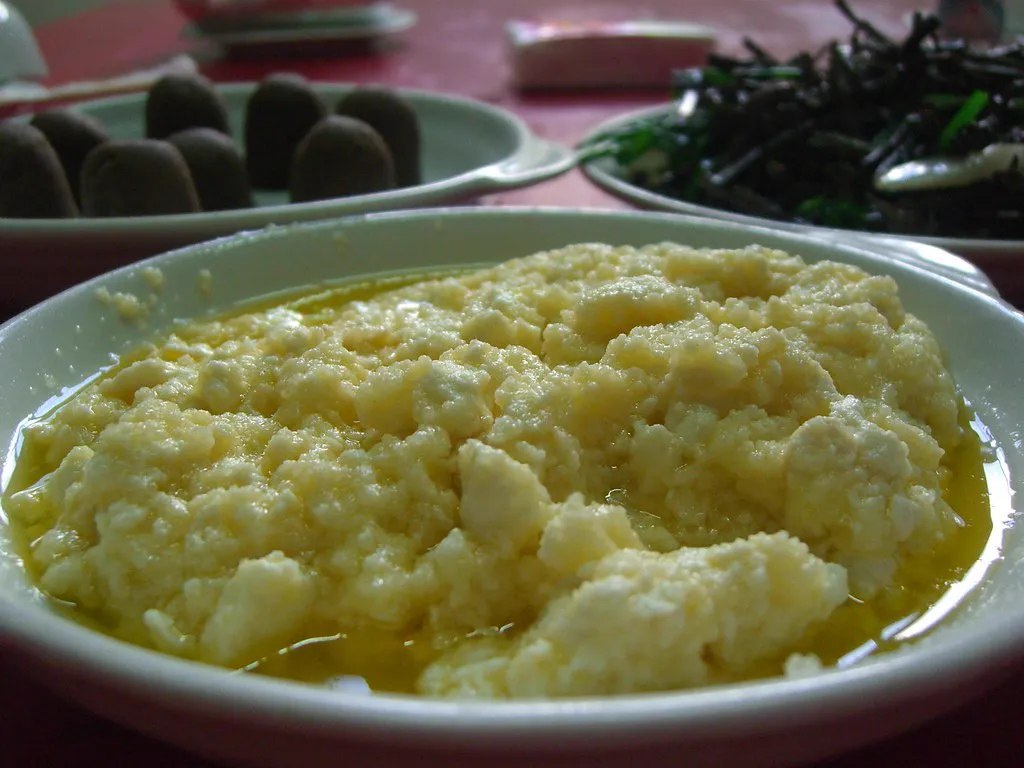
In Diqing, 奶渣 (nǎizhā) is a traditional Tibetan-area dairy food made from the solids left after milk is churned or butter is separated; the prefecture government lists it among the region’s specialty foods. Local preparations range from 酥油煎奶渣 (sūyóu jiān nǎizhā) cooked with butter and brown sugar to a Deqin-style version finished with wild honey and served with steamed buns or 粑粑 (baba).
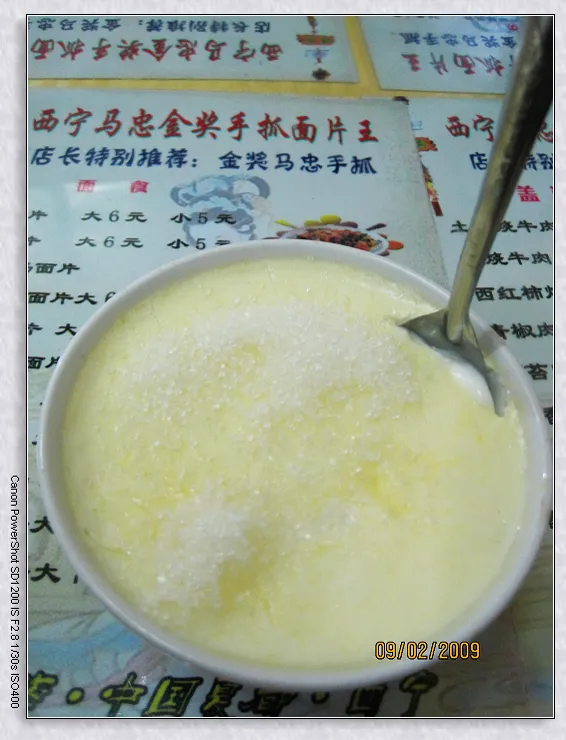
Yak milk yogurt is a fermented dairy food associated with the Tibetan food culture of Diqing. In Shangri-La, you may meet it plain, in a wooden-bowl serving, or in modern combinations such as highland barley, ice cream, or rose; the maker’s sweetness and additions are not fixed.
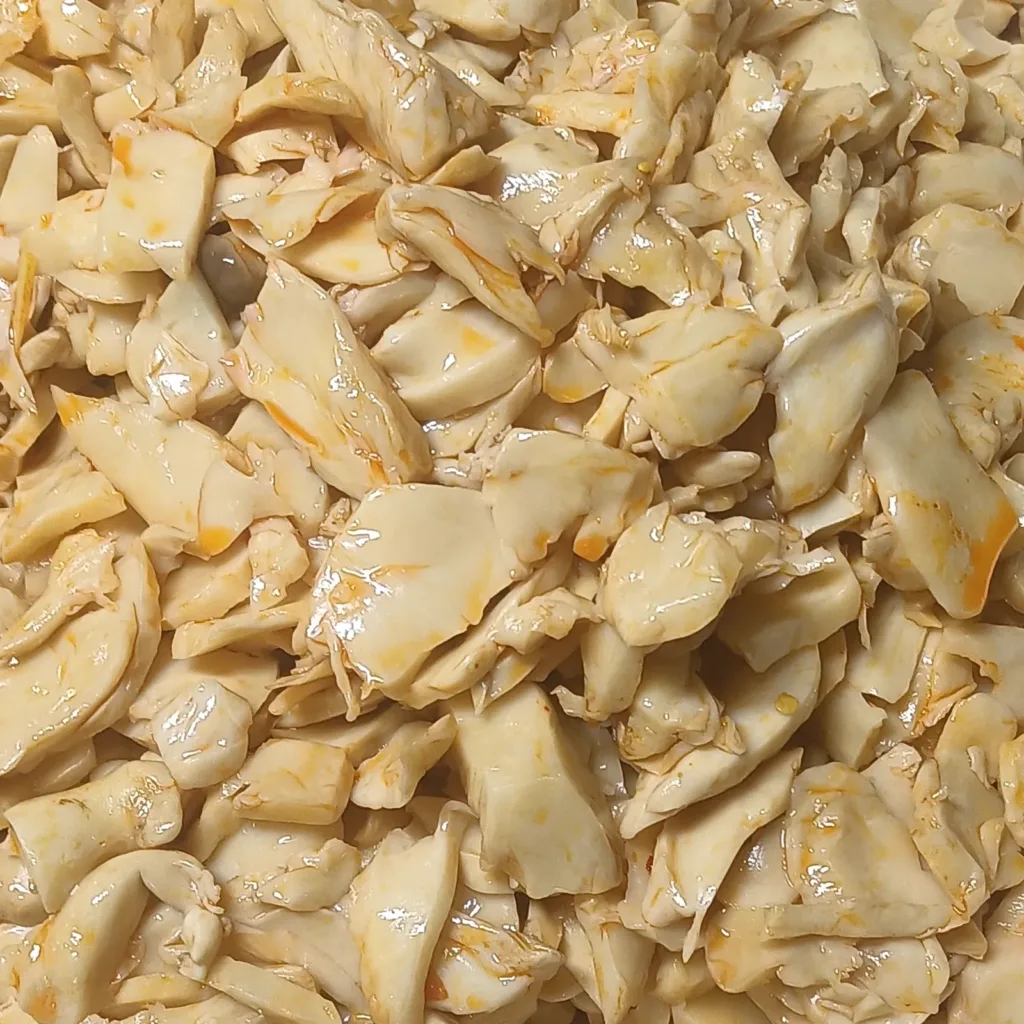
A restrained Shangri-La-area chicken soup in which sliced matsutake is added near the end, so its aroma stays distinct. It is tied to Diqing’s summer matsutake harvest, but fresh supply and kitchen versions vary.
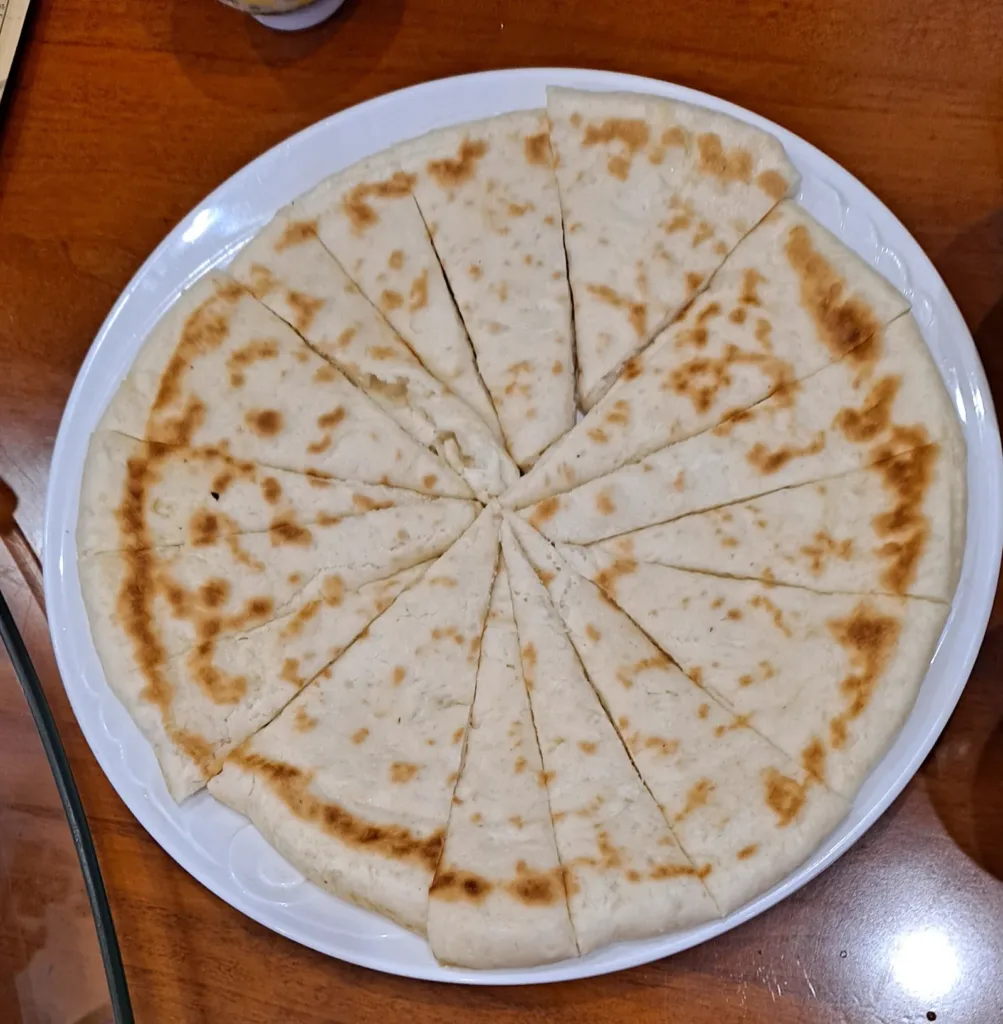
Highland Barley Cake, or 青稞饼 (qīngkē bǐng), is a baked barley-flour food found in Diqing’s Tibetan food landscape. A reported Shangri-La method uses leavened barley dough, rapeseed oil and 香豆沫, but recipes and availability vary, so treat it as a regional food to ask for rather than a city-invented fixed recipe.
Tibetan Fragrant Pig (藏香猪) is a highland pork tradition rooted in Diqing and connected to Shangri-La’s farming and food culture; try it by asking whether the kitchen serves fresh pork or cured pipa meat, rather than expecting one fixed dish.
Qingke jiu (青稞酒) is a Diqing highland-barley drink rooted in Tibetan foodways, ranging from village-fermented batches to bottled commercial spirits. Its flavor and strength can vary with the starter and process, so it is best approached as a local brewing tradition rather than a single fixed recipe.
Check the precise airport or station name on the ticket before arranging the final transfer to your hotel.
Your arrival gateway
Shangri-La 香格里拉
Transport gateways for Shangri-La. The airport is on the south-west edge of town, the railway station on Shika Road west of Dukezong, and the coach station on Kangding Road in the town centre; use a taxi or hotel car between them.
Airports
Diqing Shangri-La Airport
迪庆香格里拉机场
DIG
Shangri-La's airport on the south-west edge of town, linked by the G214 and Kangba Main Road, with flights to Kunming, Chengdu and other cities. Use a taxi or pre-arranged hotel car and confirm the fare locally.
The terminus of the Lijiang–Shangri-La railway, opened in November 2023, with trains to Lijiang, Dali and Kunming. Tickets are real-name; on 12306 the station is listed as 香格里拉.
The intercity coach station on Kangding Road, with buses to Lijiang, Dali, Kunming and Diqing counties, and the Potatso park coach. Mountain weather can change departures, so check on the day.
Diqing Shangri-La Airport (DIG) is on the south-west edge of town, with flights to Kunming, Chengdu and other cities. Shangri-La Railway Station, opened in 2023, is the terminus of the line from Lijiang. Shangri-La Coach Station on Kangding Road has buses to Lijiang, Dali, Kunming and Diqing counties, and the Potatso park coach. Use taxis or hotel cars for the airport and station, and check same-day departures for outlying sights.
Transport reference review: 2026-10-24. Consult the operator for current services and timetables.
Accommodation
Stay in Shangri-La
Stay in or beside Dukezong for walking, cafés and restaurants; near the station or airport for early departures; or in a guesthouse near Napa Lake or a village further out for quieter nights, accepting longer transfers.
Change your destination, dates and guests on Trip.com.
Weather
Shangri-La weather
Current-hour forecast
Loading the current-hour forecast…
Cool highland weather all year at about 3,300 m. Winters are cold and dry with frosty nights and some snow; summers are mild with most rain from about June to September, when roads to outlying sights can be affected. The sun is strong and nights are cold in every season, so bring warm layers and sun protection, and allow a day to adjust to the altitude.
Written by China Revealed · Editorially updated 2026-10-24
Maps & transport note
Transport suggestions on this site may be inaccurate or out of date. Confirm your exact destination, visitor entrance, current route and return connection before setting off.
For travel in mainland China, we recommend Amap (高德地图) or Apple Maps (苹果地图) for checking local directions. Both support English. Keep the Chinese place name and full address handy, and compare the result with the venue or transport operator’s latest information.
Do not rely on Google Maps or another overseas map as your only route check for mainland China. Map coverage and features vary, and no app can guarantee an error-free route.
Amap’s English interface depends on the app version and store region. Apple Maps follows your device or app language settings; some place labels may remain in Chinese. Apple states that its map service in China uses AutoNavi (Amap). Features differ in Hong Kong, Macao and Taiwan.