


Get to know Shanwei
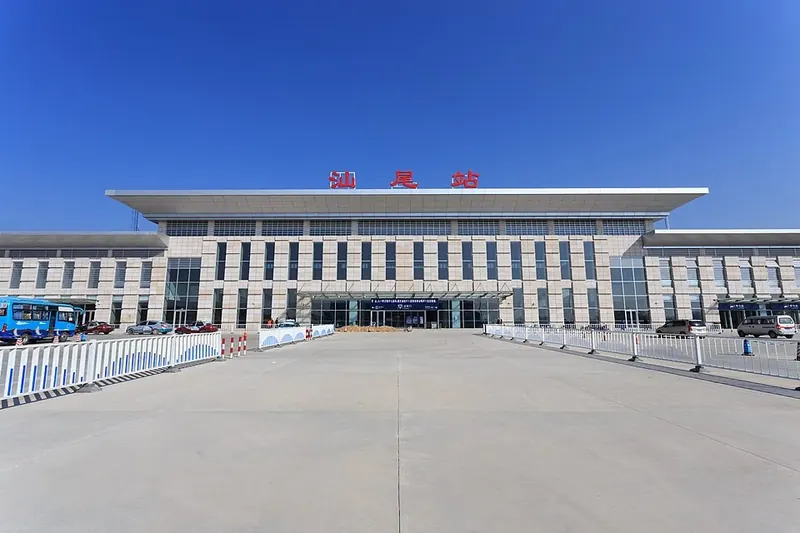
Photo adjustments
Full frame retained; proportionally resized and converted to WebP. No retouching or changes to the photographed subject. Card displays may crop the view.
- Administrative area
- Prefecture-level city · 地级市
- Part of
- Guangdong
- Chinese name
- 汕尾市
- Local areas
- 4 local areas
Area & population
- Area in the source
- 4,861.79 km²
- Population · 2010
- 2,935,469
- Administrative seat
- Chengqu
Source: cited geographic source, as of the dates shown.
Setting and landscape
Mountains fill the north, with 23 peaks above 1,000 metres, among them Lianhua Mountain itself (1,337 metres) in northwestern Haifeng County (海丰县). The centre is hills and terraces and the coast terraces and plains, crossed by the Luo (螺河) and Huang (黄江) rivers flowing south to the sea. The city counts 881 islands and 12 fishing ports.
History
The city was created in 1988 from the old Haifeng and Lufeng (陆丰) counties and named after Shanwei town, a name first recorded in early Qing gazetteers for the tail edge of a sea-washed sand flat. Haifeng already belonged to Dongguan Commandery (东官郡) in 331, and Lufeng was split from it in 1731. In the 1920s Peng Pai (彭湃) led a peasant movement here: a peasant association was founded at Chishanyue (赤山约) in Haifeng in 1922, and in 1927 three armed uprisings set up the Hailufeng Soviet (海陆丰苏维埃).
Most of the city speaks the Haifeng dialect (海丰话), a Southern Min tongue closer to Quanzhou and Zhangzhou speech than to Teochew; Hakka is spoken in the north and across Luhe County (陆河县). The city government calls Zhengzi (正字戏), Xiqin (西秦戏) and Baizi (白字戏) opera rare forms peculiar to the area. Zhengzi opera, sung in the old Central Plains official speech, grew from southern drama brought to eastern Guangdong in the early Ming. All three were on the first national intangible heritage list in 2006, with the rolling golden dragon dance (滚地金龙) and Lufeng shadow puppetry (陆丰皮影戏).
What to see
The Red Palace and Red Square (红宫、红场) site in Haifeng and Yuanshan Temple (元山寺) are national key heritage sites. Zhelang (遮浪), on the headland between the two bays, is one of the national key bathing beaches, and the Jinxiang (金厢) beach at Guanyinling (观音岭) is known for white sand, clear water and small waves. The Fengshan Mazu (凤山妈祖) and Xuanwu Mountain (玄武山) temple fairs include processions.
Food and local products
Salty tea (咸茶), long a way to receive guests, is made by pounding tea leaves in a ridged earthenware bowl with a hardwood pestle, grinding in cooked peanuts, sesame and mint, then salting it and adding boiling water; Hailufeng families still hold salty-tea feasts for weddings, births and homecomings. Caicha (菜茶) is a festive bowl of fried chopped vegetables, dried seafood, sausage and meat under hot tea broth, topped with puffed rice and peanuts. Families once served it in the first lunar month to celebrate a newborn son; most places now make it every year.
Highlights
- Red Palace and Red Square site 红宫、红场旧址: National key heritage site in Haifeng.
- Zhelang 遮浪: Headland beach between Honghai and Jieshi bays, one of the national key bathing beaches.
- Zhengzi opera 正字戏: Opera sung in the old Central Plains official speech, on the first national intangible heritage list (2006).
- Salty tea 咸茶: Tea pounded with peanuts, sesame and mint, salted and topped with boiling water; served at family celebrations.
- Caicha 菜茶: Fried vegetables, dried seafood and meat under hot tea broth, a first-month festive dish.
Sources for this guide
自然地理_自然地理_汕尾市人民政府门户网站 · Shanwei Municipal People's Government
建置沿革_建置沿革_汕尾市人民政府门户网站 · Shanwei Municipal People's Government
人口•习俗_人口•习俗_汕尾市人民政府门户网站 · Shanwei Municipal People's Government
资源物产_资源物产_汕尾市人民政府门户网站 · Shanwei Municipal People's Government
汕尾咸茶 广东省人民政府门户网站 · People's Government of Guangdong Province (text from the Guangdong Provincial Tourism Administration)
菜茶 广东省人民政府门户网站 · People's Government of Guangdong Province (text from the Guangdong Provincial Tourism Administration)
正字戏 - 中国非物质文化遗产网·中国非物质文化遗产数字博物馆 - 中国非物质文化遗产网非遗 · China Intangible Cultural Heritage Network (China National Center for the Safeguarding of Intangible Cultural Heritage)
汕尾市 广东省人民政府门户网站 · People's Government of Guangdong Province (text from the Guangdong Provincial Tourism Administration)
汕尾市 - 维基百科,自由的百科全书 · Wikipedia (Chinese) · CC BY-SA 4.0
Original English written from the listed sources and checked sentence by sentence against quoted extracts by a separate reviewer. Updated 2026-09-30.
Explore Shanwei
Core places to explore, with English and Chinese names.
Places to explore around Shanwei
 Fengshan Folk Culture Scenic Area (凤山民俗文化旅游区), Shanwei. Photograph: "Ma Zu Ge, Fengshan Temple, Shanwei, Aug 2022".
Fengshan Folk Culture Scenic Area凤山民俗文化旅游区
Fengshan’s temple landscape combines an intricately decorated ancestral temple with a hilltop Mazu statue overlooking Pinqing Lake. The old temple uses three halls and two courtyards, with ceramic inlay, carved wood and stone…
Read the place guide → AI illustration · AI 示意图(仅供参考,非该地点实拍)
Honghai Bay Zhelang Peninsula红海湾遮浪
Honghaiwan Zhelang (红海湾遮浪) is the Zhelang (Nan'ao) peninsula projecting into the sea where Honghai Bay meets Jieshi Bay, in the Red Bay Economic Development Zone at Shanwei, Guangdong.
Read the place guide →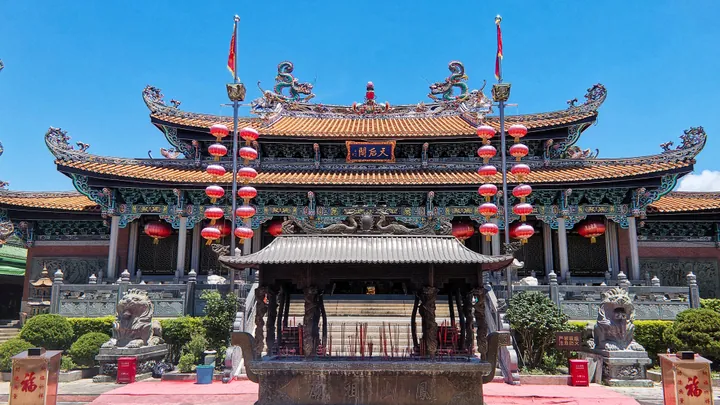 The Mazu Pavilion of Fengshan Ancestral Temple, Shanwei · 汕尾凤山祖庙妈祖阁 Source-recorded photograph date: 2022-08-14 12:49:33.
Fengshan Mazu Temple凤山祖庙
Mazu temple founded in 1636 by Fujian fishermen on Fengshan hill in Shanwei, with a 16.83 m granite Mazu statue and a yearly birthday temple fair.
Read the place guide →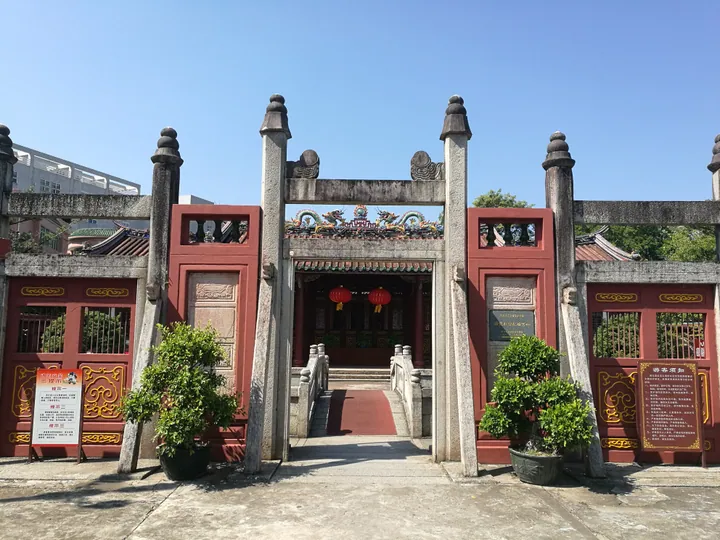 The red-painted former Confucian Temple building that houses the Red Palace of the Red Palace and Red Square site, Haifeng · 海丰红宫红场旧址(原孔庙),汕尾市海丰县 Source-recorded photograph date: 2017-10-22 13:04:03.
Red Palace and Red Square红宫红场
Hong Gong Hong Chang (红宫红场), the Red Palace and Red Square, is a former Confucian temple and adjoining public square in Haicheng town, Haifeng County, Guangdong, where the Haifeng Soviet government, described by the heritage record as the country's first Soviet-style regime, was proclaimed in 1927.
Read the place guide →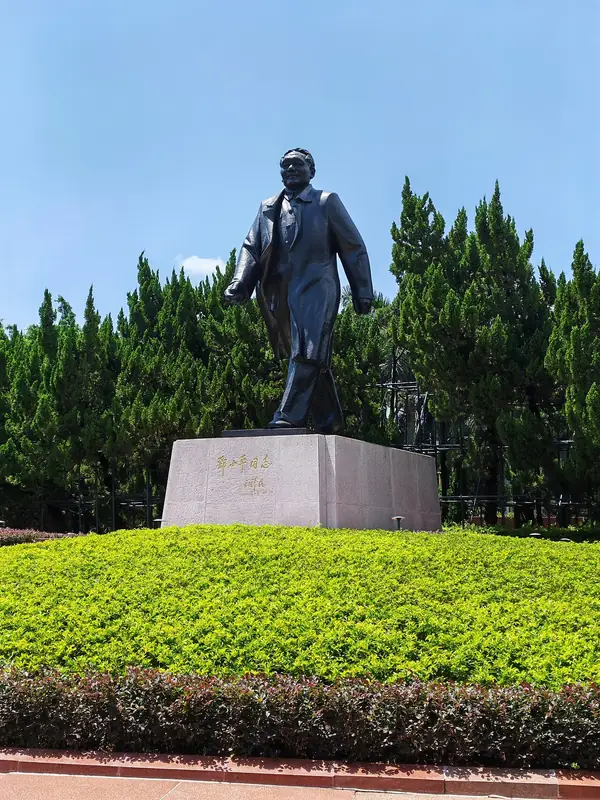 Lianhua Mountain (莲花山), Haifeng County. Photograph: "20260722-莲花山邓小平铜像".
Lianhua Mountain莲花山
Lianhuashan (莲花山) is a forest park in Haifeng County, Guangdong, taking in the mountain's main peak and a run of named gorges, waterfalls and a mountain pool.
Read the place guide → The ornate stone memorial archway at the entrance to the Xuanwu Mountain temple complex in Jieshi, Lufeng · 汕尾市陆丰市碣石镇玄武山牌坊 Source-recorded photograph date: 2014-06-23.
Xuanwu Mountain玄武山
Xuanwushan (玄武山) is a temple hill on the northern edge of Jieshi, Lufeng, Guangdong, centred on Yuanshan Temple, a Buddhist-Daoist temple complex first built in 1127 and listed as a national key cultural relic.
Read the place guide →Local life & food
Shanwei local specialties
汕尾市特色美食 · 13 specialties to discover
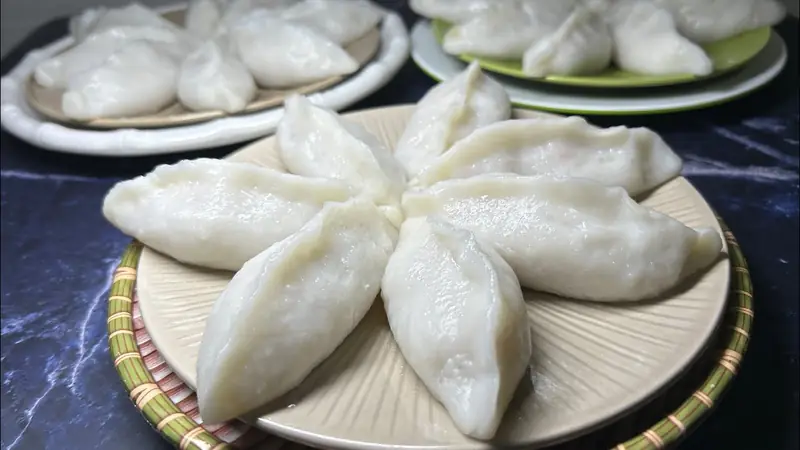 Shanwei Vegetable Rice Dumplings 汕尾菜粿
Shanwei Vegetable Rice Dumplings (汕尾菜粿) are steamed dumplings with a thin rice-flour skin and a filling of seasonal vegetables, meat and dried seafood, made across Shanwei (汕尾) in eastern Guangdong.
Read the dish guide →Photo adjustments
EXIF orientation normalized; resized without changing aspect ratio; converted to WebP. No subject edits.
 Paper-Thin Crepe Rolls 薄饼AI illustration · AI 示意图(仅供参考,非实拍)
Paper-Thin Crepe Rolls (薄饼) are the Qingming (清明) festival snack of Hailufeng (海陆丰), the Shanwei (汕尾) area of Guangdong: wheat-flour wrappers as thin as paper, rolled around a stir-fried savoury filling or a sweet one.
Read the dish guide → Xiaomi Pork Dumplings 小米AI illustration · AI 示意图(仅供参考,非实拍)
Xiaomi Pork Dumplings (小米) are small steamed dumplings from Haifeng County (海丰县) in Shanwei (汕尾), Guangdong, and a traditional snack across the Hailufeng (海陆丰) area.
Read the dish guide →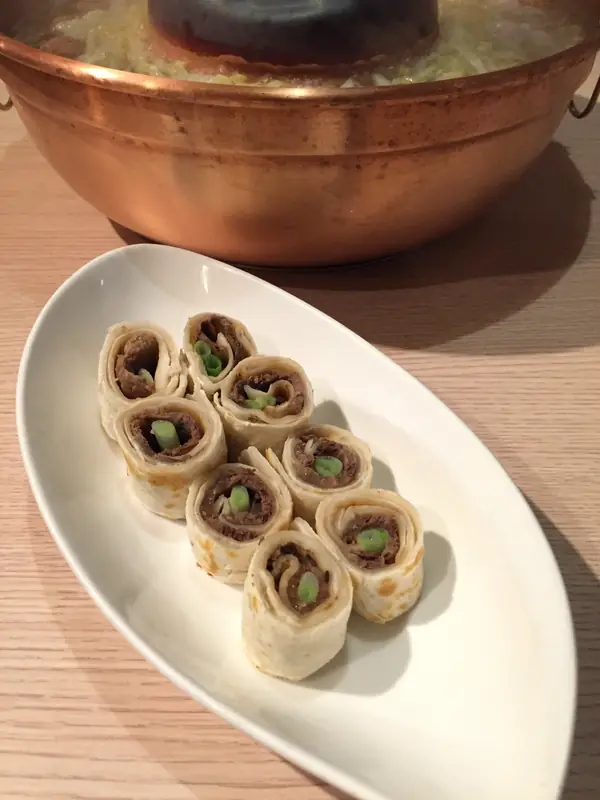 Pounded Beef Patties 牛肉饼
Pounded Beef Patties (牛肉饼) are flat discs of hand-beaten beef from Shanwei (汕尾), Guangdong, and are counted as the most representative snack of the Haifeng (海丰) area there.
Read the dish guide →
Photo adjustments
EXIF orientation normalized; resized without changing aspect ratio; converted to WebP. No subject edits.
 Haifeng Pounded Tea 海丰擂茶AI illustration · AI 示意图(仅供参考,非实拍)
Haifeng Pounded Tea (海丰擂茶) is the tea that households in Haifeng County (海丰县), in Shanwei (汕尾), Guangdong, grind by hand and serve to guests.
Read the dish guide →Lufeng Savoury Salted Tea 陆丰咸茶AI illustration · AI 示意图(仅供参考,非实拍)
Lufeng Savoury Salted Tea (陆丰咸茶) is the pounded-tea meal of Lufeng (陆丰) in Shanwei (汕尾), Guangdong: a pounded tea poured over a bowl of rice or other starches, stir-fried meat and dried seafood, finished with toasted rice, peanuts and sesame.
Read the dish guide → Jiazi Hand-Beaten Fish Balls 甲子鱼丸Reference photo of a similar dish · 同类菜品参考照片
Jiazi Hand-Beaten Fish Balls (甲子鱼丸) are springy balls of pounded sea fish from Jiazi Town (甲子镇) in Lufeng (陆丰), Guangdong.
Read the dish guide →
Photo adjustments
Full frame retained; EXIF orientation normalized, proportionally resized to at most 800 pixels and converted to WebP. No generated pixels or subject changes. Cards may crop the display.
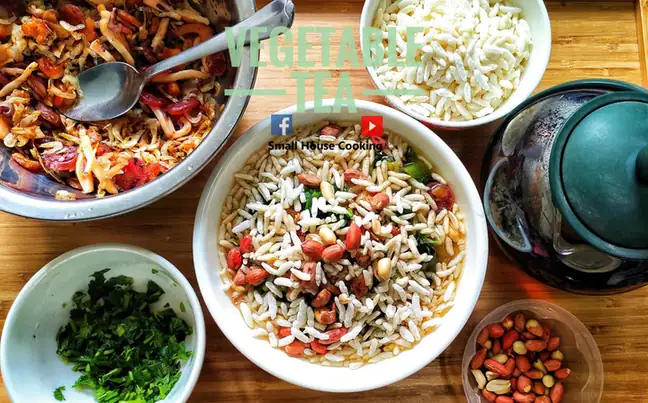 Savoury Vegetable and Rice Tea Bowl 菜茶
Savoury Vegetable and Rice Tea Bowl (菜茶) is the festive 'vegetable tea' of Hailufeng (海陆丰), the Shanwei (汕尾) area of Guangdong: a bowl of stir-fried meat, seafood, beans, grains and greens, topped with peanuts and toasted rice and moistened with weak tea or pork-bone broth.
Read the dish guide →Photo adjustments
EXIF orientation normalized; resized without changing aspect ratio; converted to WebP. No subject edits.
All dish names · 全部菜名 (13)
- Shanwei Vegetable Rice Dumplings · 汕尾菜粿
- Paper-Thin Crepe Rolls · 薄饼
- Xiaomi Pork Dumplings · 小米
- Pounded Beef Patties · 牛肉饼
- Haifeng Pounded Tea · 海丰擂茶
- Lufeng Savoury Salted Tea · 陆丰咸茶
- Jiazi Hand-Beaten Fish Balls · 甲子鱼丸
- Savoury Vegetable and Rice Tea Bowl · 菜茶
- Layered Steamed Rice Cake · 层糕粿
- Chewy Lard Candy · 猪油糖
- Raw Marinated Seafood · 生腌海鲜
- Chaoshan oyster omelet · 蚝烙
- Flat Rice Noodle Soup · 粿条汤
More dishes from across Guangdong are in the Guangdong food guide.
Counties & districts in Shanwei
4 areas belong directly to Shanwei.
4 areas
Chengqu 城区
Chengqu (simplified Chinese: 城区; traditional Chinese: 城區; Pe̍h-ōe-jī: Siâⁿ-khu; pinyin: Chéng Qū; lit. 'Urban District') is a district of Shanwei, Guangdong Province, People's Republic of China.
Explore the area →CountyHaifeng County 海丰县
Haifeng County (postal: Hoifung; simplified Chinese: 海丰县; traditional Chinese: 海豐縣; pinyin: Hǎifēng Xiàn; Pe̍h-ōe-jī: Hái-hong-koān) is a county under the administration of Shanwei, in the southeast of…
Explore the area →CountyLuhe County 陆河县
Luhe County (simplified Chinese: 陆河县; traditional Chinese: 陸河縣; pinyin: Lùhé Xiàn) is a county of eastern Guangdong province, China. It is under the administration of Shanwei City.
Explore the area →County-level cityLufeng 陆丰市
Lufeng, alternately romanized as Lukfung in Cantonese, is a county-level city in the southeast of Guangdong province, administered as a part of the prefecture-level city of Shanwei.
Explore the area →No areas match this name.
Plan your visit
Getting there
Search for 汕尾市 in a map app to find stations and your accommodation.
Where to stay →Build your route
Fengshan Folk Culture Scenic Area and Honghai Bay Zhelang Peninsula are both listed here. The linked place guides have entrance and visit details.
Continue with Guangdong →More in Guangdong
Sources & geographic information
Administrative names and parent areas: Official geographic directory · Reference date 2026-09-06.
Some facts checked against 汕尾市 — Wikipedia contributors, CC BY-SA 4.0.
Photo: Fengshan Folk Culture Scenic Area · HMGiovanniV · CC BY-SA 4.0. Full frame retained; EXIF orientation normalized, proportionally resized to at most 800 pixels and converted to WebP. No generated pixels or subject changes. Cards may crop the display.

Photo: Fengshan Mazu Temple · HMGiovanniV · CC BY-SA 4.0. Full frame retained; proportionally resized and converted to WebP. No retouching or changes to the photographed subject. Card displays may crop the view.

Photo: Red Palace and Red Square · Skywalk1722 · CC BY-SA 4.0. Full frame retained; proportionally resized and converted to WebP. No retouching or changes to the photographed subject. Card displays may crop the view.

Photo: Lianhua Mountain · BMSBridge · CC BY-SA 4.0. Full frame retained; EXIF orientation normalized, proportionally resized to at most 800 pixels and converted to WebP. No generated pixels or subject changes. Cards may crop the display.

Photo: Xuanwu Mountain · 林维岳 · Public domain. Full frame retained; proportionally resized and converted to WebP. No retouching or changes to the photographed subject. Card displays may crop the view.

Map data © OpenStreetMap contributors. Pins mark approximate centres, not entrances or boundaries.