

Yunnan local food
Local dishes, ingredients and the stories behind them.

Weishan Braised Pork Rice Noodles 巍山耙肉饵丝
Weishan Braised Pork Rice Noodles (巍山耙肉饵丝) combine soft rice strips with slow-cooked pork and a thick, pale broth. They are associated with morning meals in Weishan (巍山), Dali Bai Autonomous Prefecture (大理白族自治州), Yunnan.
Read dish guide →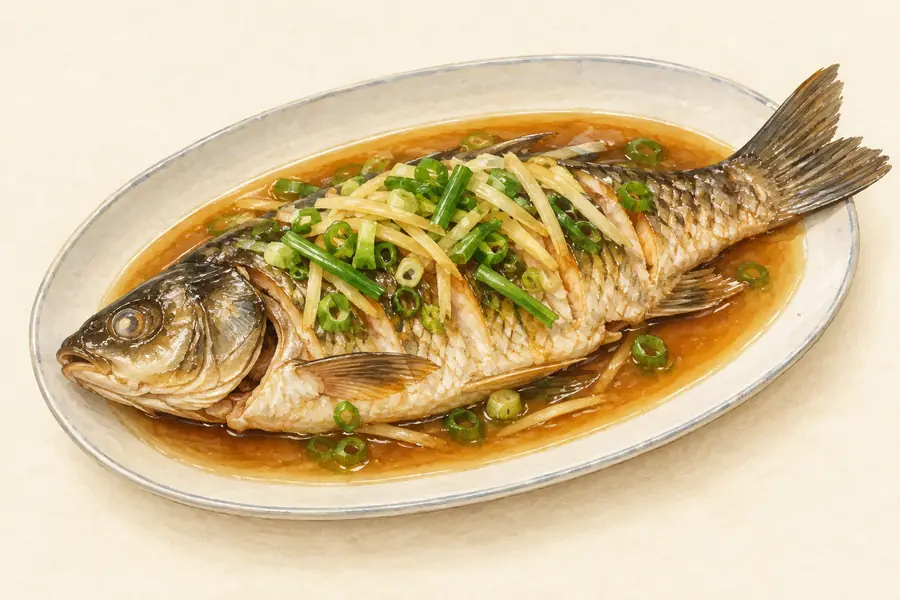
Dali Hot and Sour Fish 大理酸辣鱼
Dali Hot and Sour Fish (大理酸辣鱼) is fish cooked in a sour, chilli-hot broth in Dali Bai Autonomous Prefecture (大理白族自治州). In Eryuan County (洱源县), at the source of Erhai Lake (洱海), cooks make it with local white papaya (白木瓜).
AI illustration · AI 示意图(仅供参考,非实拍)
Read dish guide →
Erhai Water Flower Greens and Taro Soup 洱海海菜芋头汤
Erhai Water Flower Greens and Taro Soup (洱海海菜芋头汤) is a home-style soup from Dali (大理) combining an aquatic plant with taro, beans and a little cured pork.
AI illustration · AI 示意图(仅供参考,非实拍)
Read dish guide →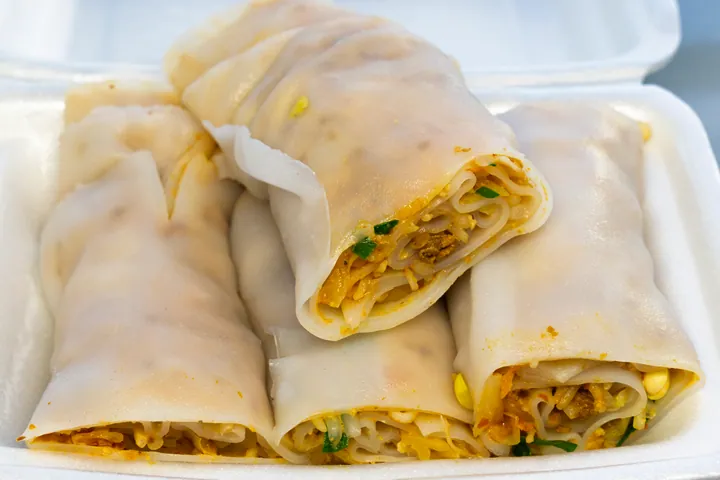
Yangbi Rolled Rice Noodles 漾濞卷粉
Yangbi Rolled Rice Noodles (漾濞卷粉) are thin rice sheets wrapped around sauces and vegetables in Yangbi (漾濞). Walnut sauce gives the local snack its particularly rich flavour, although peanut sauce is also used.
Read dish guide →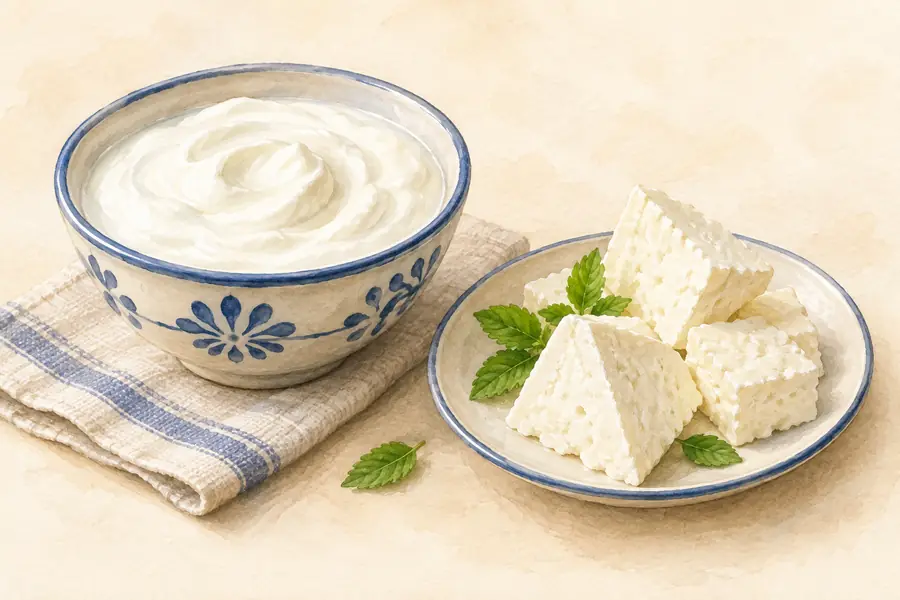
Jianchuan Goat Milk Cheese 剑川羊乳饼
Jianchuan Goat Milk Cheese (剑川羊乳饼) is a pressed cheese made from goat's milk from Jianchuan County (剑川县) in Dali Bai Autonomous Prefecture (大理白族自治州), Yunnan.
AI illustration · AI 示意图(仅供参考,非实拍)
Read dish guide →
Bai Three-Course Tea 白族三道茶
Bai Three-Course Tea (白族三道茶) is the tea ritual of the Bai (白族) people of Dali (大理), Yunnan, in which a guest is served three cups in turn: a bitter tea, a sweet tea and an 'aftertaste' tea.
AI illustration · AI 示意图(仅供参考,非实拍)
Read dish guide →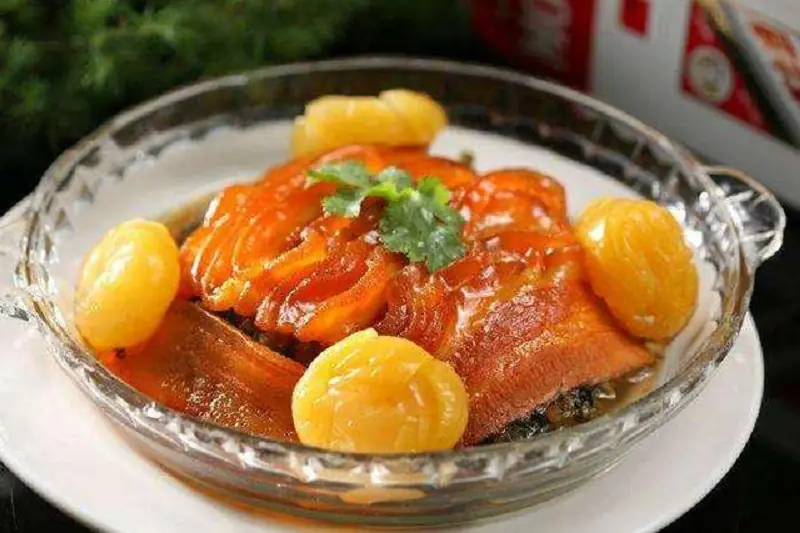
Steamed Pork Belly with Carved Plums 雕梅扣肉
Steamed Pork Belly with Carved Plums (雕梅扣肉) is a dish of Dali (大理), Yunnan, that combines kourou (扣肉), pork belly steamed in a bowl and turned out onto a plate, with diaomei (雕梅), the carved, sugar-cured green plums of the Bai (白族) people.
Read dish guide →
Cold Chicken Rice Noodles 凉鸡米线
Cold Chicken Rice Noodles (凉鸡米线) are a Dali (大理) speciality in Yunnan (云南), combining rice noodles with braised chicken and several flavoured toppings.
Reference photo of a similar dish · 同类菜品参考照片
Read dish guide →Hand-Held Rice Noodles 过手米线
Hand-Held Rice Noodles (过手米线) comes from Husa Achang Township (户撒阿昌族乡) in Longchuan County (陇川县), Dehong (德宏).
Reference photo of a similar dish · 同类菜品参考照片
Read dish guide →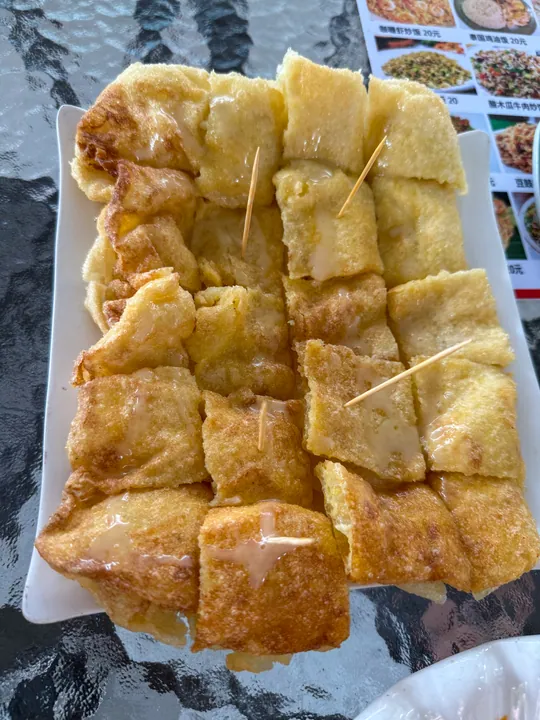
Burmese Tossed Flatbread 缅甸甩粑粑
Burmese Tossed Flatbread (缅甸甩粑粑) is one of the Burmese snacks sold in Dehong Dai and Jingpo Autonomous Prefecture (德宏傣族景颇族自治州), Yunnan.
Read dish guide →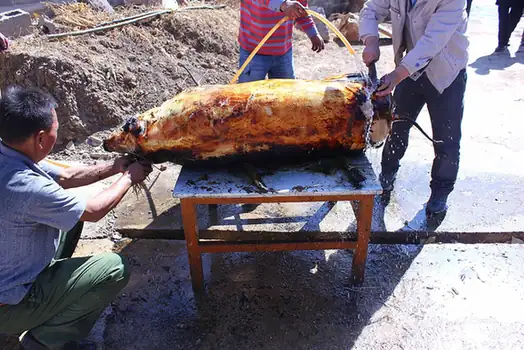
Yingjiang Dai Fire-Roasted Pig 火烧乳猪
Yingjiang Dai Fire-Roasted Pig (火烧乳猪) is a whole pig roasted over an open fire, a traditional dish of the Dai (傣族) people of Yingjiang County (盈江县) in Dehong Dai and Jingpo Autonomous Prefecture (德宏傣族景颇族自治州), Yunnan.
Read dish guide →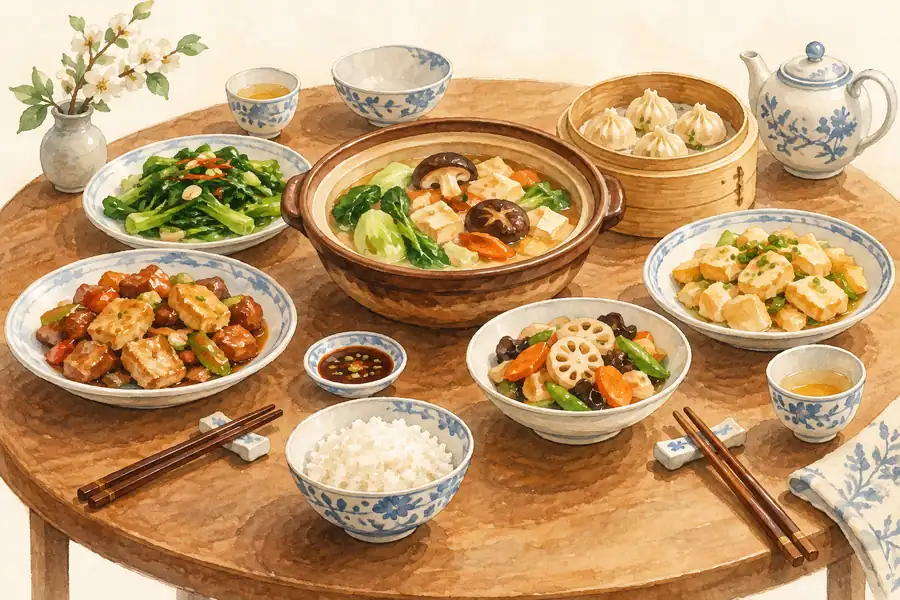
Bitter Beef Sa 牛苦撒
Bitter Beef Sa (牛苦撒), or kusa (苦撒), is a Dai cold-mixed beef dish from Dehong Dai and Jingpo Autonomous Prefecture (德宏傣族景颇族自治州), Yunnan. In Dai, "sa" means cold-mixed; the "ku", bitter, comes from cattle bitter intestine (牛苦肠).
AI illustration · AI 示意图(仅供参考,非实拍)
Read dish guide →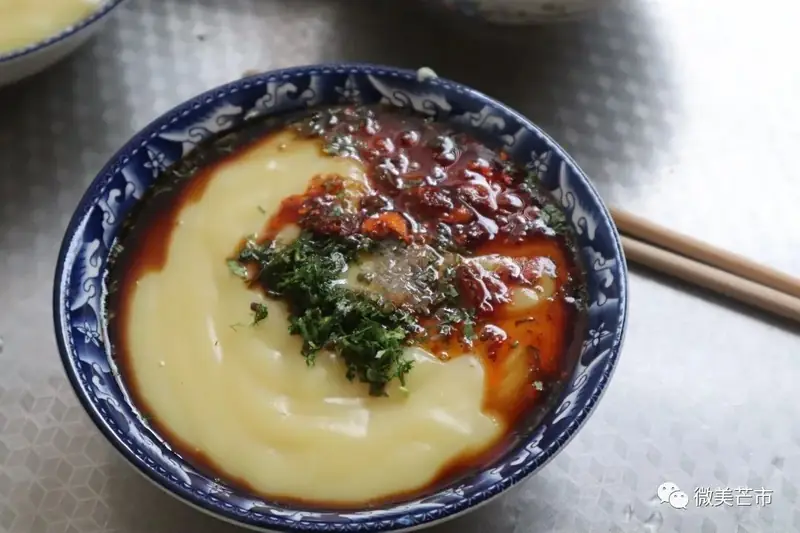
Pea Flour Porridge 稀豆粉
Pea Flour Porridge (稀豆粉) is a thick, pale yellow purée of peas that people in Dehong Dai and Jingpo Autonomous Prefecture (德宏傣族景颇族自治州) in Yunnan eat hot for breakfast, ladled over rice noodles.
Read dish guide →
Lacquer Seed Oil Chicken 漆油鸡
Lacquer Seed Oil Chicken (漆油鸡) is a traditional dish of Lisu (傈僳族) and Nu (怒族) communities in Nujiang (怒江).
AI illustration · AI 示意图(仅供参考,非实拍)
Read dish guide →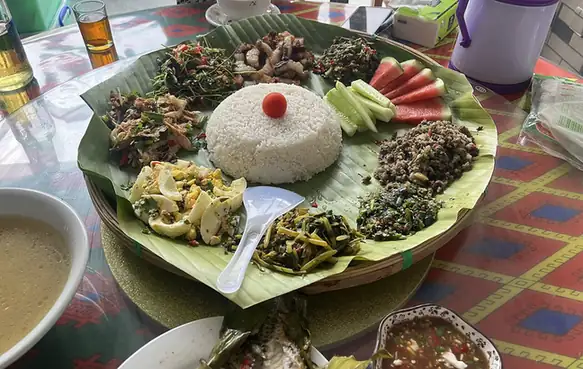
Hand-Eaten Rice Feast 手抓饭
Hand-Eaten Rice Feast (手抓饭) is served on a winnowing tray in the Lisu (傈僳族) tradition of Nujiang (怒江).
Read dish guide →
Stone Slab Flatbread 石板粑粑
Stone Slab Flatbread (石板粑粑) is a flatbread baked on a stone griddle, an old traditional food of the Derung (独龙族) and Nu (怒族) peoples of Nujiang (怒江) in Yunnan.
AI illustration · AI 示意图(仅供参考,非实拍)
Read dish guide →Chicken Simmered in Pounded Rice Wine 杵酒煮鸡
Chicken Simmered in Pounded Rice Wine (杵酒煮鸡) is listed among the local specialties of Nujiang Lisu Autonomous Prefecture, Yunnan. The name includes 鸡 (chicken). The term 酒 points to an alcoholic or fermented drink.
AI illustration · AI 示意图(仅供参考,非实拍)
Read dish guide →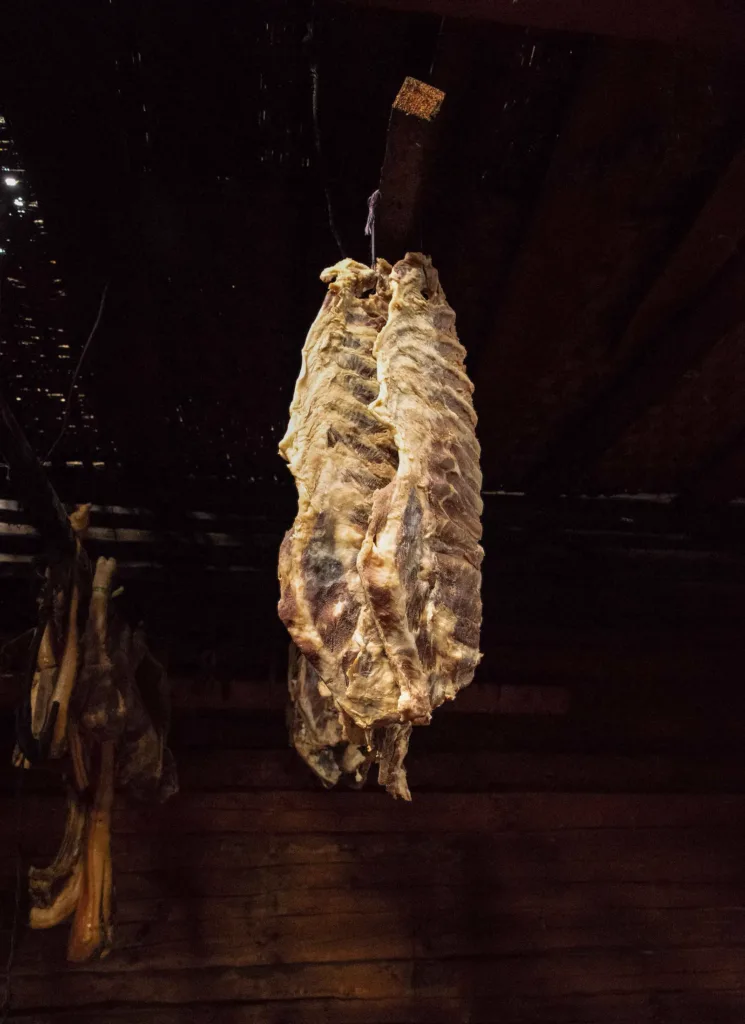
Pipa Cured Pork 琵琶肉
Pipa cured pork (琵琶肉) is a traditional Diqing preserved-pork dish made with a boned, stitched pig, then seasoned and pressed to cure; its pipa-like shape and flexible cooking methods make it a useful way to taste Tibetan food traditions without treating one restaurant's recipe as the standard.
Read dish guide →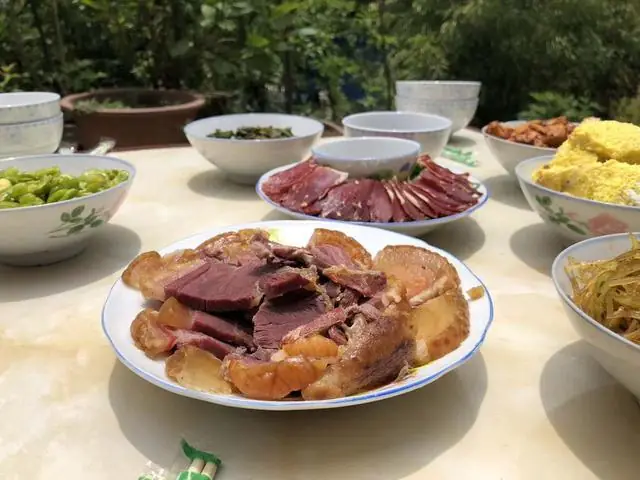
Laowo Cured Ham 老窝火腿
Laowo Cured Ham (老窝火腿) is the cured ham of Laowo (老窝), a Bai ethnic township in Lushui (泸水) city, Nujiang Lisu Autonomous Prefecture (怒江傈僳族自治州), Yunnan. It takes its name from the township where it is produced.
Read dish guide →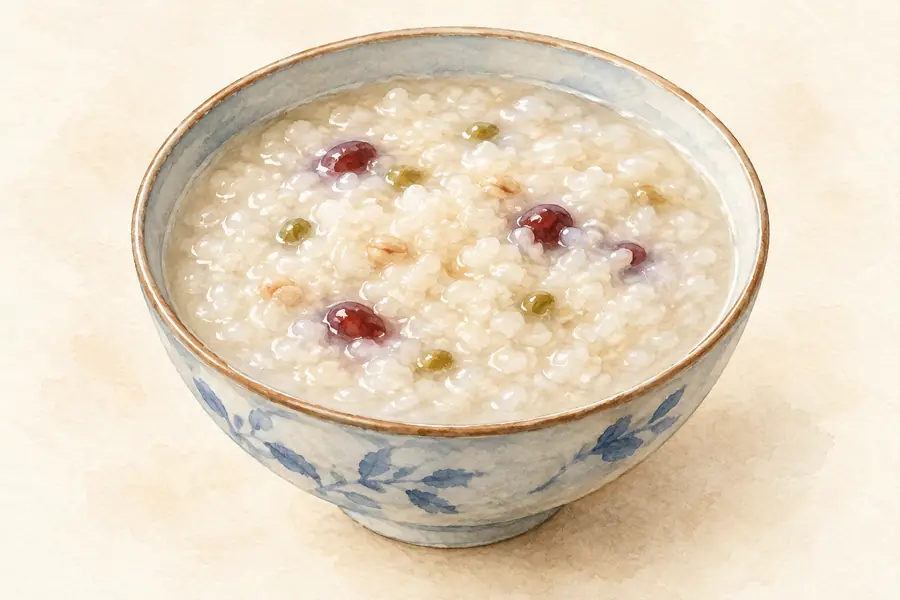
Corn Grits Porridge 包谷砂稀饭
Corn Grits Porridge (包谷砂稀饭) is listed among the local specialties of Nujiang Lisu Autonomous Prefecture, Yunnan. It is grouped here with rice & congee; retain the complete Chinese name when comparing local menus.
AI illustration · AI 示意图(仅供参考,非实拍)
Read dish guide →
Lisu Grilled Meat 傈僳族烤肉
Lisu Grilled Meat (傈僳族烤肉) is listed among the local specialties of Nujiang Lisu Autonomous Prefecture, Yunnan. 烤 describes roasting or grilling.
Read dish guide →Nujiang River Fish 怒江鱼
Nujiang River Fish (怒江鱼) is listed among the local specialties of Nujiang Lisu Autonomous Prefecture, Yunnan. The name includes 鱼 (fish).
AI illustration · AI 示意图(仅供参考,非实拍)
Read dish guide →Tongxin Wine Chicken 同心酒鸡
Tongxin Wine Chicken (同心酒鸡) is listed among the local specialties of Nujiang Lisu Autonomous Prefecture, Yunnan. The name includes 鸡 (chicken). The term 酒 points to an alcoholic or fermented drink.
AI illustration · AI 示意图(仅供参考,非实拍)
Read dish guide →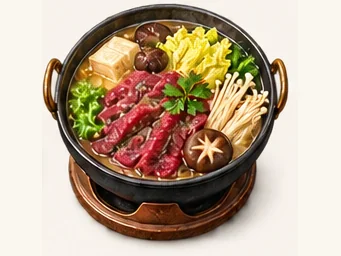
Lijiang yak-meat hotpot 牦牛肉火锅
Yak brings a robust meat flavor, with leaner pieces staying firmer and longer-cooked cuts becoming tender as the broth deepens.
AI illustration · AI 示意图
Read dish guide →Yunnan · Food stories

Food articles are in progress
Long-form food stories for this topic are being written. Until then, browse the dish guides above or see all Chinese food guides.