

Yanbian local food
Local dishes, ingredients and the stories behind them.
← Yanbian travel guideAll Jilin food →Food from all of China →

Alaska Pollock 明太鱼
Yanbian's 明太鱼 is a family of dried and cooked walleye-pollock preparations shaped by local processing and Korean foodways, from chewy hand-shredded fish to spicy steamed dishes and fish-skin rice wraps.
Read dish guide →
Yanbian apple pear 延边苹果梨
Yanbian apple pear is a crisp, juicy pear from the cold-climate orchards of Yanbian Korean Autonomous Prefecture. Its apple-like shape is visual, not a hybrid claim; the fruit is associated especially with Longjing and with a living farming heritage.
AI dish illustration · AI 菜品示意图
Read dish guide →
Yanbian Barbecue 延边烧烤
Yanbian barbecue is a prefecture-wide tabletop charcoal-skewer tradition: diners grill fresh meat and other ingredients themselves, then eat them with local sauces and Korean-style side dishes. Its character changes across Yanbian, from Yanji’s broad urban menu to Hunchun’s large Russian-style pork skewers, Tumen’s pollock by the Tumen River, and Helong’s warm noodles at the end of a meal.
Read dish guide →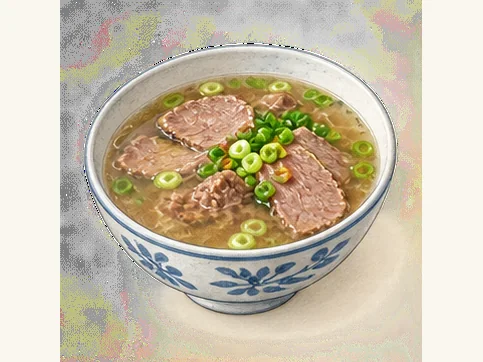
Beef soup 牛肉汤
Yanbian beef soup is a hot regional soup often served as 牛肉汤饭, with beef broth, rice and shop-specific accompaniments such as spicy sauce or fermented cabbage.
AI dish illustration · AI 菜品示意图
Read dish guide →
Beef Soup with Rice 牛肉汤饭
Beef Soup with Rice (牛肉汤饭) is Yanbian’s hot soup-and-rice meal: beef simmered into a clean broth, rice from the region, and a spicy relish that may combine beef offal, chilli and wild-perilla seeds.
Read dish guide →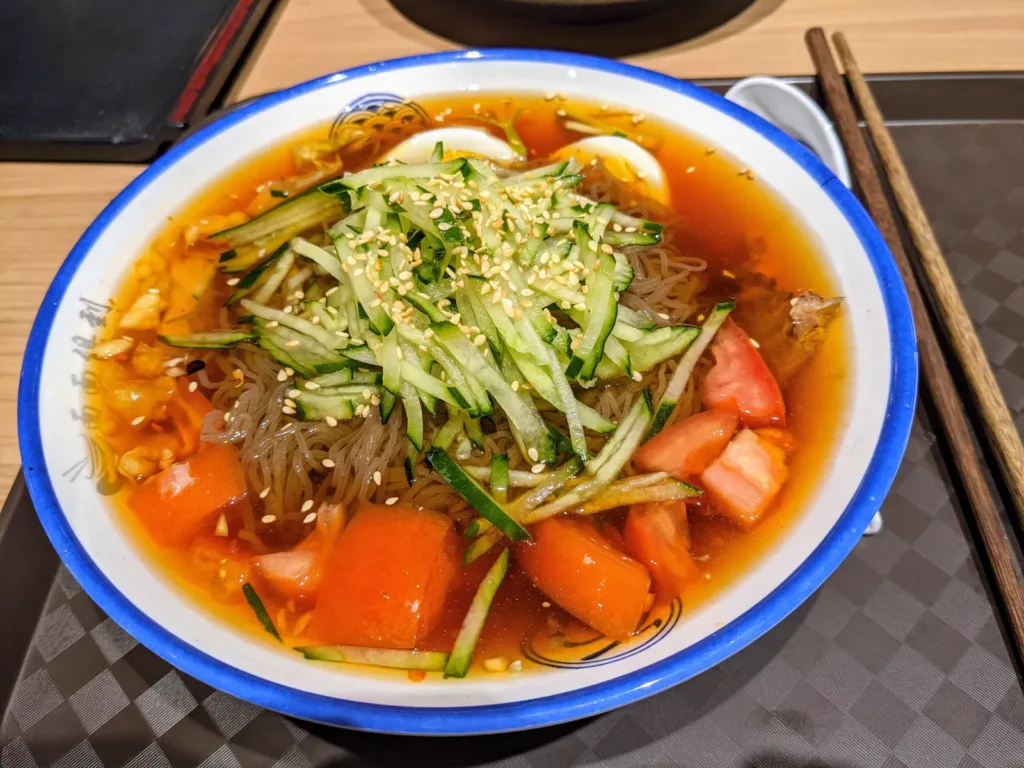
Yanbian cold noodles 延边冷面
Yanbian cold noodles are buckwheat-led noodles pressed, boiled and chilled, then served in a clear, sweet-sour beef-and-bone broth with fresh toppings. Their firm bite and very cold broth express Yanbian’s Korean-Chinese food tradition; in Yanji, the same style is commonly listed as 延吉冷面.
Read dish guide →
Dog Meat Soup 狗肉汤
Dog meat soup (狗肉汤) is a Korean-Chinese soup linked to Yanbian through a Tumen-registered preparation tradition; expect very tender meat and a table-side seasoning pattern of wild coriander, chilli oil, ground Sichuan pepper, salt and soy sauce, then check local menus for today’s availability.
Read dish guide →
Ginseng Chicken Soup 参鸡汤
Yanbian's Korean-style 参鸡汤 is a whole young chicken simmered with ginseng, glutinous rice and aromatic ingredients. It is a regional comfort dish rather than a single restaurant recipe: expect a clear, lightly herbal broth, tender chicken and rice that absorbs the stock.
Read dish guide →
Pounded rice cake 打糕
In Yanbian, dagao is a chewy Korean ethnic rice cake made by steaming glutinous rice—or, for a yellow version, yellow millet—and pounding it until cohesive, then serving it plain or with soybean powder, sugar, honey, beans, nuts, or dried fruit.
Read dish guide →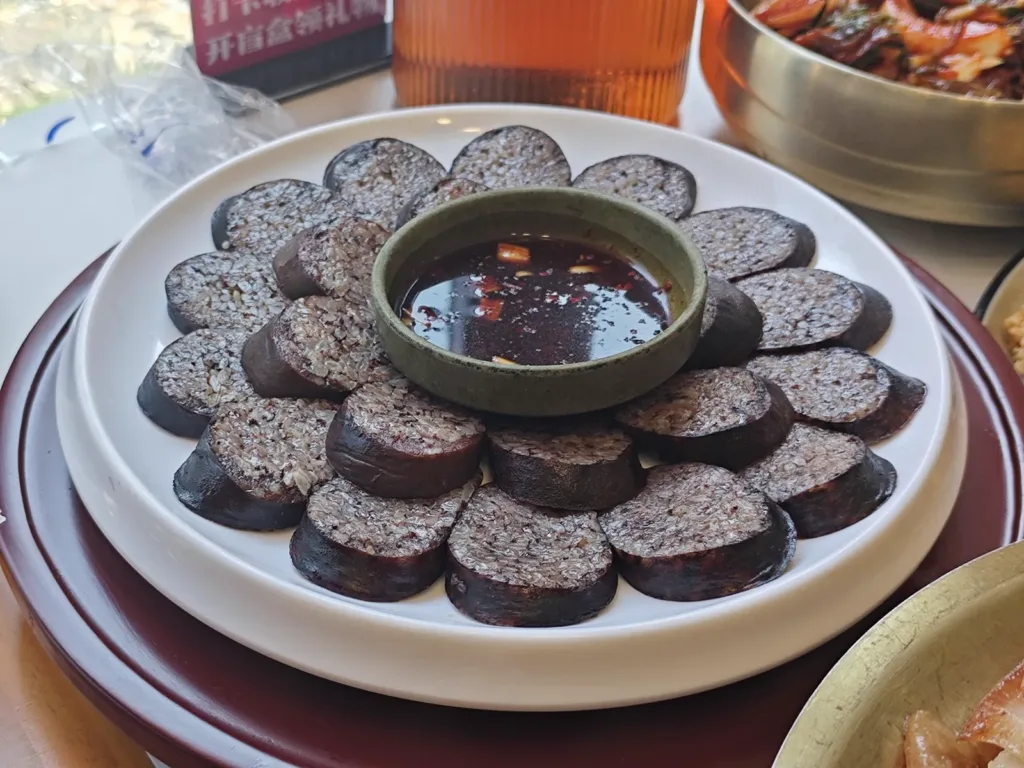
Rice sausage 米肠
Rice sausage (米肠) is a Yanbian Korean-Chinese food made by filling cleaned pork intestine with a rice-based mixture. Documented local versions may include pork blood, glutinous rice, vegetables, pork and seasonings; it is cooked, sliced and often served with a dipping sauce. Ask what is in the day's batch rather than treating one recipe as universal.
Read dish guide →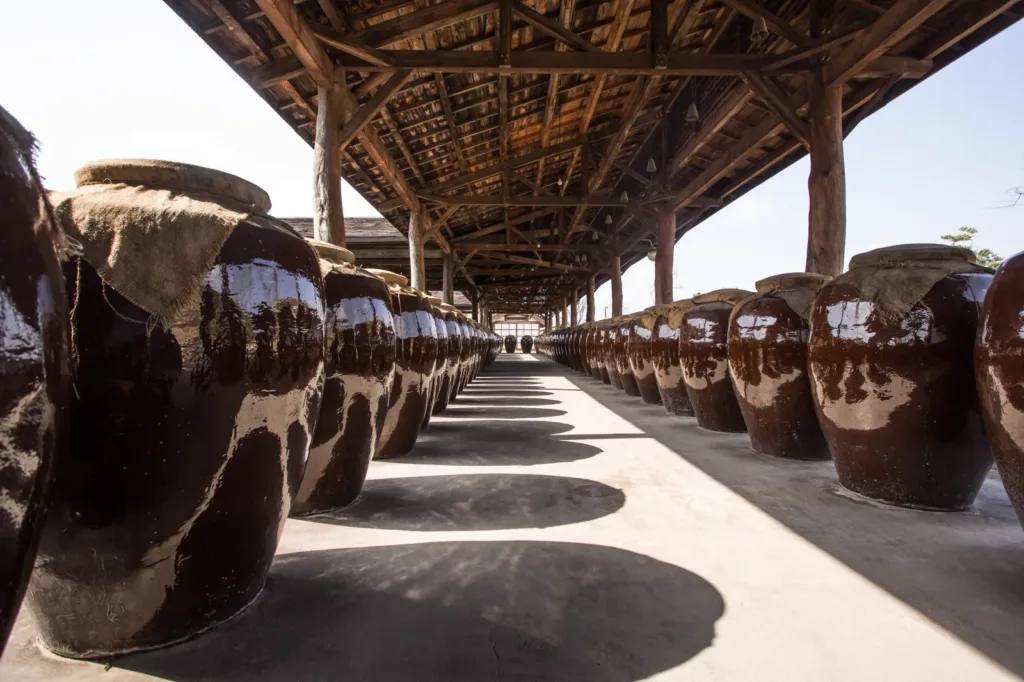
Rice Wine 米酒
Yanbian’s 米酒 is a Korean-ethnic rice drink shaped by village brewing traditions, with grain-based and fruit-flavoured versions; look for it by its Chinese name rather than treating one shop as the definitive address.
Read dish guide →
Rice Wraps 包饭
In Yanbian, 包饭 is a shared set of rice, cooked meat, leaves, kimchi and sauce assembled by hand—not the seaweed-wrapped rice roll called 紫菜包饭. Its appeal is the contrast between soft rice, rich meat, fresh leaves and a salty, savoury sauce in one large bite.
Read dish guide →
Yanbian seasoned pollock strips 延边明太鱼丝
Yanbian seasoned pollock strips are a Korean-Chinese Yanbian food made from dried pollock torn into strands, eaten dry or dressed with chili-based seasoning; the texture and recipe vary, so search by the Chinese name and check the day's supply.
Read dish guide →
Soybean Paste Soup 酱汤
Yanbian-style soybean paste soup (酱汤) is a fermented-soybean soup from the prefecture’s Korean ethnic food tradition, built around local soybean paste and flexible additions such as vegetables, seafood or tofu; it is one of Yanbian’s traditional “three bowls of soup.”
Read dish guide →
Yanbian spicy fermented cabbage 延边辣白菜
Yanbian spicy fermented cabbage (延边辣白菜) is a regional fermented napa-cabbage side dish: cabbage is salt-softened, layered with a chilli seasoning paste and fermented, often with garlic, ginger and Yanbian apple-pear, and sometimes seafood seasonings. It is valued for its crisp, sour-sweet-spicy taste and is served with everyday rice, soups and richer dishes across the prefecture.
Read dish guide →
Stone Pot Bibimbap 石锅拌饭
Yanbian stone pot bibimbap is a Korean-style mixed-rice meal served in a heated stone pot, where seasoned vegetables, protein, egg and red-chili paste meet rice and may form a crisp bottom; the prefecture also has a provincially listed technique for making it.
Read dish guide →
Stone-pot rice 石锅饭
In Yanbian, stone-pot rice is hot-bowl rice served with changing vegetables, meat or egg; the heated stone creates a browned rice crust and keeps the meal hot at the table.
Read dish guide →
Warm Noodle Soup 温面
A hot corn-noodle dish of Yanbian Korean cuisine, especially associated with Helong and Toudao: savory, spicy and suited to cold-weather meals or the end of a barbecue.
AI illustration · AI 示意图(仅供参考,非实拍)
Read dish guide →Jilin · Food stories

Food articles are in progress
Long-form food stories for this topic are being written. Until then, browse the dish guides above or see all Chinese food guides.