


Get to know Guanghe County
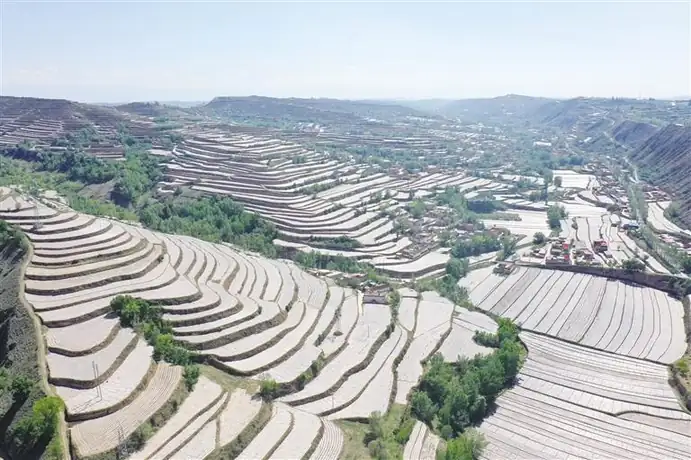
Photo adjustments
EXIF orientation normalized; resized without changing aspect ratio; converted to WebP. No subject edits.
- Administrative area
- County · 县
- Part of
- Linxia Hui Autonomous Prefecture
- Chinese name
- 广河县
- Local areas
- County guide
Area & population
- Area in the source
- 538.00 km²
- Population · 2020
- 260,596
- Administrative seat
- Chengguan
Source: cited geographic source, as of the dates shown.
Setting and landscape
The Guangtong River, a left-bank tributary of the Tao, rises on the northern slopes of the Taizi Mountains (太子山) in neighbouring Hezheng County (和政县). In Guanghe it passes Maijiaxiang (买家巷镇), Alimatu (阿力麻土), the county town at Chengguan (城关镇), Qijiaji (祁家集镇) and Sanjiaji (三甲集镇) before joining the Tao north-east of Sanjiaji. The river is the main water supply for Hezheng and Guanghe, and the flats and terraces along its banks are fertile farmland.
History
Ningding County (宁定县) was split off from Daohe County (导河县) in 1919. In 1953 it became the Guangtong Hui Autonomous District, then an autonomous county in 1955; in 1956 it was renamed Guangtong County after the river, and in 1957 it took the name Guanghe.
The Qijiaping site (齐家坪遗址) at Yuanziping village (园子坪村) in Qijia town (齐家镇) is where Johan Gunnar Andersson found the first Qijia remains in 1923, and the culture is named after it. The Qijia culture, dated to roughly 2400 to 1600 BC, is regarded as one of the earliest bronze-using cultures in China. The site became a national key protected site on 20 November 1996.
What to see
The county has the only museum in China named after the Qijia culture; its more than 3,600 objects include a mirror that the county calls "China's first mirror" and jade cong (玉琮).
Guanghe was a stop on the old Tang–Tibet road and in the tea-horse trade. Sanjiaji, on the lower Guangtong, was once called "the first market of the north-west" and is known above all for its trade in hides and furs; the county remains a collecting point for hides, furs and tea.
Food and local products
Guanghe lamb (广河羊羔肉) is the county's branded meat, sold through its own shops in dozens of Chinese cities. People from Guanghe also run more than 6,500 restaurants around China, most of them serving beef noodles.
Getting oriented
The Wuhai–Maqin Expressway (乌玛高速) runs the length of the county, and the Lanzhou–Haikou Expressway (兰海高速) passes close by.
Highlights
- Qijiaping site 齐家坪遗址: Type site of the Qijia culture, found in 1923; national key protected site since 1996.
- Sanjiaji 三甲集镇: Market town once called the first market of the north-west, known for its hide and fur trade.
- Guanghe lamb 广河羊羔肉: The county's branded lamb, sold through dedicated shops in many cities.
Sources for this guide
广河县基本县情及经济社会发展概况 · Guanghe County People's Government
广河县 - 维基百科 · Chinese Wikipedia · CC BY-SA 4.0
广通河 - 维基百科 · Chinese Wikipedia · CC BY-SA 4.0
齐家坪遗址 - 维基百科 · Chinese Wikipedia · CC BY-SA 4.0
Qijia culture - Wikipedia · English Wikipedia · CC BY-SA 4.0
Original English written from the listed sources and checked sentence by sentence against quoted extracts by a separate reviewer. Updated 2026-09-23.
Explore Guanghe County
Core places to explore, with English and Chinese names.
Guanghe County 广河县
Plan your visit
Getting there
Guanghe County is about 35 km in a straight line from central Linxia Hui Autonomous Prefecture. Search for 广河县 in a map app to find stations and your accommodation.
Where to stay →More in Linxia Hui Autonomous Prefecture
Sources & geographic information
Administrative names and parent areas: Official geographic directory · Reference date 2026-09-06.
Some facts checked against 广河县 — Wikipedia contributors, CC BY-SA 4.0.
Some facts checked against 广通河 — Wikipedia contributors, CC BY-SA 4.0.
Some facts checked against 齐家坪遗址 — Wikipedia contributors, CC BY-SA 4.0.
Some facts checked against Qijia culture — Wikipedia contributors, CC BY-SA 4.0.
Map data © OpenStreetMap contributors. Pins mark approximate centres, not entrances or boundaries.