


Get to know Linxia City
- Administrative area
- County-level city · 县级市
- Part of
- Linxia Hui Autonomous Prefecture
- Chinese name
- 临夏市
- Local areas
- County-level city guide
Area & population
- Area
- 88.60 km²
- Population · 2020
- 355,968
- Administrative seat
- Chengnan Subdistrict
Source: English Wikipedia, as of the dates shown.
Setting and layout
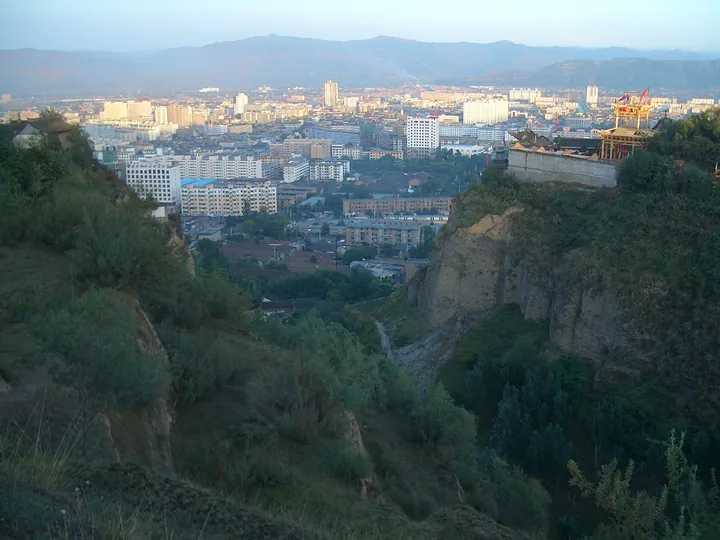
The city covers only 88.6 square kilometres along the Daxia, whose broad, fertile valley is walled in by loess escarpments. The business district occupies the old walled town of Hezhou, a couple of kilometres north of the river. The pagoda of Wanshou Guan (万寿观), a Taoist temple, stands on the loess bluff at the city's northern edge.
History
Hezhou sat where a branch of the Silk Road crossed the north-south route between Mongolia and Tibet, and was known for tea-for-horses trade. Its Muslims probably built their first mosque under the Song; the city now has more than 80 mosques. Gongbei shrines stand over the graves of Sufi masters: Da Gongbei (大拱北), around the tomb of Qi Jingyi (祁静一, 1656-1719), is the main centre of the Qadiriyya in China, and Hua Si Gongbei (华寺拱北) holds the tomb of Ma Laichi (马来迟). After the rebel leader Ma Zhan'ao (马占鳌) negotiated in early 1873 and surrendered Hezhou, Muslims were barred from living inside the walls and settled mainly in the southern suburb of Bafang (八坊).
What to see
Bafang Thirteen Lanes (八坊十三巷) is that old Hui quarter, its history traced back to the Tang. By October 2016 it had been rebuilt, without moving its residents, as a pedestrian district of about 41 hectares. Its houses combine Hui brick carving, Han woodcarving and Tibetan painted decoration. The Beisi dragon screen wall (北寺龙影壁) and the courtyard at No. 80 Dagaxiang (大旮巷) are provincial protected sites. In 2022 it joined the first list of national tourism and leisure blocks.
Dong Gongguan (东公馆), a mansion built between 1938 and 1945, keeps 126 rooms laid out on a grid plan and 189 panels of brick carving, which earn it the name "grand garden of brick carving". The Linxia Prefecture Museum (临夏州博物馆), founded in 1979 west of the city government square, holds 4,288 objects, 66 of them grade-one relics; most are Neolithic and Bronze Age painted pottery, above all of the Majiayao culture (马家窑文化).
Crafts and performing arts
Linxia brick carving (临夏砖雕), on the national intangible heritage list, decorates screen walls, gateways and roof ridges and flourished under the Ming and Qing. Pieces are either moulded or carved, and one carved design may be assembled from dozens of grey bricks. Hezhou pingxian (河州平弦), a sung storytelling style named for its even, unhurried melodies, is accompanied mainly by the sanxian lute and entered the national list in 2011.
Highlights
- Bafang Thirteen Lanes 八坊十三巷: Old Hui quarter rebuilt as a pedestrian district by 2016 without moving residents; a national tourism and leisure block.
- Dong Gongguan 东公馆: Mansion of 1938-1945 with 126 rooms and 189 brick-carving panels.
- Linxia Prefecture Museum 临夏州博物馆: 4,288 objects, mostly Neolithic and Bronze Age painted pottery, above all Majiayao ware.
- Da Gongbei 大拱北: Shrine around the tomb of Qi Jingyi, main centre of the Qadiriyya in China.
- Linxia brick carving 临夏砖雕: National intangible heritage craft; carved designs are assembled from dozens of grey bricks.
Sources for this guide
临夏市 - 维基百科,自由的百科全书 · Wikipedia (Chinese) · CC BY-SA 4.0
Linxia City - Wikipedia · Wikipedia (English) · CC BY-SA 4.0
八坊十三巷景区简介 · Linxia City People's Government
临夏市东公馆(AAA) · Linxia Hui Autonomous Prefecture People's Government
临夏州博物馆(AAA) · Linxia Hui Autonomous Prefecture People's Government
【国家级非物质文化遗产】临夏砖雕 · Linxia Hui Autonomous Prefecture People's Government
【国家级非物质文化遗产】河州平弦 · Linxia Hui Autonomous Prefecture People's Government
Original English written from the listed sources and fact-checked against them. Updated 2026-09-23.
Explore Linxia City
Core places to explore, with English and Chinese names.
Places to explore around Linxia City
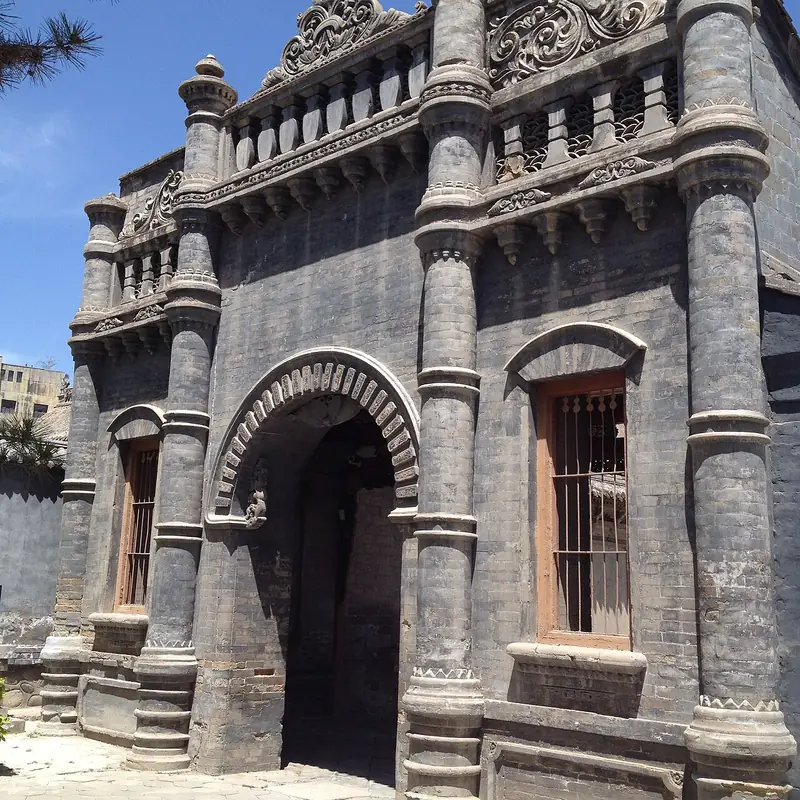 Donggongguan Mansion (东公馆), Linxia City. Photograph: "Donggong Guan at Linxia City, Gansu Provinve, China".
Donggongguan Mansion东公馆
The Donggongguan (东公馆) is the residence built for Ma Buqing at 35 Donghuan Chengdong Road, Sandaoqiao, Linxia city, Gansu, begun in 1938 and completed in 1945 after eight years of work.
Read the place guide → AI illustration · AI 示意图(仅供参考,非该地点实拍)
Bafang Thirteen Lanes八坊十三巷
Hui Muslim quarter of Linxia, Gansu: eight mosque quarters, restored lanes, the Da Gongguan mansion and a 1741 brick-carved screen wall.
Read the place guide →Plan your visit
Getting there
Linxia City covers the centre of Linxia Hui Autonomous Prefecture. Search for 临夏市 in a map app to find stations and your accommodation.
Where to stay →Build your route
Donggongguan Mansion and Bafang Thirteen Lanes are both listed here. The linked place guides have entrance and visit details.
Continue with Linxia Hui Autonomous Prefecture →More in Linxia Hui Autonomous Prefecture
Sources & geographic information
Administrative names and parent areas: Official geographic directory (dmfw.mca.gov.cn) · Reference date 2026-09-06.
Some facts checked against 临夏市 — Wikipedia contributors, CC BY-SA 4.0.
Some facts checked against Linxia City — Wikipedia contributors, CC BY-SA 4.0.
Photo: Donggongguan Mansion · Zhen Eric Zhao · CC BY-SA 4.0. Resized for the web; the photo itself has not been edited. Thumbnails may show a cropped view.

Map data © OpenStreetMap contributors. Pins mark approximate centres, not entrances or boundaries.
Image credits & notes (1)
- Linxia City viewed from the loess plateau · 从黄土高原远眺临夏市Photo: User:Vmenkov · CC BY-SA 3.0 · taken 2009-07-26Resized for the web; the photo itself has not been edited. Thumbnails may show a cropped view.
