


Get to know Qujiang District
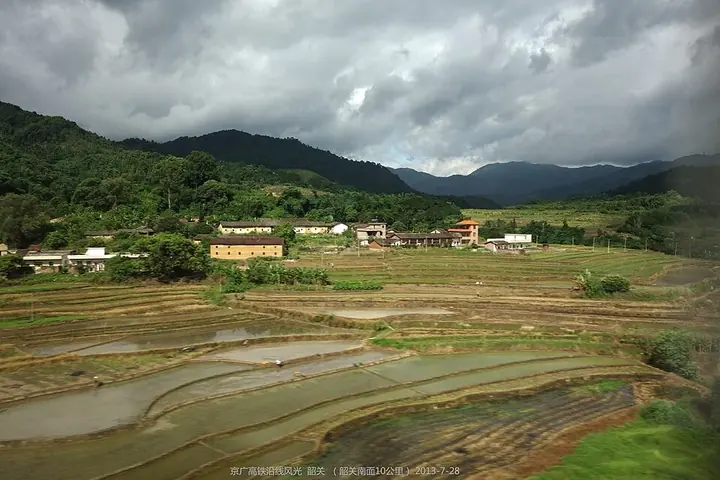
Photo adjustments
Full frame retained; proportionally resized and converted to WebP. No retouching or changes to the photographed subject. Card displays may crop the view.
- Administrative area
- District · 市辖区
- Part of
- Shaoguan
- Chinese name
- 曲江区
- Local areas
- District guide
Area & population
- Area in the source
- 1,651.00 km²
- Population · 2020
- 290,455
Source: cited geographic source, as of the dates shown.
Setting and landscape
Qujiang borders Shixing County (始兴县) to the east, Ruyuan Yao Autonomous County (乳源瑶族自治县) to the west, Wengyuan (翁源县) and Yingde (英德) to the south, and Zhenjiang (浈江区), Wujiang (武江区) and Renhua (仁化县) to the north. The name is explained as coming from the winding course of its river. The climate is mid-subtropical monsoon, averaging 20.1°C with about 1,640 mm of rain a year.
History
Qujiang County was set up in 111 BC under Emperor Wu of Han, with its seat in what is now urban Shaoguan; the seat moved to Maba in 1966. In August 2004 the county became a district, ending more than 2,100 years as a county, and several of its towns were moved to Renhua County and to Zhenjiang and Wujiang districts.
What to see
The Maba Man site (马坝人遗址) lies 3 kilometres south-west of Maba. In 1958 local people found fragments of a human skull there, identified as an early Homo sapiens about 130,000 years old. The Shixia site (石峡遗址), in the gorge between the "lion head" and "lion tail" of Shizi Rock (狮子岩), has late Neolithic house remains, crop remains, stone tools, pottery and jade, and gives its name to the Shixia culture. In 2001 the journal Kaogu (考古) named both among China's 100 great archaeological discoveries of the 20th century.
Nanhua Temple stands beside the Caoxi (曹溪) stream 4 kilometres south of Maba. Founded under Emperor Wu of Liang as Baolin Temple (宝林寺), it was revived when the Sixth Patriarch Huineng settled at Caoxi in 677, and has carried the name Nanhua Chan Temple since 968. It became a national key cultural relic in 2001. Apart from the Lingzhao Pagoda (灵照塔) and the Sixth Patriarch Hall (六祖殿), its buildings were rebuilt after 1934 under the monk Xuyun (虚云). The Sixth Patriarch Hall holds an 80-centimetre seated image of Huineng made in dry lacquer over his body, and the temple's wooden arhats, a set carved between 1043 and 1048, survive as 360 figures, 133 of them Qing replacements.
Food and local products
The Guangdong and Shaoguan chronicles offices list Qujiang's rice, tea, kudzu root and mushrooms among Shaoguan's produce. Named local products include Maba youzhan rice (马坝油粘米), Zhangshi red melon seeds (樟市红瓜籽) and Luokeng winter mushrooms (罗坑冬菇).
Getting oriented
The Beijing–Guangzhou Railway, the Beijing–Hong Kong–Macau Expressway and national roads 106 and 323 cross the district. Nanhua Temple is about 22 kilometres south of Shaoguan city.
Highlights
- Nanhua Temple 南华寺: Temple on the Caoxi where Huineng taught from 677; national key cultural relic since 2001.
- Maba Man site 马坝人遗址: Site of a skull of an early Homo sapiens about 130,000 years old, found in 1958.
- Shixia site 石峡遗址: Late Neolithic settlement at Shizi Rock that gives its name to the Shixia culture.
- Maba youzhan rice 马坝油粘米: Rice product bearing the name of Maba, the district seat.
Sources for this guide
曲江区 - 维基百科,自由的百科全书 · Wikipedia (Chinese) · CC BY-SA 4.0
何为韶关? · Local Chronicles Offices of the Guangdong Provincial and Shaoguan Municipal Governments (China Local Chronicles Network)
南华寺 (韶关) - 维基百科,自由的百科全书 · Wikipedia (Chinese) · CC BY-SA 4.0
Original English written from the listed sources and checked sentence by sentence against quoted extracts by a separate reviewer. Updated 2026-09-23.
Explore Qujiang District
Core places to explore, with English and Chinese names.
Places to explore around Qujiang District
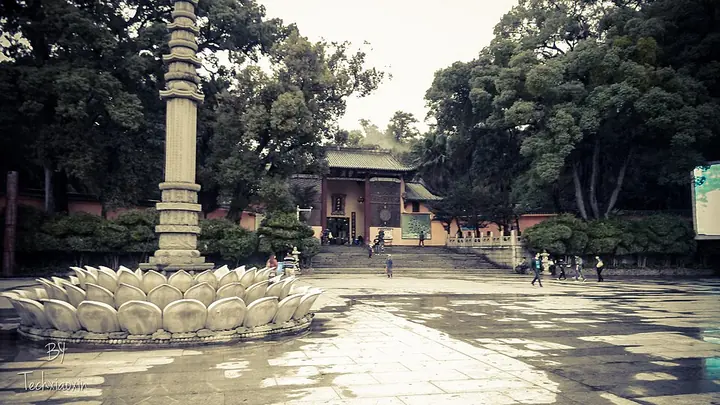 The forecourt of Nanhua Temple in Shaoguan · 南华寺 Photograph date recorded by the source: Taken on 21 November 2012.
Nanhua Temple南华寺
Nanhua Temple is a Chan Buddhist monastery at Maba in Shaoguan’s Qujiang district. It is closely associated with Huineng, the Sixth Patriarch of Chan Buddhism, who lived and taught here. That connection makes the temple a…
Read the place guide →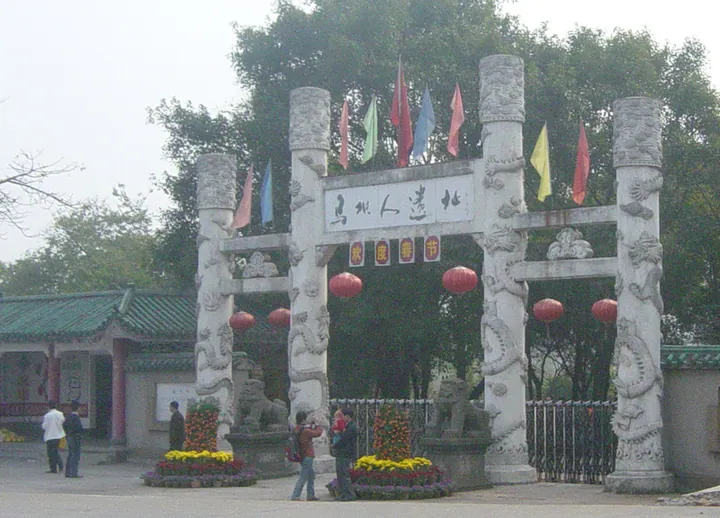 Main entrance gate of the Maba Man Site Park in Qujiang District, Shaoguan · 韶关市曲江区马坝人遗址公园大门 Source-recorded photograph date: 2 February 2006 (original upload date).
Maba Man Site马坝人遗址
Twin limestone hills near Maba, Shaoguan, where a 1958 skull find named Maba Man and the Neolithic Shixia site share one national listing.
Read the place guide →Plan your visit
Getting there
Qujiang District is about 15 km in a straight line from central Shaoguan. Search for 曲江区 in a map app to find stations and your accommodation.
Where to stay →Build your route
Nanhua Temple and Maba Man Site are both listed here. The linked place guides have entrance and visit details.
Continue with Shaoguan →More in Shaoguan
Sources & geographic information
Administrative names and parent areas: Official geographic directory · Reference date 2026-09-06.
Some facts checked against 曲江区 — Wikipedia contributors, CC BY-SA 4.0.
Some facts checked against 南华寺 (韶关) — Wikipedia contributors, CC BY-SA 4.0.
Photo: Nanhua Temple · 科技小辛 · CC BY-SA 3.0. Full frame retained; proportionally resized and converted to WebP. No retouching or changes to the photographed subject. Card displays may crop the view.
.jpg)
Photo: Maba Man Site · The original uploader was Zhuwq at Chinese Wikipedia. · CC BY-SA 3.0. Full frame retained; proportionally resized and converted to WebP. No retouching or changes to the photographed subject. Card displays may crop the view.

Map data © OpenStreetMap contributors. Pins mark approximate centres, not entrances or boundaries.