


Get to know Longgang District
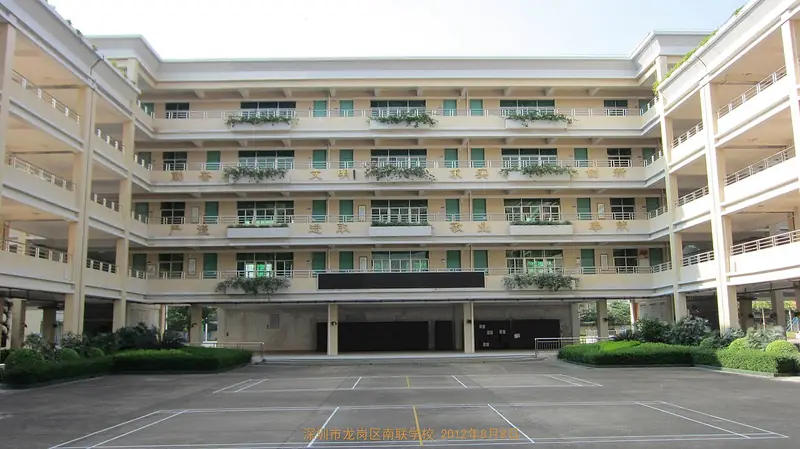
Photo adjustments
Full frame retained; EXIF orientation normalized, proportionally resized to at most 800 pixels and converted to WebP. No generated pixels or subject changes. Cards may crop the display.
- Administrative area
- District · 市辖区
- Part of
- Shenzhen
- Chinese name
- 龙岗区
- Local areas
- District guide
Area & population
- Area in the source
- 682.87 km²
- Population · 2020
- 3,979,037
Source: cited geographic source, as of the dates shown.
History
For most of its past the area was split between two counties: under the Ming and Qing it belonged partly to Xin'an County (新安县) of Guangzhou prefecture and partly to Guishan County (归善县) of Huizhou. Longgang, Pingshan (坪山) and Dapeng (大鹏) were moved from Huiyang (惠阳) to Bao'an County in 1958. When Bao'an County was abolished in December 1992 and split in two, Longgang District was created; it opened on 1 January 1993 with ten towns. In 2004 its towns became subdistricts and its villages urban communities, which the district government marks as Longgang's turn from countryside to city. Pingshan and Dapeng were placed under separate new areas in 2009 and 2011 while remaining administratively part of Longgang, and Pingshan became a district of its own in 2017.
What to see
Hehu Xinju (鹤湖新居), in Luoruihe village (罗瑞合村) in Longgang subdistrict, was built for the Luo family in the Qianlong era over three generations. Two nested enclosures, the inner one square, hold a maze of halls, wells and corridors; it is a Guangdong protected site and now houses the Longgang Hakka Folk Customs Museum (龙岗客家民俗博物馆), with displays on Hakka culture, family precepts and academies.
Dafen Oil Painting Village (大芬油画村) in Buji (布吉) grew from the late 1980s as painters gathered to copy famous works for sale; it was among China's first national cultural-industry demonstration bases, and visitors walk its galleries and the Dafen Art Museum. Gankeng Old Town (甘坑古镇) in Jihua (吉华), developed by the OCT Group (华侨城), is built around an old Hakka village, with a Hakka old house and a watchtower courtyard. The district's suggested culture routes also take in the Chinese University of Hong Kong, Shenzhen and Shenzhen MSU-BIT University.
Getting oriented
Pingshan lies to the east, Longhua (龙华) to the west, and Yantian (盐田) and Luohu (罗湖) to the south. The Guangzhou–Shenzhen and Beijing–Kowloon railways and the Xiamen–Shenzhen high-speed line cross the district, along with expressways including the Shenzhen–Shantou (深汕) and Huizhou–Yantian (惠盐) routes. The climate is subtropical monsoon, with long summers and short winters and a prevailing northeast wind.
Highlights
- Hehu Xinju (Longgang Hakka Folk Customs Museum) 鹤湖新居: Qianlong-era Hakka walled house of the Luo family; Guangdong protected site and Hakka folk museum.
- Dafen Oil Painting Village 大芬油画村: Painters' village in Buji dating from the late 1980s, with galleries and the Dafen Art Museum.
- Gankeng Old Town 甘坑古镇: Cultural tourism town built around an old Hakka village in Jihua.
Sources for this guide
位置面积-龙岗概况-龙岗政府在线 · Longgang District People's Government, Shenzhen
大芬油画村-文化-龙岗政府在线 · Longgang District People's Government, Shenzhen
甘坑古镇-文化-龙岗政府在线 · Longgang District People's Government, Shenzhen
建置沿革-龙岗概况-龙岗政府在线 · Longgang District People's Government, Shenzhen
龙岗客家民俗博物馆(鹤湖新居)-文化-龙岗政府在线 · Longgang District People's Government, Shenzhen
气候-龙岗概况-龙岗政府在线 · Longgang District People's Government, Shenzhen
鹤湖新居 - 维基百科,自由的百科全书 · Wikipedia · CC BY-SA 4.0
文化主题-旅游路线-龙岗政府在线 · Longgang District People's Government, Shenzhen
Original English written from the listed sources and checked sentence by sentence against quoted extracts by a separate reviewer. Updated 2026-09-23.
Explore Longgang District
Core places to explore, with English and Chinese names.
Longgang District 龙岗区
Plan your visit
Getting there
Longgang District is about 30 km in a straight line from central Shenzhen. Search for 龙岗区 in a map app to find stations and your accommodation.
Where to stay →More in Shenzhen
Sources & geographic information
Administrative names and parent areas: Official geographic directory · Reference date 2026-09-06.
Some facts checked against 鹤湖新居 — Wikipedia contributors, CC BY-SA 4.0.
Map data © OpenStreetMap contributors. Pins mark approximate centres, not entrances or boundaries.