


Get to know Sihui
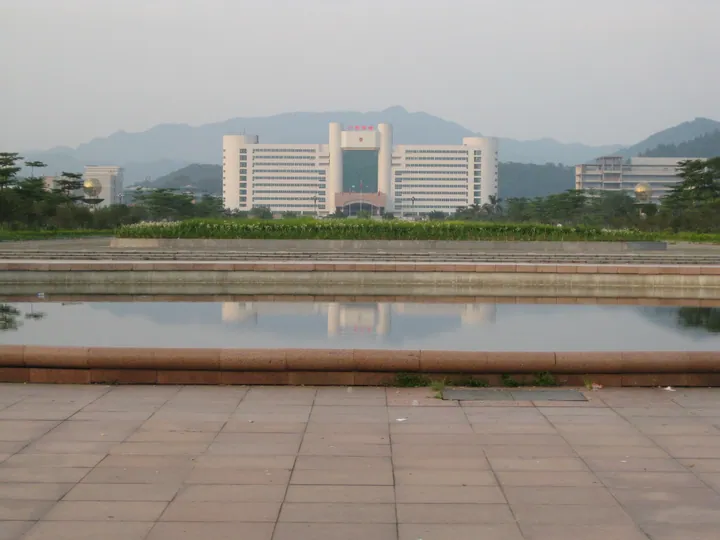
Photo adjustments
Full frame retained; proportionally resized and converted to WebP. No retouching or changes to the photographed subject. Card displays may crop the view.
- Administrative area
- County-level city · 县级市
- Part of
- Zhaoqing
- Chinese name
- 四会市
- Local areas
- County-level city guide
Area & population
- Area in the source
- 1,258.00 km²
- Population · 2020 census
- 640,910
Source: cited geographic source, as of the dates shown.
History
Sihui is listed among Guangdong's six counties with more than a thousand years of history, and its administrative record reaches back to 214 BC. The city presents it as the place where the Sixth Patriarch Huineng (惠能) attained enlightenment. Its provincial intangible heritage includes the Zhenxian festival (贞仙诞), traditional papermaking, Sihui jade carving and Sihui folk songs.
What to see
The Zhenshan resort area (贞山旅游度假区), a provincial-level tourist resort, holds the Sixth Patriarch Temple (六祖寺), founded in the Tang dynasty more than 1,300 years ago. Fuli village (扶利村), also at Zhenshan, called the first village of traditional Chinese papermaking, has made paper by hand for nearly 800 years; every household is a papermaking family, and a study base shows the whole process.
Qishi River scenic area (奇石河景区) in Weizheng town (威整镇), the city's first 3A scenic area, has the Yinlong waterfall (银龙大瀑布), a riverbed strewn with oddly shaped rocks and a group of waterwheels. The Renmianzi (人面子) grove of old trees is on the national list of 100 most beautiful ancient tree groups.
Food and local products
Citrus has been grown here for over a thousand years; Sihui shatangju mandarins (沙糖桔) and Sihui gonggan (贡柑) are on the national list of notable farm products, and Huangtian town (黄田镇) is a provincial citrus town. More than 230 orchid varieties are grown, and Shigou town (石狗镇) is a provincial orchid town. The city describes its jadeite market as the largest wholesale market for jadeite in the world.
Lai fen (濑粉), a breakfast rice noodle said to come from Qingtang (清塘), is made by letting rice-flour batter run through small holes in a special bowl into boiling water; the strands are rinsed in cold water, then served in hot stock with meat, soy sauce, scallion and sesame. Lu goose (碌鹅) is cooked whole with salt, soy sauce, slab sugar, scallion and garlic over a low flame for about 50 minutes. In Fuli village, lai fen, mugwort cakes (艾糍) and goose tangyuan zai ci (鹅汤圆仔糍) are the local snacks.
Getting oriented
Sihui borders Sanshui District (三水区) of Foshan (佛山) to the east, Dinghu District (鼎湖区) of Zhaoqing to the south, Guangning County (广宁县) to the northwest and Qingxin District (清新区) of Qingyuan (清远) to the northeast. Three railways and four expressways cross the city, and the Guangzhou–Foshan–Zhaoqing intercity railway runs through to Foshan, Guangzhou and Dongguan.
Highlights
- Sixth Patriarch Temple 六祖寺: Tang-founded Buddhist temple in the Zhenshan resort area.
- Fuli village 扶利村: Village making paper by hand for nearly 800 years.
- Qishi River scenic area 奇石河景区: Sihui's first 3A scenic area, with the Yinlong waterfall, in Weizheng town.
- Sihui shatangju mandarin 沙糖桔: Nationally listed local mandarin; citrus has been grown here for over a thousand years.
- Lai fen 濑粉: Breakfast rice noodles run through a holed bowl into boiling water, served in stock.
Sources for this guide
四会概况 - 肇庆市四会市人民政府网站 · Sihui Municipal People's Government
贞山六祖寺_肇庆市四会市人民政府网站 · Sihui Culture, Radio, Television, Tourism and Sports Bureau
贞山扶利村、古法造纸研学基地_肇庆市四会市人民政府网站 · Sihui Culture, Radio, Television, Tourism and Sports Bureau
奇石河景区_肇庆市四会市人民政府网站 · Sihui Culture, Radio, Television, Tourism and Sports Bureau
碌鹅_肇庆市四会市人民政府网站 · Sihui Culture, Radio, Television, Tourism and Sports Bureau
濑粉_肇庆市四会市人民政府网站 · Sihui Culture, Radio, Television, Tourism and Sports Bureau
Original English written from the listed sources and checked sentence by sentence against quoted extracts by a separate reviewer. Updated 2026-09-23.
Explore Sihui
Core places to explore, with English and Chinese names.
Plan your visit
Getting there
Sihui is about 40 km in a straight line from central Zhaoqing. Search for 四会市 in a map app to find stations and your accommodation.
Where to stay →More in Zhaoqing
Sources & geographic information
Administrative names and parent areas: Official geographic directory · Reference date 2026-09-06.
Map data © OpenStreetMap contributors. Pins mark approximate centres, not entrances or boundaries.