


Get to know Lingui District
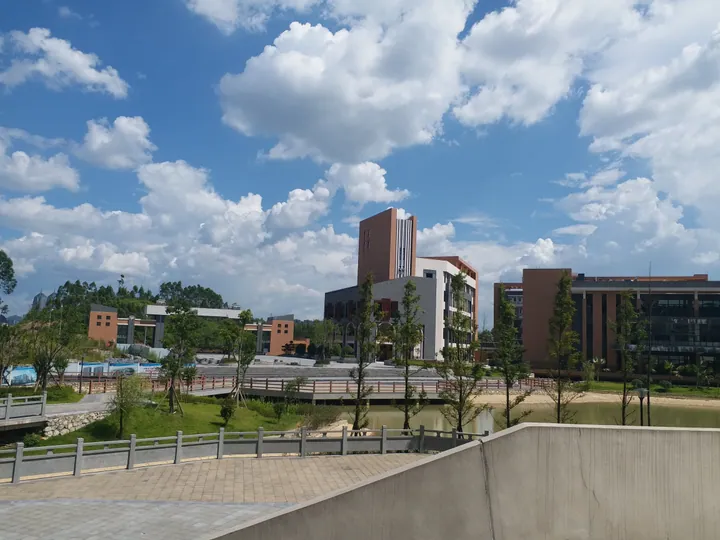
- Administrative area
- District · 市辖区
- Part of
- Guilin
- Chinese name
- 临桂区
- Local areas
- District guide
Area & population
- Area
- 2,202.00 km²
- Population · 2002
- 450,000
- Administrative seat
- Lingui Town (临桂镇)
Source: English Wikipedia, as of the dates shown.
Lingui is a current urban district of Guilin, not a separate county. The State Council abolished Lingui County and created Lingui District in 2013, carrying the former county’s territory into the new district; the district was formally inaugurated in 2015. The name therefore covers far more than the built-up centre. At the end of 2024 the district listed 11 towns and townships, including Huixian, Liangjiang and Wantian Yao Township. Use central Lingui as a convenient urban base, but plan the countryside as separate excursions rather than assuming the whole district is walkable.
Start in the urban district
The clearest first stop is Guilin Museum (桂林博物馆), at the cultural complex called 一院两馆 on Pinggui West Road (平桂西路). Its exhibitions interpret Guilin’s history and folk culture, the Jingjiang Princes, and the city’s cultural links; the museum’s abundant Ming-era plum-shaped vases are a distinctive collection highlight. Give yourself time to move between galleries rather than treating the building as a quick photo stop. The Guilin Library and Guilin Grand Theatre stand next door, so the same civic precinct makes a compact cultural walk. Current exhibitions, admission arrangements and opening days can change; check the museum’s own visitor notices before setting out.
For an outdoor contrast, walk the landscaped waterside paths and parks in the Lingui New Area. The district’s own profile describes an interconnected urban water system, bridges and four boat piers, but does not establish that public sightseeing boats are currently operating. Enjoy the paths on foot; do not plan a cruise unless a current operator confirms departures and boarding arrangements.
Make a rural side trip
Huixian Karst National Wetland Park (会仙喀斯特国家湿地公园), around Huixian Town (会仙镇), is a different landscape from Guilin’s steep karst river corridor: low peaks rise from lakes, marsh, ponds and cultivated ground. The old Gui–Liu Canal (古桂柳运河), also called Xiangsidai (相思埭), crosses this wetland and recalls the historic water link between the Li and Liu river systems. Walk slowly along public paths, look for the contrast between karst, water and working farmland, and keep to marked access rather than entering fields or disturbing wildlife. The district source describes the park’s landscape, not a current timetable or visitor service; confirm local access before travelling.
For modern wartime history, the Flying Tigers Guilin Heritage Park (美国飞虎队桂林遗址公园) at the former Yangtang airfield site preserves a cave command post, aircraft shelters and an observation stone associated with General Claire Chennault. The exhibits connect the airfield landscape with the wartime cooperation of Chinese forces and the US volunteer airmen. Liangjiang Town (两江镇) is home to Li Zongren’s Former Residence (李宗仁故居), a large timber courtyard compound whose halls, school rooms and service spaces help explain how an elite rural household functioned. These are distinct destinations in separate parts of a large district; check that each site is open before making the trip.
In Wantian Yao Township (宛田瑶族乡), the hillside village of Dongzhaijiang (东宅江村) is associated with the Zaishui Yifang (在水一汸) scenic area. The local account describes stilted timber homes, walking paths and waterfalls. Treat this as a visit to a living Guoshan Yao (过山瑶) community, not a staged daily performance: ask before photographing residents or entering private yards, and do not assume a household, ritual or cultural activity will be available to visitors.
Getting around
Guilin has no metro service to Lingui. For the urban cultural precinct, city bus 91 serves the stop 桂林大剧院 (Guilin Grand Theatre); the museum is in the adjoining 一院两馆 complex, so follow its signs across the shared cultural forecourt. Route 91 continues between the Lingui New Area and central Guilin, but routes and temporary stops can change; check the current stop display before boarding. Bus 65 is also listed on the museum’s own location page, but that page dates from 2017, so do not rely on it without checking the live route.
For a direct car or ride-hail arrival, enter 桂林博物馆 Guìlín Bówùguǎn and the address 桂林市临桂区平桂西路一院两馆内 Guìlín Shì Línguì Qū Píngguì Xī Lù Yīyuàn Liǎngguǎn nèi. Use the signed public museum entrance and a legal roadside or car-park drop-off; no single taxi entrance serves the whole district. The district is large, and its wetland, heritage and mountain-village destinations do not share a central visitor gate. Arrange a separate vehicle or a locally confirmed connection for each rural outing; do not assume the urban bus network reaches the attraction entrance.
Air travellers use Guilin Liangjiang International Airport (桂林两江国际机场), about 15 km from central Lingui according to the district profile. The airport’s own site provides current flight information and separate traffic-navigation sections for city buses, intercity coaches and taxis. For a transfer into Lingui, confirm the current route and boarding point directly with the airport; no direct airport-to-Lingui-centre service is asserted here. Enter the exact Chinese destination for a car transfer, and follow the terminal shown on your flight booking.
Explore Lingui District
Core places to explore, with English and Chinese names.
Places to explore around Lingui District
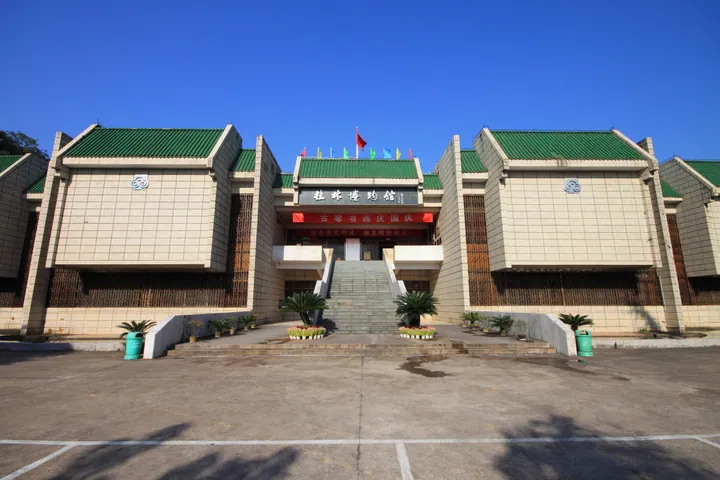 Guilin Museum, a large exhibition building in Lingui District, Guilin · 桂林博物馆展馆建筑,位于桂林市临桂区 Source-recorded photograph date: 2012-09-29 08:54:20.
Guilin Museum桂林博物馆
A substantial museum in Lingui that connects Guilin’s regional history and folk culture with Ming plum-shaped porcelain vases, calligraphy, paintings and gifts presented by foreign visitors.
Read the place guide →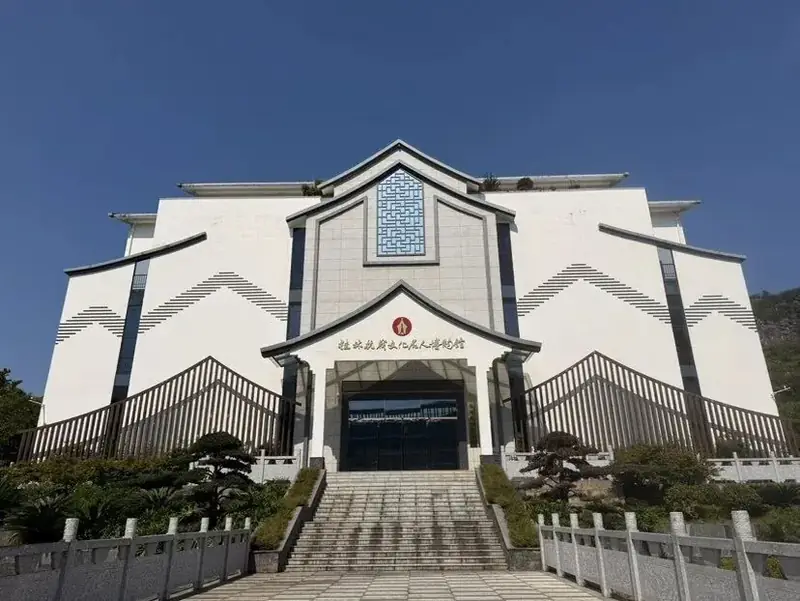 Guilin Wartime Cultural Figures Museum · 桂林抗战文化名人博物馆
Guilin Wartime Cultural Figures Museum桂林抗战文化名人博物馆
In Lingui, this two-storey museum follows the writers, artists, educators and other cultural workers who made wartime Guilin a centre of cultural resistance. Photographs and objects are paired with reconstructed scenes from the Southwest Drama Exhibition and cave-school education.
Read the place guide →Plan your visit
Getting there
Lingui District is about 15 km (straight-line distance) from central Guilin. Search for 临桂区 in a map app to find stations and your accommodation.
Where to stay →Build your route
Guilin Museum and Guilin Wartime Cultural Figures Museum are about 3 km apart (straight-line distance). The linked place guides have entrance and visit details.
Continue with Guilin →More in Guilin
Sources & geographic information
Administrative names and parent areas: Official geographic directory (dmfw.mca.gov.cn) · Reference date 2026-09-06.
Background text adapted from Lingui District — Wikipedia contributors, under CC BY-SA 4.0. Text has been shortened and reorganized; source revision 1365277355.
Photo: Guilin Museum · Zhangzhugang · CC BY-SA 3.0. Resized for the web; the photo itself has not been edited. Thumbnails may show a cropped view.

Photo: Guilin Wartime Cultural Figures Museum · view.inews.qq.com. Resized for the web; the photo itself has not been edited.
Map data © OpenStreetMap contributors. Pins mark approximate centres, not entrances or boundaries.
