


Get to know Pingle County
- Administrative area
- County · 县
- Part of
- Guilin
- Chinese name
- 平乐县
- Local areas
- County guide
Area & population
- Area
- 1,919.34 km²
- Administrative seat
- Pingle Town
Source: English Wikipedia, as of the dates shown.
Pingle County (平乐县) is part of Guilin, but it is not the central city. Its main settlement and outlying villages are spread across a sizeable rural area, so choose one base and plan other stops as separate journeys. The Li, Lijiang and Cha rivers meet here to form the Gui River; that water corridor once linked inland trade between Guangxi and Guangdong and is also associated with Pingle’s local cooking traditions.
For a sense of the county’s older settlement life, make a separate trip to Rongjin (榕津), in Zhangjia Town (张家镇). Its historic street is a lived-in village, not a reconstructed pedestrian theme park: look for banyan roots arching around old walls, stone-paved lanes, traditional houses, and the Yue Dong Guild Hall (粤东会馆). A 2013 account also describes the old opera stage and local links with Gui opera; treat performances as occasional community activity, not a daily show or guaranteed attraction. Walk respectfully, keep to public lanes, and ask before photographing residents or entering private courtyards.
Pingle’s best-known local table tradition is “stuffed dishes” (平乐十八酿), a family of preparations rather than a fixed list of eighteen. Cooks tuck a seasoned filling into or around a vegetable, flower, tofu, or snail shell, then steam, braise, or stir-fry it according to the ingredient. Pumpkin flowers may be filled with fish, egg white, tofu, and scallion and steamed; for stuffed river snails, cooked snail meat is chopped with pork and mushrooms, scented with perilla and mint, returned to the shells, stir-fried, then braised with sour bamboo shoots and chili. The flower tastes delicate and lightly sweet, while the snail version is savory, aromatic, and often spicy. Leaf-wrapped glutinous-rice parcels with pork belly and peanuts offer a soft, fragrant contrast. Ingredients, fillings, heat, and seasonal choices vary by household and cook, so ask what is in a particular dish.
Getting around
There is no Guilin metro service to Pingle, and no county passenger railway connection was established in the sources checked. The airport operator’s current route page lists a road coach from Guilin Liangjiang International Airport (桂林两江国际机场) via Qintan Coach Station (琴潭客运站) to Pingle Bus Terminal (平乐汽车总站). The page showed an 11:30 airport departure and a 12:25 transfer departure at Qintan when checked; tickets and the actual service offered are subject to the airport’s same-day sales system. That page does not establish a matching return departure from Pingle, so confirm the return with the operator or the terminal before setting out.
Use the Chinese destination name when arranging a taxi or ride-hail. For the county seat, 平乐汽车总站 is a verified coach arrival point, not a sightseeing entrance. For Rongjin, use 榕津古街(平乐县张家镇榕津村) and ask to be let out at a public-road approach; the precise current vehicle drop point has not been independently verified. The county’s villages are separate destinations, so do not assume a reliable walking connection between Rongjin and the county seat. Check local road transport again for the day of travel.
Pingle’s agricultural and cultural life is distributed among its townships. Recent county reporting describes rural tourism planning around the Rongjin River basin and seasonal village activity, but it does not promise public access to working farms or a fixed event calendar. Treat village visits as a chance to observe the setting, not as an arranged performance.
Explore Pingle County
Core places to explore, with English and Chinese names.
Places to explore around Pingle County
 Pingle (
Local life & food
Pingle County local specialties
平乐县特色美食 · 1 specialties to discover
 Pingle stuffed dishes 平乐十八酿AI dish illustration · AI 菜品示意图
Pingle’s “eighteen stuffed dishes” is a changing repertoire, not a fixed set of eighteen plates: seasonal vegetables, tofu and other wrappers are filled with savory mixtures, then steamed, braised, fried or cooked in soup.
Source ↗Read the dish guide →All dish names · 全部菜名 (1)
More dishes from across Guangxi are in the Guangxi food guide.
Plan your visit
Getting there
Pingle County is about 80 km (straight-line distance) from central Guilin. Search for 平乐县 in a map app to find stations and your accommodation.
Where to stay →Build your route
Start with Pingle. The linked place guides have entrance and visit details.
Continue with Guilin →More in Guilin
Sources & geographic information
Administrative names and parent areas: Official geographic directory (dmfw.mca.gov.cn) · Reference date 2026-09-06.
Background text adapted from Pingle County — Wikipedia contributors, under CC BY-SA 4.0. Text has been shortened and reorganized; source revision 1363130805.
Photo: Pingle · luchangjiang~鲁昌江 · CC BY-SA 3.0. Resized for the web; the photo itself has not been edited. Thumbnails may show a cropped view.

Map data © OpenStreetMap contributors. Pins mark approximate centres, not entrances or boundaries.
Image credits & notes (1)
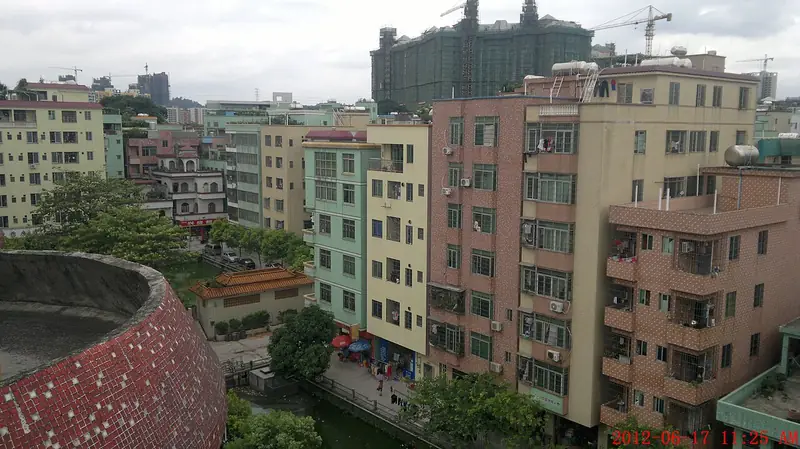
- Representative view in Pingle County · 平乐县代表景观。Photo: peter boy12qq12 · CC BY 3.0Resized for the web; the photo itself has not been edited. Thumbnails may show a cropped view. Original file title: 平乐街景.
