

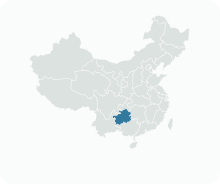
Get to know Xixiu District
- Administrative area
- District · 市辖区
- Part of
- Anshun City
- Chinese name
- 西秀区
- Local areas
- District guide
Area & population
- Area
- 1,705.00 km²
- Population · 2020 census
- 870,441
- Administrative seat
- Dongguan Subdistrict
Source: English Wikipedia, as of the dates shown.
Xixiu is the central district of Anshun rather than a single compact attraction. The current district profile lists 1,467.9179 square kilometres, 21 townships, towns and subdistrict offices, and three new communities. It describes Xixiu as Anshun’s political, economic and cultural centre, with a history that reaches back more than 600 years. The district’s older names—Anshun zhou, Anshun prefecture’s home district, Anshun County and Anshun City—help explain why the modern urban core and a much wider rural landscape share one administrative name.
The clearest reason to spend time here is Tunpu culture. In Qiyanqiao Town, east of Anshun, more than 40 relatively well-preserved Ming-era Tunpu villages form a historic village group; Yunfeng Tunpu is one of its best-known examples. This is a place to read rather than rush through: limestone walls, lanes, roofs and enclosed courtyards show how domestic life and defence were built into the same settlement. Look for the relationship between a village entrance, house walls and the surrounding fields, instead of treating a single costume or performance as the whole story. The villages remain lived places, so any ground-opera performance or seasonal programme should be checked locally rather than assumed to run every day.
Jiuzhou Ancient Town offers a different scale of the same regional history. Its old lanes, traditional houses, courtyards, carved gate details and water beside the streets are the features worth noticing on foot. Workshops and visitor-oriented businesses have been added, but their opening days and activities can change. The district government also lists Hongshan Lake Park and the Anshun Confucian Temple (安顺文庙) among Xixiu’s recognised attractions and protected cultural places. Together, these sites make the district useful for combining an urban half-day with a separate village or landscape excursion, not for pretending that everything is within one walk.
Getting there and moving around
Anshun is connected by the Guiyang–Kunming Railway and the Shanghai–Kunming High-Speed Railway, and the city government describes a wider road, rail and aviation network linking the area with Guiyang and other parts of China. When booking a train, keep the exact station name from the ticket. From the station, enter the named destination—not just “Xixiu District”—in Amap or another current mainland map, then check the final walk, taxi or bus leg and save a return route before leaving the city.
Anshun Huangguoshu Airport is in Xixiu District at Shuangyangchang (双阳场). The district government also places Guiyang Longdongbao International Airport about 90 kilometres away. Flight schedules and airport services change, so check the operating flight and the arrival transfer for your dates rather than assuming that a route mentioned in an older guide still runs.
For the city-side sights, search the exact Chinese POIs 安顺文庙 Ān Shùn Wén Miào, 虹山湖公园 Hóng Shān Hú Gōng Yuán and 旧州古镇 Jiù Zhōu Gǔzhèn. For the village area, search 云峰屯堡景区 Yún Fēng Tún Bǎo Jǐngqū and select the current visitor entrance or ticket office shown by the map. Amap’s route planner supports driving, public transport, walking and cycling, and warns that public-transport results can differ from actual service because of temporary changes. Treat Yunfeng, Jiuzhou and the urban centre as separate stops: use a taxi, ride-hail or a confirmed local bus for the outlying leg, and verify the return connection before starting a rural visit. Do not rely on an approximate district pin or on a historic shuttle description.
Xixiu lies at roughly 1,200–1,600 metres and has a humid subtropical monsoon climate. The district government gives an average annual temperature of about 14°C and describes winters without severe cold and summers without extreme heat. Pack layers and a light rain shell; the practical issue is changeable highland weather, not a promise of a particular future season. Venue opening, ticketing and passport-acceptance rules belong to the individual attraction, so check the named venue’s current notice before setting out.
Explore Xixiu District
Core places to explore, with English and Chinese names.
Places to explore around Xixiu District
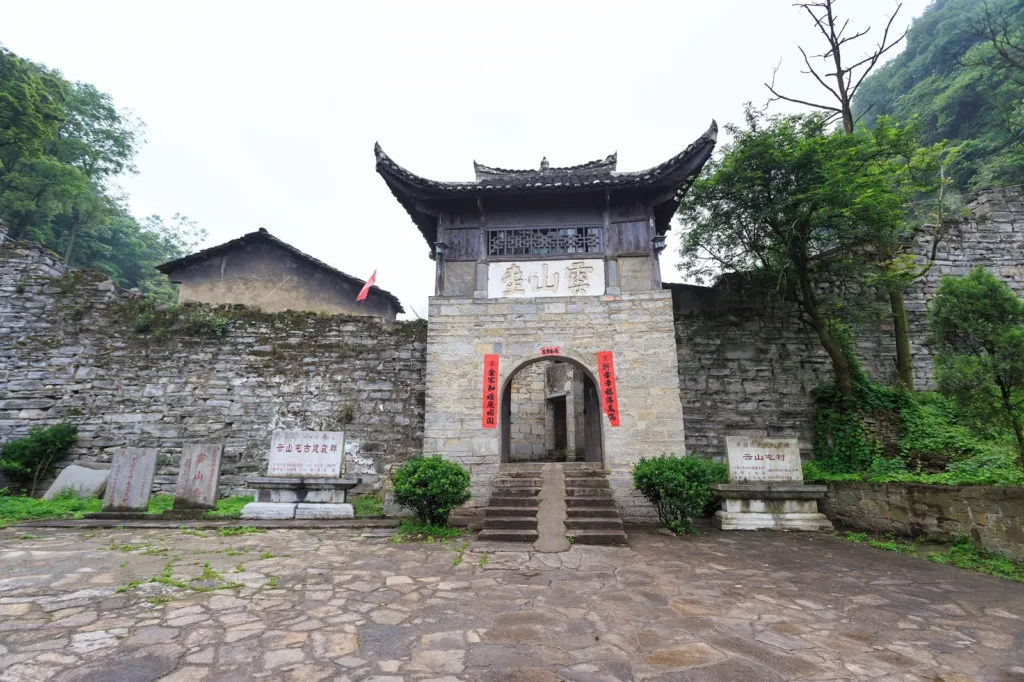 Yunshantun village gate and surrounding stone walls in the Yunfeng Tunpu cluster, Anshun, photographed on 28 April 2014. Photo: Zhangzhugang · CC BY-SA 3.0
Yunfeng Tunpu Garrison Villages云峰屯堡
A living cluster of eight Ming-era military-settlement villages south of Anshun, where stone walls, watchtowers and Jiangnan-style courtyards preserve the architecture and customs of Tunpu communities.
Read the place guide →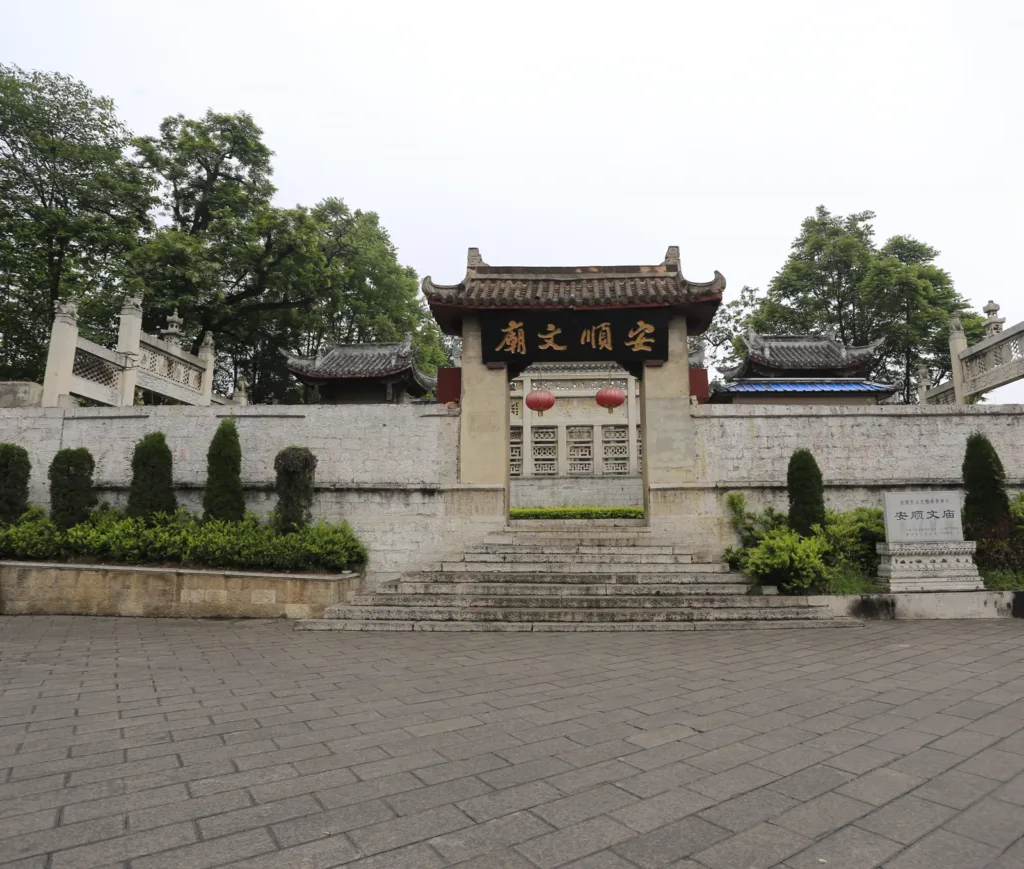 Frontage view of Anshun Confucian Temple, showing the tiled central ceremonial gateway, stone boundary walls and the adjacent protection marker. Photo: Zhangzhugang · CC BY-SA 3.0
Anshun Confucian Temple安顺文庙
Anshun Confucian Temple (安顺文庙), also called Fuxue Palace (府学宫), is a Ming-founded Confucian complex in Xixiu District where a formal central axis, a pond-and-bridge entrance sequence, and unusually fine stone carving make the old city’s educational history visible.
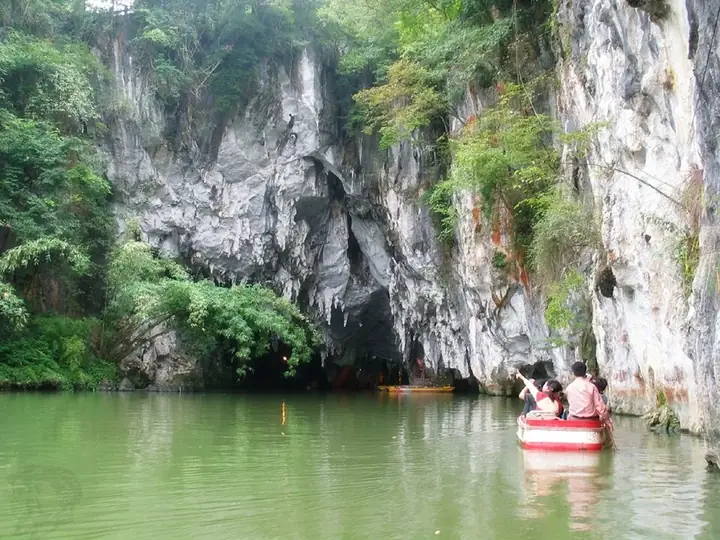
Read the place guide →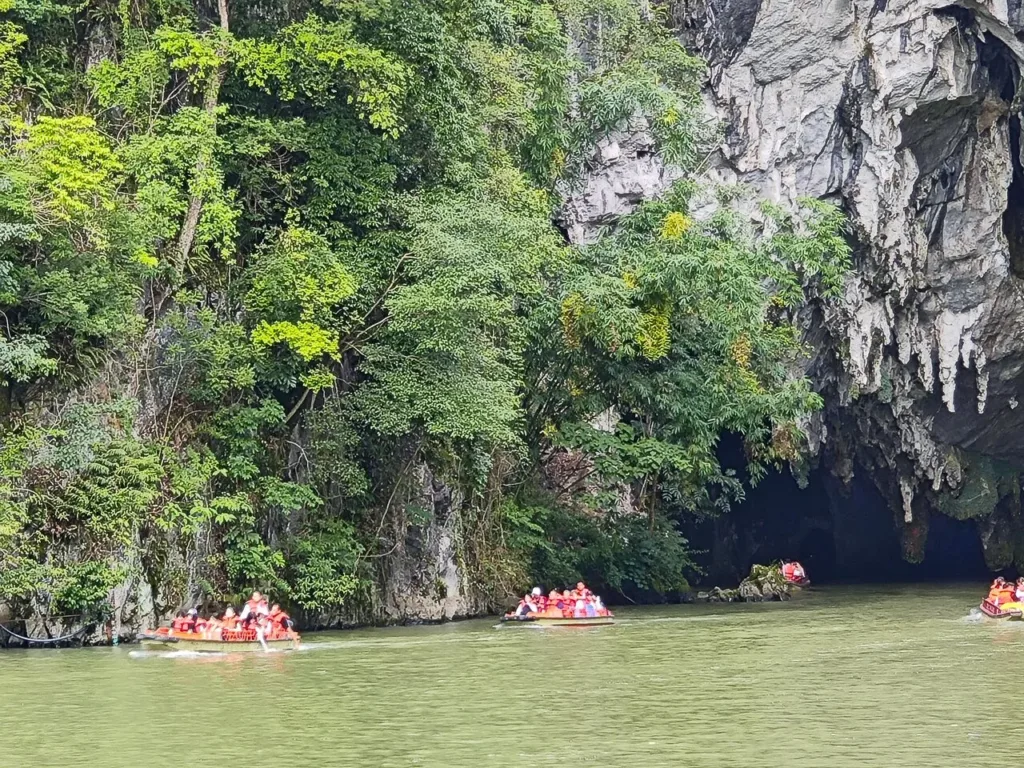 At Dragon Palace in Anshun, tourist boats on the water approach a limestone cave opening framed by forest, photographed in August 2025. Photo: Zhangzhugang · CC BY-SA 4.0
Dragon Palace Cave龙宫
Dragon Palace is an Anshun karst scenic area where an underground river carries visitors by boat through the developed cave sections, alongside Tianchi Lake, Longmen Waterfall and steep limestone terrain. It is a managed scenic-area visit rather than a single cave entrance, so book the timed entry and plan the return journey before setting out.
Read the place guide → AI illustration · AI 示意图(仅供参考,非该地点实拍)
Jiuzhou Ancient Town旧州古镇
A living historic town in Xixiu District, Anshun, where four old streets, stone-and-timber Tunpu houses, and customs carried forward from the Ming period make the former seat of Anshun Prefecture worth exploring on foot.
Read the place guide →Plan your visit
Getting there
Xixiu District covers the centre of Anshun City. Search for 西秀区 in a map app to find stations and your accommodation.
Where to stay →Build your route
Yunfeng Tunpu Garrison Villages and Anshun Confucian Temple are about 15 km apart (straight-line distance). The linked place guides have entrance and visit details.
Continue with Anshun City →More in Anshun City
Sources & geographic information
Administrative names and parent areas: Official geographic directory (dmfw.mca.gov.cn) · Reference date 2026-09-06.
Background text adapted from Xixiu, Anshun — Wikipedia contributors, under CC BY-SA 4.0. Text has been shortened and reorganized; source revision 1301360419.
Map data © OpenStreetMap contributors. Pins mark approximate centres, not entrances or boundaries.
Image credits & notes (1)
- A karst cave entrance and boat landing in Xixiu District, Anshun. Source date: 23 May 2010 (original upload date).Photo: 牛糞 · CC BY-SA 3.0Resized for the web; the photo itself has not been edited. Thumbnails may show a cropped view.
