

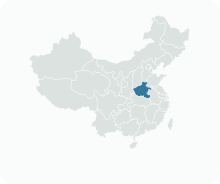
Get to know Qi County
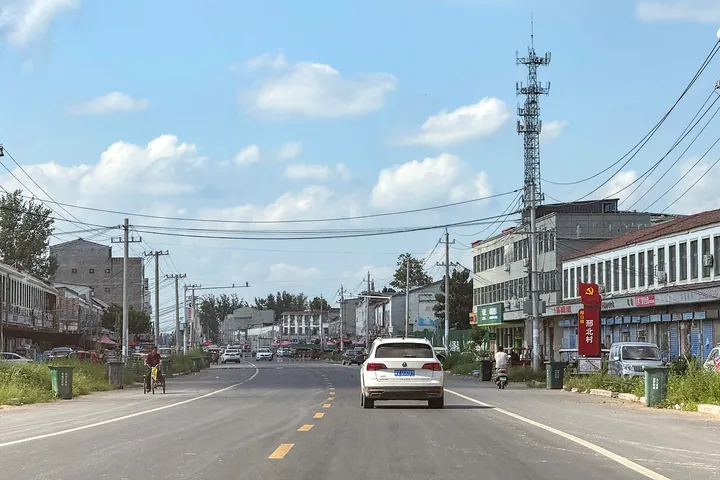
Photo adjustments
Full frame retained; proportionally resized and converted to WebP. No retouching or changes to the photographed subject. Card displays may crop the view.
- Administrative area
- County · 县
- Part of
- Kaifeng
- Chinese name
- 杞县
- Local areas
- County guide
Area & population
- Area in the source
- 1,258.00 km²
- Population · 2019
- 895,600
- Administrative seat
- Chengguan (城关镇)
Source: cited geographic source, as of the dates shown.
Setting and landscape
The land tilts slightly from northwest to southeast, and the main rivers are the Huiji (惠济河) and the Tiedi (铁底河). Suixian (睢县) lies to the east, Taikang (太康县) to the south, Kaifeng's Xiangfu District (祥符区) to the west and Lankao (兰考县) to the north. The county government calls it a "granary of the Central Plains" and lists production bases for garlic, chilli, peanuts, cotton, wheat, cauliflower and edible fungi.
History
The county government dates the state of Qi to the Shang dynasty, some 3,700 years ago. After the Qin unification the area became Yongqiu County; the Later Jin of the Five Dynasties renamed it Qi, and it has been called Qi since the Jurchen Jin dynasty (金), with the county under Kaifeng through the Ming and Qing. The county counts among its people the Shang minister Yi Yin (伊尹), Liu Bang's adviser Li Yiji (郦食其), the Eastern Han writer and calligrapher Cai Yong (蔡邕) and the poet Cai Wenji (蔡文姬). Modern names include the journalist Mu Qing (穆青) and Xiao Hong (肖红), designer of the Hong Kong and Macau regional flags and emblems.
The fable of the man of Qi who could not eat or sleep for fear that heaven and earth would collapse is told in the Liezi (列子) and gave Chinese the idiom qi ren you tian (杞人忧天) for needless worry. The local body of legends around it was added to the national intangible heritage list in 2014: more than 60 tales, among them Nüwa mending the sky (女娲补天), told across 20 townships. A temple fair for "Third Grandmother" (三奶奶) on the fifteenth day of the third lunar month draws many worshippers.
What to see
The Lutaigang site (鹿台岗遗址) at Peicundian (裴村店乡), in the east of the county 12 kilometres from the county town, lies beneath the village school and committee office; its marker records national key protection from 2006. Digs in 1989–1990 found remains from the Yangshao and Longshan cultures through the Shang to the Spring and Autumn period, including Longshan structures that one research report reads as an early sun-shadow observatory, though other archaeologists see them as sacrificial sites. The Duangang site (段岗遗址) at Duangang village (段岗村), Gaoyang, spans the Neolithic to the Spring and Autumn period and was listed nationally in 2013. The Ming-dynasty Dayun Temple Pagoda (杞县大云寺塔) stands at Wagang village (瓦岗村), south of the county town, and was listed in 2019.
Highlights
- Qi sky-worry legend 杞人忧天传说: Body of local legends behind the idiom for needless worry; national intangible heritage since 2014.
- Lutaigang site 鹿台岗遗址: Settlement from Yangshao to Spring and Autumn times with possible Longshan observatory structures.
- Dayun Temple Pagoda 杞县大云寺塔: Ming pagoda at Wagang village, a national protection unit since 2019.
- Duangang site 段岗遗址: Neolithic to Spring and Autumn site at Gaoyang, national listing 2013.
Sources for this guide
杞县 · Wikipedia (Chinese) · CC BY-SA 4.0
杞县概况 · Qi County People's Government
杞县鹿台岗遗址:打开远古先民传说和“奥秘”的钥匙 · China.com.cn (report by the Qi County Federation of Literary and Art Circles)
杞人忧天 · Wikipedia (Chinese) · CC BY-SA 4.0
杞人忧天传说 · China Intangible Cultural Heritage Network (ihchina.cn)
杞县各级文物保护单位列表 · Wikipedia (Chinese) · CC BY-SA 4.0
Original English written from the listed sources and checked sentence by sentence against quoted extracts by a separate reviewer. Updated 2026-09-24.
Explore Qi County
Core places to explore, with English and Chinese names.
Plan your visit
Getting there
Qi County is about 50 km in a straight line from central Kaifeng. Search for 杞县 in a map app to find stations and your accommodation.
Where to stay →More in Kaifeng
Sources & geographic information
Administrative names and parent areas: Official geographic directory · Reference date 2026-09-06.
Some facts checked against 杞县 — Wikipedia contributors, CC BY-SA 4.0.
Some facts checked against 杞人忧天 — Wikipedia contributors, CC BY-SA 4.0.
Some facts checked against 杞县各级文物保护单位列表 — Wikipedia contributors, CC BY-SA 4.0.
Map data © OpenStreetMap contributors. Pins mark approximate centres, not entrances or boundaries.