

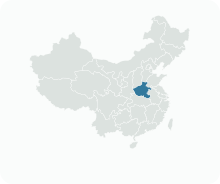
Get to know Weishi County
- Administrative area
- County · 县
- Part of
- Kaifeng
- Chinese name
- 尉氏县
- Local areas
- County guide
Area & population
- Area
- 1,257.00 km²
- Population · 2019
- 851,000
Source: English Wikipedia, as of the dates shown.
Weishi is a county of Kaifeng on the eastern Henan plain. It is better understood as a broad administrative area than as a compact sightseeing town: the county seat, the older town of Weichuan, and rural heritage sites sit at different road distances. The county government traces the county’s establishment to the Qin period, more than 2,200 years ago, and connects its local story with figures including the strategist Wei Liao, the writer Cai Yong, the poet Ruan Ji, and the 1911 revolutionary Liu Qingxia.
That mix of plain-country scale and concentrated historic remains is the reason to come. In the county seat, two nationally protected sites put architecture and modern Chinese history within the same urban visit. Further south-west, Weichuan preserves a former county-town centre whose buildings still carry the marks of local administration, ritual, and community use. Do not plan it as a single pedestrian circuit: choose the sites you can reach by road and confirm the return journey before setting out.
What to see
Xingguo Temple Pagoda (尉氏兴国寺塔, also called Dongguan Pagoda 东关塔) stands at the junction of Jianshe Road and Renmin Road in Weishi’s county-town area. The pagoda was built in the Northern Song’s Taiping Xingguo period, 976–984, as the relic pagoda of Xingguo Temple. The remaining structure is a six-sided, eight-storey brick tower about 29.53 metres high. Look for the tapering storeys, projecting eaves and brick Buddhist images and niches; the county annals account describes a narrow internal stair and later repairs to the upper three storeys in 1546. It became a Henan provincial protected site in 1963 and a National Key Cultural Relics Protection Unit in 2006.
Those historical descriptions are not proof of current public access inside the tower. No current official opening hours, ticket rule, climbing permission, or passport-specific admission procedure was confirmed for this visit. Treat the protected structure as a place to view from its current permitted perimeter unless an on-site notice or the responsible authority confirms entry.
Former Residence of Liu Qingxia (刘青霞故居) is in West Street (西大街) in the county-town area. Liu Qingxia was a late-Qing and early-Republican figure associated with education, social work, and support for the 1911 Revolution. The Kaifeng cultural-authority’s 2023 reply identifies the Weishi Liu Qingxia Memorial Hall as a separate local institution, says it opened free to the public in March 2010, and describes three displays covering her life, a reconstruction of her domestic life, and commemorative calligraphy and painting. The same source does not establish current daily hours, an online reservation channel, or whether a foreign passport can be used in place of a domestic identity document. Check the latest notice before making this the fixed point of a trip.
Ruan Ji’s Whistling Terrace and Tomb (阮籍啸台与阮籍墓) is listed by Kaifeng as a provincial protected site in the county-town area, beside the former east wall. It is associated with Ruan Ji, the Jin-period poet traditionally counted among the Seven Sages of the Bamboo Grove. The heritage listing gives its location as the middle section of Wenhua Road east of the old city wall; it does not provide a visitor timetable or ticketing information. View it as a heritage reference point rather than assuming a staffed attraction.
Weichuan City God Temple (洧川城隍庙, including the South Gate 南城门) is a separate stop in Weichuan Town, not another building in the county seat. The local government places Weichuan about 50 li south-west of the county town and describes the temple as founded in the Ming period, rebuilt in 1440 and repaired repeatedly thereafter. Surviving elements include the gate, worship hall and altered east and west side rooms; the site is also used by the Weishi County Cultural Centre’s Weichuan branch. The temple and South Gate were listed as a Henan provincial protected site in 2006. Its heritage importance does not guarantee unrestricted entry or a published tourist schedule, so look for the current local notice and respect cultural-centre activity.
Getting there and moving around
From Kaifeng city, make Weishi a road-based excursion rather than assuming a direct sightseeing connection. The current county-government introduction places Weishi in the Zheng–Kai and Zheng–Bian–Xu regional corridor and says the county town is about 30 minutes from high-speed rail and about 40 minutes from Zhengzhou Xinzheng International Airport; these are orientation claims, not a promise of a particular train, bus, or transfer.
For rail or air arrivals, continue from the station or airport by road into Weishi. In Amap/Gaode Maps, search the exact Chinese destination 尉氏县 Wèi Shì Xiàn first, then the individual names 尉氏兴国寺塔 Wèi Shì Xīngguó Sì Tǎ, 刘青霞故居 Liú Qīng Xiá Gù Jū, 阮籍啸台与阮籍墓 Ruǎn Jí Xiào Tái yǔ Ruǎn Jí Mù, or 洧川城隍庙 Wěi Chuān Chénghuángmiào. The official heritage listing gives the pagoda’s road junction and the Weichuan temple’s streets, while the county government identifies the county-town and Weichuan relationship. Amap provides current driving and local-transit route planning, but its result should still be checked against the venue’s latest notice.
The pagoda and Liu Qingxia Memorial Hall are county-town stops. Weichuan is a separate road leg, and a current return bus or visitor shuttle was not verified in the sources used here; arrange or confirm the return ride before leaving the county seat. Keep the Chinese names and addresses saved offline, and do not infer that a map pin is an open entrance. Current hours, ticketing, and foreign-passport procedures remain venue-specific.
Guide sources
Explore Weishi County
Core places to explore, with English and Chinese names.
Weishi County 尉氏县
Plan your visit
Getting there
Weishi County is about 45 km (straight-line distance) from central Kaifeng. Search for 尉氏县 in a map app to find stations and your accommodation.
Where to stay →More in Kaifeng
Sources & geographic information
Administrative names and parent areas: Official geographic directory (dmfw.mca.gov.cn) · Reference date 2026-09-06.
Sources and licences for the original area background:
Sights and heritage
Chinese Wikipedia: 尉氏县 (revision 87032377, 2025-04-28)
Adapted from Wikipedia contributors, "尉氏县", Chinese Wikipedia · CC BY-SA 4.0. Translated into English and condensed from the cited revision; figures and dates as stated there. Not independently verified.
Background text adapted from Weishi County — Wikipedia contributors, under CC BY-SA 4.0. Text has been shortened and reorganized; source revision 1336880133.
Map data © OpenStreetMap contributors. Pins mark approximate centres, not entrances or boundaries.
Image credits & notes (1)
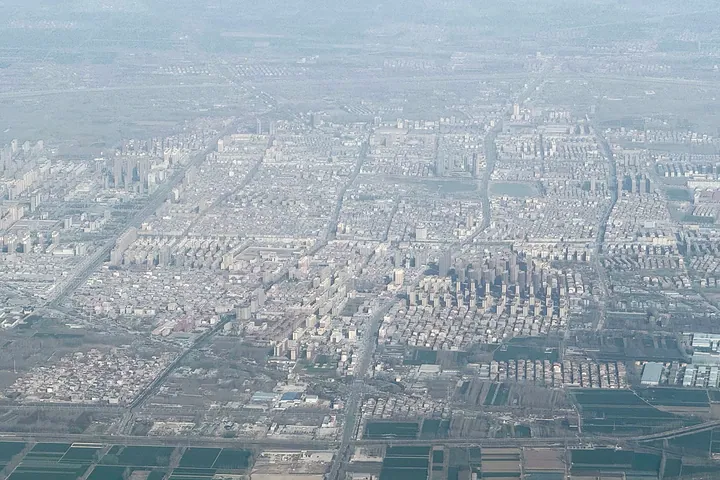
- Aerial view of Weishi County's urban core amid farmland, Kaifeng · 尉氏县城区鸟瞰,开封市Photo: Windmemories · CC BY-SA 4.0 · taken 2024-03-21Resized for the web; the photo itself has not been edited. Thumbnails may show a cropped view.
