

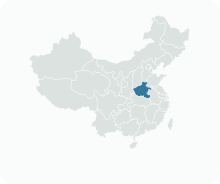
Get to know Yuwangtai District
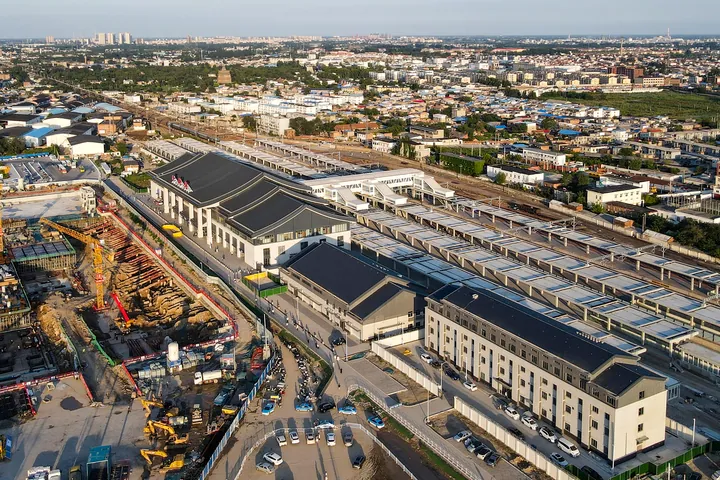
Photo adjustments
Full frame retained; proportionally resized and converted to WebP. No retouching or changes to the photographed subject. Card displays may crop the view.
- Administrative area
- District · 市辖区
- Part of
- Kaifeng
- Chinese name
- 禹王台区
- Local areas
- District guide
Area & population
- Area in the source
- 56.00 km²
- Population · 2019
- 141,300
Source: cited geographic source, as of the dates shown.
What to see
Yuwangtai, a provincial protected site of more than 400 mu, marks the site of the ancient Liang Garden (梁园). Its older name, Guchuitai (古吹台, "Old Playing Terrace"), recalls the legend that Shi Kuang (师旷), a blind court musician of the state of Jin, played music on the mound. In 1523, with the Yellow River flooding repeatedly, a temple to Yu the Great, the tamer of floods, was built on top, and the terrace took his name.
Next to it, on Po Terrace (繁台), stands Po Pagoda (繁塔), a Northern Song pagoda that Chinese Wikipedia describes as the oldest standing building in Kaifeng. It was begun in 974 or 977 as the pagoda of Tianqing Temple (天清寺) and took nearly twenty years to finish. Its three surviving storeys of brick are faced with dozens of kinds of carved Buddha tiles, and an inner stair climbs to the third storey; a small seven-tier pagoda was added on top in the early Qing. Its form marks a transition from square hollow pagodas to octagonal solid ones, and it belongs to the national protected site of the Northern Song capital Dongjing (北宋东京城遗址).
The district government counts four national and five provincial protected sites in the district. Its historic buildings include the Red Western Building (红洋楼), where Mao Zedong stayed when he visited Kaifeng in 1952, and the century-old Kaifeng railway station. It also claims half of the Eight Views of Bianjing, including "Spring colours on Po Terrace" (繁台春色). The district was also one of the birthplaces of modern industry in Henan: the province's earliest government-run enterprise, an arsenal, was here, along with machinery, brewing, pharmaceutical and tobacco factories.
Chrysanthemums and local products
Nanjiao Township (南郊乡) grows chrysanthemums; the district government describes it as the only township given the national title of home of chrysanthemums, and says most of the chrysanthemums displayed in Kaifeng's streets each autumn come from there. The district is also an important source of vegetables for Kaifeng and a dairy-farming base.
Getting oriented
Kaifeng railway station and the city's central long-distance bus station both lie in the district, and the Longhai Railway and National Road 310 run through it.
Highlights
- Yuwangtai 禹王台: Terrace on the site of the ancient Liang Garden, linked to the musician Shi Kuang; a temple to Yu the Great was built on it in 1523.
- Po Pagoda 繁塔: Northern Song pagoda begun in 974 or 977, three storeys of carved Buddha tiles topped by a small Qing pagoda.
- Red Western Building 红洋楼: Where Mao Zedong stayed during his 1952 visit to Kaifeng.
- Nanjiao chrysanthemums 南郊乡菊花: Source of most chrysanthemums shown in Kaifeng each autumn, according to the district government.
Sources for this guide
禹王台区简介 · Yuwangtai District People's Government (开封市禹王台区人民政府)
禹王台 · Chinese Wikipedia · CC BY-SA 4.0
繁塔 · Chinese Wikipedia · CC BY-SA 4.0
Original English written from the listed sources and checked sentence by sentence against quoted extracts by a separate reviewer. Updated 2026-09-24.
Explore Yuwangtai District
Core places to explore, with English and Chinese names.
Yuwangtai District 禹王台区
Plan your visit
Getting there
Yuwangtai District covers the centre of Kaifeng. Search for 禹王台区 in a map app to find stations and your accommodation.
Where to stay →More in Kaifeng
Sources & geographic information
Administrative names and parent areas: Official geographic directory · Reference date 2026-09-06.
Some facts checked against 禹王台 — Wikipedia contributors, CC BY-SA 4.0.
Some facts checked against 繁塔 — Wikipedia contributors, CC BY-SA 4.0.
Map data © OpenStreetMap contributors. Pins mark approximate centres, not entrances or boundaries.