

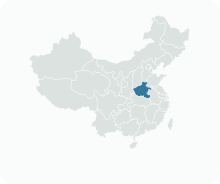
Get to know Ruzhou
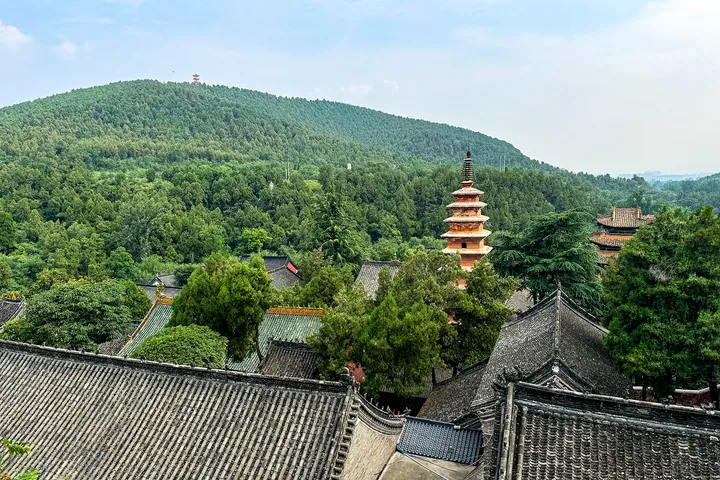
Photo adjustments
Full frame retained; proportionally resized and converted to WebP. No retouching or changes to the photographed subject. Card displays may crop the view.
- Administrative area
- County-level city · 县级市
- Part of
- Pingdingshan
- Chinese name
- 汝州市
- Local areas
- County-level city guide
Area & population
- Area in the source
- 1,573.00 km²
- Population · 2019
- 968,400
Source: cited geographic source, as of the dates shown.
History
Ruzhou was formerly known as Linru (临汝) and Liangxian (梁县). In 1476 it became the only zhili zhou, a prefecture answering straight to the province, in Henan. It was renamed Linru County in 1913 and became Ruzhou city under Pingdingshan in August 1988. From 2014 it was formally run by the province, before some powers returned to Pingdingshan on 1 January 2018.
The Ruzhou city government lists Ru kilns as one of the five famous kilns of the Song. Its kilns were split by the Beiru River (北汝河): a southern zone ran from Yanhedian (严和店) in Mangchuan (蟒川) towards Qingliangsi (清凉寺) in Baofeng, and a northern zone covered today's city area and Dayu (大峪镇). The kilns peaked between 1086 and 1127, making ware for the court, and fell cold when the Northern Song collapsed in 1127. A bean-green Ru glaze was fired successfully in 1958, and a sky-blue (天青) glaze passed technical appraisal on 28 July 1988.
What to see
Fengxue Temple (风穴寺) was founded in the Northern Wei and keeps more than 140 bays of buildings from the Tang to the Qing, set against a hillside. Its Tang Seventh Patriarch Pagoda (七祖塔) is a nine-storey square brick pagoda, the grounds also keep a Song bell pavilion (悬钟阁) and an iron bell cast in 1125, and the Jin-dynasty Middle Buddha Hall (中佛殿) is one of two Jin halls left in China. Upper and lower pagoda forests hold 115 tomb pagodas of eminent monks. The temple and pagoda forest became a national protected site in 1988.
Faxing Temple Pagoda (法行寺塔) is 20.87 metres tall: its near-square lower part follows Tang brick-pagoda style, and the upper body has nine octagonal eaves in the Song and Jin manner. It was listed nationally in 2006. The Yancun site (阎村遗址), a Neolithic village and urn-burial ground listed in 2019, yielded the painted Stork, Fish and Stone Axe jar (鹳鱼石斧图彩陶缸) in 1978; the roughly 6,000-year-old jar is now in the National Museum of China.
Food and local products
Yanglou pan-baked bun (杨楼锅贴馍), nicknamed "ox-tongue bun" (牛舌头馍), is made by hand with an old sourdough starter and stuck to the side of an iron wok with water in the bottom, so it steams and bakes at once and comes out with a crisp, layered base.
Getting oriented
The Jiaozuo–Liuzhou railway (焦柳铁路) and the Erenhot–Guangzhou (二广高速) and Nanjing–Luoyang (宁洛高速) expressways pass through the city.
Highlights
- Fengxue Temple and Pagoda Forest 风穴寺暨塔林: Northern Wei foundation with buildings from the Tang to the Qing and 115 tomb pagodas of eminent monks; national protected site since 1988.
- Faxing Temple Pagoda 法行寺塔: 20.87-metre brick pagoda with a Tang-style lower part and Song-Jin style eaves; national protected site since 2006.
- Yancun Site 阎村遗址: Neolithic village and urn-burial ground where the Stork, Fish and Stone Axe jar was found; national protected site since 2019.
- Ru ware 汝瓷: Song court porcelain named after Ruzhou; a sky-blue glaze re-creation passed technical appraisal in 1988.
- Yanglou pan-baked bun 杨楼锅贴馍: Hand-made sourdough bun steamed and baked against the wall of an iron wok.
Sources for this guide
汝州市 - 维基百科,自由的百科全书 · Wikipedia (Chinese) · CC BY-SA 4.0
稀世珍宝——汝瓷 · Ruzhou Municipal People's Government (from 汝州人文史话, Ruzhou Local Chronicles Office)
风穴寺暨塔林 · Ruzhou Municipal People's Government (from 汝州市文物志, Ruzhou Local Chronicles Office)
法行寺塔 · Ruzhou Municipal People's Government
阎村遗址 · Ruzhou Municipal People's Government (from 汝州市文物志, Ruzhou Local Chronicles Office)
鹳鱼石斧图彩陶缸 · Ruzhou Municipal People's Government (from 汝州市文物志, Ruzhou Local Chronicles Office)
杨楼锅贴馍 · Ruzhou Municipal People's Government (from 汝滋汝味, Ruzhou Local Chronicles Office)
Original English written from the listed sources and checked sentence by sentence against quoted extracts by a separate reviewer. Updated 2026-09-24.
Explore Ruzhou
Core places to explore, with English and Chinese names.
Plan your visit
Getting there
Ruzhou is about 55 km in a straight line from central Pingdingshan. Search for 汝州市 in a map app to find stations and your accommodation.
Where to stay →More in Pingdingshan
Sources & geographic information
Administrative names and parent areas: Official geographic directory · Reference date 2026-09-06.
Some facts checked against 汝州市 — Wikipedia contributors, CC BY-SA 4.0.
Map data © OpenStreetMap contributors. Pins mark approximate centres, not entrances or boundaries.