


Get to know Wufeng Tujia Autonomous County
- Administrative area
- Autonomous county · 自治县
- Part of
- Yichang
- Chinese name
- 五峰土家族自治县
- Local areas
- Autonomous county guide
Area & population
- Area
- 2,401.00 km²
- Population · 2020
- 156,026
- Administrative seat
- Yuyangguan Town
Source: English Wikipedia, as of the dates shown.
A county best understood as a set of mountain landscapes
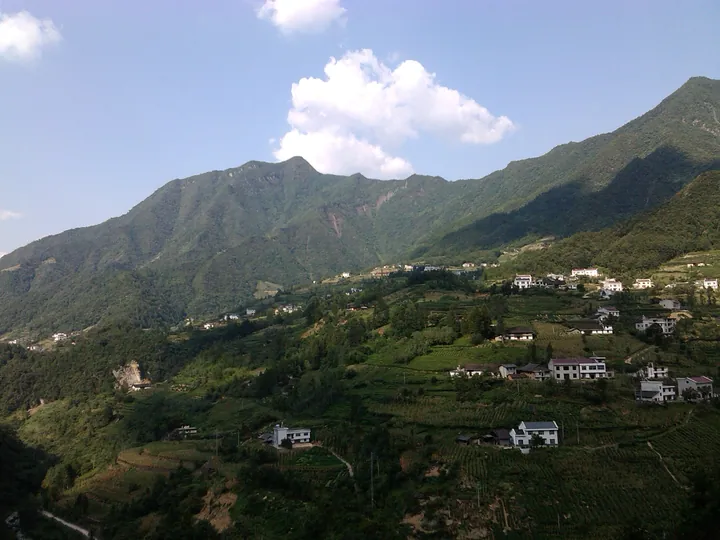
Many visits to Wufeng are planned as if the county were one attraction. It is not. Roads connect tea-growing slopes, village valleys, a managed canyon and protected forest, with real distances between them. A Ministry of Culture and Tourism route runs from Yichang through Renheping and Yuyangguan, then on to Chaibuxi, Wufeng Town, Caihua, Liziping and Duling; that sequence gives a better sense of the county’s scale than a single map pin.
Wufeng’s appeal is the way its ecology and livelihoods sit together. The county is identified in a Hubei government interview as a national key ecological-function area with the Chaibuxi National Forest Park, Houhe National Nature Reserve and Baixihe National Wetland Park among its major ecological designations. The same source describes a tea-growing landscape of about 220,000 mu and a forest-coverage rate of 81 percent. For a visitor, this means looking beyond a viewpoint: tea gardens, old paths, village buildings and conservation boundaries are part of the story.
Read the county from east to southwest
Yuyangguan (渔洋关) is the most practical road gateway for an overland visit. The current Wufeng Coach Transport Centre is in Lijiawan, Dafangping Community, Yuyangguan Town, beside the G59 expressway’s Yuyangguan exit. It replaced the former county coach station in December 2023. Use it as a base for arranging the next leg, not as proof that every scenic area is nearby.
To the east, Chaibuxi Grand Canyon (柴埠溪大峡谷) is the county’s most legible managed landscape. The canyon is described by the Ministry route as an 80-square-kilometre, deeply cut valley about 30 kilometres long and 1–3 kilometres wide, with the Chaibuxi River between steep mountain walls. Its four named scenic sections are Dawan’kou, Tanzikou, Jiaokou and Duanshankou, while an inner area is protected for ecology. It is listed there as a 4A scenic area, national forest park and national geopark. Allow time to read the stone-forest forms and water-cut ravines, rather than treating the place as a single photo stop. Entrance arrangements, opening hours and any cable-car or shuttle charge should be confirmed with the operator for the date of travel.
The Houhe National Nature Reserve (后河国家级自然保护区) belongs to a different category. The reserve authority says it covers 10,340 hectares inside Wufeng, is part of the Wuling Mountains’ biodiversity corridor, and protects old forest and many nationally protected plants and animals. This is a conservation landscape, not an invitation to walk into unmarked forest. The authority’s public material confirms the reserve’s protection status but does not provide a general visitor timetable or an unrestricted trail map; only enter a visitor area or education activity that the responsible operator has confirmed.
The tea-and-village belt fills the spaces between these headline landscapes. The Ministry route names Qinggangling Ecological Tea Garden, Hanyangqiao Ancient Tea Road, a Maojian tea base at Hanmachi Village, Xingyanping Village’s tea gardens and Liziping Village. Hanyangqiao retains bridge, road and platform-building remains from the Qing period and was a key link between Wufeng, Hefeng, Shimen and Changyang. Liziping is presented on the same route for its mountain setting and surviving Ming–Qing traditional buildings. These are places to move slowly: notice how the path follows the slope, how tea plots occupy the warmer folds of the mountains, and how a village sits beside rather than on top of the landscape.
Tea, sound and respectful encounters
Tea is a practical way to understand Wufeng rather than a decorative label. The official rural-tourism route connects the county’s tea history with the phrase “峡州山南出好茶” in The Classic of Tea, and describes seasonal possibilities for picking, processing and tasting at tea gardens. It lists April to September as its recommended travel window, but picking dates, workshops and farm access are seasonal arrangements, not daily guarantees.
The county’s Tujia identity also has a sound. The national intangible-heritage record for Wufeng Tujia Weeding Gong-and-Drum Songs (五峰土家族薅草锣鼓) describes a work-song tradition in which a drummer and a gong player lead singers during collective weeding. The record associates it with eight townships in Wufeng and more than 150 years of local history, while also noting the pressure created by changing agricultural work and ageing practitioners. Look for a museum explanation, a documented heritage programme or a confirmed performance rather than expecting villagers to perform on demand. Ask before photographing people, and do not turn ordinary farm work into a show.
How to plan the visit
For a short visit, base the road plan around Yuyangguan and choose one direction: Chaibuxi for a managed canyon walk, or the tea-and-village route through the documented tea gardens and Liziping. A longer trip can add the other direction, but the county’s mountain roads make “Chaibuxi, Houhe, the tea villages and Duling in one day” an unrealistic default. The Ministry route itself strings these places together as a multi-stop journey rather than a single local loop.
Treat Houhe as an add-on only after its current visitor access is confirmed. Treat tea picking, tea making and non-heritage performances as seasonal or scheduled experiences. That keeps the visit useful without promising a fixed daily programme that the sources do not establish.
Getting there and moving around
The verified long-distance approach is by road. The Ministry route from Yichang uses the Yichang Yangtze River Highway Bridge and G59 (the Hubei–Hunan section of the Hubei–Beihai Expressway) toward Renheping, then continues to Yuyangguan and the county’s mountain destinations.
A 10 October 2026 service update says the Yichang–Yuyangguan intercity bus added stops in both urban areas. The Yichang-bound list includes Huanglongzhai Community, the Tea Museum, Dailizhai, the stadium, Tea City and the Southwest Tea Market; the Yichang-to-Yuyangguan list includes Yichang Coach Passenger Transport Centre and several city stops. The update also says the route now uses Qingjiang Third Bridge and no longer detours through Yidu Coach Station. It publishes 0717-5758509 for enquiries, but the page does not show a complete timetable, so confirm the departure day and boarding stop before setting out.
For the county arrival, use the Chinese destination 五峰客运中心站 (Wufeng Coach Transport Centre), 渔洋关镇大房坪社区李家坪 Yúyángguān Zhèn Dàfángpíng Shèqū Lǐjiāpíng. The station report says local urban routes 1, 2 and 4 were arranged to reach the new station after the move, and that the old station ceased operating. From there, arrange the current local connection for the specific destination—柴埠溪大峡谷风景区 Cháibùxī Dàxiágǔ Fēngjǐngqū, 后河天门峡景区 Hòuhé Tiānménxiá Jǐngqū or a named tea village—after confirming its present visitor entrance. Do not assume a regular public shuttle, a fixed taxi fare or a same-day return from a mountain attraction. Keep the return to Yuyangguan and the outbound coach as separate parts of the plan.
There is no useful metro leg for this county. A visitor arriving by train should treat Yichang as the transfer point and continue by the road network to Yuyangguan, then arrange the chosen mountain destination separately. Ticket prices, opening hours, reservation rules and foreign-passport arrangements for individual scenic areas should be checked with the relevant operator before payment or departure.
Explore Wufeng Tujia Autonomous County
Core places to explore, with English and Chinese names.
Places to explore around Wufeng Tujia Autonomous County
 Misty limestone pillars and wooded ridges in Chaibuxi Grand Canyon Scenic Spot, Wufeng, Hubei, photographed on 16 September 2019. Photo: Fxqf · CC BY-SA 4.0
Chaibuxi Grand Canyon柴埠溪大峡谷
Chaibuxi Grand Canyon is a karst mountain landscape in Wufeng, reached through the Tizikou (梯子口) scenic-area gate. Its most legible visit combines a valley stream and cliff-top stone forest with the cableway to Dawankou (大湾口), while upgraded visitor services make the gate and transfer point easier to use.
Read the place guide → AI illustration · AI 示意图(仅供参考,非该地点实拍)
Houhe Eco-Tourism Area后河开放生态旅游区
Houhe (后河) is a national nature reserve in Wufeng Tujia Autonomous County, about 20 kilometres from the county town in south-western Hubei. The part open to visitors is the Tianmen Gorge scenic area, a 4A-graded corridor of cliffs and narrow clefts at the edge of the protected forest.
Read the place guide →Plan your visit
Getting there
Wufeng Tujia Autonomous County is about 65 km (straight-line distance) from central Yichang. Search for 五峰土家族自治县 in a map app to find stations and your accommodation.
Where to stay →Build your route
Chaibuxi Grand Canyon and Houhe Eco-Tourism Area are both listed here. The linked place guides have entrance and visit details.
Continue with Yichang →More in Yichang
Sources & geographic information
Administrative names and parent areas: Official geographic directory (dmfw.mca.gov.cn) · Reference date 2026-09-06.
Sources and licences for the original area background:
People and culture
Chinese Wikipedia: 五峰土家族自治县 (revision 84504666, 2024-10-08)
Adapted from Wikipedia contributors, "五峰土家族自治县", Chinese Wikipedia · CC BY-SA 4.0. Translated into English and condensed from the cited revision; figures and dates as stated there. Not independently verified.
Background text adapted from Wufeng Tujia Autonomous County — Wikipedia contributors, under CC BY-SA 4.0. Text has been shortened and reorganized; source revision 1339037892.
Map data © OpenStreetMap contributors. Pins mark approximate centres, not entrances or boundaries.
