

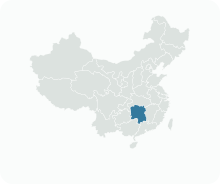
Get to know Daxiang District
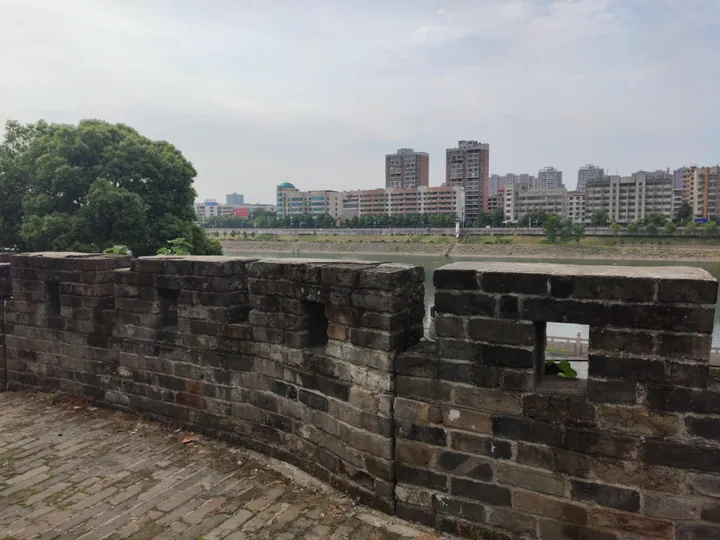
Photo adjustments
Full frame retained; proportionally resized and converted to WebP. No retouching or changes to the photographed subject. Card displays may crop the view.
- Administrative area
- District · 市辖区
- Part of
- Shaoyang
- Chinese name
- 大祥区
- Local areas
- District guide
Setting and landscape
The land tilts from south to north across the Hengyang-Shaoyang belt of low hills. Low mountains in the south average about 450 metres, topped by Diaojingling (吊井岭) in Luoshi town (罗市镇) at 504 metres; the centre and west are rolling hills around 300 metres; and a flat alluvial plain lines the Shao and Zi in the east and north. The Zi runs 18.2 kilometres through the district and leaves it at Nanjiangzui (南江嘴), where the Shao flows in. The Bottomless Cave (无底洞) between Zengqiao and Yongxing villages in Tanjiang township (檀江乡) is a large limestone cave with four kilometres of visitor paths.
What to see
Two sites are under national protection: the Baoqing city wall (宝庆古城墙) and the former residence of the democratic revolutionary Cai E (蔡锷). The Songpo Library (松坡图书馆), founded in 1943 in Cai E's memory, still has its book-storage and reading building. The Guxiejia Fang (古卸甲坊), a small shrine rebuilt in 1820, marks where the Three Kingdoms general Zhang Fei (张飞) is said to have drilled troops. The Foundling Home (育婴堂), a two-storey Chinese-European building of grey brick, was put up by Italian Catholics in 1932 to take in orphans.
The Longqiao iron rhinoceros (龙桥铁犀), one of the old Twelve Views of Baoqing, is a bridge over the Shao first built in wood in the Tang; a stone-pier bridge with an iron rhinoceros followed in 1226, and four rhinoceros figures were added at the ends in 1993. The Shaoyang memorial arch to chaste and filial women (邵阳节孝贞烈总坊), built in 1869, is about 10 metres high and carved with over 240 names and dragon and lion reliefs. Songpo Park (松坡公园) in Yuxi town holds a bronze statue and memorial hall for Cai E and the grave of He Luting (贺绿汀).
Food and local products
Baoqing facing-heaven chillies (宝庆朝天椒) are small, thin-skinned, glossy red peppers that grow tip upward and are very hot; they come mainly from Luoshi, Tanjiang and Banqiao. Baitian radish (白田萝卜), grown along the Zi in Baizhou (白洲), is shaped like a clay pot. Feather pictures (羽毛画) of butterflies and moths are on the provincial intangible heritage list, and the Baoqing prefectural gazetteer (宝庆府志) records local black stone carved into brush pots and chess pieces.
Highlights
- Baoqing city wall 宝庆古城墙: Old city wall protected at the national level.
- Former residence of Cai E 蔡锷故居: Home of the democratic revolutionary Cai E, protected at the national level.
- Longqiao iron rhinoceros 龙桥铁犀: Bridge over the Shao with an iron rhinoceros, one of the Twelve Views of Baoqing.
- Bottomless Cave 无底洞: Large limestone cave in Tanjiang township with four kilometres of paths.
- Baoqing facing-heaven chilli 宝庆朝天椒: Small, very hot upward-pointing chilli from Luoshi, Tanjiang and Banqiao.
Explore Daxiang District
Core places to explore, with English and Chinese names.
Daxiang District 大祥区
Plan your visit
Getting there
Daxiang District is about 3 km in a straight line from central Shaoyang. Search for 大祥区 in a map app to find stations and your accommodation.
Where to stay →More in Shaoyang
Sources & geographic information
Administrative names and parent areas: Official geographic directory · Reference date 2026-09-06.
Map data © OpenStreetMap contributors. Pins mark approximate centres, not entrances or boundaries.