


Get to know Qidong
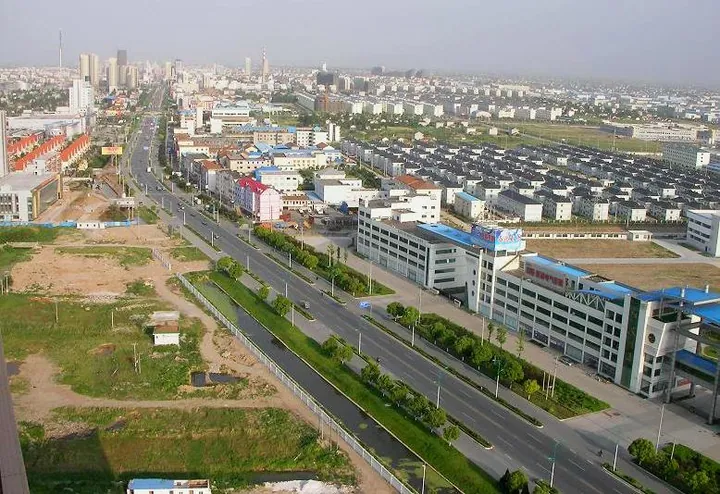
Photo adjustments
Full frame retained; proportionally resized and converted to WebP. No retouching or changes to the photographed subject. Card displays may crop the view.
- Administrative area
- County-level city · 县级市
- Part of
- Nantong
- Chinese name
- 启东市
- Local areas
- County-level city guide
Area & population
- Area in the source
- 1,208.00 km²
- Population · 2020 census
- 967,313
Source: cited geographic source, as of the dates shown.
History
Qidong is built of Yangtze sediment, and its coastline has moved back and forth. Chinese Wikipedia records that the area was open sea before the Han; in the early Tang two sandbanks rose and merged, and in the Five Dynasties a Haimen County (海门县) was seated near today's Lüsi (吕四). From the late Yuan to the Kangxi reign most of this land returned to the sea, leaving only the Lüsi area. From the mid-18th century more than ten new sandbanks formed in the south, known as the 'outer sands of Chongming', and joined up by the early Republic. In March 1928 the northern, central and southern parts were combined as Qidong County, a name taken from the phrase 'open up our eastern frontier' (启吾东疆). It became a city in 1989.
The two halves still speak differently: the south uses Shadi speech (沙地话), a Wu dialect close to that of Haimen and Chongming, while Lüsi in the north speaks Tongdong (通东话).
What to see
China Tourism News describes Yuantuojiao (圆陀角), a horn-shaped point pushing into the meeting of river and sea, as the first place in Jiangsu to see the sunrise. The resort there includes the Golden Beach (黄金海滩), where visitors dig for clams, and tulip fields each spring. The paper also names Lüsi port (吕四港), called a thousand-year-old town, and the Tonghai Land Reclamation Company (通海垦牧公司), founded by the industrialist Zhang Jian (张謇) to turn Yellow Sea mudflats into cotton land for his mills and rebuilt on its original site in July 2021. Qidong also has a printmaking museum (启东版画博物馆).
Food and local products
China Tourism News lists the Lüsi fishing ground (吕四渔场) among China's four great fishing grounds, with pomfret, yellow croaker, hairtail, prawns, swimming crab and jellyfish from the southern Yellow Sea. On land, Chinese Wikipedia names Sanhuang chicken (三黄鸡), named for its yellow beak, feet, skin and feathers and served as white-cut chicken or in whole-chicken soup, and sweet sorghum (甜芦粟), grown for its juicy stems and already recorded in the Zhengde-era gazetteer of Chongming.
Highlights
- Yuantuojiao 圆陀角: Horn-shaped point at the meeting of the Yangtze and the sea; described by China Tourism News as Jiangsu's first place to see sunrise.
- Tonghai Land Reclamation Company 通海垦牧公司: Zhang Jian's reclamation company on the Yellow Sea mudflats, rebuilt on its original site in July 2021.
- Lüsi port 吕四港: Described by China Tourism News as a thousand-year-old town.
- Sanhuang chicken 三黄鸡: Local chicken named for its yellow beak, feet, skin and feathers.
Sources for this guide
启东市 · Wikipedia (Chinese) · CC BY-SA 4.0
打造休闲目的地 启东江海文化有“味道” · China Tourism News (中国旅游报)
Original English written from the listed sources and checked sentence by sentence against quoted extracts by a separate reviewer. Updated 2026-09-25.
Explore Qidong
Core places to explore, with English and Chinese names.
Places to explore around Qidong
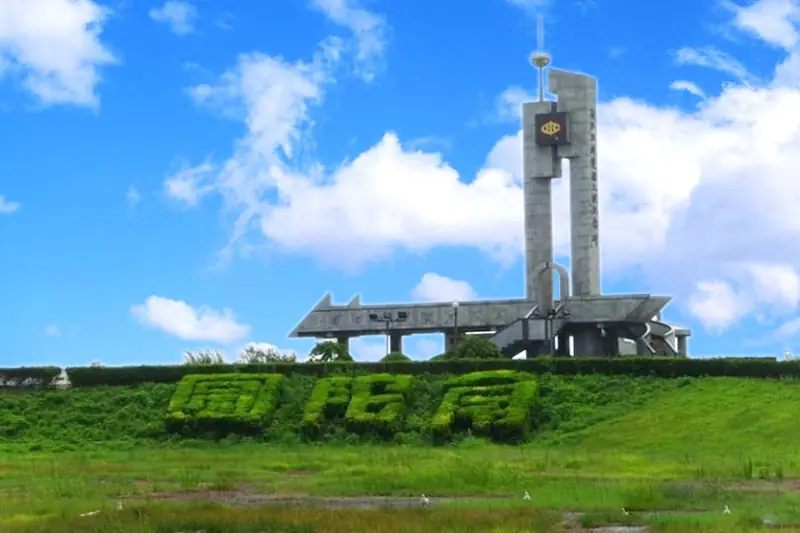 Yuantuo Cape ·
 Plan your visit
Getting there
Qidong is about 75 km in a straight line from central Nantong. Search for 启东市 in a map app to find stations and your accommodation.
Where to stay →Build your route
Start with Yuantuo Cape. The linked place guides have entrance and visit details.
Continue with Nantong →More in Nantong
Sources & geographic information
Administrative names and parent areas: Official geographic directory · Reference date 2026-09-06.
Some facts checked against 启东市 — Wikipedia contributors, CC BY-SA 4.0.
Photo: Yuantuo Cape · Source photographer · License not provided. EXIF orientation normalized; resized without changing aspect ratio; converted to WebP. No subject edits.
Map data © OpenStreetMap contributors. Pins mark approximate centres, not entrances or boundaries.