


Get to know Pizhou
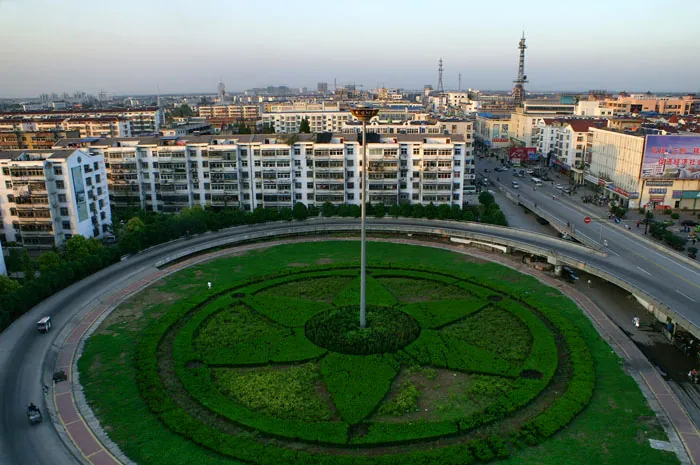
Photo adjustments
Full frame retained; proportionally resized and converted to WebP. No retouching or changes to the photographed subject. Card displays may crop the view.
- Administrative area
- County-level city · 县级市
- Part of
- Xuzhou
- Chinese name
- 邳州市
- Local areas
- County-level city guide
Area & population
- Area in the source
- 2,088.00 km²
- Population · 2020 census
- 1,462,563
Source: cited geographic source, as of the dates shown.
Setting and landscape
Pizhou lies on the Huang-Huai-Hai plain (黄淮海平原). An old course of the Yellow River once crossed it, and today the Grand Canal runs through, with Weishan Lake (微山湖) to the north and Luoma Lake (骆马湖) to the south. Around Tiefu town (铁富镇) the ginkgo plantations lie between the Yi River (沂水) to the east and Mount Ai (艾山) to the west.
History
The city government's timeline begins with the state of Pi (邳国), founded around 2100 BC when Xi Zhong (奚仲) was made its marquis. Qin set up Xiapi County (下邳县) in 221 BC, and in 202 BC Liu Bang (刘邦) made Han Xin (韩信) King of Chu with his seat at Xiapi. The name Pizhou dates from 579, when the Northern Zhou created a prefecture of that name. The old seat was at today's Guping (古邳镇), now in Suining County; after the early-Qing Tancheng (郯城) earthquake destroyed it, the seat moved to Picheng (邳城), in the north of the present city. Pizhou became Pi County (邳县) in 1912 and a county-level city in 1992.
What to see
The Aishan Jiulong scenic area (艾山九龙风景区) at Mount Ai is a national AAAA site of about 20 square kilometres in Tiefu town. Its Iron Buddha Temple (铁佛寺) has an iron Buddha 16.8 metres tall, which the city government calls the largest indoor iron Buddha in China. East of Tiefu, the Ginkgo Time Tunnel (银杏时光隧道) at Yaozhuang village (姚庄村) is a road of more than 3,000 metres lined by over 3,000 ginkgo trees whose crowns meet overhead; villagers began planting in the early 1990s.
In the north of the city, the National Ginkgo Expo Park (国家级银杏博览园), centred on Gangshang (港上), has in its core area more than 10,000 ginkgos over a century old and over ten said to exceed a thousand years. In Paoche (炮车街道), the Ancient Chestnut Garden (邳州古栗园) keeps more than 3,000 chestnut trees planted in the Qianlong era. Tushan old town (土山古镇), known from the Romance of the Three Kingdoms episode of Guan Yu's three conditions at Tushan, has a Guandi Temple (关帝庙) founded in the Tianshun reign of the Ming dynasty and listed by Jiangsu province as a key protected heritage site, plus Ming and Qing buildings.
Highlights
- Mount Ai (Aishan Jiulong scenic area) 艾山: National AAAA scenic area in Tiefu town, with the Iron Buddha Temple and its 16.8-metre iron Buddha.
- Ginkgo Time Tunnel 银杏时光隧道: Over 3,000 ginkgo trees lining more than 3,000 metres of road at Yaozhuang village.
- National Ginkgo Expo Park 国家级银杏博览园: Ginkgo park centred on Gangshang with more than 10,000 trees over a century old.
- Tushan old town 土山古镇: Three Kingdoms setting with a provincially protected Guandi Temple founded in the Ming Tianshun reign.
Explore Pizhou
Core places to explore, with English and Chinese names.
Places to explore around Pizhou
 AI illustration · AI
 Plan your visit
Getting there
Pizhou is about 65 km in a straight line from central Xuzhou. Search for 邳州市 in a map app to find stations and your accommodation.
Where to stay →Build your route
Start with Mount Aishan. The linked place guides have entrance and visit details.
Continue with Xuzhou →More in Xuzhou
Sources & geographic information
Administrative names and parent areas: Official geographic directory · Reference date 2026-09-06.
Some facts checked against 邳州市 — Wikipedia contributors, CC BY-SA 4.0.
Map data © OpenStreetMap contributors. Pins mark approximate centres, not entrances or boundaries.