

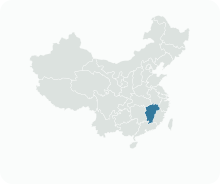
Get to know Hukou County
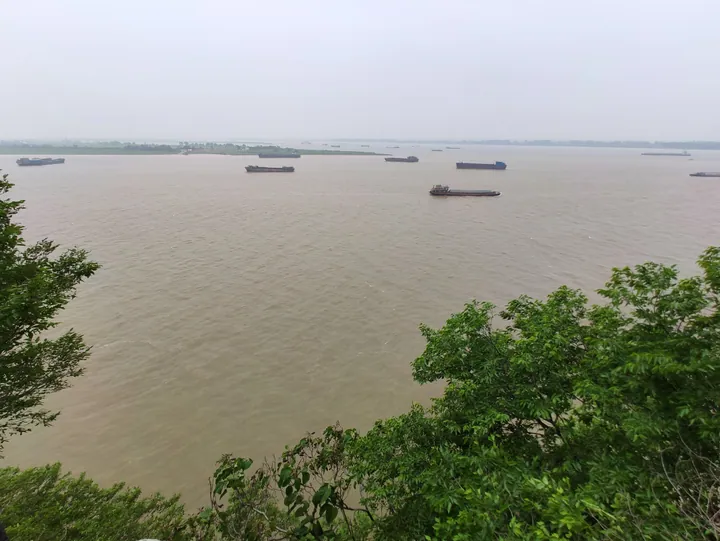
Photo adjustments
Full frame retained; proportionally resized and converted to WebP. No retouching or changes to the photographed subject. Card displays may crop the view.
- Administrative area
- County · 县
- Part of
- Jiujiang
- Chinese name
- 湖口县
- Local areas
- County guide
Area & population
- Area in the source
- 673.66 km²
- Population · 2018
- 297,308
Source: cited geographic source, as of the dates shown.
Setting and landscape
About four-fifths of the county lies below 50 metres. It belongs to the Poyang Lake alluvial plain but is broken by low hills, and much of the farmland is terraced. Hills close in from the southeast, the river and the lake wrap around the northwest, and the land falls from southeast to northwest. The climate is humid north subtropical, with a mean annual temperature of 17.4°C.
History
In AD 26 the area belonged to Pengze County (彭泽县). The Liu Song dynasty (420-479) set up a Hukou garrison (湖口戍) here, and in 938 the Southern Tang made Hukou a county of its own, with its seat at Xiaoyang town (枭阳镇), southwest of today's Shuangzhong. The Dutch traveller Johan Nieuhof drew a view of Hukou in 1665.
What to see
Stone Bell Hill (石钟山) is two hills, the upper one south of the town and the lower one north of it, known together as the "double bells" (双钟). The lower hill drops in cliffs to the Yangtze, and waves striking its hollows ring like a bell; the Song writer Su Shi (苏轼) went by boat to check the explanation and wrote his "Record of Stone Bell Mountain" (石钟山记). Because the hill commands both the river and the lake it was called the "lock and key of river and lake" (江湖锁钥), and Taiping forces fought the Xiang Army navy of Zeng Guofan (曾国藩) here between 1853 and 1857.
After Peng Yulin (彭玉麟) took the hill in 1857, Zeng petitioned for a memorial shrine to the Xiang navy there, the Zhaozhong Shrine (昭忠祠); the complex around it was largely complete by 1860. It is flanked by the Baoci Buddhist hall (报慈禅林) and the Huanxiang villa (浣香别墅). Inscriptions on the hill include a painting of plum, orchid, bamboo and chrysanthemum attributed to Su Shi, a poem by Huang Tingjian (黄庭坚) and a poem by Guo Moruo (郭沫若). The buildings and inscriptions were listed as a national key cultural relic site in 2013.
Crafts and customs
The Hukou straw dragon (湖口草龙), locally called the "grain dragon" (谷龙), has been on the national intangible-heritage list since 2008. After the autumn harvest villagers tied rice-straw dragons and paraded them from village to village. The dragon is built on a bamboo and timber frame in an odd number of sections, usually nine to twenty-one, and Zhou Yongfa (周雍发), born in the late nineteenth century, is credited with turning it into a refined craft.
Highlights
- Stone Bell Hill 石钟山: Twin hills at the lake outlet, subject of Su Shi's essay and a national key cultural relic site since 2013.
- Zhaozhong Shrine 昭忠祠: Memorial shrine to the Xiang Army navy on Stone Bell Hill, largely complete by 1860.
- Hukou straw dragon 湖口草龙: Rice-straw harvest dragon of nine to twenty-one sections, national intangible heritage since 2008.
Sources for this guide
草编(湖口草龙) - 中国非物质文化遗产网·中国非物质文化遗产数字博物馆 - 中国非物质文化遗产网非遗 · China Intangible Cultural Heritage Network (ihchina.cn)
石钟山 - 维基百科,自由的百科全书 · Wikipedia (Chinese) · CC BY-SA 4.0
湖口县 - 维基百科,自由的百科全书 · Wikipedia (Chinese) · CC BY-SA 4.0
Original English written from the listed sources and checked sentence by sentence against quoted extracts by a separate reviewer. Updated 2026-09-25.
Explore Hukou County
Core places to explore, with English and Chinese names.
Places to explore around Hukou County
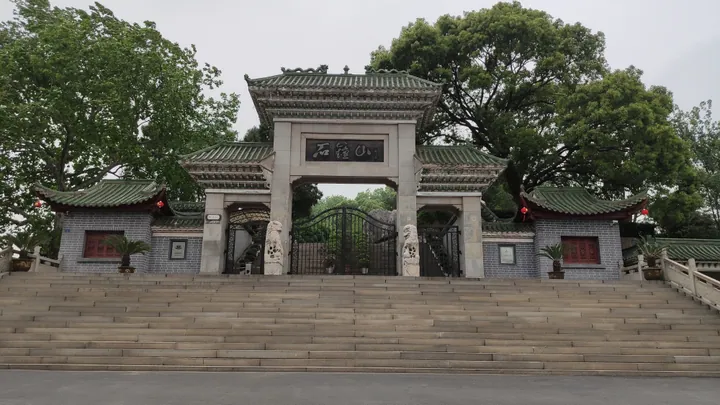 The main gate of Stone Bell Hill, inscribed with its name, in Hukou County, Jiujiang ·
 Plan your visit
Getting there
Hukou County is about 30 km in a straight line from central Jiujiang. Search for 湖口县 in a map app to find stations and your accommodation.
Where to stay →Build your route
Start with Stone Bell Hill. The linked place guides have entrance and visit details.
Continue with Jiujiang →More in Jiujiang
Sources & geographic information
Administrative names and parent areas: Official geographic directory · Reference date 2026-09-06.
Some facts checked against 石钟山 — Wikipedia contributors, CC BY-SA 4.0.
Some facts checked against 湖口县 — Wikipedia contributors, CC BY-SA 4.0.
Photo: Stone Bell Hill · Zhangzhugang · CC BY-SA 4.0. Full frame retained; proportionally resized and converted to WebP. No retouching or changes to the photographed subject. Card displays may crop the view.

Map data © OpenStreetMap contributors. Pins mark approximate centres, not entrances or boundaries.