

Explore the region
Tap any red Chinese text to hear it in Mandarin.
A city to read through three different settings
Yanji is more rewarding when you treat it as a living prefectural capital rather than as a single photo stop. The city government places it in the northern foothills of the Changbai Mountains, with hills around the east, south and north and an open western side. Its rivers and basin setting help explain why a city museum, a southern cultural park and a forested overlook can belong to the same visit without offering the same experience.
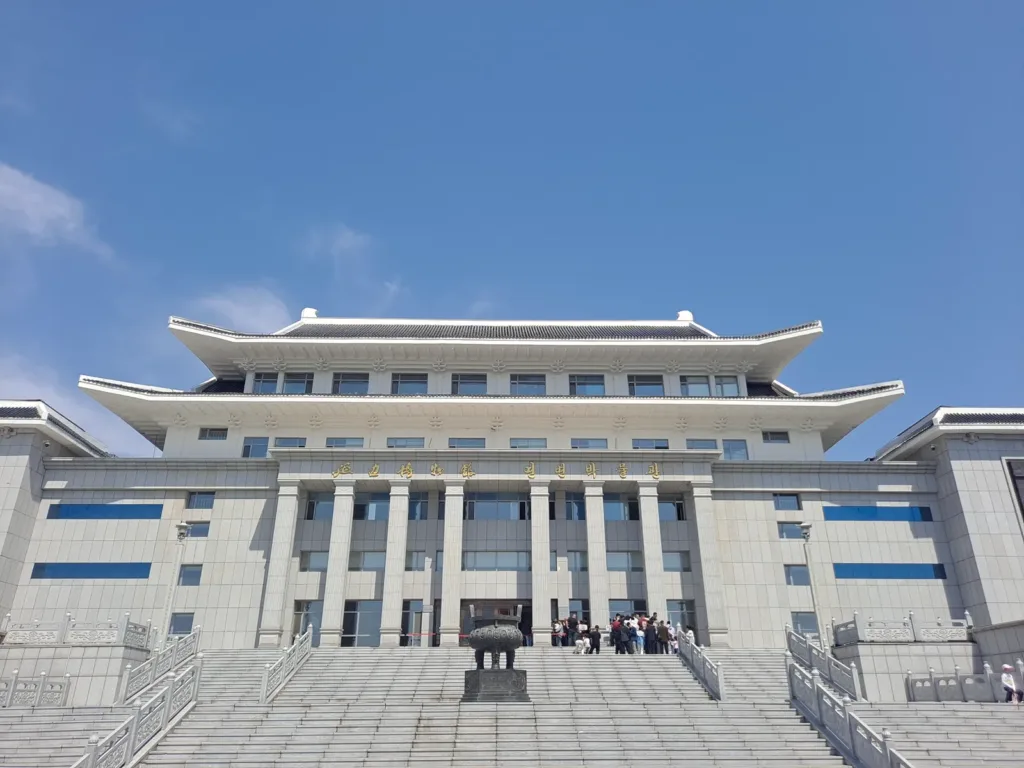
Begin with the Yanbian Museum if you want context before taking in staged or outdoor settings. The museum’s permanent displays cover Yanbian’s archaeology and local history, Korean folk customs and the history of Korean revolutionary struggle. The provincial culture authority lists it as a national second-level museum at 8627 Changbai West Road in Yanji. The museum’s own visitor notice says admission is free, visitors must register with valid documents, and individual visitors can register on site or use the museum’s WeChat reservation channel.
The Korean Folk Customs Park presents a different kind of encounter. Local reporting describes five functional areas for traditional food experiences, homestay-style settings, old-house experiences, traditional sports and performances, and cultural displays. A Jilin government travel page gives examples such as swinging, wrestling, seesaw-style springboard games, making glutinous-rice cakes, Korean snacks and performances; that page was published in 2016, so treat those examples as the park’s cultural direction rather than a promise that every activity runs on your date. The current map listing places 中国朝鲜族民俗园 at the east side of the 延南路–延龙路 intersection, 150 metres from the junction.
Mao’er Mountain is the outdoor counterpoint. The Yanji government describes the national forest park south of the city as a landscape of mountain, water, forest, fields and city, and as a natural viewing platform for the Bulhar Tong and Hailan river valleys. The Yanbian government groups the forest park, the Korean Folk Customs Park and other attractions within the wider Mao’er Mountain (Dinosaur) cultural-tourism area, but that administrative grouping does not turn them into one building or one visitor entrance. Come for a forest walk and a city-and-valley outlook, and check trail conditions before attempting a longer climb.
Planning the visit
The three stops need separate local transfers. The museum is at 8627 Changbai West Road. Its visitor notice lists bus 28 to the Yanbian Museum stop, and buses 9, 12 and 39 to the People’s Stadium stop; use the Chinese museum name and address when checking the direction for the return journey. The notice does not provide a current timetable, so do not infer a departure interval from the route numbers.
For the folk park, enter 中国朝鲜族民俗园 Zhōngguó Cháoxiǎnzú Mínsúyuán as a separate destination in Amap or another current Chinese map. The available address evidence is 延边朝鲜族自治州延吉市延南路与延龙路交叉口东150米. The evidence reviewed here does not establish a numbered gate, a current ticket rule or a dependable bus stop for the park, so follow the map to the venue’s actual entrance rather than reusing the museum address. Check the return direction before leaving, especially if you continue to the mountain area.
For Mao’er Mountain, search 延吉帽儿山国家森林公园 Yánjí Màoérshān Guójiā Sēnlín Gōngyuán separately. The city government identifies the forest park as the southern outdoor attraction, but the page used here does not give a numbered gate or a current public-transport route. Do not treat the folk park’s address as the mountain entrance. A taxi or ride-hailing driver should be shown the exact Chinese destination, and the return pickup point should be agreed before you start walking. No metro route is needed for the access plan recorded here.
By air, Yanji Chaoyangchuan International Airport is in the southwest of Yanji and the airport operator describes it as about 5 km from the city centre. The airport’s transport page currently lists buses 44, 28, B45, 48, B29 and 7, but it gives route numbers rather than a complete stop-by-stop tourist route; check the direction and terminal information on the day. For a rail or long-distance-coach arrival, keep the final destination in Chinese and confirm the last transfer in a current map; no station-to-venue route is asserted here without a current operator source.
Hours, season and visitor notes
The museum notice lists Tuesday to Sunday opening, with summer hours of 09:00–16:30 and winter hours of 09:00–16:00; entry stops 30 minutes before closing. It is closed on Mondays except statutory holidays. The notice requires valid-document registration but does not spell out how a foreign passport is handled. If you are travelling on a passport, contact the museum or confirm at the venue before relying on same-day entry.
Mao’er Mountain is an outdoor setting in a city with a long, cold winter. Snow and ice can change the practical condition of forest paths even when the city itself is accessible, so check local conditions before setting out. The sources reviewed here do not confirm a current seasonal closure, ticket price or organised shuttle for the mountain or the folk park. Verify those details with the venue or current map listing rather than carrying over an older itinerary.
Combine your visit
Suggested order within this visit:
-
Yanbian Museum延边博物馆
Establish the regional history and cultural context.
-
Korean Folk Customs Park中国朝鲜族民俗园
Compare museum interpretation with the village-style cultural setting.
-
Mao'er Mountain延吉帽儿山
Add a forest walk or viewpoint above the southern city, using a separate local transfer.
This sequence is an editorial suggestion based on the features described in the sources. Access to individual buildings or areas should be checked locally; no travel time or shared admission is implied.
Find Yanji overview
延吉 · 延边朝鲜族自治州
The pin marks the area, not the entrance.
More places nearby
Approximate straight-line distances between map pins, not travel distances.
Korean Folk Customs Park of China 中国朝鲜族民俗园
3 km awayThe Korean Folk Customs Park in southern Yanji is a purpose-built cultural landscape arranged around traditional-style homes, food and performance spaces. It presents the appearance of a village while accommodating restaurants…
View guide →Yanji Dinosaur Museum 延吉恐龙博物馆
4 km awayYanji's dinosaur museum grew from fossil discoveries made at Longshan on Mao'er Mountain's southern slope. Its six Korean-style buildings divide the visit between a broad Dinosaur Planet introduction and the Dragon Rising in…
View guide →Head Mountain 延吉帽儿山
6 km awayMao'er Mountain takes its name from a hat-like profile above Yanji's southern outskirts. The approach moves from a forest boardwalk to a long stair climb, ending at a lookout over the city, river valleys and surrounding rice…
View guide →Sources & visit information
Sources checked on 1 November 2026. Hours, tickets, reservations and transport can change; confirm with the operator before you go.
Image credits & notes (1)
- The Yanbian Museum in Yanji, photographed from the front steps. Photo: EditQPhoto: CC BY-SA 4.0