

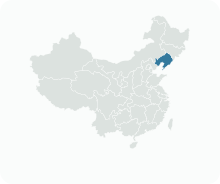
Get to know Tiexi District
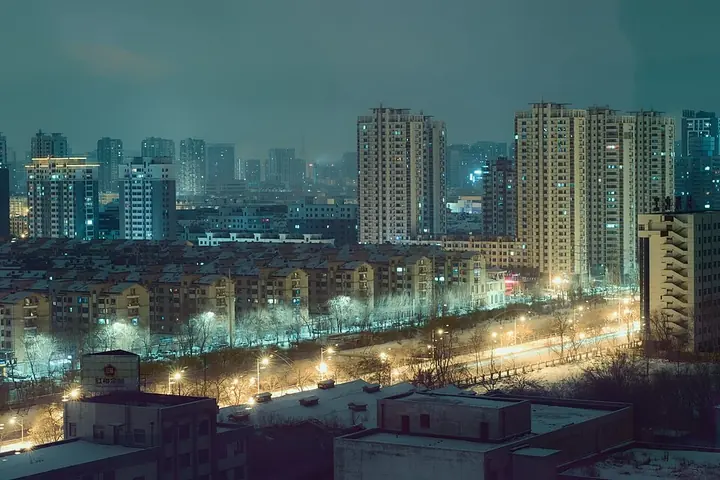
Photo adjustments
Full frame retained; proportionally resized and converted to WebP. No retouching or changes to the photographed subject. Card displays may crop the view.
- Administrative area
- District · 市辖区
- Part of
- Shenyang
- Chinese name
- 铁西区
- Local areas
- District guide
Area & population
- Area in the source
- 286.00 km²
- Population · 2020
- 1,335,935
Source: cited geographic source, as of the dates shown.
History
Tombs found in 1958 at Zhengjiawazi (郑家洼子) held bronze short swords, stone tools, pottery and chariot fittings dated to some 2,700 years ago. After Nurhaci (努尔哈赤) moved his capital to Shenyang in 1625, much of the land west of the city was assigned to the Bordered Blue Banner, and until 1931 it was farmland and scattered villages.
Industry arrived with the railway. In 1898 Russia forced the Qing to grant it the right to build a line from Harbin (哈尔滨) to Lüshun (旅顺); after Japan took over the southern section in 1906, the Japanese South Manchuria Railway Company treated the east side of the tracks as town and the west side as a factory zone. Companies such as Mitsui, Mitsubishi and Sumitomo built plants here, and a district called Tiexi was formally set up on 1 January 1938.
After 1949 the district became a centre of national industrial planning: three of the 156 key projects built with Soviet help were in Tiexi. Workers' Village (工人村), begun on 23 September 1952 as 72 three-storey brick blocks, was then the largest workers' housing estate in China. After management reforms begun in 1984, the economy of the Northeast declined and many of Tiexi's state enterprises went bankrupt; in 2002 the district government merged its offices with the Shenyang Economic and Technological Development Zone.
What to see
The China Industrial Museum (中国工业博物馆) occupies the former sand-casting workshop of the Shenyang Foundry (沈阳铸造厂), built in 1956 and once described as the largest specialised foundry in Asia. The foundry poured its last iron on 17 April 2007 and moved out; the workshop was listed as a Liaoning provincial heritage site in 2008 and named national industrial heritage in 2018. Inside, giant ladles and cupola furnaces remain in place, and further halls cover the general history of Chinese industry and machine tools arranged from belt-driven lathes to numerically controlled machines.
Highlights
- China Industrial Museum 中国工业博物馆: Museum in the 1956 casting workshop of the Shenyang Foundry, a provincial heritage site since 2008.
- Workers' Village 工人村: Housing estate begun in 1952, then the largest workers' residential area in China.
Sources for this guide
铁西区 (沈阳市) · Wikipedia (Chinese) · CC BY-SA 4.0
沈阳市铁西区(经开区、中德园)简介 · Tiexi District People's Government, Shenyang
中国工业博物馆 · Wikipedia (Chinese) · CC BY-SA 4.0
Original English written from the listed sources and checked sentence by sentence against quoted extracts by a separate reviewer. Updated 2026-09-26.
Explore Tiexi District
Core places to explore, with English and Chinese names.
Places to explore around Tiexi District
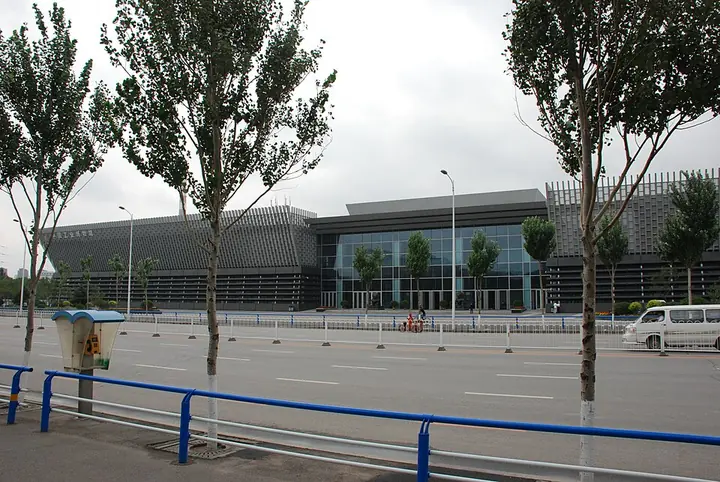 China Museum of Industry entrance facade, Shenyang ·
 Plan your visit
Getting there
Tiexi District is about 20 km in a straight line from central Shenyang. Search for 铁西区 in a map app to find stations and your accommodation.
Where to stay →Build your route
Start with China Museum of Industry. The linked place guides have entrance and visit details.
Continue with Shenyang →More in Shenyang
Sources & geographic information
Administrative names and parent areas: Official geographic directory · Reference date 2026-09-06.
Some facts checked against 铁西区 (沈阳市) — Wikipedia contributors, CC BY-SA 4.0.
Some facts checked against 中国工业博物馆 — Wikipedia contributors, CC BY-SA 4.0.
Photo: China Museum of Industry · Wang65 · Wang65 — Chinese_Industry_Museum.JPG — CC BY-SA 3.0 · CC BY-SA 3.0. Full frame retained; proportionally resized and converted to WebP. No retouching or changes to the photographed subject. Card displays may crop the view.

Map data © OpenStreetMap contributors. Pins mark approximate centres, not entrances or boundaries.