


Get to know Chengdong District
- Administrative area
- District · 市辖区
- Part of
- Xining
- Chinese name
- 城东区
- Local areas
- District guide
Area & population
- Area
- 114.59 km²
- Population · 2020
- 489,372
- Administrative seat
- Dazhong Street Subdistrict
Source: English Wikipedia, as of the dates shown.
Chengdong is less a single sightseeing zone than a working eastern slice of Xining. The district lies on the downstream stretch of the Huangshui River and borders Ping’an District, Huangzhong District, Chengzhong District and Huzhu County. The district government describes it as Xining’s eastern gateway and records 114.59 square kilometres, seven subdistricts and one town; its population figure comes from the Seventh National Population Census. Treat the district as a broad urban area, not as one walkable attraction: the old-city mosque, railway quarter, markets and more peripheral parks need different routes.
The clearest first encounter is Dongguan Street and Dongguan Mosque (东关清真大寺). The mosque is an active place of worship as well as an architectural landmark: look at the sequence of gates, the courtyard and the prayer hall’s combination of Chinese building forms and Islamic features, while leaving worshippers space. A Qinghai government account dates its foundation to the Hongwu period of the Ming dynasty and gives its historic address as 31 Dongguan Street. The mosque is not a museum performance; dress and behaviour should be respectful, and photography should never interrupt prayer or assume access to every interior.
Chengdong’s other strong character is commercial rather than monumental. The district government names Wangjiazhuang Small Commodities Wholesale Market (王家庄小商品批发市场), Qinghai Huixin Food Distribution Centre (青海汇鑫食品集散中心), Daxibu Trade City (大西部商贸城) and two cordyceps trading centres. It also identifies Tibetan carpets, Kunlun jade, Qinghai old-style yoghurt and yak jerky among products associated with the district’s trade. These are working markets, not a guaranteed tourist show: observe without blocking business, ask before photographing people or goods, and treat packaged food, jade and medicinal products as purchases requiring your own checks.
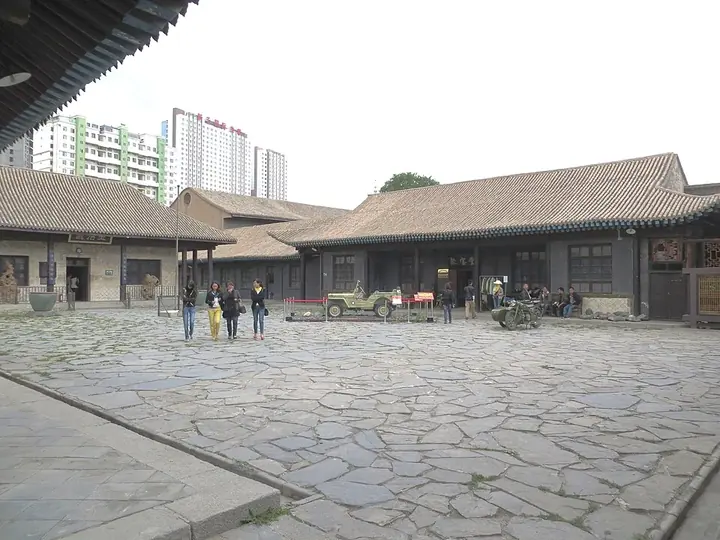
Xinlu (馨庐), also known as Ma Bufang’s former residence and historically linked with the Qinghai Folk Customs Museum, helps explain the district’s layered twentieth-century history. A Qinghai government account describes a compound built from six courtyards and a rear garden, begun in 1942 and completed in 1943, with residential, administrative and security functions. Do not plan an interior visit without checking first: a recent listing accessed on 24 October 2026 marks Xinlu Residence as temporarily closed. The building is therefore best treated as a historical reference point unless a current official notice confirms entry.
Getting there and back
By rail, use Xining Railway Station (西宁站), which is inside Chengdong and is the starting station of the Qinghai–Tibet Railway. China Railway’s station guide lists passenger services towards Lhasa, Golmud, Lanzhou and other major cities. For the old-city mosque, the station’s “火车站” stop is listed on routes 1, 22, 33 and 101; a local transport guide also lists route 2. Get off at “北小街口” and walk along Dongguan Street for about 150 metres to the mosque. Check the live direction and stop-side before boarding.
For the return, use the reverse-direction stop and confirm that the bus is heading to “火车站”, or use a taxi or ride-hail with the Chinese destination “西宁站”. Chengdong is a large district, so give the driver the exact venue rather than only the district name. If you arrive by air, Xining Caojiabao International Airport (西宁曹家堡国际机场) is in Huzhu County, outside Chengdong. China Southern’s airport information says the airport is about 30 kilometres from central Xining and that an airport bus can be taken from 八一路客运站; check the current bus timetable and terminal before relying on it for either direction.
Before you go
Visitor information for Dongguan Mosque is time-sensitive. A local notice dated 22 October 2024 lists free entry, daytime visiting on most days and restrictions during Friday prayer, but these are not a substitute for the mosque’s current notice. The same sources give 31 and 34 Dongguan Street as the address, so search for “东关清真大寺” in a current Chinese map and confirm the open gate on arrival. This guide does not assume a passport booking or foreign-visitor policy where no current source states one.
Guide sources
- 区情简介 — Chengdong District People’s Government
- 【西宁市旅游景点】东关清真大寺 — Qinghai Provincial Government
- 西宁东关清真大寺公交在哪下 — Xining Bendibao
- 西宁站 — China Railway 12306
- 极具建筑艺术的馨庐 — Qinghai Daily via Qinghai Provincial Government
- Xinlu Residence Travel Guide — Trip.com
- 西宁 — China Southern Airlines airport information
Explore Chengdong District
Core places to explore, with English and Chinese names.
Places to explore around Chengdong District
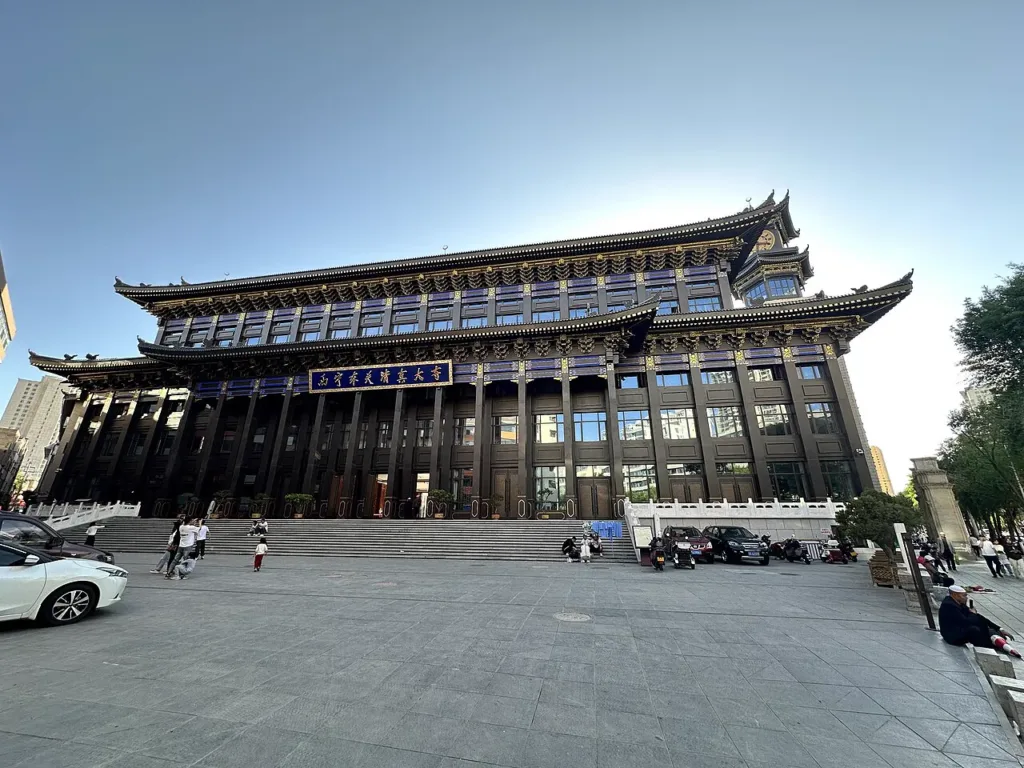 A May 2025 exterior view of Dongguan Mosque's main prayer building and public forecourt, showing the Chinese-style roofline in its street-side setting. Photo: Michał Beim · CC BY 4.0
Plan your visit
Getting there
Chengdong District is about 10 km (straight-line distance) from central Xining. Search for 城东区 in a map app to find stations and your accommodation.
Where to stay →Build your route
Start with Dongguan Mosque. The linked place guides have entrance and visit details.
Continue with Xining →More in Xining
Sources & geographic information
Administrative names and parent areas: Official geographic directory (dmfw.mca.gov.cn) · Reference date 2026-09-06.
Background text adapted from Chengdong, Xining — Wikipedia contributors, under CC BY-SA 4.0. Text has been shortened and reorganized; source revision 1360354201.
Map data © OpenStreetMap contributors. Pins mark approximate centres, not entrances or boundaries.
Image credits & notes (1)
- A courtyard of Ma Bufang's former residence in Chengdong District, Xining. Photograph date recorded by the source: 2013-05-31 05:24:07.Photo: Popolon · CC BY-SA 3.0Resized for the web; the photo itself has not been edited. Thumbnails may show a cropped view.
