

Get to know Laiyang
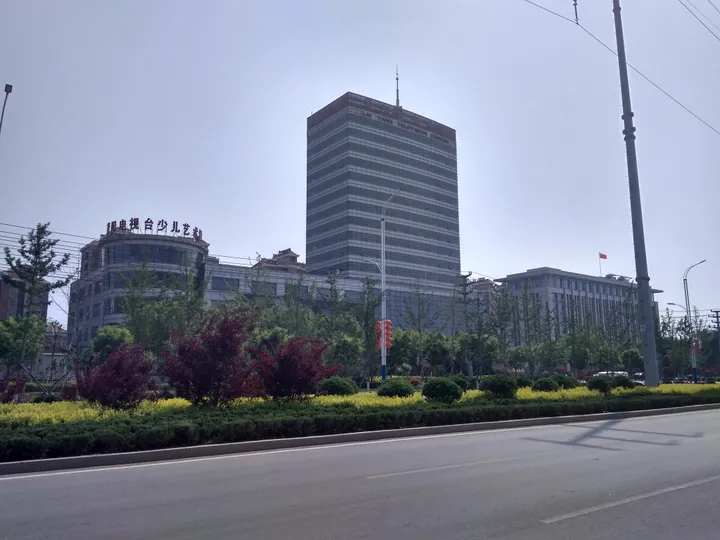
Photo adjustments
Full frame retained; proportionally resized and converted to WebP. No retouching or changes to the photographed subject. Card displays may crop the view.
- Administrative area
- County-level city · 县级市
- Part of
- Yantai
- Chinese name
- 莱阳市
- Local areas
- County-level city guide
Area & population
- Area in the source
- 1,734.00 km²
- Population · 2020
- 872,000
Source: cited geographic source, as of the dates shown.
Setting and landscape
Laiyang is mostly hills and low mountains where apple and pear orchards are common; large flat fields are rare and little wheat is grown. Its rivers are mostly rain-fed monsoon streams that flow from north to south. Besides pears and apples, the city is known for peanut oil, and it styles itself China's 'home of pears' (中国梨乡) and 'home of peanut oil'.
History
The old name of the place was Changyang (昌阳). Under the Shang, Western Zhou and Spring and Autumn periods it belonged to the state of Lai (莱国), and in the Ming and Qing it was governed from Dengzhou (登州府).
The poet Song Wan (宋琬, 1614–1674) came from an established Laiyang clan; counted among the eight great poets of the Qing, he was paired with Shi Runzhang (施闰章) of Xuancheng (宣城) as 'Shi of the south, Song of the north'. In 1879 the county magistrate put up a stele at his house, which is now the Laiyang Museum (莱阳市博物馆).
Laiyang Agricultural College, founded in 1951, produced China's first cow cloned from a somatic cell in November 2001; in 2007 it was renamed Qingdao Agricultural University and moved to Qingdao, leaving its Haidu College (海都学院) on the old campus.
What to see and do
Mantis boxing (螳螂拳), put on the national list of intangible cultural heritage in 2008, is said to have been created by Wang Lang (王朗) of Jiaodong in the late Ming or early Qing after watching a mantis catch a cicada, and it spread most widely in Laiyang. From here it developed into four main Jiaodong schools: Taiji, Plum Blossom, Seven Star and Six Harmonies mantis. It favours linked hooking, grabbing and striking hands, summed up in the saying 'no hook, no strike; once hooked, strike several times'.
Graded scenic areas include the Cretaceous National Geopark (白垩纪国家地质公园, 4A), the pear-country scenic area (梨乡风情旅游区) and Zhuo village (濯村, both 3A), and the Wulong River (五龙河) water scenic area, Niangniang Mountain (娘娘山) and Xianhe Park (蚬河公园, all 2A). The Dingzi Bay (丁字湾) coastal resort is a provincial tourism resort.
Getting oriented
The city has two railway stations, Laiyang and Laiyang South (莱阳南站).
Highlights
- Mantis boxing 螳螂拳: Martial art said to be modelled on a mantis catching a cicada; national intangible heritage, 2008.
- Laiyang Museum (Song Wan's former residence) 莱阳市博物馆: Museum in the house of the early-Qing poet Song Wan.
- Cretaceous National Geopark 白垩纪国家地质公园: The city's 4A-graded scenic area.
- Laiyang pears 莱阳梨: The fruit behind Laiyang's title 'home of pears'.
Sources for this guide
螳螂拳 - 中国非物质文化遗产网·中国非物质文化遗产数字博物馆 · China Intangible Cultural Heritage Network (Chinese National Academy of Arts)
莱阳市 - 维基百科,自由的百科全书 · Wikipedia (Chinese) · CC BY-SA 4.0
宋琬 - 维基百科,自由的百科全书 · Wikipedia (Chinese) · CC BY-SA 4.0
Original English written from the listed sources and checked sentence by sentence against quoted extracts by a separate reviewer. Updated 2026-09-23.
Explore Laiyang
Core places to explore, with English and Chinese names.
Plan your visit
Getting there
Laiyang is about 85 km in a straight line from central Yantai. Search for 莱阳市 in a map app to find stations and your accommodation.
Where to stay →More in Yantai
Sources & geographic information
Administrative names and parent areas: Official geographic directory · Reference date 2026-09-06.
Some facts checked against 莱阳市 — Wikipedia contributors, CC BY-SA 4.0.
Some facts checked against 宋琬 — Wikipedia contributors, CC BY-SA 4.0.
Map data © OpenStreetMap contributors. Pins mark approximate centres, not entrances or boundaries.