


Get to know Zhaoyuan
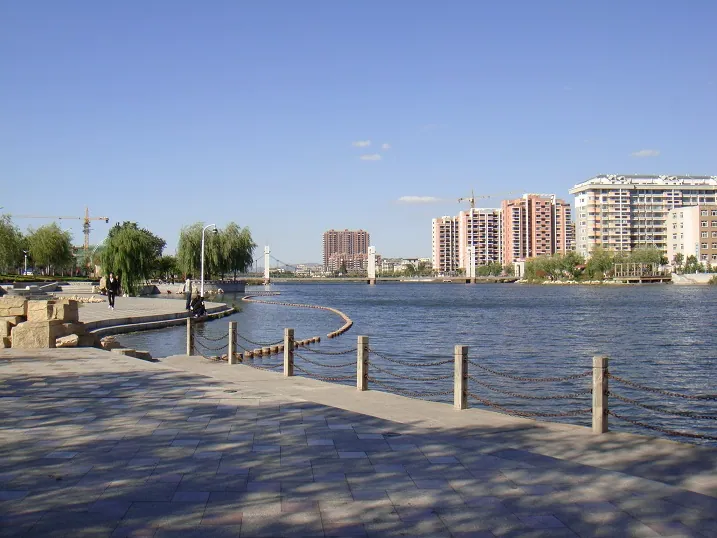
Photo adjustments
Full frame retained; proportionally resized and converted to WebP. No retouching or changes to the photographed subject. Card displays may crop the view.
- Administrative area
- County-level city · 县级市
- Part of
- Yantai
- Chinese name
- 招远市
- Local areas
- County-level city guide
Area & population
- Area in the source
- 1,432.32 km²
- Population · 2019
- 560,234
Source: cited geographic source, as of the dates shown.
Setting and landscape
The land is higher in the northeast, the centre and the west, and lower in the northwest and southeast. The gold deposits are concentrated in the northeast of the city, and the mining company Zhaojin Mining (招金集团) has its headquarters here.
History
Under the Han dynasty the area was organised as Qucheng County (曲成县), and the site of the ancient Qucheng city lies within Zhaoyuan. The county took the name Zhaoyuan in 1131 and was made a county-level city on 21 December 1991. Local legend says the gold was found when a giant tortoise named Ao told famine-stricken villagers where to dig.
What to see
Luoshan National Forest Park (罗山国家森林公园) holds a large golden statue of Ao, 15 metres tall and 20 metres long, in Oujiakuang village (欧家夼村) in Linglong town (玲珑镇).
Food and local products
Longkou vermicelli (龙口粉丝) was born in Zhaoyuan, not in Longkou. In the late Ming and early Qing, Zhaoyuan people began making glass noodles from mung beans, and by the Xianfeng reign the craft had spread across the county. From 1860, or by another account 1916, the noodles were shipped out through the port of Longkou, which gave them their name. The traditional process has three hand stages, making the starch paste, dripping the strands and sun-drying them; good vermicelli is white, translucent and chewy. It became a Chinese geographical-indication product in 2002, Zhaoyuan is one of the five Yantai areas where the name may be used, and the traditional technique joined the national intangible heritage list in 2014.
Highlights
- Luoshan National Forest Park 罗山国家森林公园: Forest park containing the 15-metre golden statue of the tortoise Ao.
- Longkou vermicelli 龙口粉丝: Mung-bean glass noodles that originated in Zhaoyuan; national intangible heritage technique since 2014.
Sources for this guide
招远市 - 维基百科,自由的百科全书 · Wikipedia (Chinese) · CC BY-SA 4.0
Zhaoyuan, Shandong - Wikipedia · Wikipedia (English) · CC BY-SA 4.0
龙口粉丝 - 维基百科,自由的百科全书 · Wikipedia (Chinese) · CC BY-SA 4.0
Original English written from the listed sources and checked sentence by sentence against quoted extracts by a separate reviewer. Updated 2026-09-23.
Explore Zhaoyuan
Core places to explore, with English and Chinese names.
Places to explore around Zhaoyuan
 AI illustration · AI
 Plan your visit
Getting there
Zhaoyuan is about 95 km in a straight line from central Yantai. Search for 招远市 in a map app to find stations and your accommodation.
Where to stay →Build your route
Start with Luoshan Mountains. The linked place guides have entrance and visit details.
Continue with Yantai →More in Yantai
Sources & geographic information
Administrative names and parent areas: Official geographic directory · Reference date 2026-09-06.
Some facts checked against 招远市 — Wikipedia contributors, CC BY-SA 4.0.
Some facts checked against Zhaoyuan, Shandong — Wikipedia contributors, CC BY-SA 4.0.
Some facts checked against 龙口粉丝 — Wikipedia contributors, CC BY-SA 4.0.
Map data © OpenStreetMap contributors. Pins mark approximate centres, not entrances or boundaries.