


Get to know Jinshan District
- Administrative area
- District · 市辖区
- Part of
- Shanghai
- Chinese name
- 金山区
- Local areas
- District guide
Area & population
- Area
- 586.14 km²
- Population · 2020
- 822,776
Source: English Wikipedia, as of the dates shown.
Jinshan is Shanghai’s southwestern edge, where the municipality meets Zhejiang and turns south toward Hangzhou Bay. Its identity is less about a continuous city centre than a set of distinct landscapes: historic market towns in the north, farmland and flower-growing country inland, and a coastal strip around Shihua, Jinshan City Beach and Jinshanzui. The district is administered as Shihua Subdistrict and nine towns; it is an extensive area, not a sightseeing precinct that can be crossed on foot.
That geography gives a useful way to plan: choose one part of Jinshan per outing. Fengjing is a northern water-town visit; the beach and fishing village make a separate southern itinerary; rural attractions such as Langxia Countryside Park or Huakai Haishang Ecological Park are their own destinations rather than walkable extensions of either. The Ministry of Culture and Tourism’s route connects several of these places as a multi-stop, district-wide trip, while recent local route guidance likewise organizes the coast and countryside over more than one day.
Fengjing: follow the lanes and bridges
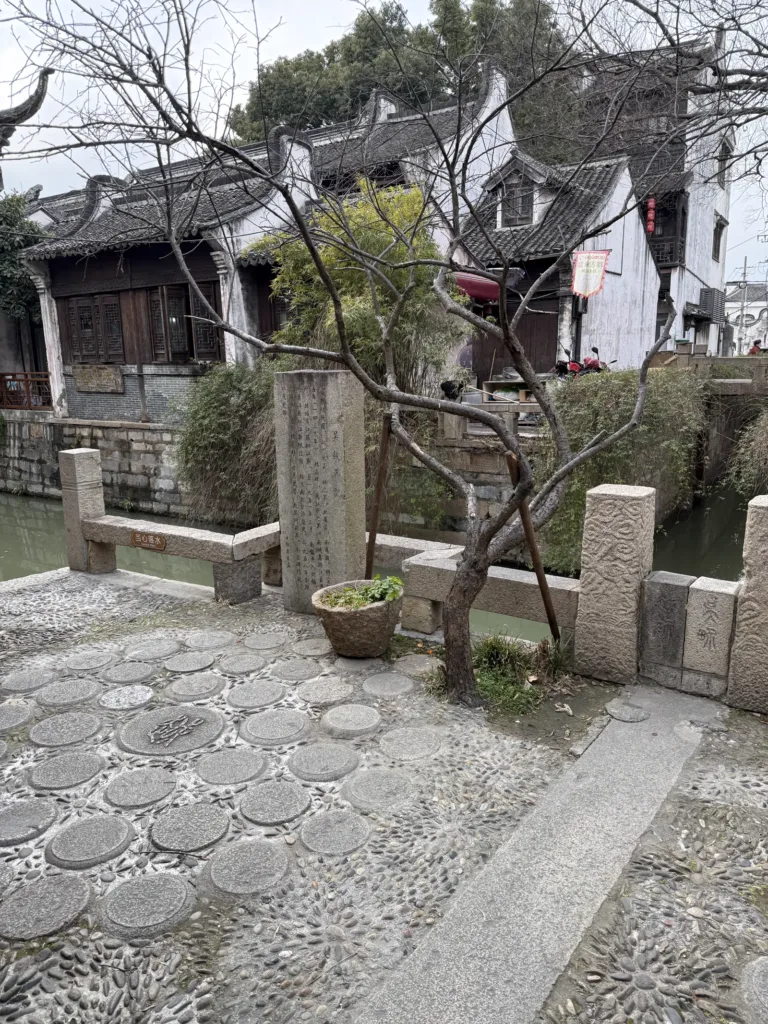
Fengjing Ancient Town (枫泾古镇) is the strongest place to begin if you want to understand Jinshan’s water-town character. Fengjing lies in the district’s northwest, beside the Zhejiang border. The town’s waterways thread between old houses and lanes; the local saying “three steps, two bridges; one look, ten lanes” captures the compact, bridge-linked pattern better than trying to treat the historic quarter as one monument. A sensible visit is to walk slowly between the Three Bridges and the principal lanes, then choose a museum or heritage house rather than trying to see every site.
The town is also associated with Jinshan peasant painting, a locally rooted folk-art tradition, and with painter Cheng Shifa and cartoonist Ding Cong. District information lists their former homes or museums among Fengjing’s cultural stops. These provide a different lens on the town from the canal scenery: look for paintings and local craft, not only the familiar view of white walls reflected in water. If you want a longer cultural visit, China Peasant Painting Village is in nearby Zhonghong Village, also within Fengjing Town, but it is a separate rural stop and requires its own transfer.
Getting there and tickets: the town’s visitor address is 8588 Nong, Tingfeng Highway, Fengjing Town. A local government visitor guide published in April 2026 says entry to the historic street area is free, while access to paid exhibition halls can be bought as a 50-yuan combination ticket. Treat that as the guide’s stated price, not a guarantee against later changes; check the official local channel before travel. The Ministry of Culture and Tourism describes Fengmei Line from Jinjiang Park Metro Station and Lianfeng Special Line from Lianhua Road Metro Station as public-transport approaches. Routes and departure patterns can change, so confirm the current service before setting out.
The south coast: beach promenade and fishing-village streets
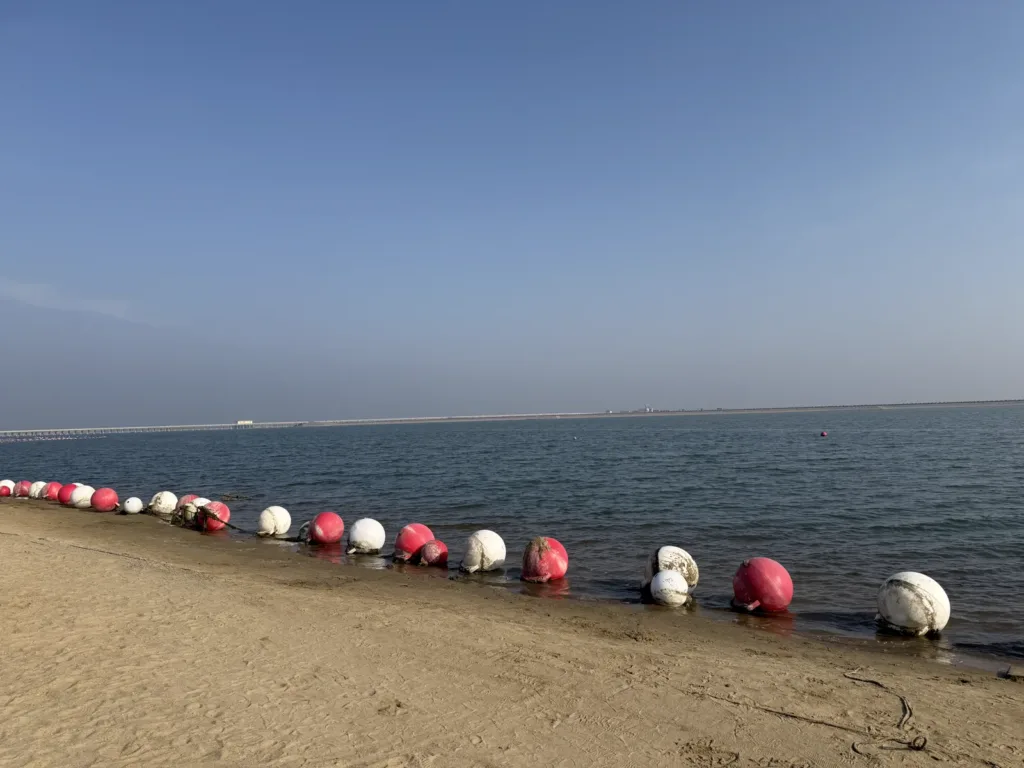
Jinshan City Beach (金山城市沙滩) is a managed recreational waterfront facing Hangzhou Bay, rather than a natural open-coast beach. A promenade runs along the shore; the best way to use the visit is to take the waterfront at an unhurried pace, then continue east to Jinshanzui Fishing Village (金山嘴渔村) for the area’s maritime history and food culture. The two sites are close enough to make a coherent coastal day, but they are distinct attractions with separate entrances and experiences.
Jinshanzui preserves a lived-in fishing-village setting and interprets it through small museums and collections devoted to fishing gear, maritime culture, Mazu worship and local objects. Rather than rushing through a checklist, walk its lanes and pause at the exhibition spaces that are open; the village’s role as a coastal settlement is the point. Local sources place Jinshan City Beach beside the village, while the Ministry of Culture and Tourism lists the village and beach together on a Jinshan route.
Arrival: for the beach, the Ministry of Culture and Tourism route gives a rail-and-bus approach: take the Jinshan Railway from Shanghai South to Jinshanwei, then Jinshan Bus 2 to Qijiadun. A May 2026 local route article also describes travel to Jinshanwei Station followed by the Shinan Special Line toward Jinshanzui. These are published route references, not live timetables; check the current destination and bus service before departure. For the beach, use the official address 7555 Huhang Highway in navigation and follow the attraction’s marked public entrance. Current beach opening hours, swimming conditions, booking requirements and ticket prices were not established in the official pages checked on 21 October 2026, so do not assume they are unchanged from older seasonal notices.
Inland Jinshan: plan a countryside outing separately
Between the northern towns and the coast, Jinshan’s rural landscape offers a slower, seasonal visit. Huakai Haishang Ecological Park, in Zhujing Town, is a planted garden landscape organized around flower areas, a plum garden, aromatic gardens and seasonal scenery. Langxia Countryside Park and its Shantang Old Street give a different outing: village-scale streets, countryside and local food or craft activities. These places are spread out; they work best as destination-based visits, with a car or a verified local connection, rather than as add-ons after walking Fengjing.
For a north-Jinshan day, pair Fengjing with a nearby rural attraction only if you have confirmed the connection and opening status. For a south-coast day, stay around the beach and Jinshanzui, or add one inland stop only with enough transfer time. Donglin Temple (东林寺) in Zhujing is a separate active Buddhist site, not part of the coastal circuit; visitors should respect worship and check the temple’s own current access information before going.
A practical way to explore the district
Use a map pin for the specific attraction rather than “Jinshan District.” The area is large: the district government describes a low-lying plain crossed by waterways, a 23.3-kilometre coastline and three islands offshore. Those details help explain why “near Jinshan” does not necessarily mean a convenient walk or quick transfer. Pick the north, centre or south as the day’s focus, then verify the last bus or return train before leaving the more rural stops.
Jinshan’s appeal is the contrast within Shanghai itself: canal bridges and folk painting in the north, working-village memory and a managed bayfront to the south, and cultivated countryside between them. It is worth giving those contrasts room rather than compressing the district into a hurried list of landmarks.
Guide sources
- Jinshan District Government profile
- Shanghai administrative division codes, 27 July 2026
- Jinshan’s tourism areas and routes
- A painted Jinshan route, Ministry of Culture and Tourism
- Spring outings in Jinshan, local visitor guide, 7 April 2026
- Jinshan rural tourism routes, 6 May 2026
- Shanghai Jinshan City Beach, official Shanghai travel website
Explore Jinshan District
Core places to explore, with English and Chinese names.
Places to explore around Jinshan District
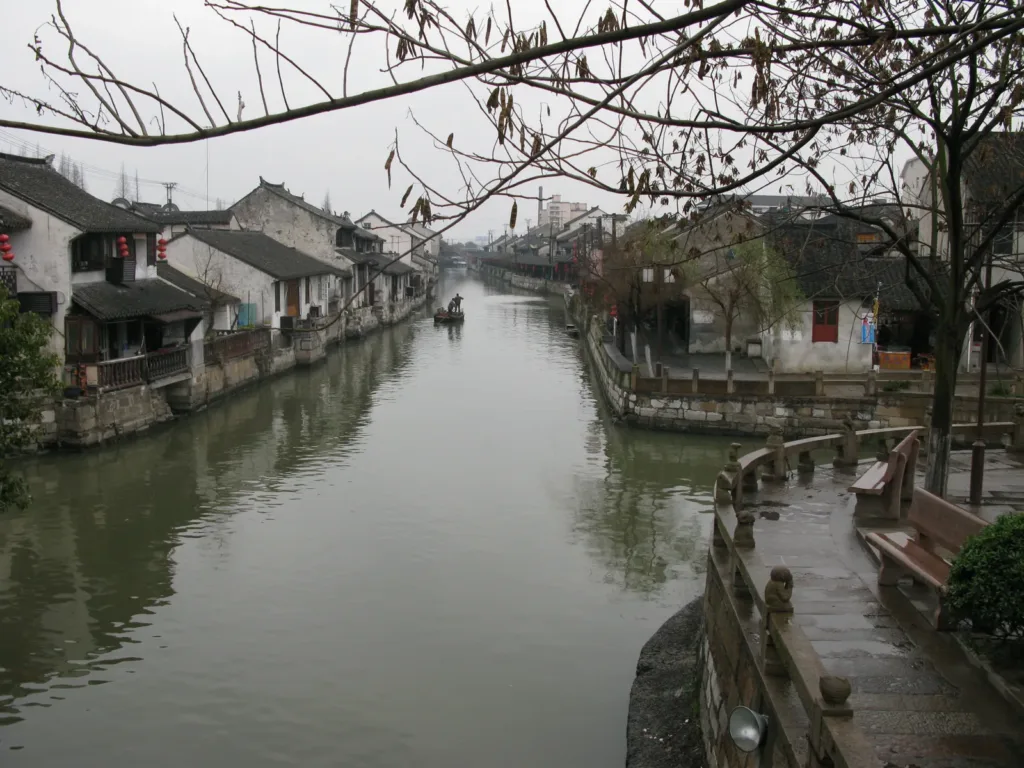 Fengjing canal, 12 January 2008. Photo: Carsten Ullrich from Shanghai, China · CC BY-SA 2.0
Fengjing枫泾
In Shanghai’s southwestern Jinshan District, Fengjing is a historic canal town shaped by its position on the old Wu–Yue cultural boundary. Follow the waterside lanes around the Three Bridges, then choose a heritage house or small exhibition site rather than treating nearby Zhonghong Peasant Painting Village as part of the same stop. Line 1 and the Fengmei bus provide the published public-transport approach from central Shanghai.
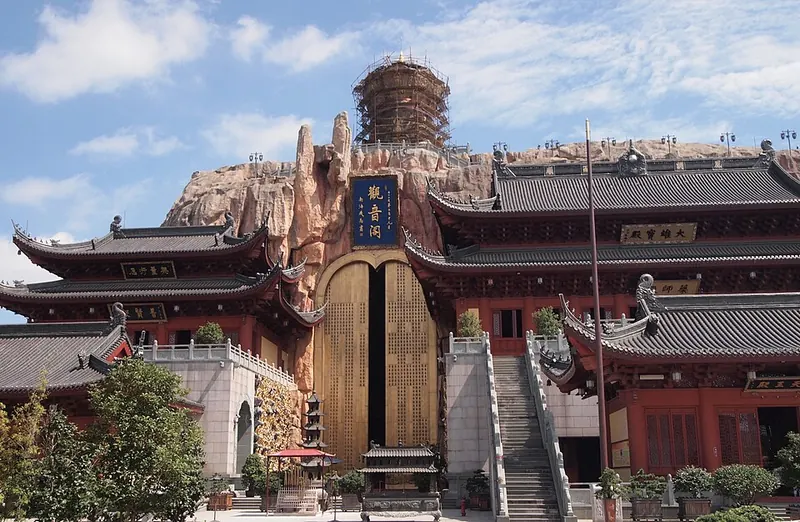
Read the place guide →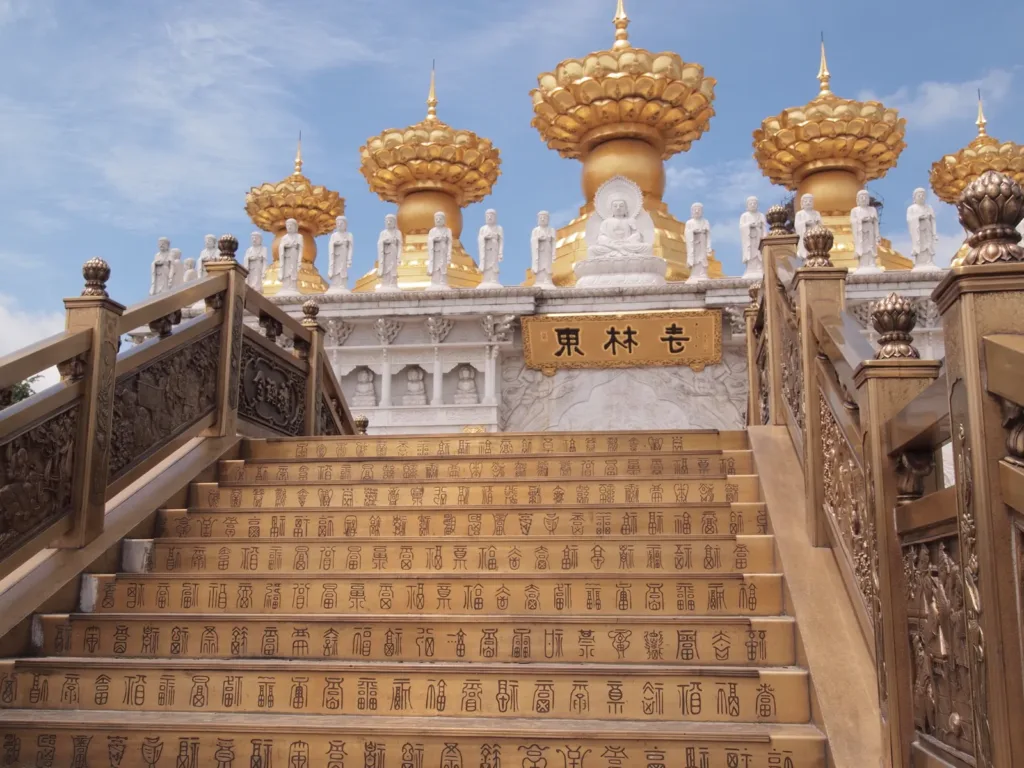 The upper façade and roofline figures frame the temple’s mountain-like composition. Photo: Jetlife2 · CC BY-SA 3.0
Donglin Temple (Shanghai)东林寺
In Zhujing, on Shanghai’s southwestern edge, Donglin Temple pairs an active Buddhist place of worship with a striking modern, mountain-like complex. Look for the cloisonné Shancai figure, the monumental bronze Thousand Buddha Gate and the Guanyin Pavilion; check current access before travelling, since the published service details are dated and the temple’s ticket price was not confirmed for 2026.
Read the place guide → The buoys and seawall in this 2025 photograph show one section of the enclosed shore; it is not a current-season conditions report. Photo: Carrot2333 · CC0 1.0
Jinshan City Beach金山城市沙滩
Jinshan City Beach is a managed coastal recreation area on Hangzhou Bay in Shanghai’s Jinshan District, not an unregulated natural strand. Its east and west sections sit within a protective seawall; the sandy shore and a 1,500-metre coastal promenade make the built shoreline itself the main walk, while swimming and water activities are seasonal.
Read the place guide →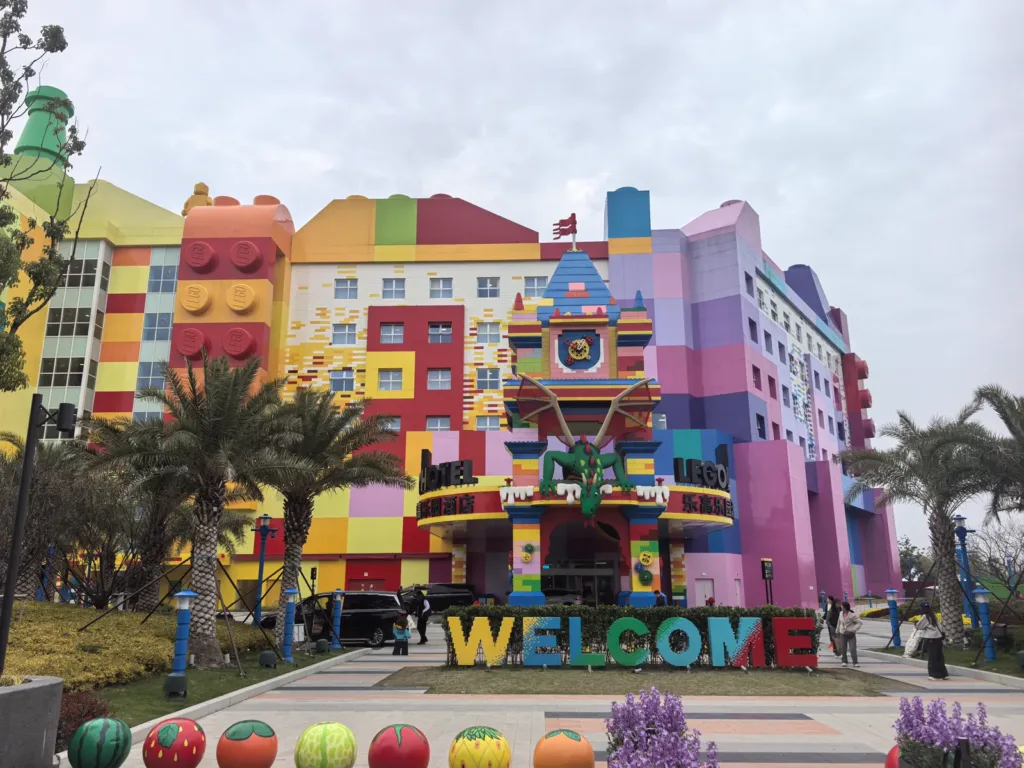 The colorful LEGOLAND Shanghai Hotel facade. Photo: 4084470 0.smil (Wikimedia Commons username) · CC BY 4.0
LEGOLAND Shanghai Resort上海乐高乐园®度假区
Set in Fengjing Town on Shanghai’s far southwestern edge, LEGOLAND® Shanghai Resort is a full-day, hands-on theme park built around LEGO play, family rides and Chinese-themed storytelling. Its eight themed areas include attractions announced for LEGO City and Monkie Kid, while the 2026 official site lists more than 75 experiences. Plan around children’s interests and the live ride map, then check the official app or mini-program for the chosen date’s hours, ticket availability and final fare.
Read the place guide →Local life & food
Jinshan District local specialties
金山区特色美食 · 2 specialties to discover
 Fengjing braised pork hock 枫泾丁蹄AI dish illustration / AI 菜品示意图
A Jinshan specialty associated with Fengjing Town, 枫泾丁蹄 is a whole pork hock slowly braised to a glossy soy-brown finish. Try it chilled, when the seasoned skin and set cooking juices are fragrant, or steamed, when the texture turns warm and sticky.
Source ↗Read the dish guide →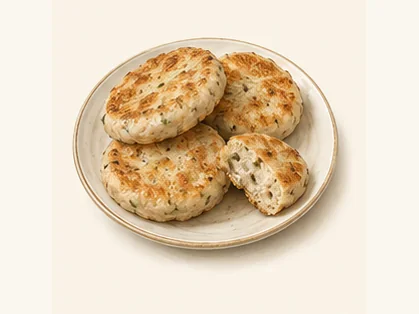 Jinshan fish cakes 金山米鱼饼AI dish illustration / AI 菜品示意图
A fish cake promoted as a Jinshan Zui Fishing Village specialty.
Source ↗Read the dish guide →All dish names · 全部菜名 (2)
More dishes from across Shanghai are in the Shanghai food guide.
Plan your visit
Getting there
Jinshan District is about 45 km (straight-line distance) from central Shanghai. Search for 金山区 in a map app to find stations and your accommodation.
Where to stay →Build your route
Fengjing and Donglin Temple (Shanghai) are about 15 km apart (straight-line distance). The linked place guides have entrance and visit details.
Continue with Shanghai →More in Shanghai
Sources & geographic information
Administrative names and parent areas: Official geographic directory (dmfw.mca.gov.cn) · Reference date 2026-09-06.
Background text adapted from Jinshan, Shanghai — Wikipedia contributors, under CC BY-SA 4.0. Text has been shortened and reorganized; source revision 1355464407.
Map data © OpenStreetMap contributors. Pins mark approximate centres, not entrances or boundaries.
Image credits & notes (3)
- Donglin Temple in Jinshan District, Shanghai. Photo: 2012-07-21.Photo: Jetlife2 · CC BY-SA 3.0Resized for the web; the photo itself has not been edited. Thumbnails may show a cropped view.
- A canal-side lane in Fengjing Old Town, with whitewashed walls, tiled roofs and a stone bridge. Photo: Carrot2333Photo: CC0 1.0
- Sandy shore and red-and-white buoys along the water at Jinshan City Beach. Photo: Carrot2333Photo: CC0 1.0
