


Get to know Xuhui District
- Administrative area
- District · 市辖区
- Part of
- Shanghai
- Chinese name
- 徐汇区
- Local areas
- District guide
Area & population
- Area
- 54.76 km²
- Population · 2020
- 1,113,078
Source: English Wikipedia, as of the dates shown.
Xuhui occupies southwest central Shanghai. It covers 54.93 square kilometres and, under the municipal division list published on 27 July 2026, comprises 12 subdistricts and Huajing Town. The district reported a year-end 2025 resident population of 1.1012 million. These are district-wide figures, not a measure of how far apart its visitor areas are.
The useful way to explore Xuhui is to choose a neighbourhood for each outing. Its best-known experiences are not contiguous attractions: the former French Concession’s tree-shaded residential streets, the historic and commercial centre at Xujiahui, the riverfront arts district, and Longhua’s Buddhist and memorial landmarks each have a different pace. Xujiahui itself takes its name from Xu Guangqi, the scholar and official associated with this part of Shanghai; the municipal government describes the district more broadly as a meeting place of Shanghai, Jiangnan and international cultural influences.
Hengfu and Wukang–Anfu: a streetscape, not an indoor attraction
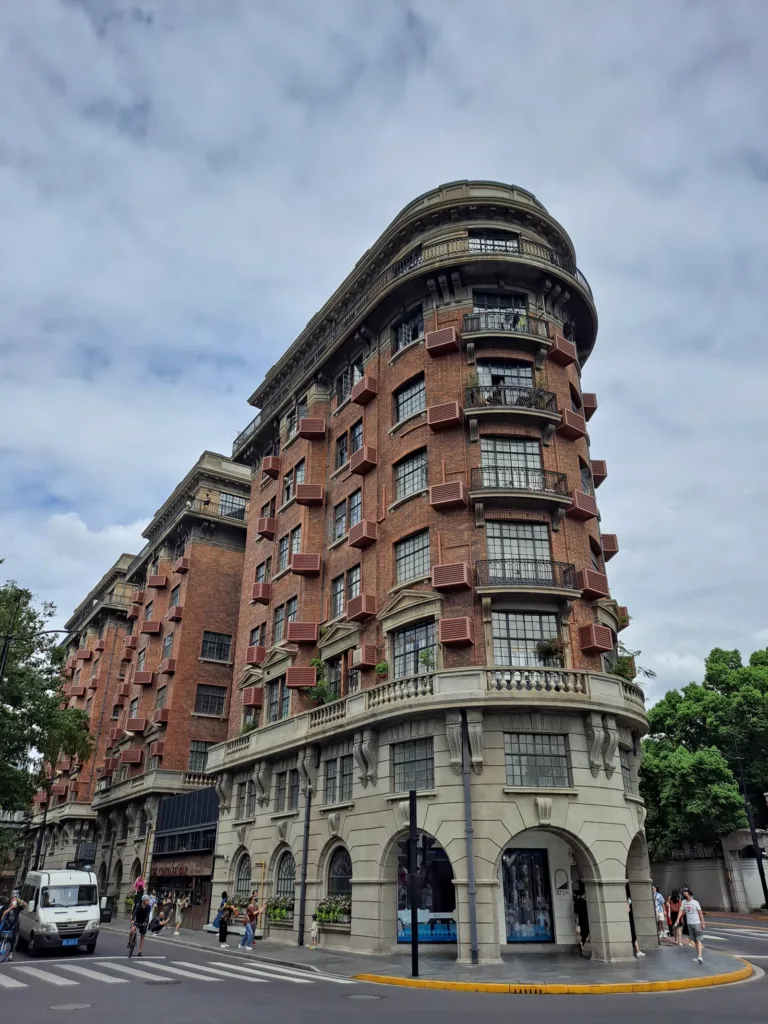
Start at the Wukang Road Tourist Information Center, 393 Wukang Road, where the official Shanghai tourism route describes displays about Xuhui’s historic houses. The route’s architectural anchor is Wukang Mansion (武康大楼), the wedge-shaped apartment block at the junction with Middle Huaihai Road. Built in 1924 and formerly called Normandie Apartments, it is a street-facing landmark, not a public house museum: the tourism authority says it is not open to visitors inside. Walk around the junction to read its red-brick elevations and arcaded base, then continue along Wukang Road rather than expecting access to the residential interior.
For a compact, landmark-focused stroll, continue to the Wukang Road Post Office at 1883 Middle Huaihai Road and finish at the Shanghai Soong Ching Ling Former Residence Memorial Hall, 1843 Middle Huaihai Road. The official tourism page reviewed on 21 October 2026 lists the memorial hall’s hours as Tuesday–Sunday, 9:00–17:00, with last entry at 16:30. Because opening arrangements can change and the page is not clearly date-stamped, recheck the operator’s visitor notice before setting out.
A longer neighbourhood walk can loop back north along Wukang Road, passing Wukang Court and the Anfu Road area before ending near the Shanghai Dramatic Arts Centre, 288 Anfu Road. This is a lived-in district of shops, cafés, cultural venues and apartment buildings, so take the side streets at a residential pace and leave doorways and building entrances clear. Some frequently photographed buildings are private residences, not attractions: the same official route says the Ba Jin Former Residence at 113 Wukang Road and the so-called Romeo’s Balcony at 210 Wukang Road are not open to the public; it lists the former residence as under renovation.
Route start: Wukang Road Tourist Information Center, 393 Wukang Road. Follow the Wukang Mansion–post office–Soong Ching Ling Memorial Hall sequence for the short version; add Anfu Road and Wukang Court for a longer streetscape walk. The official tourism page gives conflicting opening schedules for the information center in different route descriptions, so confirm its hours before relying on it as a stop.
Xujiahui: a cluster of institutions amid the commercial centre
Plan Xujiahui Origin (徐家汇源) as a separate half-day, with the official attraction’s visitor centre or a chosen landmark as the map pin. The district describes the attraction as an open urban heritage area of about 2.4 square kilometres, combining historic scenery, shopping and green space—not one fenced site with a single gate. Its landmarks include St Ignatius Cathedral, the Xujiahui Observatory, the Xujiahui Library, and former educational institutions connected with the area’s Catholic and scholarly history.
A practical sequence is to begin around the cathedral and commercial centre, then walk between the heritage buildings that are actually open on the day. The official district information highlights the former observatory and library as significant heritage sites, while its attraction website currently points visitors to separate sections for opening information, visitor rules, recommended routes and services. The institutions have different operators and access rules, so do not assume that a district pass or one booking covers them all. The attraction’s older description of a free circuit ticket and advance-booking arrangements is not adequate evidence of today’s conditions; no current district-wide ticket price or universal reservation rule was confirmed on 21 October 2026. Check each institution’s own notice before travelling.
Keep this outing focused on Xujiahui rather than trying to walk to the West Bund or Longhua as if they were adjacent stops. The official Xujiahui Origin site lists a visitor-service telephone number, 021-54259260. Activity notices visible on its landing page were dated October 2025, so they do not establish events taking place in October 2026; the accessible page also did not expose a reliable current list of every site’s hours or ticket terms when checked on 21 October 2026.
West Bund: the Huangpu edge and the post-industrial city
The West Bund (Xuhui Riverside) is a separate riverfront outing. Xuhui government describes an 8.4-kilometre waterfront and a former industrial landscape that included railway freight yards, wharves, a cement works and aircraft manufacturing. The public realm now mixes river views and long walking or cycling stretches with arts venues and retained industrial structures. The shift from working waterfront to open cultural district is part of what makes this stretch recognisably Shanghai: the city’s industrial history remains visible beside new public space and contemporary institutions.
Choose one cluster instead of attempting the whole bank. Around the northern arts area, combine a riverside walk with an exhibition venue whose programme and entry rules you have checked. Farther south, use Longteng Avenue and the riverfront parkland as the focus. Look out for the scale of the former industrial sites and the open views across the Huangpu; the route is as much about the waterfront landscape as any single building. The district-government source confirms the area’s public riverfront and cultural development, but it does not provide one current, unified visitor timetable, fare or entrance for the whole West Bund. Individual museums and event spaces set their own hours and admission.
Route start: set a map pin to the particular museum, park entrance or stretch of Longteng Avenue you intend to visit. The West Bund is a long, multi-entry area, not a single attraction with one entrance; check the chosen venue’s official visitor page and current transit directions on the day.
Longhua: temple, pagoda and remembrance
Longhua, in southern Xuhui, makes another distinct outing. Longhua Temple and Longhua Pagoda form a historic religious complex, while the Longhua Revolutionary Martyrs’ Memorial and cemetery provide a solemn commemorative landscape nearby. The district’s account of its historic conservation area treats these as related but distinct places. Visit the temple as an active religious site: observe posted rules, keep quiet in worship spaces and do not treat ritual activity as a performance. The memorial grounds call for a more reflective pace.
Plan the temple and pagoda visit separately from the memorial if you want time to understand both. Use the exact Chinese site name in a map app, since “Longhua” also labels a broader neighbourhood and transit area. Current admission, opening hours, worship restrictions and any temporary access changes should be confirmed with each operator; they were not established by the official district pages reviewed for this guide on 21 October 2026.
Getting around the district
Use the first specific destination as your map search, not simply “Xuhui District.” 393 Wukang Road works for the Hengfu streets; the cathedral or another named heritage institution is a better starting pin for Xujiahui; and a named venue or park entrance is necessary for the extensive West Bund. Longhua Temple and the memorial grounds are separate destination pins. These neighbourhoods are spread across a sizeable district, so plan separate outings or use current route directions between them instead of assuming one continuous walk.
The district includes Shanghai South Railway Station, but it is a transport hub rather than an attraction; the 2026 district page notes the airport link line reaches both airports. For station transfers, airport journeys and final-mile routing, check the live operator or map listing for your exact destination.
Explore Xuhui District
Core places to explore, with English and Chinese names.
Places to explore around Xuhui District
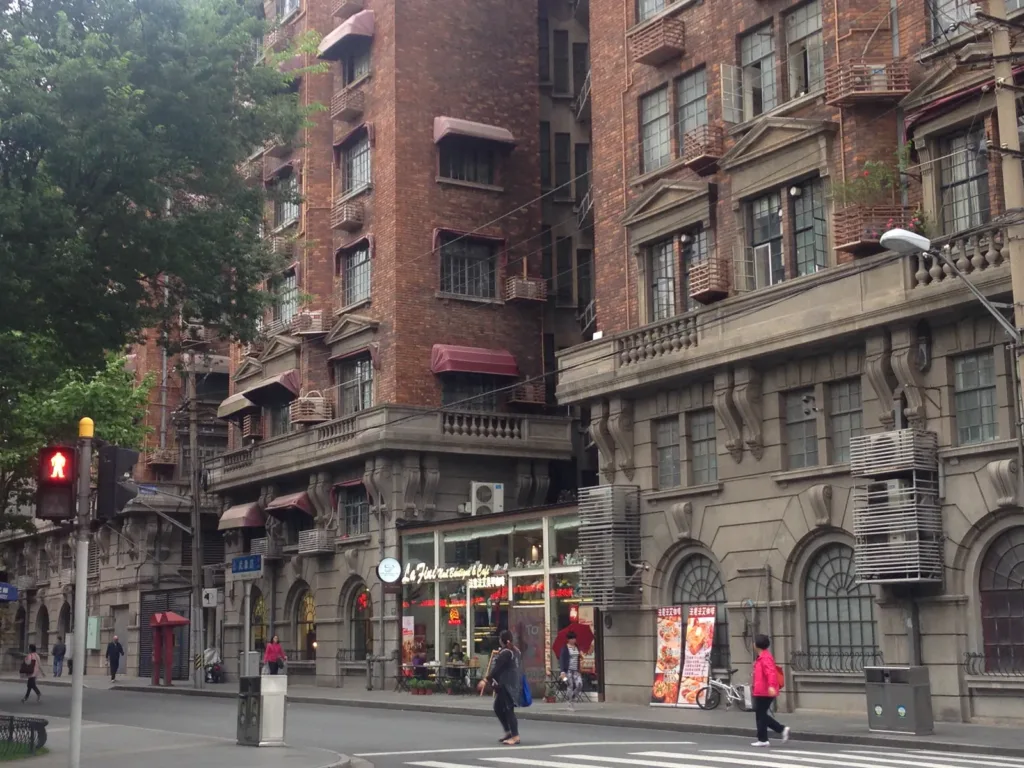 Wukang Road just north of Wukang Mansion, photographed in May 2016. An older streetscape illustration, not a record of current shops or road conditions. Photo: SSYoung · CC BY-SA 4.0
Wukang Road武康路
Wukang Road is a compact, tree-shaded street in Shanghai’s Xuhui District where the pleasure is in reading the changing fronts of old homes and apartment blocks, not entering one ticketed attraction. Start at the wedge-shaped Wukang Building at the Middle Huaihai Road junction, then wander north, pausing at façades such as No. 99 and Ba Jin’s former residence at No. 113; treat the buildings as lived-in places, not open museums. The street itself has no published site-wide ticket or reservation, and some notable interiors are closed to visitors.
Read the place guide → Longhua Pagoda beside the temple. The tower is a distinct landmark near the temple’s halls, not the main hall itself. Photo: Fayhoo · CC BY-SA 3.0
Longhua Temple龙华寺
Longhua Temple is a living Buddhist site in Xuhui where the central hall sequence gives the visit its shape: begin at Maitreya Hall and continue toward the principal Great Hall, reading the upturned eaves and layered roofs as part of the experience. The seven-storey Longhua Pagoda stands nearby, while the wider district includes separate memorial, arts and commercial sites. An official Shanghai tourism listing gives posted hours of 09:00–16:30, but last entry, admission and booking details were not verifiable on the check date.
Read the place guide →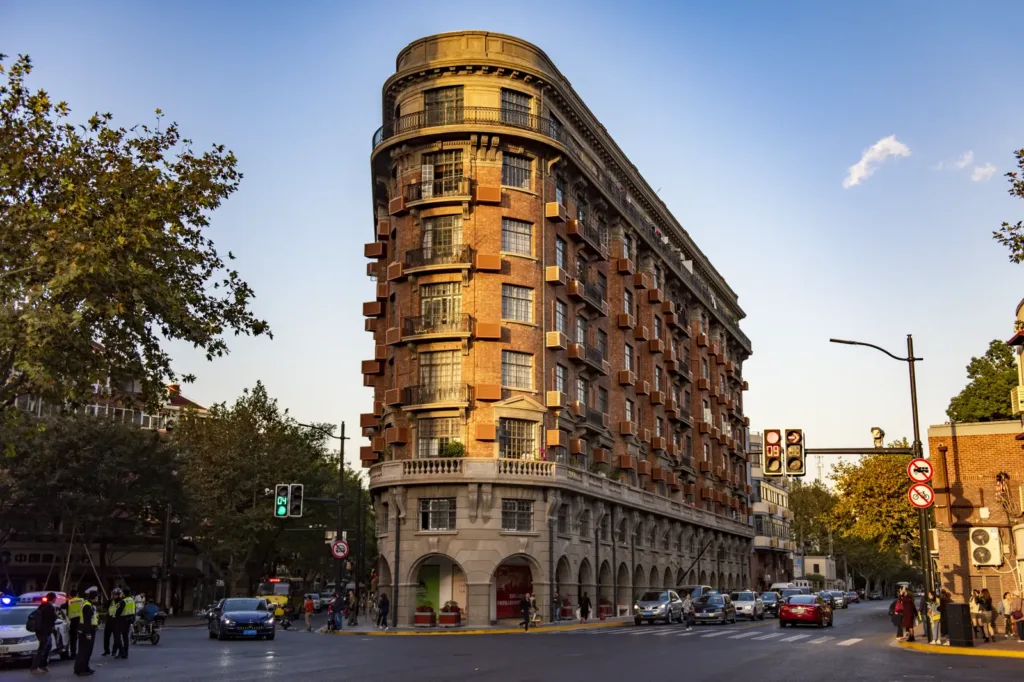 Wukang Mansion from the junction in November 2019. Photo: N509FZ · CC BY-SA 4.0
Wukang Mansion武康大楼
At the southern end of Wukang Road, Wukang Mansion turns a busy Xuhui junction into an architectural viewing point. The eight-storey former Normandie Apartments is still a residential building, so the visit is an exterior walk: read its narrowing, ship-like plan and long arcaded frontage from public sidewalks, then continue north along leafy Wukang Road. There is no public museum interior or ticketed route to plan around.
Read the place guide →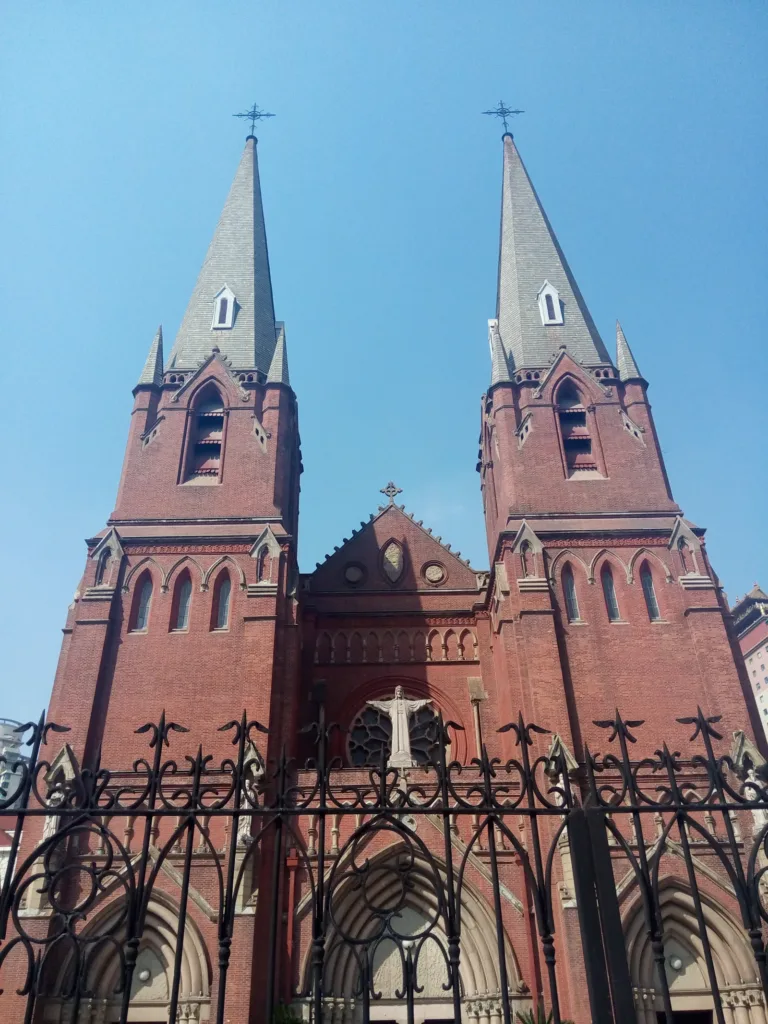 The cathedral’s twin towers rise above its brick façade; this 2014 photograph includes the iron fence in the foreground. Photo: Qa003qa003 · CC BY-SA 4.0
St. Ignatius Cathedral, Shanghai徐家汇天主教堂
In Xujiahui, St. Ignatius Cathedral pairs a red-brick, twin-spired Gothic Revival exterior with rose windows and a Latin-cross church interior. Read the façade from the public forecourt first, then enter only when the church’s posted visitor arrangements allow; this is a working diocesan cathedral, not a museum with guaranteed access to every space.
Read the place guide →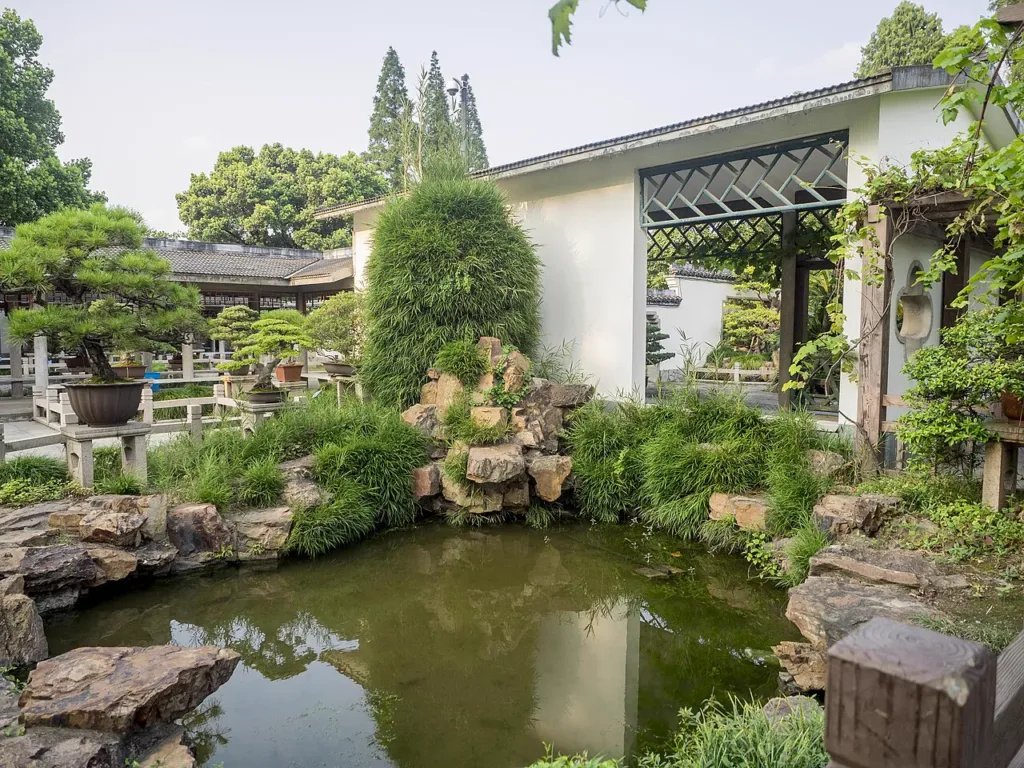 The Penjing Section, photographed in 2015. This historic view is not a current display report. Photo: Esin Üstün (Flickr: fotopamas) · CC BY 2.0
Shanghai Botanical Garden上海植物园
South of central Shanghai, this 81.86-hectare botanical garden pairs broad seasonal planting with specialist collections, including its Penjing Garden and indoor plant displays. The main grounds are free to enter, but ticketed specialist areas have separate admission; choose your gate and visit around the current opening information rather than assuming every collection keeps the same hours.
Read the place guide →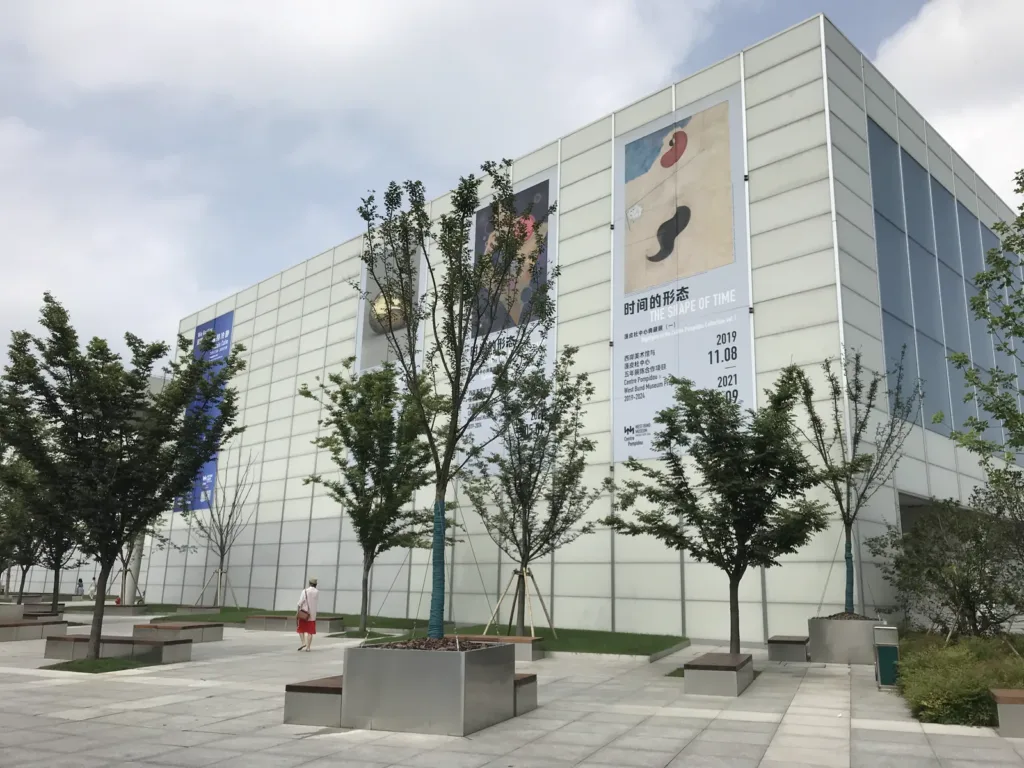 West Bund Museum exterior, photographed 26 June 2020. Photo: Lcsun · CC BY-SA 4.0
West Bund Museum西岸美术馆
West Bund Museum pairs changing modern and contemporary art exhibitions with a striking riverside building in Xuhui. Look for its three gallery wings around a tall central lobby, then step back outside to read the museum against the Huangpu River and West Bund promenade.
Read the place guide → Wukang Road near Huaihai Road, Shanghai, showing the street sign, residential façade and shops; photographed 8 May 2016. Photo: SSYoung · CC BY-SA 4.0
Wukang Road and Anfu Road武康路—安福路街区
In Xuhui’s Hengfu Historic and Cultural Area, Wukang Road and Anfu Road make a compact walk through Shanghai’s leafy residential streets, historic buildings and present-day shops and cafés. Start at Wukang Road’s junction with Middle Huaihai Road, look up at the wedge-shaped Wukang Building from the pavement, then continue north and branch onto Anfu Road. The streets themselves are the attraction; private homes and separately managed memorials have their own access rules.
Read the place guide → St Ignatius Cathedral’s red-brick Gothic Revival masonry and rose window. This close view shows part of the building, not the complete twin-tower façade. Photo: Siyuwj · CC BY-SA 4.0
Xujiahui Origin徐家汇源
Xujiahui Origin brings together the red-brick twin towers of St Ignatius Cathedral, the former Xujiahui Observatory, libraries, schools, memorial sites and everyday commercial streets in southwest central Shanghai. Explore it as a set of separate stops rather than expecting a single gate or ticket: choose either the cathedral-and-science cluster or a longer branch to Guangqi Park and Tushanwan, and check each venue’s current access before setting out.
Read the place guide →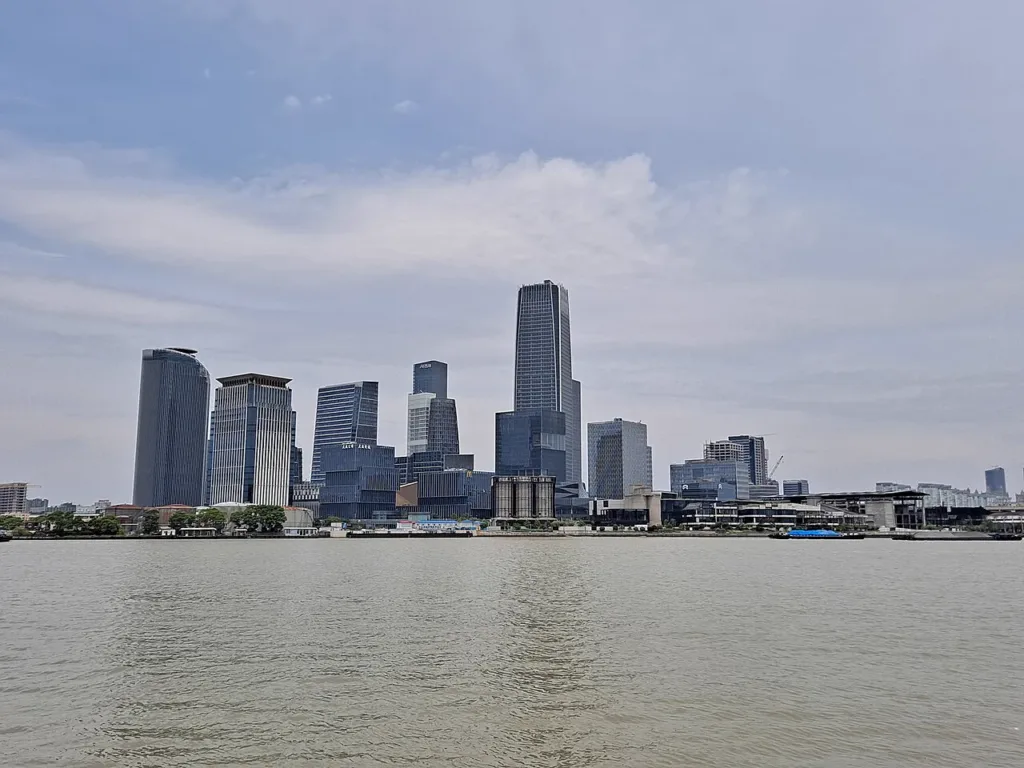 Huangpu River and the Xuhui Riverside skyline. Photo: 钉钉 · CC BY-SA 4.0
West Bund Riverside西岸滨江
West Bund Riverside, or Xuhui Riverside, is a long Huangpu River waterfront where former docks and industrial sites now sit beside public riverside space and contemporary art venues. Choose one museum or cultural stop as your anchor, then walk a manageable stretch of the river rather than treating the whole district as a single attraction.
Read the place guide →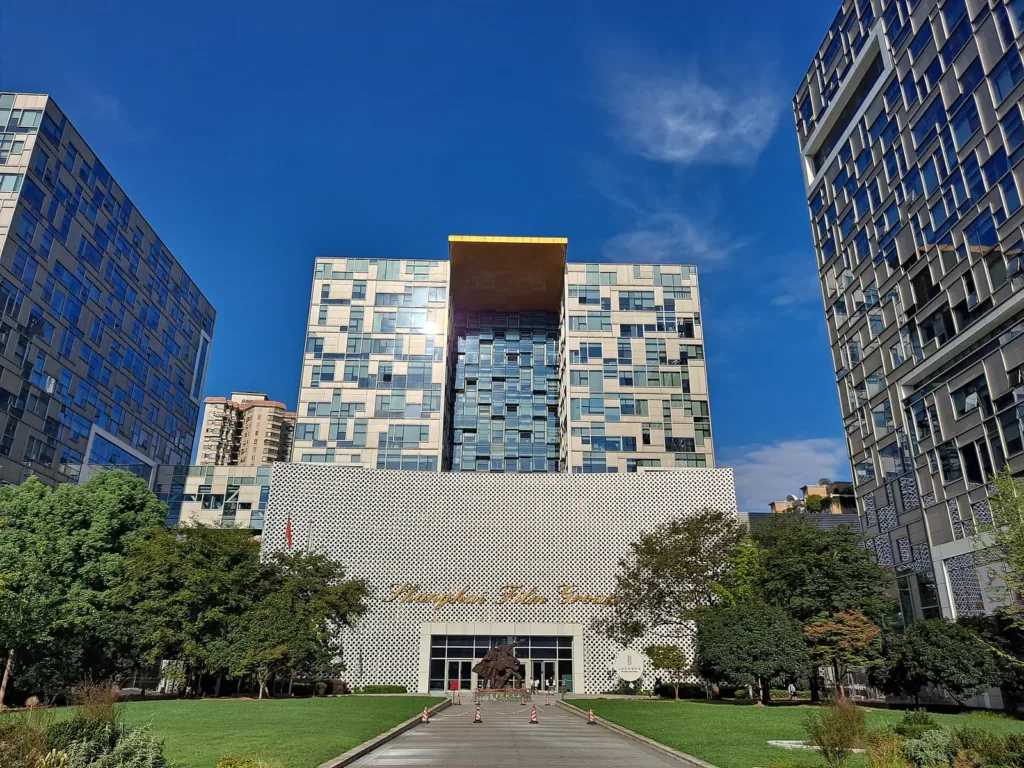 The Shanghai Film Museum building. Photo: 钉钉 · CC BY-SA 4.0
Shanghai Film Museum上海电影博物馆
A substantial museum devoted to Shanghai’s century of film, set at the historic Shanghai Film Studio site in Xuhui and included in an official Shanghai cultural-experience itinerary.
Read the place guide →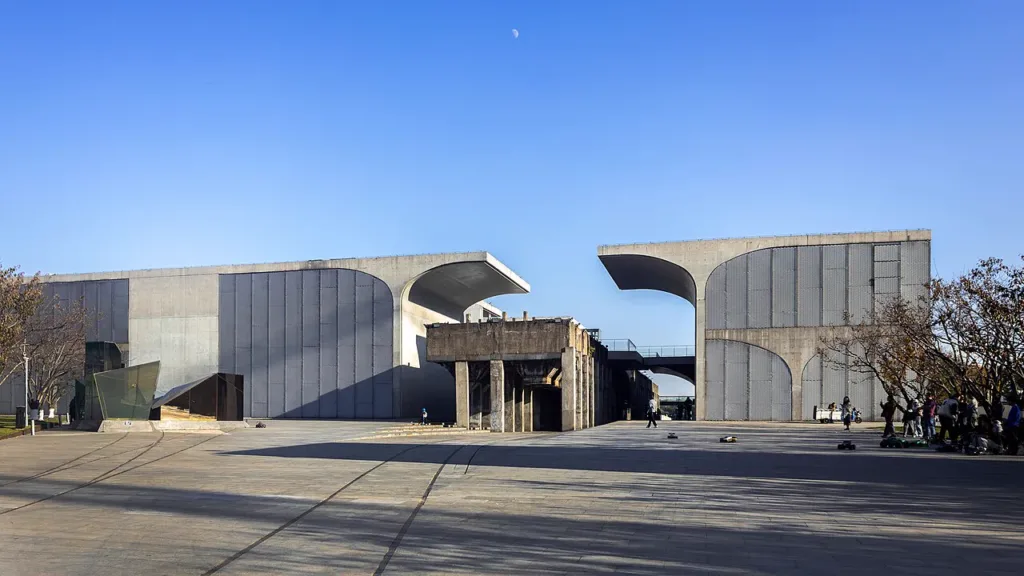 The concrete gallery forms meet the retained industrial loading bridge at the museum. Photo: Supanut Arunoprayote · CC BY 4.0
Long Museum West Bund龙美术馆西岸馆
At the Long Museum West Bund, the building is part of the art visit: pale concrete gallery volumes with umbrella-like vaults rise around a retained coal-loading bridge from the former Beipiao Wharf. Start by reading that industrial structure against the contemporary galleries, then follow the museum’s current floor plan and exhibition labels rather than expecting a fixed display route.
Read the place guide →Plan your visit
Getting there
Xuhui District is about 6 km (straight-line distance) from central Shanghai. Search for 徐汇区 in a map app to find stations and your accommodation.
Where to stay →Build your route
Wukang Road and Longhua Temple are about 4 km apart (straight-line distance). The linked place guides have entrance and visit details.
Continue with Shanghai →More in Shanghai
Sources & geographic information
Administrative names and parent areas: Official geographic directory (dmfw.mca.gov.cn) · Reference date 2026-09-06.
Background text adapted from Xuhui, Shanghai — Wikipedia contributors, under CC BY-SA 4.0. Text has been shortened and reorganized; source revision 1366683863.
Map data © OpenStreetMap contributors. Pins mark approximate centres, not entrances or boundaries.
Image credits & notes (2)
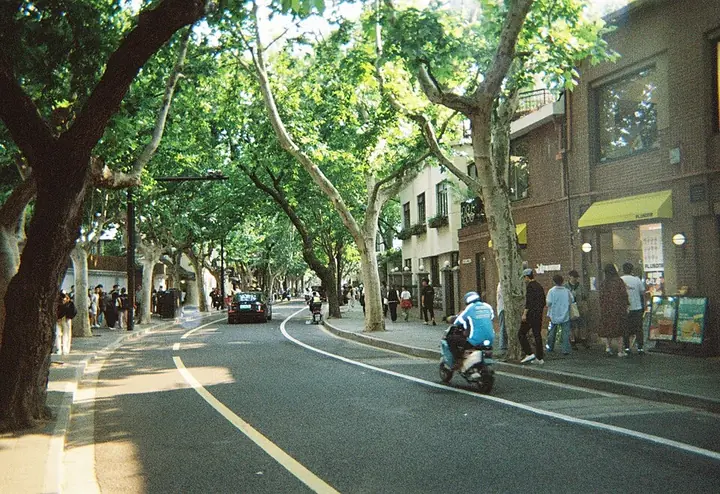
- Wukang Road in Xuhui District, Shanghai. Photograph date recorded by the source: 2025-06-26 16:05:53.Photo: RunningTurtle8964 · CC BY 4.0Resized for the web; the photo itself has not been edited. Thumbnails may show a cropped view.
- Wukang Mansion (Normandie Apartments), seen from the pavement at the junction of Wukang Road and Middle Huaihai Road. Photo: 钉钉Photo: CC BY-SA 4.0
