


Get to know Baiyang

Photo adjustments
EXIF orientation normalized; resized without changing aspect ratio; converted to WebP. No subject edits.
- Administrative area
- County-level city · 县级市
- Part of
- Xinjiang
- Chinese name
- 白杨市
- Local areas
- County-level city guide
Area & population
- Area in the source
- 4,928.00 km²
- Population · 2019
- 85,655
- Administrative seat
- 163rd Regiment Farm
Source: cited geographic source, as of the dates shown.
History
Baiyang traces its start to April 1962, when the 3rd management office of the 7th Agricultural Division was assigned to farm, herd and manage land on others' behalf. In April 1969 that office and other units were merged into the 9th Agricultural Division, renamed the 9th Division in December 2012. The district that became Baiyang was first known as the new town of the division's 163rd Regiment (163团). The city was approved in December 2022, the regional government announced it on 20 January 2023, and it was formally inaugurated on 28 April 2023 as the twelfth city administered by the Corps.
What to see
The city takes its name from the Xiaobaiyang Outpost (小白杨哨所, 'Little White Poplar Outpost'), a border post of the 161st Regiment on the Tasti River (塔斯提河) in the Barluk Mountains (巴尔鲁克山). It was once the forward squad of the Tasti company; Tasti is Kazakh for 'pile of stones'. In spring 1982 Cheng Fusheng (程富胜), a Xibe soldier returning from home leave, planted poplar saplings his mother had given him beside the post. Only one survived, and he served there for 17 years. The song 'Little White Poplar' (《小白杨》), written about his story, was first sung by Yan Weiwen (阎维文) at the 1984 Army Day gala and became known across China. The PLA Daily reports that the outpost has been named a Xinjiang patriotic education base and a national defence education demonstration base. Since the China–Kazakhstan boundary protocol took effect in July 2003, it no longer stands on the front line.
Getting oriented
The central district adjoins Tacheng city to the east and the Bakhty port to the west, and lies 30 km from Tacheng Airport. National highways G219 and G335 and the Karamay–Tacheng expressway and railway (克塔高速、克塔铁路) pass through. The 9th Division's headquarters is in Emin County (额敏县), but the city itself lies within Tacheng's area; its government is at No. 1 Guangming Road in the 163rd Regiment.
Highlights
- Xiaobaiyang Outpost 小白杨哨所: Border post on the Tasti River that inspired the 1984 song 'Little White Poplar' and gave the city its name.
- Bakhty Port 巴克图口岸: China–Kazakhstan land port on the western side of Baiyang's central district.
Sources for this guide
新疆生产建设兵团白杨市挂牌成立 · Xinjiang Daily (via People's Daily Online)
边关,那棵挺立的小白杨--军事--人民网 · PLA Daily (via People's Daily Online)
白杨市 - 维基百科,自由的百科全书 · Chinese Wikipedia · CC BY-SA 4.0
新疆生产建设兵团第九师一六一团 - 维基百科,自由的百科全书 · Chinese Wikipedia · CC BY-SA 4.0
Original English written from the listed sources and checked sentence by sentence against quoted extracts by a separate reviewer. Updated 2026-09-25.
Explore Baiyang
Core places to explore, with English and Chinese names.
Local life & food
Baiyang local specialties
白杨市特色美食 · 8 specialties to discover
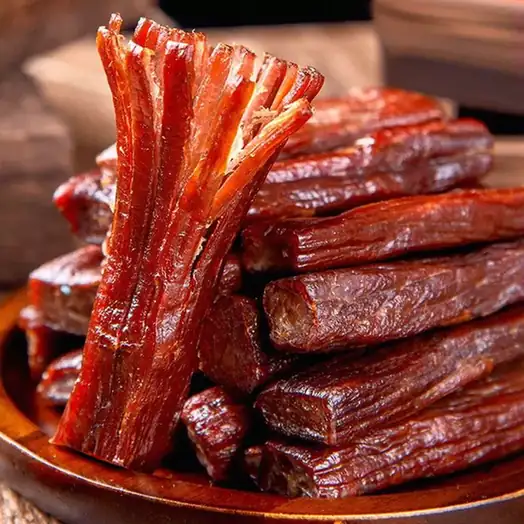 Tacheng Air-Dried Meat 塔城风干肉
Tacheng Air-Dried Meat (塔城风干肉) is mutton cured by salting and drying, made in Tacheng (塔城), Xinjiang.
Read the dish guide →Photo adjustments
EXIF orientation normalized; resized without changing aspect ratio; converted to WebP. No subject edits.
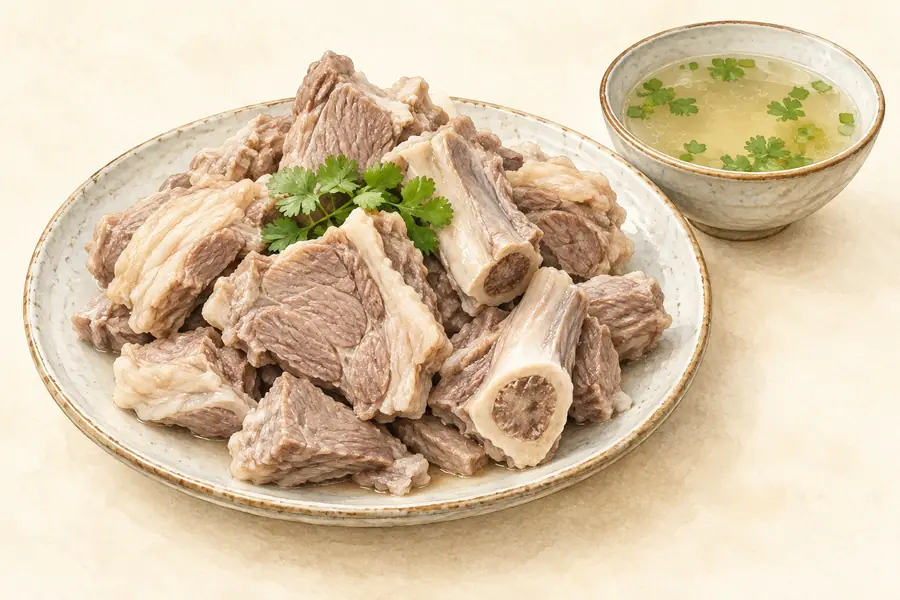 Bashibai Lamb 巴什拜羊AI illustration · AI 示意图(仅供参考,非实拍)
Bashibai Lamb (巴什拜羊) is listed among the local specialties of Baiyang, Xinjiang. The name includes 羊 (sheep).
Read the dish guide →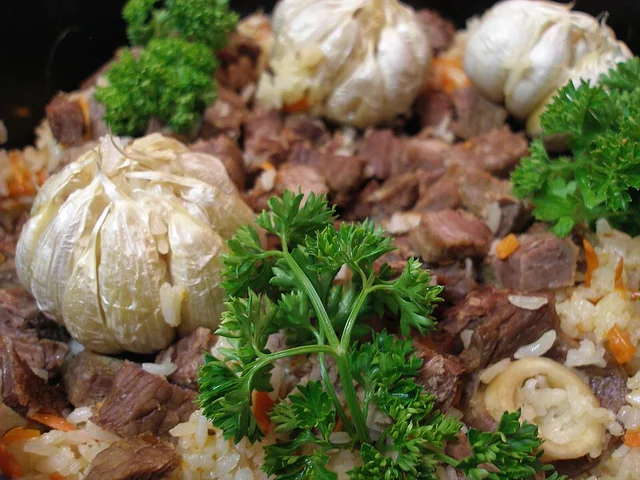 Polo rice 抓饭
The rice is rich and separate-grained, with sweet carrot, savory meat and occasional fruit sweetness rather than a sticky porridge texture.
Source ↗Read the dish guide →
Photo adjustments
EXIF orientation applied where present; resized proportionally to at most 640 px on the long edge and encoded as WebP. No crop, retouching, recoloring or subject changes.
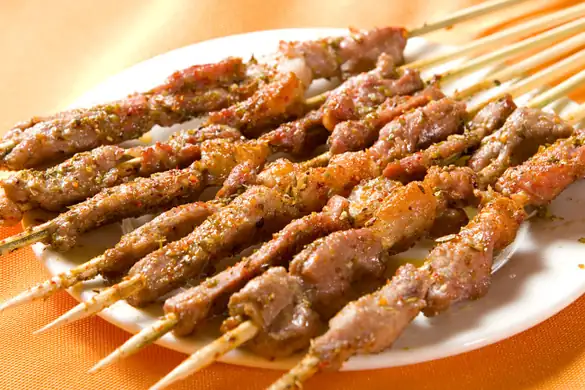 Grilled Lamb 烤羊肉
Grilled Lamb (烤羊肉) is listed among the local specialties of Karamay, Xinjiang. The name includes 羊肉 (lamb or mutton). 烤 describes roasting or grilling.
Read the dish guide →Photo adjustments
EXIF orientation normalized; resized without changing aspect ratio; converted to WebP. No subject edits.
 Salted Milk Tea 奶茶
Salted Milk Tea (奶茶) is brick tea mixed with boiled milk, hot water and salt. The Keketuohai Scenic Area Management Committee in Altay calls it the most important item of Kazakh food and drink, and in Ürümqi (乌鲁木齐) Xinjiang milk tea (新疆奶茶) is one of the common drinks.
Read the dish guide →
Photo adjustments
EXIF orientation normalized; resized without changing aspect ratio; converted to WebP. No subject edits.
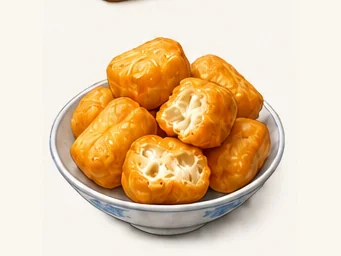 Baursak fried dough 包尔萨克AI illustration · AI 示意图
They have a lightly crisp surface and a soft, airy middle, with a mild fried-dough flavor that works with tea or richer foods.
Source ↗Read the dish guide →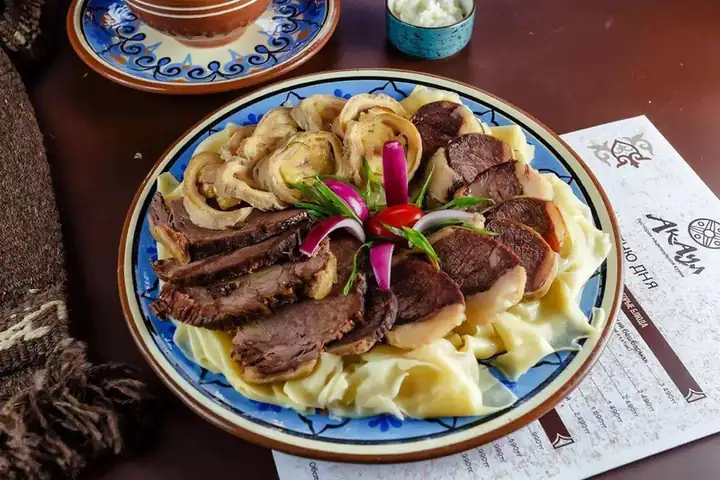 Smoked Horse Meat 熏马肉
Smoked Horse Meat (熏马肉) is a Kazakh cured meat of the Ili Kazakh Autonomous Prefecture (伊犁哈萨克自治州), Xinjiang.
Read the dish guide →Photo adjustments
EXIF orientation normalized; resized without changing aspect ratio; converted to WebP. No subject edits.
 Nang bread 馕
Thin nang is crisp, while thicker bread has a soft, chewy center and toasted crust. Fresh warmth brings out the wheat and topping aromas.
Source ↗Read the dish guide →
Photo adjustments
EXIF orientation applied where present; resized proportionally to at most 640 px on the long edge and encoded as WebP. No crop, retouching, recoloring or subject changes.
More dishes from across Xinjiang are in the Xinjiang food guide.
Plan your visit
Getting there
Search for 白杨市 in a map app to find stations and your accommodation.
Where to stay →More in Xinjiang
Sources & geographic information
Administrative names and parent areas: Official geographic directory · Reference date 2026-09-06.
Some facts checked against 白杨市 — Wikipedia contributors, CC BY-SA 4.0.
Some facts checked against 新疆生产建设兵团第九师一六一团 — Wikipedia contributors, CC BY-SA 4.0.
Map data © OpenStreetMap contributors. Pins mark approximate centres, not entrances or boundaries.