


Get to know Wujiaqu
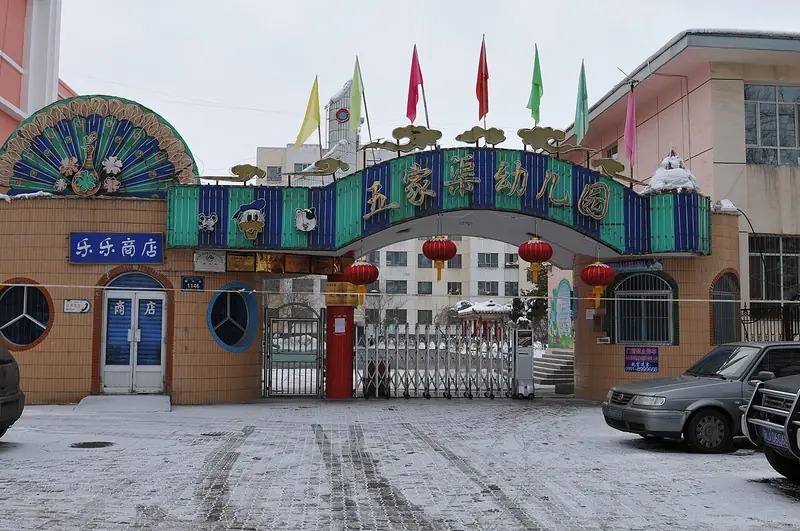
Photo adjustments
Full frame retained; EXIF orientation normalized, proportionally resized to at most 800 pixels and converted to WebP. No generated pixels or subject changes. Cards may crop the display.
- Administrative area
- County-level city · 县级市
- Part of
- Xinjiang
- Chinese name
- 五家渠市
- Local areas
- County-level city guide
Area & population
- Area in the source
- 742.00 km²
- Population · 2022
- 154,400
- Administrative seat
- Renmin Road Subdistrict
Source: cited geographic source, as of the dates shown.
Setting and landscape
The city lies north of Bogda Peak (博格达峰) on the Tianshan and on the southern edge of the Junggar Basin (准噶尔盆地). It borders Midong District (米东区) of Ürümqi (乌鲁木齐) to the east and south and Changji (昌吉) city to the west and north. From south to north the land passes from mountains to alluvial plain and then desert.
History
The name means "five families' canal": in the late Qing and early Republic, five households, among them the Yang, Feng and Du families, dug a canal from the Laolong River (老龙河) to water their fields. From 1950 the 51st Regiment of the People's Liberation Army's 17th Division farmed the land around Qinggeda Lake (青格达湖), and in winter 1953 the headquarters of the Sixth Division moved to Wujiaqu. The State Council approved the city in September 2002, and it was formally inaugurated on 19 January 2004, formed from the division's 101st, 102nd and 103rd regiments and its Wujiaqu headquarters area.
What to see
Qinggeda Lake (青格达湖), 3 kilometres from the city centre in the south of the city, is the Mengjin Reservoir (猛进水库), a 17-square-kilometre irrigation lake at the end of the Ürümqi, Toutun and Shuimo rivers. It began as a reed-filled hollow called Heilongtan (黑龙潭, "Black Dragon Pool"). The 17th Division's Party committee decided to build the reservoir in May 1952, and work began on 18 June; it was then the largest reservoir project in Xinjiang, and the lake is also called the "first reservoir of the military reclamation". It has been called "the kidneys of Ürümqi" for holding back sand blown from the Gurbantünggüt Desert (古尔班通古特沙漠). Surveys between 2002 and 2013 recorded 225 bird species in the lake's nature reserve, including black storks, great bustards and white-tailed eagles, and large numbers of migrants stop there in spring and autumn.
The lake is also a national water-conservancy scenic area. Bingtuan Radio and Television reported in May 2025 that the lakeside scenic area had been refitted with flower fields in seven themes, among them a windmill square modelled on the Netherlands, and that the division-city's red-tourism circuit centres on its Generals' Memorial Hall (将军纪念馆).
Food and local products
Wujiaqu's main farm products are cotton, grain, sugar beet, watermelons and Hami melons (哈密瓜), along with oil crops, maize, aquatic products, eggs and meat.
Highlights
- Qinggeda Lake 青格达湖: The Mengjin Reservoir, begun in 1952 by the 17th Division and then the largest reservoir project in Xinjiang.
- Qinggeda Lake nature reserve 青格达湖自然保护区: 225 bird species recorded between 2002 and 2013, including black storks and great bustards.
- Generals' Memorial Hall 将军纪念馆: The centre of the division-city's red-tourism circuit.
Sources for this guide
五家渠市 - 维基百科,自由的百科全书 · Wikipedia · CC BY-SA 4.0
青格达湖 - 维基百科,自由的百科全书 · Wikipedia · CC BY-SA 4.0
缤纷夏日 在第六师五家渠市感受丝路芳华 · Xinjiang Production and Construction Corps Radio and Television Station (Bingtuan Radio and Television)
Original English written from the listed sources and checked sentence by sentence against quoted extracts by a separate reviewer. Updated 2026-09-25.
Explore Wujiaqu
Core places to explore, with English and Chinese names.
Local life & food
Wujiaqu local specialties
五家渠市特色美食 · 9 specialties to discover
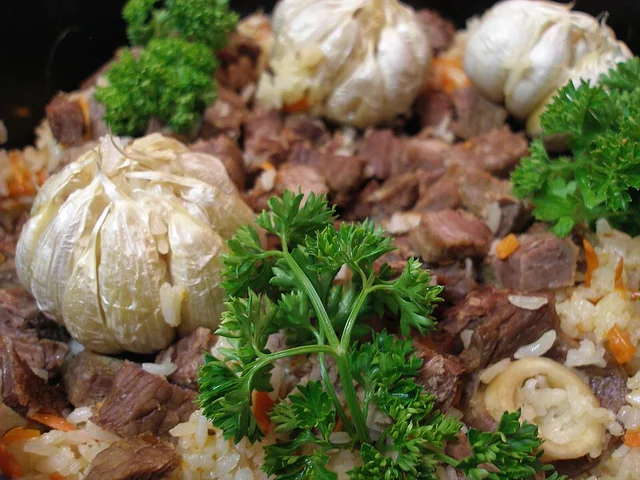 Polo rice 抓饭
The rice is rich and separate-grained, with sweet carrot, savory meat and occasional fruit sweetness rather than a sticky porridge texture.
Source ↗Read the dish guide →
Photo adjustments
EXIF orientation applied where present; resized proportionally to at most 640 px on the long edge and encoded as WebP. No crop, retouching, recoloring or subject changes.
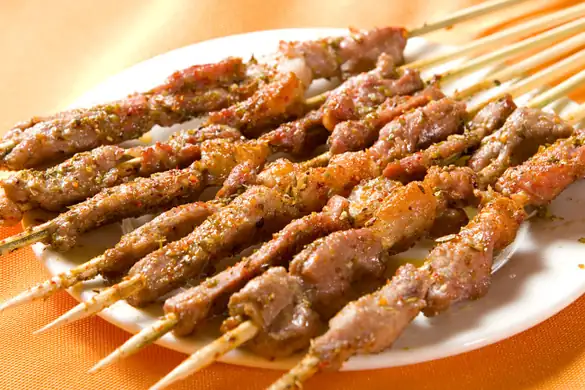 Grilled Lamb 烤羊肉
Grilled Lamb (烤羊肉) is listed among the local specialties of Karamay, Xinjiang. The name includes 羊肉 (lamb or mutton). 烤 describes roasting or grilling.
Read the dish guide →Photo adjustments
EXIF orientation normalized; resized without changing aspect ratio; converted to WebP. No subject edits.
 Hand-Pulled Mixed Noodles 拌面
Hand-Pulled Mixed Noodles (拌面) is listed among the local specialties of Karamay, Xinjiang. The term 面 points to noodles or flour-based food.
Read the dish guide →
Photo adjustments
EXIF orientation normalized; resized without changing aspect ratio; converted to WebP. No subject edits.
 Big-plate chicken 大盘鸡
Tender potatoes thicken the savory, often spicy sauce, while bone-in chicken and chewy noodles create a substantial meal.
Source ↗Read the dish guide →.jpg)
Photo adjustments
EXIF orientation applied where present; resized proportionally to at most 640 px on the long edge and encoded as WebP. No crop, retouching, recoloring or subject changes.
 Nang bread 馕
Thin nang is crisp, while thicker bread has a soft, chewy center and toasted crust. Fresh warmth brings out the wheat and topping aromas.
Source ↗Read the dish guide →
Photo adjustments
EXIF orientation applied where present; resized proportionally to at most 640 px on the long edge and encoded as WebP. No crop, retouching, recoloring or subject changes.
 Baked samsa buns 烤包子
The shell is crisp and firm, while the center is juicy, onion-sweet and richly savory.
Source ↗Read the dish guide →
Photo adjustments
EXIF orientation applied where present; resized proportionally to at most 640 px on the long edge and encoded as WebP. No crop, retouching, recoloring or subject changes.
 Meatball Soup 丸子汤
Meatball Soup (丸子汤) is a Hui (回族) dish of Xinjiang: fried beef meatballs simmered in a beef-bone broth with a mix of other ingredients.
Read the dish guide →
Photo adjustments
Full frame retained; proportionally resized and converted to WebP. No retouching or changes to the photographed subject. Card displays may crop the view.
 Numbing Pepper Chicken 椒麻鸡Reference photo of a similar dish · 同类菜品参考照片
Numbing Pepper Chicken (椒麻鸡) is a cold dish of Xinjiang's Hui (回族) cooking: boiled free-range chicken torn into strips, scattered with chilli shreds and onion and dressed with a numbing Sichuan-pepper sauce.
Source ↗Read the dish guide →
Photo adjustments
Full frame retained; EXIF orientation normalized, proportionally resized to at most 800 pixels and converted to WebP. No generated pixels or subject changes. Cards may crop the display.
More dishes from across Xinjiang are in the Xinjiang food guide.
Plan your visit
Getting there
Search for 五家渠市 in a map app to find stations and your accommodation.
Where to stay →More in Xinjiang
Sources & geographic information
Administrative names and parent areas: Official geographic directory · Reference date 2026-09-06.
Some facts checked against 五家渠市 — Wikipedia contributors, CC BY-SA 4.0.
Some facts checked against 青格达湖 — Wikipedia contributors, CC BY-SA 4.0.
Map data © OpenStreetMap contributors. Pins mark approximate centres, not entrances or boundaries.