


Get to know Longchuan County
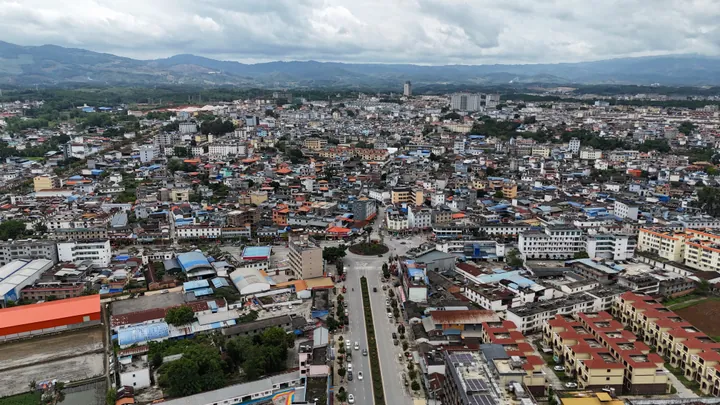
Photo adjustments
Full frame retained; proportionally resized and converted to WebP. No retouching or changes to the photographed subject. Card displays may crop the view.
- Administrative area
- County · 县
- Part of
- Dehong Dai and Jingpo Autonomous Prefecture
- Chinese name
- 陇川县
- Local areas
- County guide
Area & population
- Area in the source
- 1,931.00 km²
- Population · 2020 census
- 181,364
Source: cited geographic source, as of the dates shown.
A flower with local meaning
Banse flowers are also known locally as shenhuangdou (神黄豆). Mengyue adopted the flower as its township emblem in 2018. In Jingpo tradition it represents good fortune, happiness and prosperity. Flowering is most abundant from May to July, when clusters hang from the branches along the paths.
River views and Jingpo food
At Boxin Bay, a lakeside wooden walkway and hillside cabins complement the flowers. Sightseeing boats travel on the Longjiang River (龙江), with green hills along its banks. The visitor area also offers motorboat and water-sport activities. Thatched guesthouses are among its accommodation styles, while local foods include Jingpo hand-eaten rice (景颇手抓饭) and freshwater foods from the Longjiang River.
Sources for this guide
斑色花称霸朋友圈,陇川美景又上新 · Dehong Prefecture Converged Media Center; source: Munao Zongge zhi Xiang Longchuan
Original English written from the listed sources and checked sentence by sentence against quoted extracts by a separate reviewer. Updated 2026-09-27.
Explore Longchuan County
Core places to explore, with English and Chinese names.
Longchuan County 陇川县
Plan your visit
Getting there
Longchuan County is about 80 km in a straight line from central Dehong Dai and Jingpo Autonomous Prefecture. Search for 陇川县 in a map app to find stations and your accommodation.
Where to stay →More in Dehong Dai and Jingpo Autonomous Prefecture
Sources & geographic information
Administrative names and parent areas: Official geographic directory · Reference date 2026-09-06.
Map data © OpenStreetMap contributors. Pins mark approximate centres, not entrances or boundaries.