


Get to know Beibei District

- Administrative area
- District · 市辖区
- Part of
- Chongqing
- Chinese name
- 北碚区
- Local areas
- District guide
Area & population
- Area
- 1,093.20 km²
Source: beibei.gov.cn, as of the dates shown.
A northern landscape with its own story
Beibei is a current district of Chongqing, not a separate county and not a compact extension of the downtown sightseeing core. It sits at the municipality’s northern edge, where the Jialing River and wooded uplands shape a calmer, more dispersed day out. In the 2025 administrative adjustment, five former Yubei towns—Dawan, Tongjing, Dasheng, Xinglong and Cizhu—became part of Beibei; five former Beibei townships were assigned to Liangjiang New Area. The district now has six subdistricts and eleven towns and covers about 1,100 square kilometres.
The district’s character is not only scenic. Beibei became known for an early twentieth-century experiment in local development associated with entrepreneur Lu Zuofu (卢作孚), the Jialing Three Gorges and rural reconstruction. The former Western China Academy of Sciences and other heritage sites preserve parts of that history. These places make a useful counterpoint to the mountain and riverside landscapes: they tell how research, education and community-building became part of Beibei’s identity.
Choose an outing by landscape
For a first visit, pair the Chongqing Natural History Museum (重庆自然博物馆) with the Jinyun Mountain and North Hot Spring area, but allow for transfers between them. At the museum, take time with the natural-science displays rather than treating it as only a rainy-day stop. Its official visitor information says the permanent exhibitions are free. The museum’s site also publishes special exhibitions and learning activities, which change over time; check the current notice before setting out.
Jinyun Mountain (缙云山) is the district’s defining wooded upland. In 2024, the district government highlighted scenic nodes including Dai Lake (黛湖), Linshang Pavilion (林上阁) and Pingfeng Kanyun (凭风看云), as well as improvements to the mountain’s ecological environment. Treat it as a landscape visit, not a single short attraction: choose one signed viewpoint or path cluster, leave time for the climb and descent, and check local access notices after heavy rain or during fire-prevention restrictions. The nearby North Hot Spring (北温泉) area adds a long-established spring-country strand to the same broader outing, but individual bathing facilities have their own operators and current entry arrangements.
For a riverside and village contrast, look toward Jingangbei (金刚碑), a Beibei cultural-tourism stop that the district included among its National Day visitor experiences, described as a place to seek out local memory and flavor. Walk slowly through public lanes and pause for the river-and-hills setting; distinguish the historic village from any separately operated shops or attractions. Do not assume every business, room or lane is open at the same time.
Beibei’s wider rural area offers a different day from the urban museum and mountain foothills. The district government has also highlighted rural tourism, including the long-table feast at Pianyan (偏岩) and paragliding in Sansheng (三圣). These are specific village-based activities, not attractions in Beibei’s central town; confirm the operator, weather conditions, transport and return journey before committing to a remote trip.
Getting there
For the museum, take Chongqing Rail Transit Line 6 to Zhuangyuanbei (状元碑). The museum’s official directions specify Exit 1C, then bus 560, or Exit 2B, then bus 583; both routes serve the Natural History Museum stop. Buses 560, 580, 583, 590 and 592 are also listed as reaching the museum directly. Follow the stop and site signs for the final approach. The museum address is 398 Jinhua Road (金华路398号), Beibei. For a taxi or ride-hail, enter “重庆自然博物馆” and that address, then use the signed public entrance and alight only where stopping is permitted.
The verified rail-and-bus directions above apply to the museum, not to Beibei as a whole. Jinyun Mountain, Jingangbei and the outlying villages are separate destinations, not one walkable extension of the museum stop. For those trips, choose the named venue or entrance as the destination and verify the day’s local transport and return options; do not assume the museum bus routes serve them.
Beibei rewards a slower itinerary that gives the museum, wooded uplands and riverside life their own time. Public cultural and village spaces are shared with residents; ask before photographing people, and avoid treating private homes or courtyards as visitor exhibits.
Explore Beibei District
Core places to explore, with English and Chinese names.
Places to explore around Beibei District
 Exterior of the Chongqing Natural History Museum, Beibei District · 重庆自然博物馆外观,北碚区 Source-recorded photograph date: 2018-08-22 11:10:04.
Chongqing Natural History Museum重庆自然博物馆
A six-gallery natural-science museum in Beibei, where dinosaur fossils, Earth science, biodiversity and Chongqing’s landscapes connect in one visit.
Read the place guide →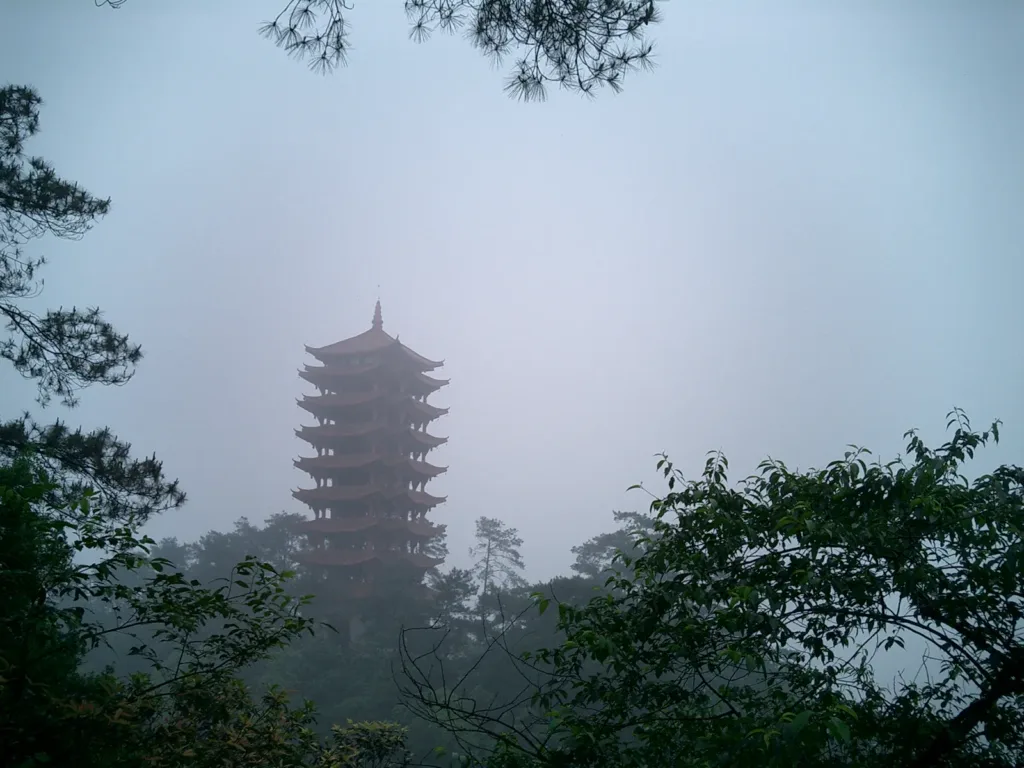 A mist-framed pagoda rises above forest on Jinyun Mountain; the image is not a current trail-access depiction. Photo: Seasonsinthesun · CC BY-SA 4.0
Jinyun Mountain缙云山
A forested mountain reserve above Beibei, where clouded ridges, a Buddhist temple with a history dating to 423, restored Daihu Lake and marked hiking routes meet.
Read the place guide → AI illustration · AI 示意图(仅供参考,非该地点实拍)
North Hot Spring北温泉
A historic hot-spring landscape on the Jialing River’s Wentang Gorge, where Wenquan Temple, wooded parkland and modern bathing facilities sit beneath Jinyun Mountain in Beibei.
Read the place guide →AI illustration · AI 示意图(仅供参考,非该地点实拍)Tongjing Hot Springs统景温泉
A far-northeastern Chongqing escape in Yubei District, where a hot-spring complex sits among the wooded gorges and karst caves of the Tongjing river valley.
Read the place guide →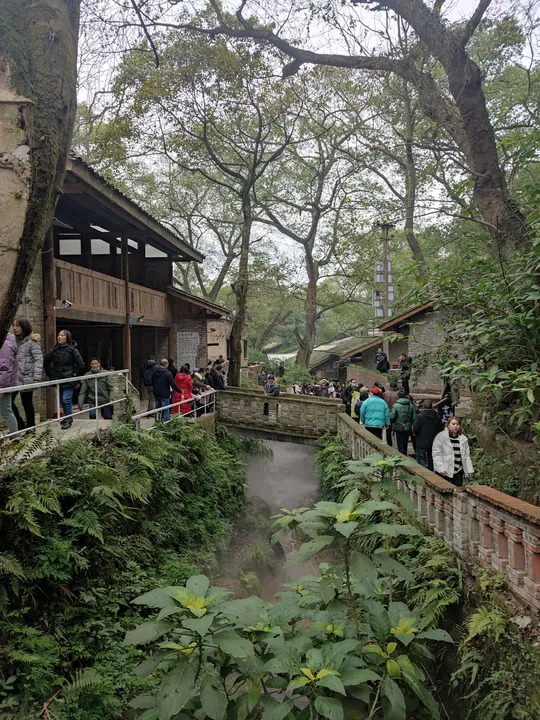 An old village lane: a stone-paved path and a low bridge with a brick balustrade beside a stream that gives off steam, flanked by weathered timber buildings with balconies and stone walls; many visitors walk the paths and large green plants fill the foreground under bare trees.
Jingangbei Old Village金刚碑古村
A riverside old village below Jinyun Mountain in northern Beibei, where stone lanes, historic courtyard houses and old trees meet Chongqing’s wartime intellectual history and a small, changing community of craft and cultural businesses.
Read the place guide →Local life & food
Beibei District local specialties
北碚区特色美食 · 6 specialties to discover
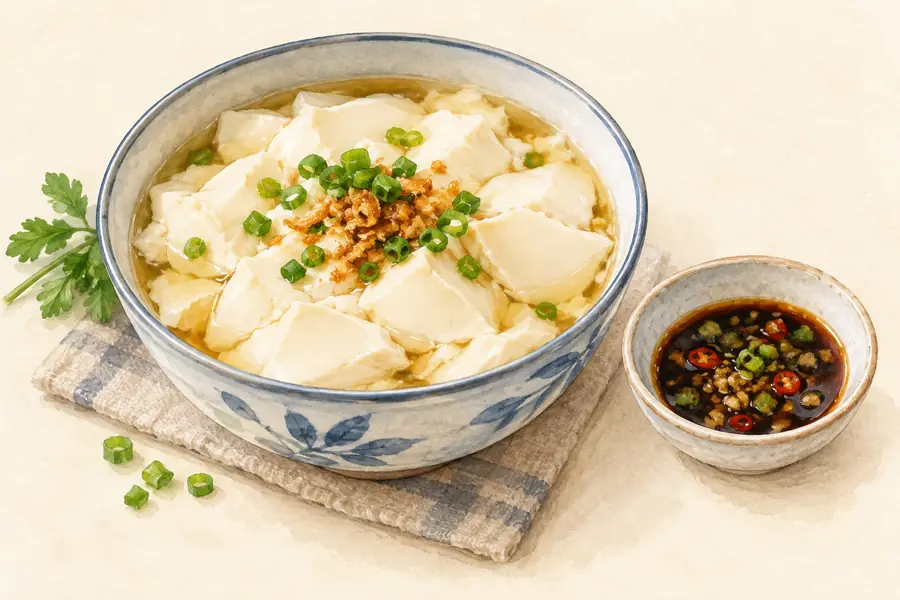 Beibei Soft Tofu 北碚豆花AI illustration · AI 示意图(仅供参考,非实拍)
A Beibei District take on Chongqing’s soft soybean curd: delicate, warm douhua commonly eaten with rice and a boldly seasoned dipping sauce.
Read the dish guide →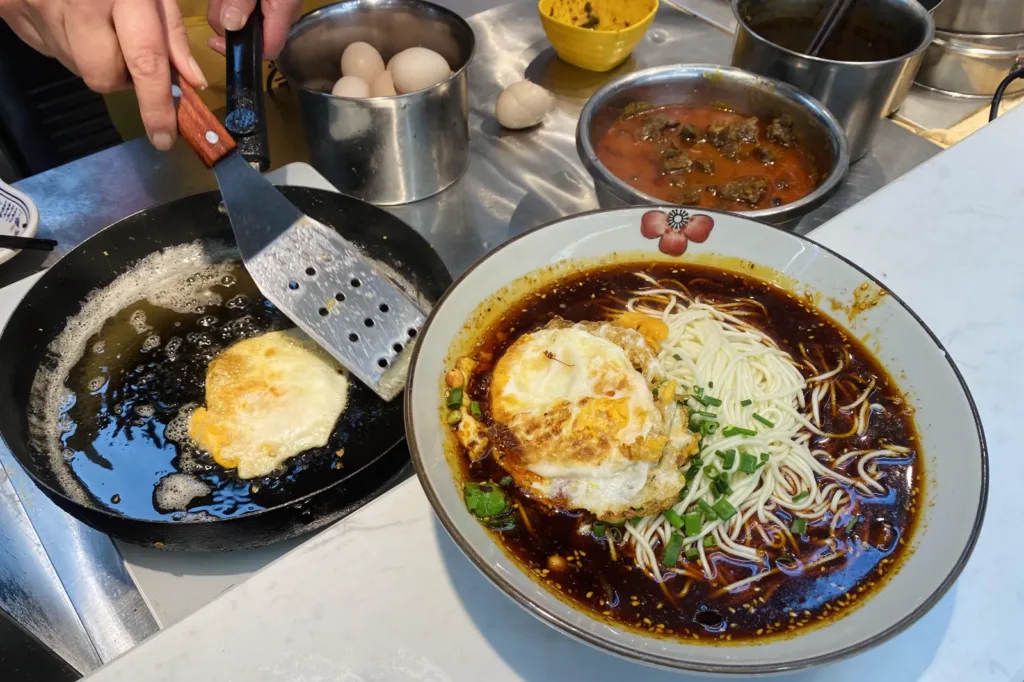 Chongqing xiaomian 重庆小面
Chongqing xiaomian is an everyday wheat-noodle bowl built around a fragrant, spicy-numbing seasoning base. Order it plain or with toppings such as peas and minced-meat sauce; shops vary between broth and dry-mixed servings.
Source ↗Read the dish guide →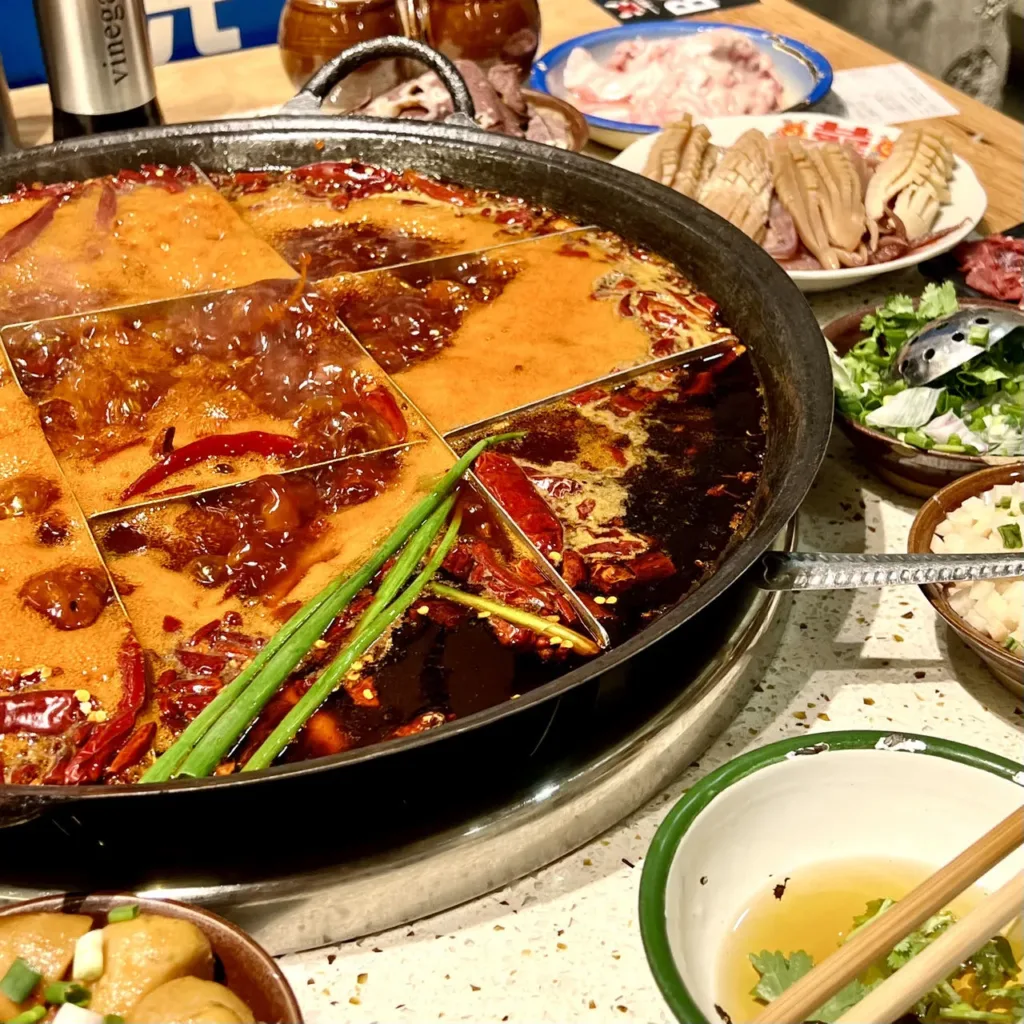 Chongqing hotpot 重庆火锅
A communal Chongqing meal built around a bubbling, usually chili-red broth, fragrant with Sichuan pepper and often enriched with beef tallow. Diners cook thin-sliced meats, offal, tofu and vegetables at the table; each restaurant’s broth and ingredient selection differs.
Source ↗Read the dish guide →Beiquan Wet-Milled Soft Tofu 北泉水磨豆花AI illustration · AI 示意图(仅供参考,非实拍)
A Beibei-associated name for Chongqing tofu pudding. Expect tender, freshly set soybean curds with a savory dipping sauce, but confirm the preparation at the restaurant: the exact “Beiquan wet-milled” label is not independently documented as a standardized recipe.
Read the dish guide → Smoked Cured Pork 腊肉AI illustration · AI 示意图(仅供参考,非实拍)
A shared Sichuan–Chongqing winter food of salted, air-dried and sometimes smoked pork; the northern Chongqing county of Chengkou is especially known for its own old-style cured pork.
Source ↗Read the dish guide → Jinyun Mountain Spring-Water Chicken 缙云山泉水鸡AI illustration · AI 示意图(仅供参考,非实拍)
A Chongqing food-directory label, but the evidence reviewed does not establish 缙云山泉水鸡 as a distinct Beibei dish. The documented spring-water chicken is associated with Nanshan in Nan’an, while Beibei sources name the separate dish 缙云醉鸡.
Read the dish guide →More dishes from across Chongqing are in the Chongqing food guide.
Plan your visit
Getting there
Beibei District is about 30 km (straight-line distance) from central Chongqing. Search for 北碚区 in a map app to find stations and your accommodation.
Where to stay →Build your route
Chongqing Natural History Museum and Jinyun Mountain are about 4 km apart (straight-line distance). The linked place guides have entrance and visit details.
Continue with Chongqing →More in Chongqing
Sources & geographic information
Administrative names and parent areas: Official geographic directory (dmfw.mca.gov.cn) · Reference date 2026-09-06.
Official administrative update
Official administrative update
Official administrative update
Beibei District People’s Government: current profile and 2026 government work report
Photo: Chongqing Natural History Museum · STW932 · CC BY-SA 4.0. Resized for the web; the photo itself has not been edited. Thumbnails may show a cropped view.

Photo: Jingangbei Old Village · 重庆轨交18 · CC BY-SA 4.0. Resized for the web; the photo itself has not been edited. Thumbnails may show a cropped view.

Map data © OpenStreetMap contributors. Pins mark approximate centres, not entrances or boundaries.
Image credits & notes (1)
- Pagoda among trees on Jinyun Mountain, Chongqing · 重庆缙云山林间塔影. Shown locality: Jinyun Mountain, Beibei District. Source-recorded photograph date: 22 May 2005, 11:52:19.Photo: Seasonsinthesun · Seasonsinthesun — Jinyun Mountain.JPG — CC BY-SA 4.0 · CC BY-SA 4.0Resized for the web; the photo itself has not been edited. Thumbnails may show a cropped view.
