


Get to know Beitun
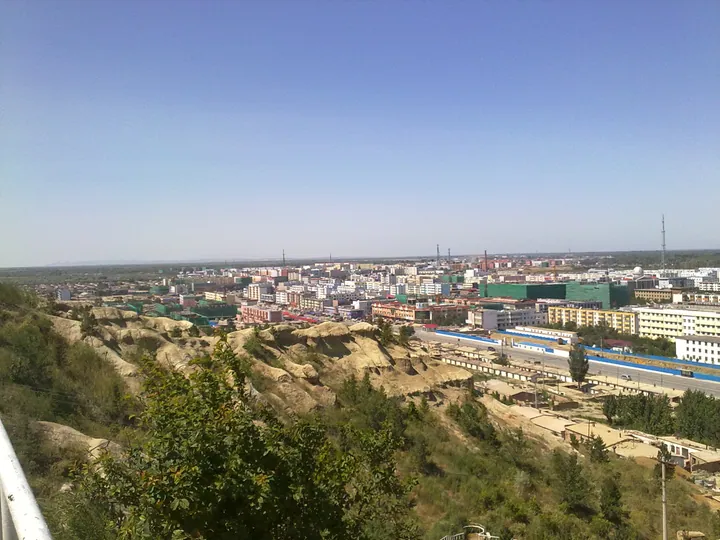
Photo adjustments
Full frame retained; proportionally resized and converted to WebP. No retouching or changes to the photographed subject. Card displays may crop the view.
- Administrative area
- County-level city · 县级市
- Part of
- Xinjiang
- Chinese name
- 北屯市
- Local areas
- County-level city guide
Area & population
- Area in the source
- 910.50 km²
- Population · 2020
- 20,414
- Administrative seat
- Beitun Town, Altay City
Source: cited geographic source, as of the dates shown.
Setting and landscape
Most of the flat land is alluvial plain laid down by the Irtysh and the Ulungur (乌伦古河), and Derenshan (得仁山) lies in the city centre. The area counts 58 rivers. The recorded extreme low is −49 °C, and evaporation of 1,900–2,300 mm a year far exceeds rainfall of 87–188.6 mm. Saxaul, Euphrates poplar and birch grow here; wildlife includes beaver, sable and otter, and northern pike, European perch, burbot and common bream are recorded as rare fish species in China.
History
The 10th Division began as the 7th Cavalry Division of the PLA's 22nd Army Corps and became an agricultural construction division in June 1953. In August 1958 Duolebuerjin (多勒布尔津) was chosen as the division's new headquarters and given the name Beitun, 'northern garrison farm', because it was China's northernmost base for farming and border defence; the headquarters moved here on 1 November 1959. The State Council approved Beitun as a city on 20 December 2011 and it was founded eight days later. Its three towns, Shuangqu (双渠镇), Fengqing (丰庆镇) and Haichuan (海川镇), were created in 2019 at the headquarters of the 183rd, 187th and 188th regiments. The city government records that the 183rd began in 1959 as the division's 33rd Regiment.
What to see
The city has two national 3A scenic areas: the Tuvan Folk Culture Tourist Village (图瓦民俗文化旅游村) and the Bulun Tokhoi Lakeshore Tourist Area (布伦托海海滨风情旅游区).
Food and local products
The city promotes its Irtysh cold-water fish banquet (额河冷水鱼宴): fish from the cold, clear Irtysh, with firm, tender flesh, served in a thick, glossy broth flavoured with chopped chillies and pepper. Diners break the fish up in their bowl and stir it with the broth into plain rice.
Getting oriented
National highway G216 meets provincial roads 318 and 319 in Beitun, and the Kuytun–Altay expressway (奎屯—阿勒泰高速公路) passes through. Beitun station on the Kuytun–Beitun railway (奎北铁路) opened in June 2011.
Highlights
- Irtysh Cold-water Fish Banquet 额河冷水鱼宴: Irtysh fish in a chilli-and-pepper broth, eaten stirred into rice.
- Tuvan Folk Culture Tourist Village 图瓦民俗文化旅游村: National 3A scenic area.
- Bulun Tokhoi Lakeshore Tourist Area 布伦托海海滨风情旅游区: National 3A scenic area.
Sources for this guide
第十师北屯市-额河冷水鱼宴 · 10th Division / Beitun City (XPCC)
第十师北屯市-第十师一八三团双渠镇历史沿革 · 10th Division / Beitun City (XPCC)
第十师北屯市-第十师一八八团海川镇历史沿革 · 10th Division / Beitun City (XPCC)
第十师北屯市-第十师一八七团丰庆镇历史沿革 · 10th Division / Beitun City (XPCC)
北屯市 - 维基百科,自由的百科全书 · Chinese Wikipedia · CC BY-SA 4.0
Original English written from the listed sources and checked sentence by sentence against quoted extracts by a separate reviewer. Updated 2026-09-25.
Explore Beitun
Core places to explore, with English and Chinese names.
Local life & food
Beitun local specialties
北屯市特色美食 · 9 specialties to discover
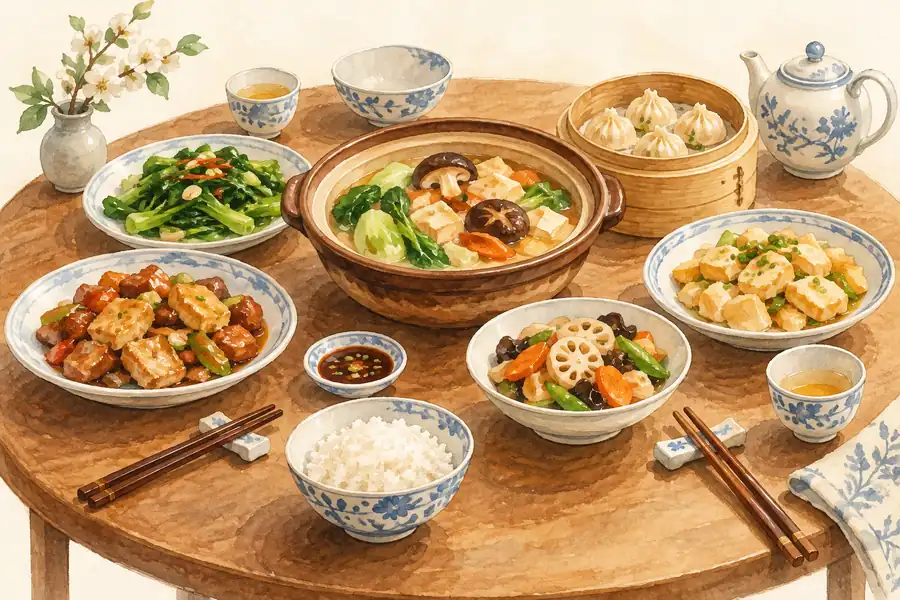 Cold-Water Fish Banquet 冷水鱼宴AI illustration · AI 示意图(仅供参考,非实拍)
Cold-Water Fish Banquet (冷水鱼宴) is a meal of many fish dishes served in Beitun (北屯), Fuhai County (福海县), Burqin County (布尔津县) and other towns of the Altay (阿勒泰) region in northern Xinjiang.
Read the dish guide →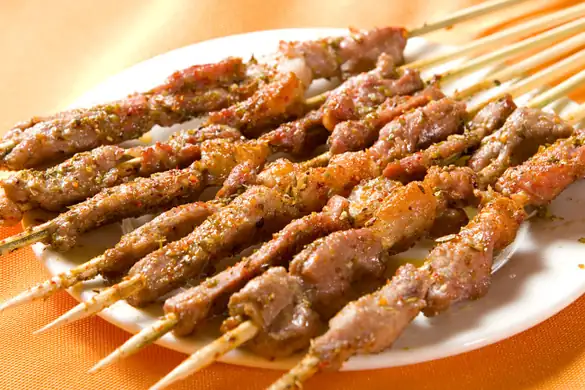 Grilled Lamb 烤羊肉
Grilled Lamb (烤羊肉) is listed among the local specialties of Karamay, Xinjiang. The name includes 羊肉 (lamb or mutton). 烤 describes roasting or grilling.
Read the dish guide →Photo adjustments
EXIF orientation normalized; resized without changing aspect ratio; converted to WebP. No subject edits.
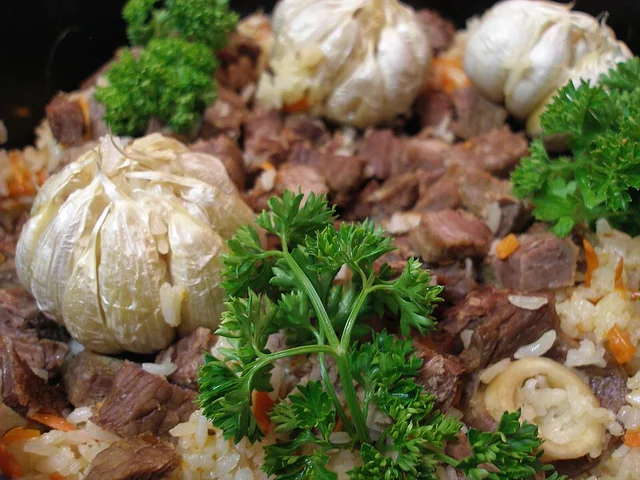 Polo rice 抓饭
The rice is rich and separate-grained, with sweet carrot, savory meat and occasional fruit sweetness rather than a sticky porridge texture.
Source ↗Read the dish guide →
Photo adjustments
EXIF orientation applied where present; resized proportionally to at most 640 px on the long edge and encoded as WebP. No crop, retouching, recoloring or subject changes.
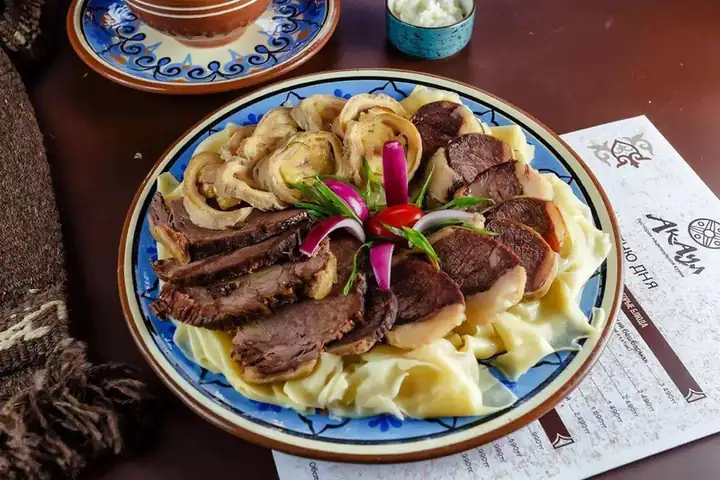 Smoked Horse Meat 熏马肉
Smoked Horse Meat (熏马肉) is a Kazakh cured meat of the Ili Kazakh Autonomous Prefecture (伊犁哈萨克自治州), Xinjiang.
Read the dish guide →Photo adjustments
EXIF orientation normalized; resized without changing aspect ratio; converted to WebP. No subject edits.
 Hand-Grabbed Boiled Meat 手抓肉
Hand-Grabbed Boiled Meat (手抓肉) is a way of preparing bone-in meat associated with pastoral communities of the Junggar Basin (准噶尔盆地) and other northern grasslands.
Source ↗Read the dish guide →.jpg)
Photo adjustments
Full frame retained; proportionally resized and converted to WebP. No retouching or changes to the photographed subject. Card displays may crop the view.
 Nang bread 馕
Thin nang is crisp, while thicker bread has a soft, chewy center and toasted crust. Fresh warmth brings out the wheat and topping aromas.
Source ↗Read the dish guide →
Photo adjustments
EXIF orientation applied where present; resized proportionally to at most 640 px on the long edge and encoded as WebP. No crop, retouching, recoloring or subject changes.
 Baked samsa buns 烤包子
The shell is crisp and firm, while the center is juicy, onion-sweet and richly savory.
Source ↗Read the dish guide →
Photo adjustments
EXIF orientation applied where present; resized proportionally to at most 640 px on the long edge and encoded as WebP. No crop, retouching, recoloring or subject changes.
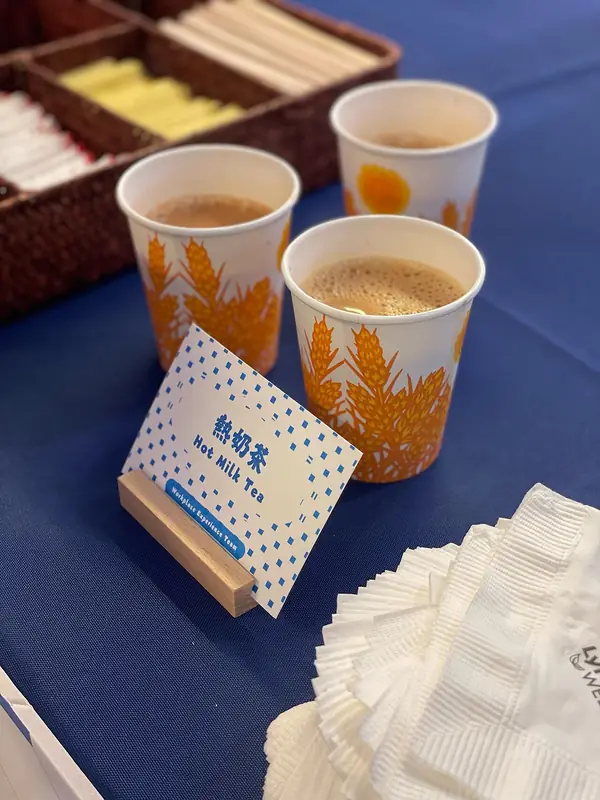 Salted Milk Tea 奶茶
Salted Milk Tea (奶茶) is brick tea mixed with boiled milk, hot water and salt. The Keketuohai Scenic Area Management Committee in Altay calls it the most important item of Kazakh food and drink, and in Ürümqi (乌鲁木齐) Xinjiang milk tea (新疆奶茶) is one of the common drinks.
Read the dish guide →
Photo adjustments
EXIF orientation normalized; resized without changing aspect ratio; converted to WebP. No subject edits.
More dishes from across Xinjiang are in the Xinjiang food guide.
Plan your visit
Getting there
Search for 北屯市 in a map app to find stations and your accommodation.
Where to stay →More in Xinjiang
Sources & geographic information
Administrative names and parent areas: Official geographic directory · Reference date 2026-09-06.
Some facts checked against 北屯市 — Wikipedia contributors, CC BY-SA 4.0.
Map data © OpenStreetMap contributors. Pins mark approximate centres, not entrances or boundaries.