


Get to know Gongshu District

Photo adjustments
Full frame retained; proportionally resized and converted to WebP. No retouching or changes to the photographed subject. Card displays may crop the view.
- Administrative area
- District · 市辖区
- Part of
- Hangzhou
- Chinese name
- 拱墅区
- Local areas
- District guide
Area & population
- Area in the source
- 69.25 km²
- Population · 2022
- 361,609
Source: cited geographic source, as of the dates shown.
History
From the Sui and Tang dynasties onward, the area served as a collecting and distribution point for goods from the Hangzhou-Jiaxing-Huzhou region (杭嘉湖地区). Gongshu took its present shape on 9 April 2021, when the former Xiacheng District (下城区) and the old Gongshu District were abolished and their territory merged into a new Gongshu District.
Setting and landscape
The land rises from southwest to northeast. The northeastern hills are an outlying spur of the Tianmu Mountains (天目山) that runs for more than 10 kilometres. They include Banshan (半山), also called Gaoting Mountain (皋亭山), whose main peak reaches 283.9 metres, and Huanghe Mountain (黄鹤山), the highest point in the district at 319.2 metres. The southwest is flat ground crossed by a network of waterways.
What to see
Gongchen Bridge marks the point where the Grand Canal reaches Hangzhou. It was first built in 1631, in the fourth year of the Ming Chongzhen reign, and rebuilt in 1885. The stone bridge has three arches and is 92.1 metres long and 5.9 metres wide. Its name contains the character chen (宸), a word for the imperial palace, and the tall arch was meant as a gesture of welcome to the emperor.
The district government lists two provincial-level historic and cultural blocks, both announced in 2016: the Gongchen Bridge block and the Xiaohe Straight Street (小河直街) block. The Dadou Road (大兜路) historic area was added at city level in 2024. In the Qiaoxi (桥西) historic block by Gongchen Bridge, four museums are run as one institution: the Hangzhou Arts and Crafts Museum (杭州工艺美术博物馆), the China Knife, Scissors and Sword Museum (中国刀剪剑博物馆), the China Fan Museum (中国扇博物馆) and the China Umbrella Museum (中国伞博物馆). They occupy converted industrial buildings, including the old Tongyigong cotton mill (通益公纱厂) and a silk factory. The knife, fan and umbrella museums were completed in September 2009 and the arts and crafts museum in September 2011.
Other areas in the district include the Xinyifang (信义坊) and Shengli River (胜利河) streets and Banshan National Forest Park (半山国家森林公园).
Highlights
- Gongchen Bridge 拱宸桥: Three-arch stone bridge marking the Grand Canal's arrival in Hangzhou; first built 1631, rebuilt 1885.
- Xiaohe Straight Street historic block 小河直街历史文化街区: Provincial-level historic and cultural block announced in 2016.
- China Knife, Scissors and Sword Museum 中国刀剪剑博物馆: One of four craft museums in the Qiaoxi block, completed in September 2009 in converted industrial buildings.
- Banshan National Forest Park 半山国家森林公园: Scenic area in the district; Banshan, also called Gaoting Mountain, has a main peak of 283.9 m.
Sources for this guide
拱墅区 - 维基百科,自由的百科全书 · Wikipedia (Chinese) · CC BY-SA 4.0
拱墅区历史文化街区、历史风貌区和历史建筑名单 · Gongshu District People's Government
拱宸桥 - 维基百科,自由的百科全书 · Wikipedia (Chinese) · CC BY-SA 4.0
杭州工艺美术博物馆 - 维基百科,自由的百科全书 · Wikipedia (Chinese) · CC BY-SA 4.0
Original English written from the listed sources and checked sentence by sentence against quoted extracts by a separate reviewer. Updated 2026-09-25.
Explore Gongshu District
Core places to explore, with English and Chinese names.
Places to explore around Gongshu District
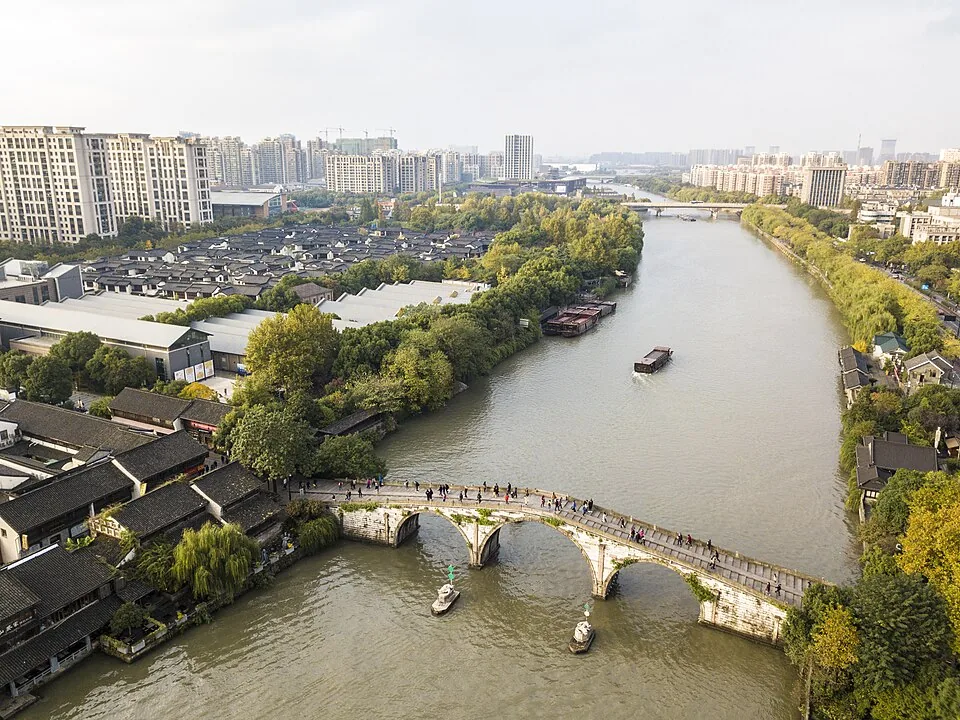 Gongchen Bridge · 拱宸桥. Photo: 2017-11-18 15:59:29.
Gongchen Bridge拱宸桥
Gongchen Bridge arches over the Grand Canal between two distinct parts of Hangzhou’s canal district. To the west, Qiaoxi’s whitewashed walls and dark roofs retain the character of an older waterside neighbourhood; to the east…
Read the place guide → The shared entrance building of the China Knife, Scissors and Sword Museum and China Umbrella Museum in Hangzhou; 20 July 2013.
China Knife, Scissors and Sword Museum中国刀剪剑博物馆
The China Knife, Scissors and Sword Museum belongs to the Hangzhou Arts and Crafts Museum group in the Qiaoxi historic district. The buildings reuse textile factories and warehouses beside the Grand Canal.
Read the place guide →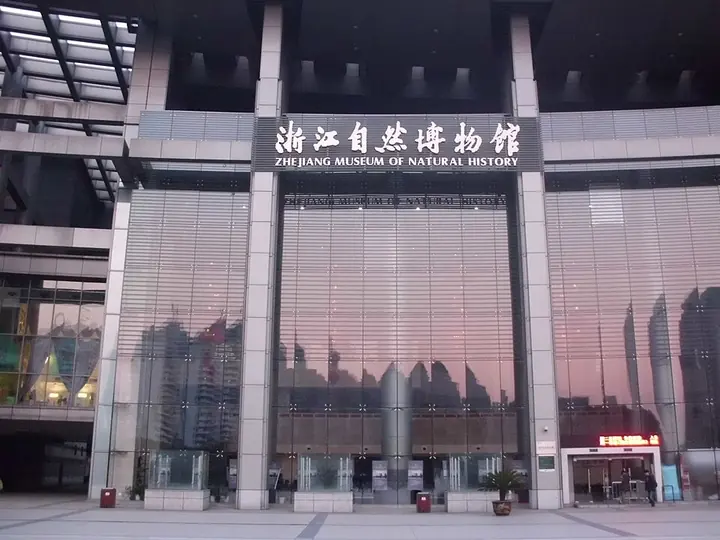 Entrance to Zhejiang Museum of Natural History, Hangzhou branch · 浙江自然博物院杭州馆入口 Photograph date recorded by the source: 5 December 2012, 16:51:56.
Zhejiang Museum of Natural History浙江自然博物院杭州馆
The Hangzhou branch of Zhejiang Museum of Natural History introduces life through large specimens, fossils and the ecosystems of the province. The entrance display brings together striking examples such as a grey whale skeleton…
Read the place guide →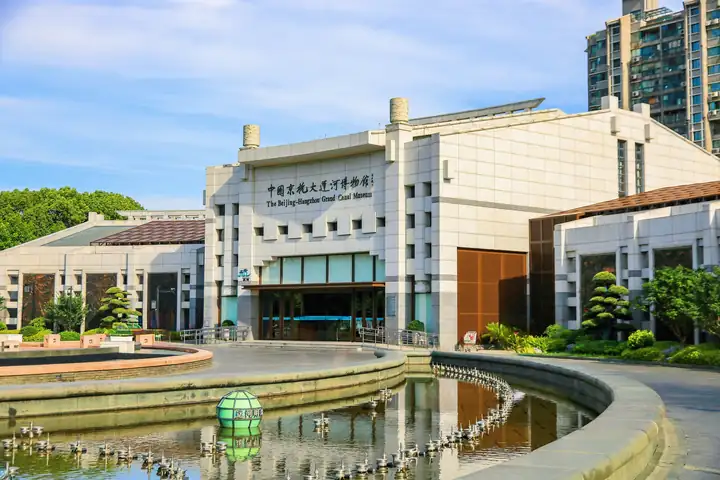 Beijing-Hangzhou Grand Canal Museum · 中国京杭大运河博物馆
Beijing-Hangzhou Grand Canal Museum中国京杭大运河博物馆
The Grand Canal Museum uses its position beside Gongchen Bridge to connect indoor displays with a working waterway outside. Models of canal vessels and a cross-section explaining water levels make the engineering story tangible…
Read the place guide →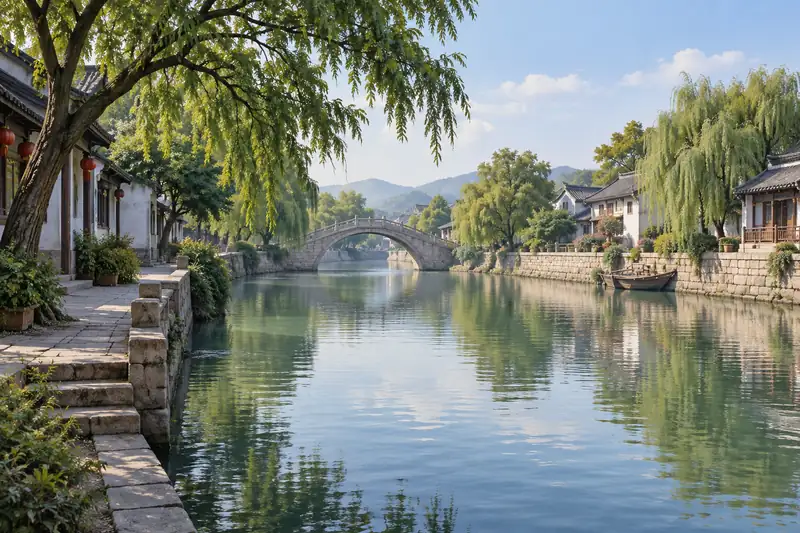 AI illustration · AI 示意图(仅供参考,非该地点实拍)
Grand Canal Around Gongchen Bridge京杭大运河拱宸桥片区
Gongchen Bridge is a stone arch bridge over the Grand Canal in Hangzhou's Gongshu district.
Read the place guide → AI illustration · AI 示意图(仅供参考,非该地点实拍)
Hangzhou Arts and Crafts Museums中国杭州工艺美术博物馆群
The Hangzhou Arts and Crafts Museums occupy former industrial buildings on the west side of Gongchen Bridge, beside the Grand Canal.
Read the place guide →Plan your visit
Getting there
Gongshu District is about 9 km in a straight line from central Hangzhou. Search for 拱墅区 in a map app to find stations and your accommodation.
Where to stay →Build your route
Gongchen Bridge and China Knife, Scissors and Sword Museum are less than 1 km apart. The linked place guides have entrance and visit details.
Continue with Hangzhou →More in Hangzhou
Sources & geographic information
Administrative names and parent areas: Official geographic directory · Reference date 2026-09-06.
Some facts checked against 拱墅区 — Wikipedia contributors, CC BY-SA 4.0.
Some facts checked against 拱宸桥 — Wikipedia contributors, CC BY-SA 4.0.
Some facts checked against 杭州工艺美术博物馆 — Wikipedia contributors, CC BY-SA 4.0.
Photo: Gongchen Bridge · Legolas1024 · CC BY-SA 4.0. Converted to WebP and resized without changing the subject or cropping the source frame.

Photo: China Knife, Scissors and Sword Museum · 猫猫的日记本 · CC BY-SA 3.0. Proportionally resized and converted to WebP without cropping, retouching or changing the photographed subject.

Photo: Zhejiang Museum of Natural History · Huandy618 · Huandy618 — Westlake_Cultural_Square_9.JPG — CC BY-SA 3.0 · CC BY-SA 3.0. Full frame retained; proportionally resized and converted to WebP. No retouching or changes to the photographed subject. Card displays may crop the view.

Photo: Beijing-Hangzhou Grand Canal Museum · Source photographer · License not provided. EXIF orientation normalized; resized without changing aspect ratio; converted to WebP. No subject edits.
Map data © OpenStreetMap contributors. Pins mark approximate centres, not entrances or boundaries.