


Get to know Shangcheng District
- Administrative area
- District · 市辖区
- Part of
- Hangzhou
- Chinese name
- 上城区
- Local areas
- District guide
Area & population
- Area
- 119.68 km²
- Population · 2022
- 1,335,000
Source: English Wikipedia, as of the dates shown.
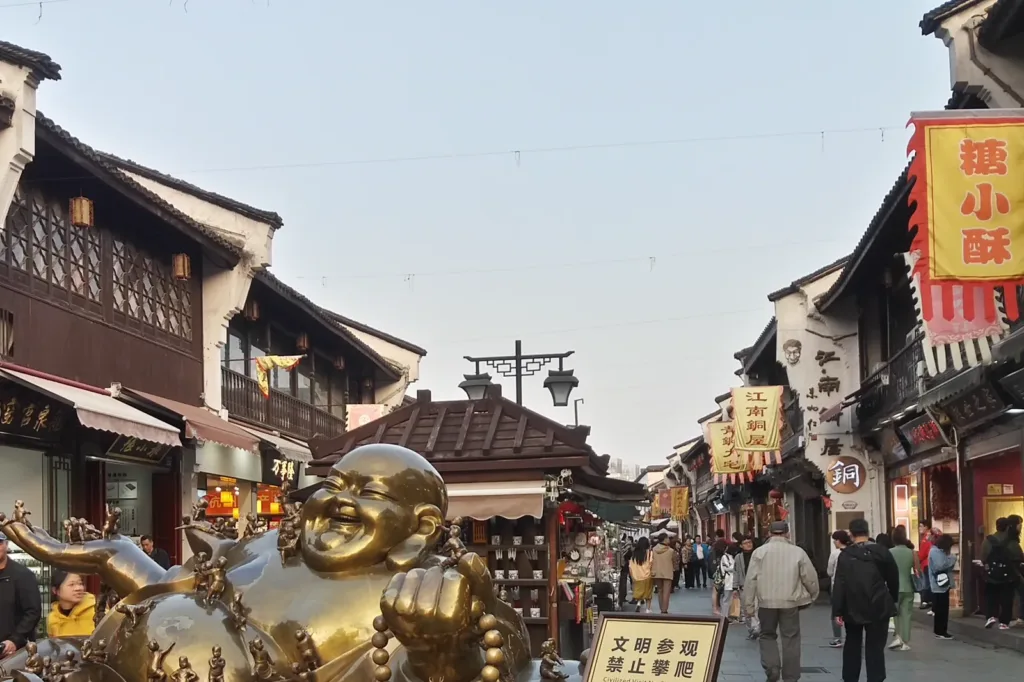
Two very different sides of Shangcheng
Today’s Shangcheng is not just Hangzhou’s old-town core. In 2021 the former Shangcheng and Jianggan districts were abolished and a new Shangcheng was formed from their territories, except for Xiasha and Baiyang subdistricts, which became part of Qiantang District. “Jianggan District” is therefore a former administrative name, not a separate current district.
The district makes most sense as two visits: a slower walk through the historic commercial lanes below Wushan, and a separate outing to the modern civic and riverfront spaces of Qianjiang New City. The latter is a working centre for public administration, finance, commerce, culture and housing, not an extension of the old pedestrian street.
Walk the old commercial quarter
Hefang Street (河坊街) lies at the foot of Wushan Hill and grew into a major commercial street when Hangzhou was the Southern Song capital. Today its shopfronts, long-established businesses, snack stalls and craft stores make it a place to read the city’s commercial life as much as its history.
Start near Wushan Square (吴山广场), then walk along Hefang Street and let the smaller lanes draw you away from the busiest stretch. Compare the continuous street of shops with the narrower side lanes, and look for the old trades and local products named in the shop signs. This is a lived-in shopping quarter, not a single enclosed museum; opening hours belong to individual businesses and venues, so do not assume every shop or museum is open when you arrive.
Wushan Square and the surrounding streets are also everyday public space. You may see people meeting, resting or exercising, but public activities are not a scheduled show. Keep doorways clear, and ask before taking close portraits of residents or shopkeepers.
See the newer riverfront
Qianjiang New City (钱江新城) gives the district a very different scale. At the Hangzhou City Balconies (杭州城市阳台), three open urban-park sections face the Qiantang River and offer places to sit, walk and look across the water and the newer city skyline. Nearby civic and commercial architecture makes this a useful contrast with the tight grain of the old lanes.
Treat the river as a landscape rather than a promised spectacle: water levels, weather and any special display vary. Stay on public paths and follow local riverside safety notices. The civic riverfront and the old-town shops are separate areas; use the metro or a legal taxi transfer rather than planning them as one short walk.
Getting around
For the historic core, take Hangzhou Metro Line 7 to Wushan Square (吴山广场). This station opened with the northern section of Line 7 in 2022; follow the station’s current signs for Wushan Square or Hefang Street, then continue on foot into the pedestrian shopping lanes. Exit lettering is not specified here because station access can change.
For Qianjiang New City and the City Balconies, Line 7 also connects the old-town end with Civic Center (市民中心). Follow the station’s current pedestrian signs toward the City Balconies and the riverfront; check the station map for the right exit on the day rather than relying on an unverified exit letter.
For a taxi to the historic quarter, give the driver 吴山广场,杭州市上城区延安路1号. Ask to be dropped at a legal curbside near the square and continue on foot; do not request entry into pedestrian-only lanes. For the riverfront, use 杭州城市阳台(杭州市上城区解放东路与之江路交叉口) as the destination and follow marked public access. Neither destination is a single entrance for the entire district.
No bus route is prescribed here: a district-wide recommendation would be misleading across such a large area, and no bus line is needed for the two routes above. Public streets and parks have no single district ticket; enclosed venues set their own admission, booking and opening arrangements.
Explore Shangcheng District
Core places to explore, with English and Chinese names.
Hefang Street 河坊街
Leifeng Pagoda 雷峰塔
Hu Qing Yu Tang Pharmacy and Museum 胡庆余堂
Phoenix Mosque 凤凰寺
Orioles Singing in the Willows 柳浪闻莺
King Qian's Memorial 钱王祠
West Lake Museum 西湖博物馆
Jade Emperor Hill 玉皇山
Wushan Square 吴山广场
Museum of Chinese Go 中国围棋博物馆
Former Residence of Hu Xueyan 胡雪岩故居
Qiantang River City Balcony 钱塘江城市阳台
Places to explore around Shangcheng District
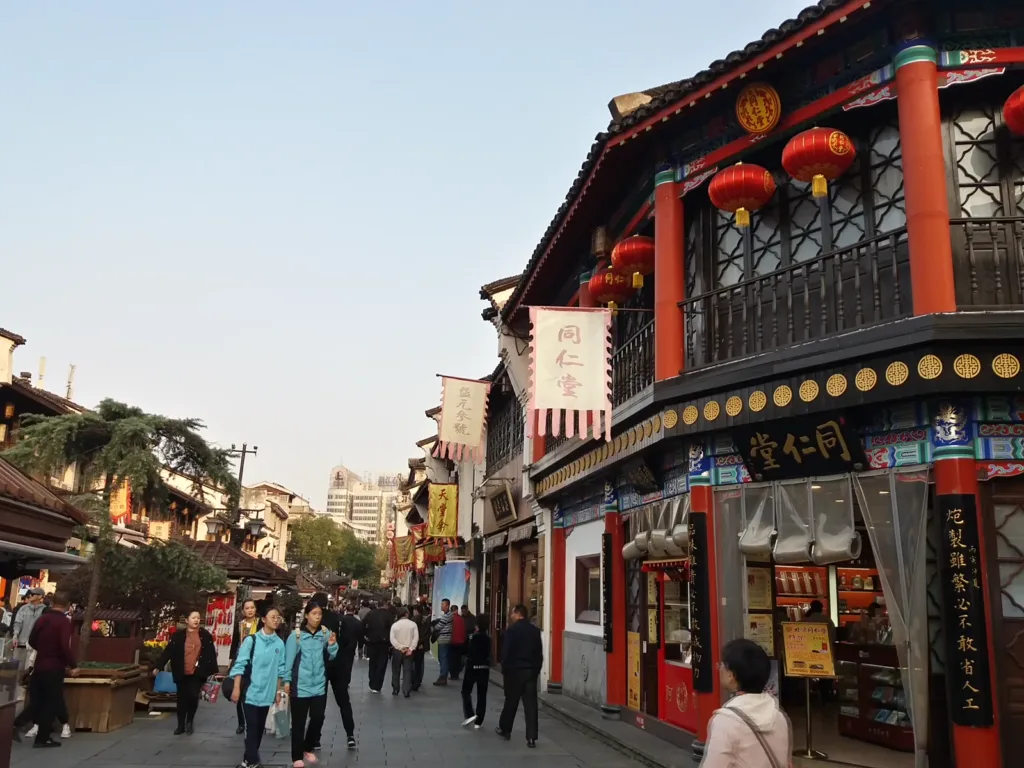 Historic shopfront and pedestrian lane on Hefang Street, Hangzhou. Photo: 钉钉 · CC BY-SA 4.0
Hefang Street河坊街
A lively historic shopping street in Hangzhou’s Shangcheng District, where traditional medicine, crafts, old shopfronts and newer creative spaces sit within the larger Qinghefang historic quarter.
Read the place guide →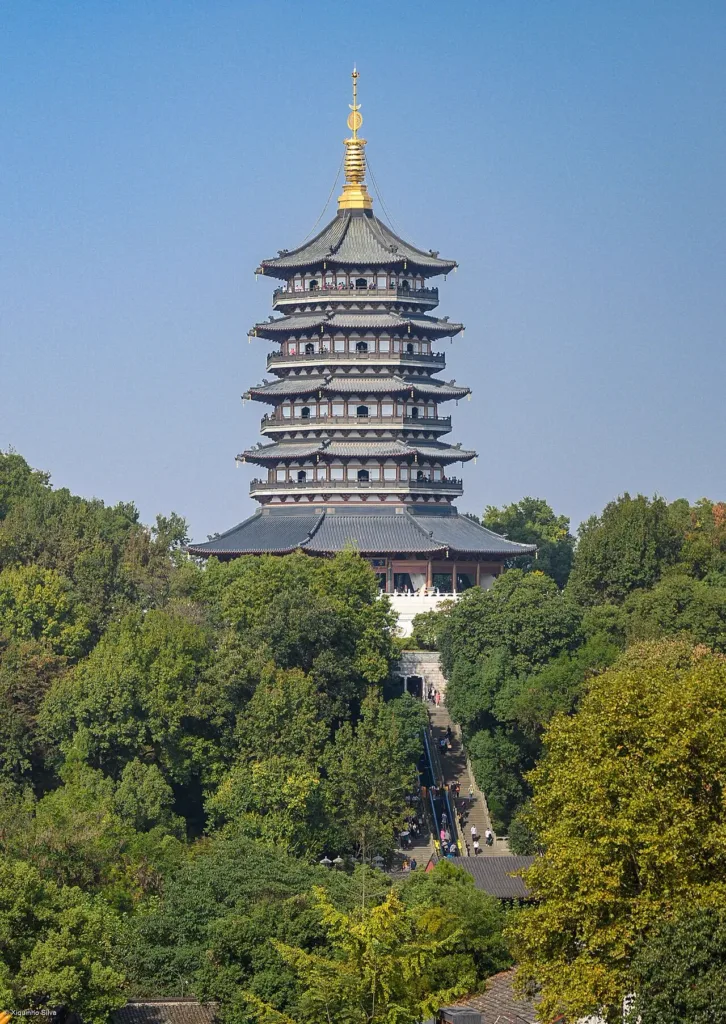 Leifeng Pagoda on Sunset Hill above West Lake, Hangzhou. Photo: xiquinhosilva (Xiquinho Silva) · CC BY 2.0
Leifeng Pagoda雷峰塔
A five-storey, octagonal copper-clad pagoda rises above the protected remains of its medieval predecessor on West Lake’s south shore, combining archaeology, Buddhist heritage, the White Snake legend, and wide lake views.
Read the place guide → The historic Hu Qing Yu Tang sales hall, with pharmacy counters beneath carved timber galleries. Photo: Siyuwj · CC BY-SA 4.0
Hu Qing Yu Tang Pharmacy and Museum胡庆余堂
A living Hangzhou pharmacy and traditional Chinese medicine museum in a finely preserved late-Qing commercial compound at 95 Dajing Lane, where medicine, craft, and the “戒欺” ethic meet.
Read the place guide →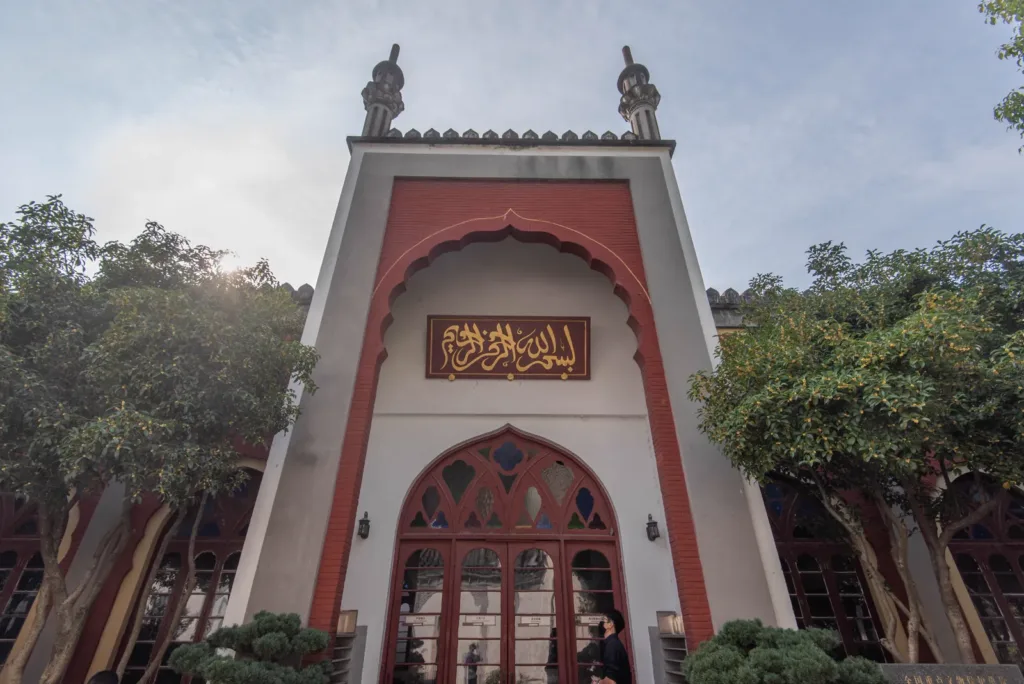 The entrance pavilion of Phoenix Mosque, photographed on 2022-10-16. Photo: Siyuwj · CC BY-SA 4.0
Phoenix Mosque凤凰寺
A historic mosque on Zhongshan Middle Road where a Yuan-era domed prayer hall, Chinese roof forms, Arabic and Persian inscriptions, and Hangzhou’s Muslim heritage meet.
Read the place guide → Orioles Singing in the Willows · 柳浪闻莺
Orioles Singing in the Willows柳浪闻莺
A willow-shaded public garden on West Lake’s southeast shore, where lakeside paths, open lawns and historic scenic markers make a gentle alternative to the busier promenades.
Read the place guide →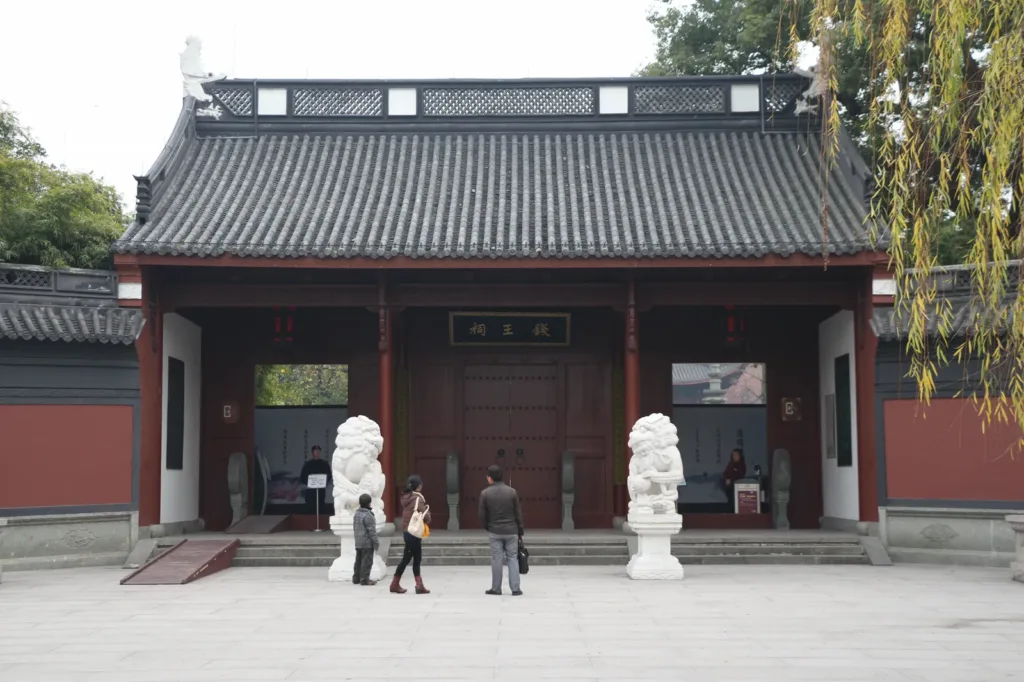 Entrance hall of Qian Wang Temple, Hangzhou. Photo: Marcushsu · CC BY-SA 3.0
King Qian's Memorial钱王祠
A quiet memorial to the Wuyue rulers, set inside the lakeside garden of Orioles Singing in the Willows. Follow its ceremonial halls and inscriptions to see how early Hangzhou connected civic rule, water management and West Lake.
Read the place guide →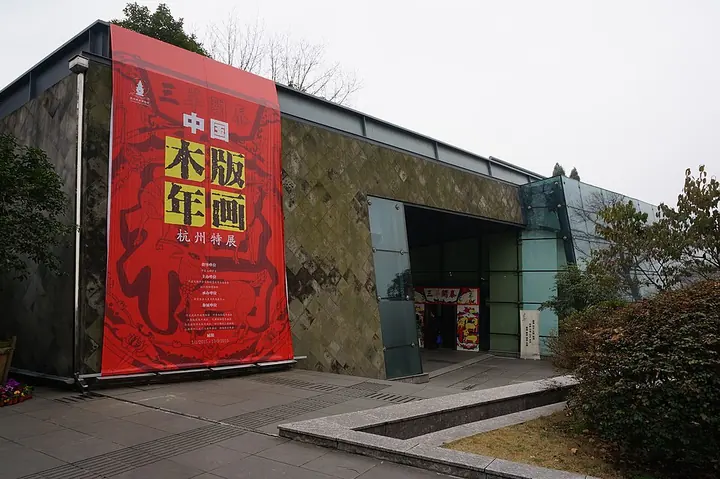 The West Lake Museum building in March 2015 · 西湖博物馆 Photograph date recorded by the source: 7 March 2015, 12:45:41.
West Lake Museum西湖博物馆
A largely underground museum on Hangzhou’s southern lakefront introduces how West Lake was formed, reshaped, named and celebrated. Start with the lake’s physical story, then follow the human history before stepping back outside to the shore it interprets.
Read the place guide → Jade Emperor Hill · 玉皇山
Jade Emperor Hill玉皇山
A wooded climb south of West Lake combines a striking hillside cave, Daoist architecture, stone inscriptions and broad views toward West Lake and the Qiantang River.
Read the place guide →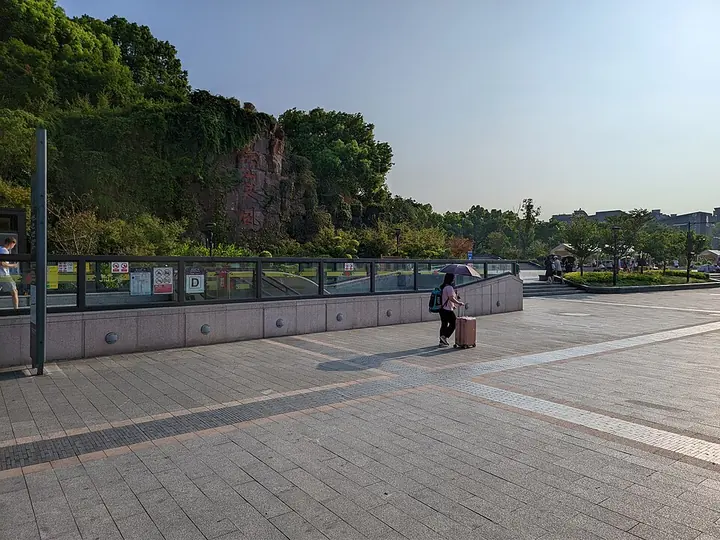 A corner of Wushan Square in Hangzhou, photographed in September 2024 · 吴山广场 Photograph date recorded by the source: 8 September 2024.
Wushan Square吴山广场
Wushan Square is a broad civic space at the foot of Wu Hill, where Hangzhou’s old commercial streets meet the wooded ridge. Its present layout is only partly accessible while a city-renewal project and archaeological protection are planned.
Read the place guide →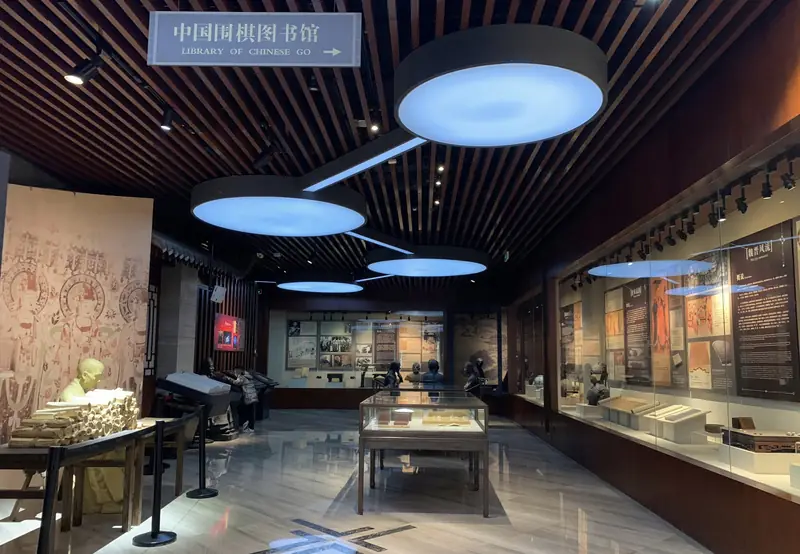 Museum of Chinese Go · 中国围棋博物馆
Museum of Chinese Go中国围棋博物馆
A specialist museum inside Hangzhou’s Tianyuan Tower traces the history and cultural life of Go through a focused exhibition in the city’s chess-culture complex.
Read the place guide →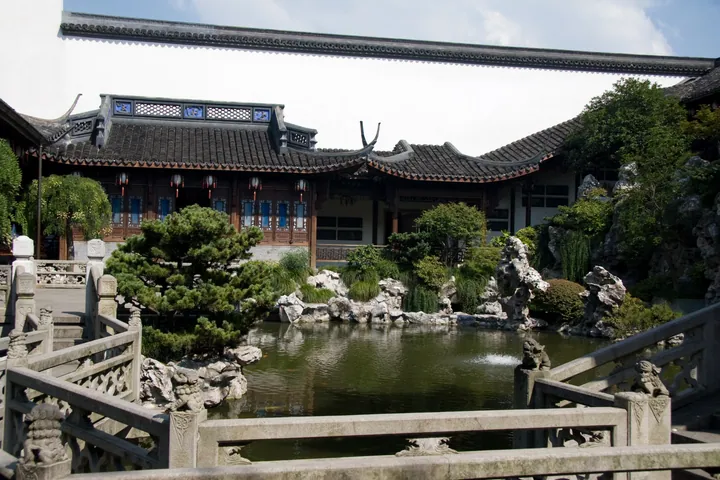 Garden courtyard with rockery and pond at the Former Residence of Hu Xueyan, Hangzhou · 杭州胡雪岩故居园林景观,上城区 Source-recorded photograph date: 2007-08.
Former Residence of Hu Xueyan胡雪岩故居
A restored late-Qing merchant residence on Yuanbao Street, where richly carved halls and the rockwork garden of Zhiyuan show how domestic life and public display met in a wealthy Hangzhou household.
Read the place guide →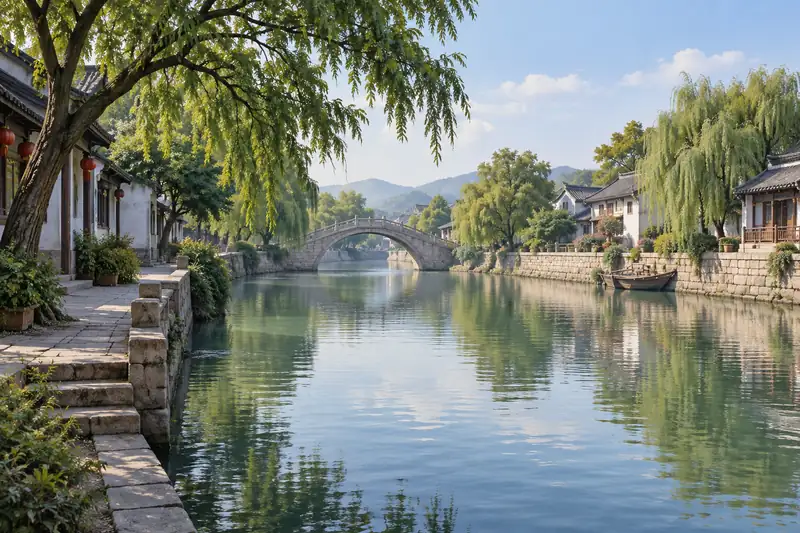 AI illustration · AI 示意图(仅供参考,非该地点实拍)
Qiantang River City Balcony钱塘江城市阳台
A landscaped riverside civic deck in Shangcheng’s Qianjiang New City, where a broad main platform and green side promenades open onto the Qiantang River and Hangzhou’s modern central business district.
Read the place guide →Plan your visit
Getting there
Shangcheng District covers the centre of Hangzhou. Search for 上城区 in a map app to find stations and your accommodation.
Where to stay →Build your route
Hefang Street and Leifeng Pagoda are about 2 km apart (straight-line distance). The linked place guides have entrance and visit details.
Continue with Hangzhou →More in Hangzhou
Sources & geographic information
Administrative names and parent areas: Official geographic directory (dmfw.mca.gov.cn) · Reference date 2026-09-06.
Background text adapted from Shangcheng, Hangzhou — Wikipedia contributors, under CC BY-SA 4.0. Text has been shortened and reorganized; source revision 1353594302.
Photo: Orioles Singing in the Willows · Shizhao · Public domain. Resized for the web; the photo itself has not been edited.

Photo: West Lake Museum · 猫猫的日记本 · CC BY-SA 4.0. Resized for the web; the photo itself has not been edited. Thumbnails may show a cropped view.

Photo: Jade Emperor Hill · Shuishouyue · CC BY-SA 4.0. Resized for the web; the photo itself has not been edited.

Photo: Wushan Square · Benteds · CC BY-SA 4.0. Resized for the web; the photo itself has not been edited. Thumbnails may show a cropped view.

Photo: Museum of Chinese Go · gs.ctrip.com. Resized for the web; the photo itself has not been edited.
Photo: Former Residence of Hu Xueyan · Maros M r a z (Maros) · CC BY-SA 3.0. Resized for the web; the photo itself has not been edited. Thumbnails may show a cropped view.

Map data © OpenStreetMap contributors. Pins mark approximate centres, not entrances or boundaries.
Image credits & notes (2)
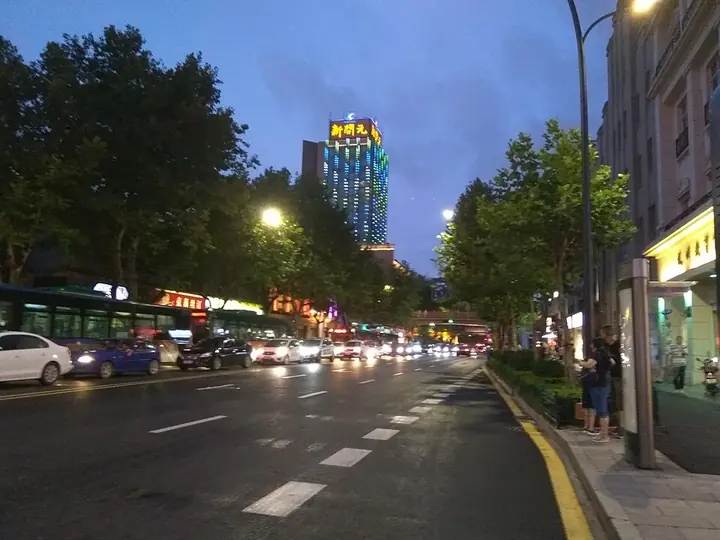
- Jiefang Road at dusk in Shangcheng District, Hangzhou. Photograph date recorded by the source: 2016-08-09 19:03:47.Photo: MNXANL · CC BY-SA 4.0Resized for the web; the photo itself has not been edited. Thumbnails may show a cropped view.
- Hefang Street (河坊街), showing traditional-style shopfronts and the pedestrian lane. Photo: 钉钉Photo: CC BY-SA 4.0
