


Get to know Xihu District

- Administrative area
- District · 市辖区
- Part of
- Hangzhou
- Chinese name
- 西湖区
- Local areas
- District guide
Area & population
- Area
- 312.43 km²
Source: English Wikipedia, as of the dates shown.
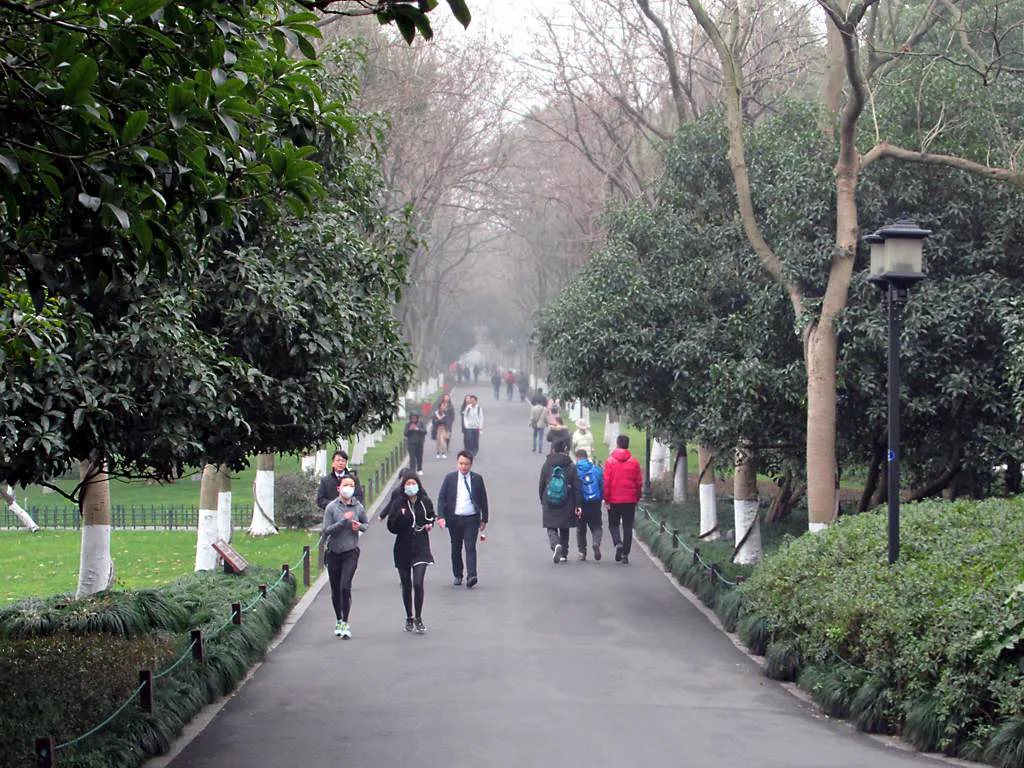
A district, not a single scenic gate
Xihu (西湖区) is one of Hangzhou’s current county-level districts. Hangzhou’s 2021 administrative reorganization established new Shangcheng, Gongshu and Linping districts and Qiantang District while retaining Xihu among the city’s ten districts. The district name comes from West Lake, but an administrative district is not the same thing as the lake’s scenic-area or heritage designation. The UNESCO-listed cultural landscape is a designed setting of water, wooded hills, causeways, islands, temples, pagodas and gardens; its management is described separately from ordinary district government.
That variety is the point of a visit. The familiar lake-and-hills landscape is only one part of Xihu. Farther west, waterways and wetland paths make a slower, more seasonal outing. In the foothills, the historic “Xixi Eighteen Valleys” (西溪十八坞) connect small villages, art spaces, tea slopes and wooded walking routes. These are separate settings; allow time to travel between them rather than trying to cover the district as a compact walking itinerary.
Walk the lake as a landscape
Around West Lake (西湖), look beyond postcard viewpoints to the relationship between the open water, low hills, planted causeways, islands and buildings. Walking a shore section or a causeway lets you notice how bridges and pavilions frame views and how the hills form a backdrop to the city. UNESCO describes the landscape as a long cultural practice of shaping nature into a sequence of composed scenes, not simply a natural lake. Choose one shore or hillside section and pause at several viewpoints; trying to circle the whole lake in a short visit leaves little time to see how those views change.
The photograph above shows a tree-lined section of Su Causeway (苏堤), a promenade where locals and visitors share the same public path. Keep to pedestrian space, give way to cyclists where paths are shared, and avoid blocking the route for photographs. The UNESCO landscape includes temples, pagodas, gardens and ornamental planting as well as water, so a visit can combine lakeside walking with one nearby cultural site rather than collecting viewpoints at speed.
Take a slower route through Xixi’s foothill valleys
“Xixi Eighteen Valleys” is a name for a group of small valleys between the Xixi and West Lake landscapes, not a single ticketed park or a standardized trail. Hangzhou Daily reported that Xihu District’s culture and tourism bureau organized five themed routes in 2024. The article describes the “Artist” route between Outer and Inner Tongwu (外桐坞—里桐坞), with tea hills, an art museum, ceramics studios and workshops; other routes emphasize green scenery, cultural leisure or hiking. Treat this as an editorial starting point, not a promise that every workshop, guided outing or route service is operating on a given day. Check with the individual venue before making a special trip.
These valleys are lived-in places as well as countryside. Follow marked public paths, keep noise low, do not enter private courtyards or tea plots without invitation, and ask before photographing residents or their homes. Harvesting, tea-making demonstrations and community events are seasonal or venue-run activities; they are not guaranteed daily public performances.
Xixi National Wetland Park (西溪国家湿地公园) is another distinct outing, centered on wetland channels and park paths rather than the lake’s promenades. Use the specific park entrance you intend to visit as your destination; the north and south sides are not interchangeable for a walk. Park boat services, access arrangements and opening details can change, so verify them with the park’s current visitor information before setting out.
Reaching different parts of the district
Xihu has no single entrance, taxi address or district-wide last-mile route. Hangzhou City News’ August 2026 route overview lists Xixi Wetland South (西溪湿地南站) on Metro Line 3 and says Line 3 serves the Xixi Wetland area. A station-opening guide places that station in Xihu District. The exact station exit and the best walking connection to a particular park gate were not verified, so do not treat the station name alone as confirmation of a gate-side exit. For West Lake’s west-side paths and the hill villages, choose the exact named destination in Chinese—such as 外桐坞 or 里桐坞—then use a current local bus itinerary or a licensed taxi to a public visitor approach. No single bus route, taxi drop-off or entrance applies to the whole district.
The Xixi Eighteen Valleys article describes several walking itineraries but does not establish current public bus numbers, station exits or a permanent coach service. Those route details should be checked for the chosen trailhead on the day. Do not enter a private lane or stop where roadside signs prohibit stopping.
Guide sources
- Hangzhou Municipal Government Gazette: 2021 administrative reorganization
- UNESCO World Heritage Centre: West Lake Cultural Landscape of Hangzhou
- Xihu District People’s Government
- Hangzhou Daily: Xixi Eighteen Valleys open a new way to explore the hills
- Xixi National Wetland Park official website
- Hangzhou City News: current metro line connections in western Hangzhou
- Hangzhou 2022: Line 3 stations and district locations
Explore Xihu District
Core places to explore, with English and Chinese names.
West Lake 西湖
Lingyin Temple 灵隐寺
Xixi National Wetland Park 西溪国家湿地公园
Hangzhou Songcheng Show Park 杭州宋城
Feilai Feng 飞来峰
Longjing Village, Hangzhou 龙井村
Longjing Tea Fields 龙井茶园
Liuhe Pagoda 六和塔
China National Tea Museum 中国茶叶博物馆
Yue Fei Temple 岳王庙
Baochu Pagoda 保俶塔
Xiling Seal Art Society 西泠印社
Zhejiang Provincial Museum 浙江省博物馆
Hangzhou Botanical Garden 杭州植物园
Spring Dawn at Su Causeway 苏堤春晓
Wind and Lotus at the Crooked Courtyard (in Summer) 曲院风荷
Autumn Moon over the Calm Lake 平湖秋月
Lingering Snow on Broken Bridge 断桥残雪
Viewing Fish at Flower Pond 花港观鱼
Three Ponds Mirroring the Moon 三潭映月小瀛洲
Evening Bell Ringing on Nanping Hill 净慈寺南屏晚钟
Mid-Lake Pavilion 湖心亭
Bai Causeway 白堤
Solitary Hill and Zhongshan Park 孤山及中山公园
Yanggong Causeway 杨公堤
Baopu Taoist Temple 抱朴道院
Dreaming of the Tiger Spring 虎跑梦泉
Nine Creeks and Eighteen Gullies 九溪十八涧
Lingyin Feilai Peak Scenic Area 灵隐寺与飞来峰
Meijiawu Tea Culture Village 龙井村与梅家坞茶山
Longwu Tea Garden 龙坞茶园
Zhejiang Provincial Museum (Zhijiang Branch) 浙江省博物馆之江馆区
Places to explore around Xihu District
 West Lake (Xi Hu) · 西湖
West Lake西湖
West Lake’s water, causeways, islands and wooded hills form a cultural landscape best explored one shoreline at a time. Walk a causeway, pause at a garden or pavilion, and take a boat only if you want to add an island visit.
Read the place guide →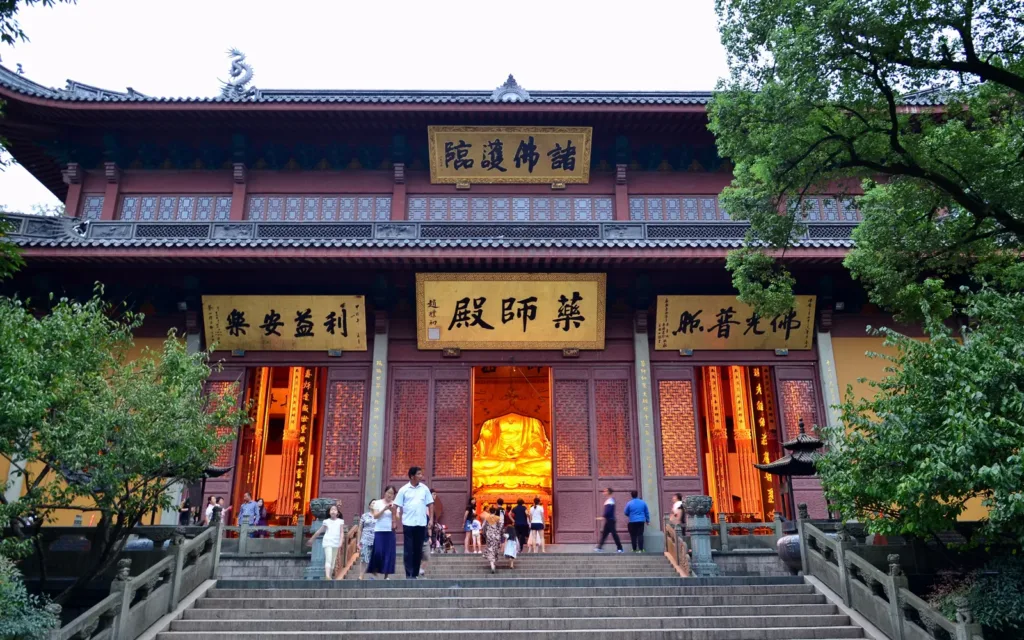 The Medicine Buddha Hall at Lingyin Temple, Hangzhou. Photo: Tyg728 · CC BY-SA 4.0
Lingyin Temple灵隐寺
A working Chan monastery between Feilai Peak and Beigao Peak, Lingyin Temple is known for its monumental halls, Buddhist sculpture and wooded West Lake foothills.
Read the place guide → Boats on a wooded waterway in the western part of Xixi National Wetland Park, Hangzhou. Photo: Tyg728 · CC BY-SA 4.0
Xixi National Wetland Park西溪国家湿地公园
A living water landscape on Hangzhou’s western edge, where reed-lined channels, fishpond banks, bird habitat and old village culture make a quieter counterpoint to West Lake.
Read the place guide →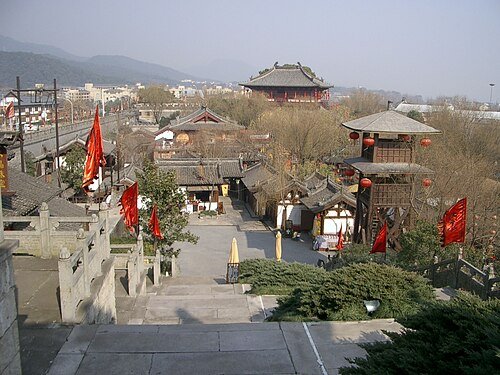 Hangzhou Songcheng · 杭州宋城
Hangzhou Songcheng Show Park杭州宋城
A purpose-built performance park in Hangzhou’s Xihu District, with Song-inspired streets, water scenery and live entertainment. Its signature revue stages stories drawn from Liangzhu, the Southern Song court, Yue Fei and Hangzhou legends.
Read the place guide →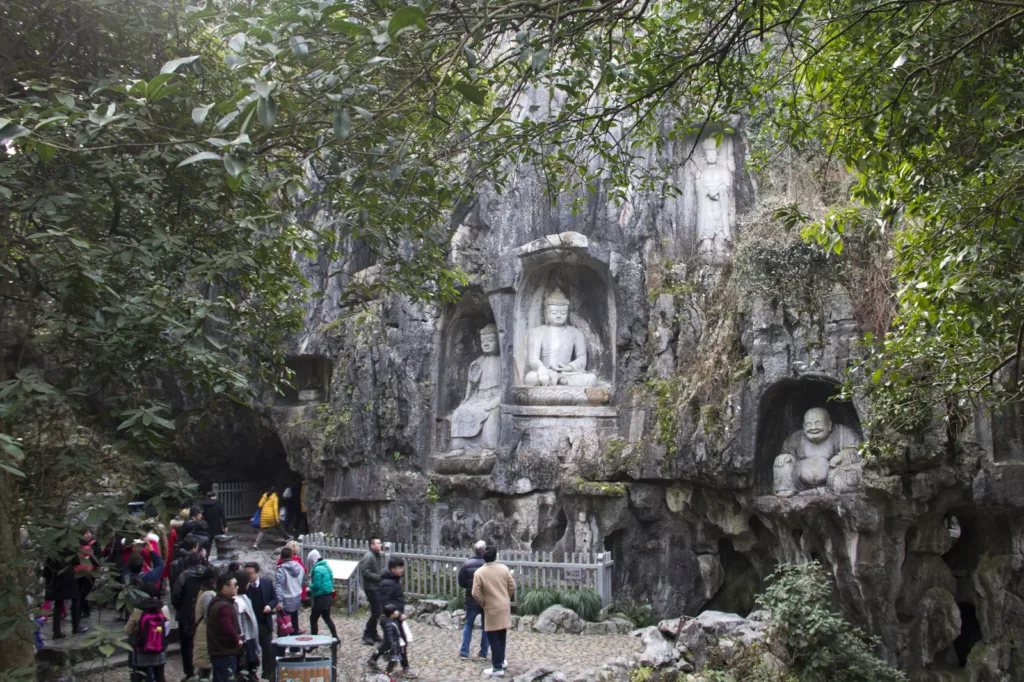 Buddhist figures carved into a limestone cliff at Feilai Feng; one section of the grotto site. Photo: 維基小霸王 · CC BY-SA 4.0
Feilai Feng飞来峰
On a wooded limestone hillside opposite Lingyin Temple, follow shaded paths past natural grottoes and centuries-old Buddhist carvings, from a lively Budai-and-arhats relief to smaller figures cut into the rock.
Read the place guide →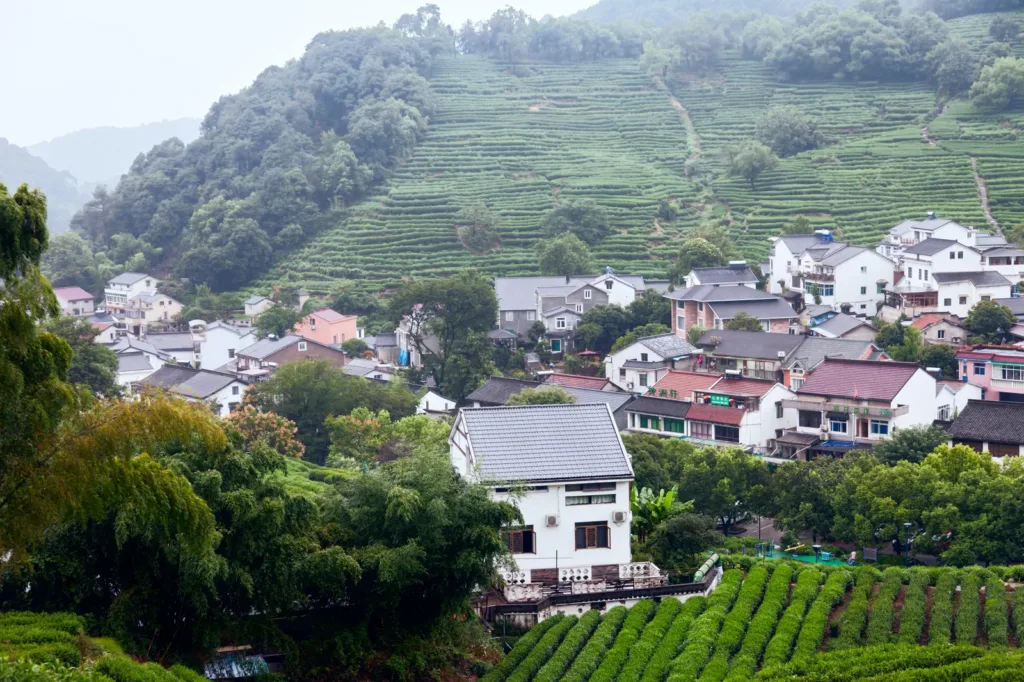 Village houses among cultivated tea slopes in the Longjing area of Hangzhou. Photo taken 20 October 2017. Photo: Niklas Dougherty · CC BY-SA 4.0
Longjing Village, Hangzhou龙井村
A lived-in tea village on Hangzhou’s West Lake hills, where cultivated slopes, village lanes and tea heritage make the landscape behind Longjing tea tangible.
Read the place guide →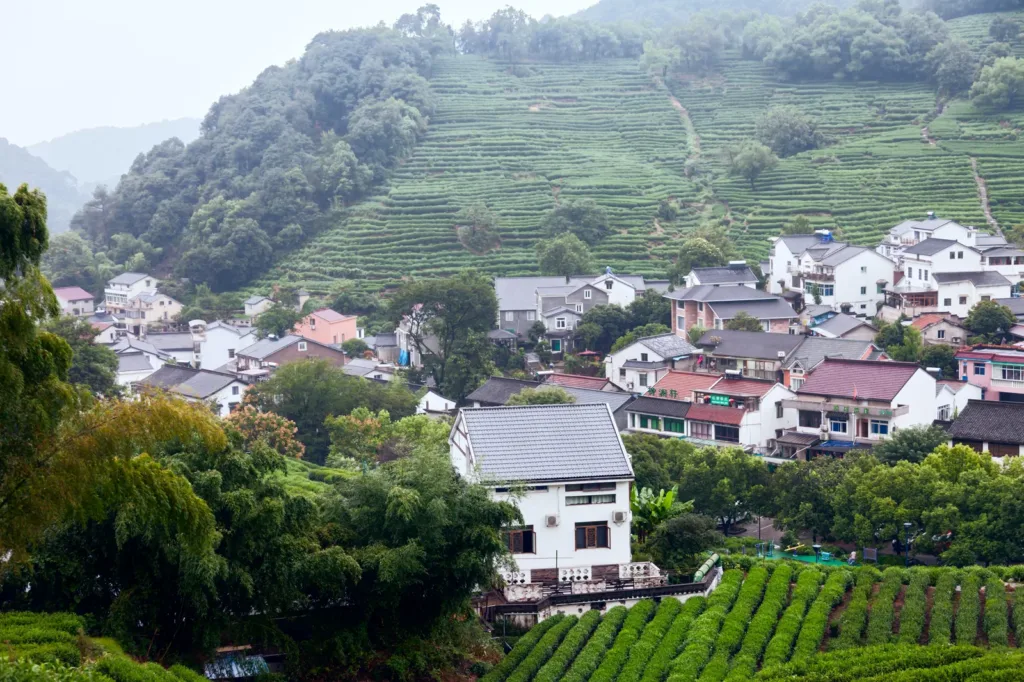 Tea rows rise behind the houses of Longjing Village in Hangzhou. Photo: Niklas Dougherty · CC BY-SA 4.0
Longjing Tea Fields龙井茶园
Walk village lanes and permitted paths around Longjing Village to see cultivated tea slopes and taste West Lake Longjing where it is grown.
Read the place guide → Liuhe Pagoda among the surrounding trees, Hangzhou. Photo: Zhangzhugang · CC BY-SA 4.0
Liuhe Pagoda六和塔
Climb Hangzhou’s octagonal Song-era pagoda on Yuelun Hill for a close look at its brick-and-timber construction and views over the Qiantang River and its bridge.
Read the place guide → Tea fields at the China National Tea Museum grounds. Photo: 2016-09-27 12:19.
China National Tea Museum中国茶叶博物馆
A two-campus museum in Hangzhou’s West Lake tea country pairs the history and objects of tea with Longjing tea landscapes and cross-cultural displays.
Read the place guide →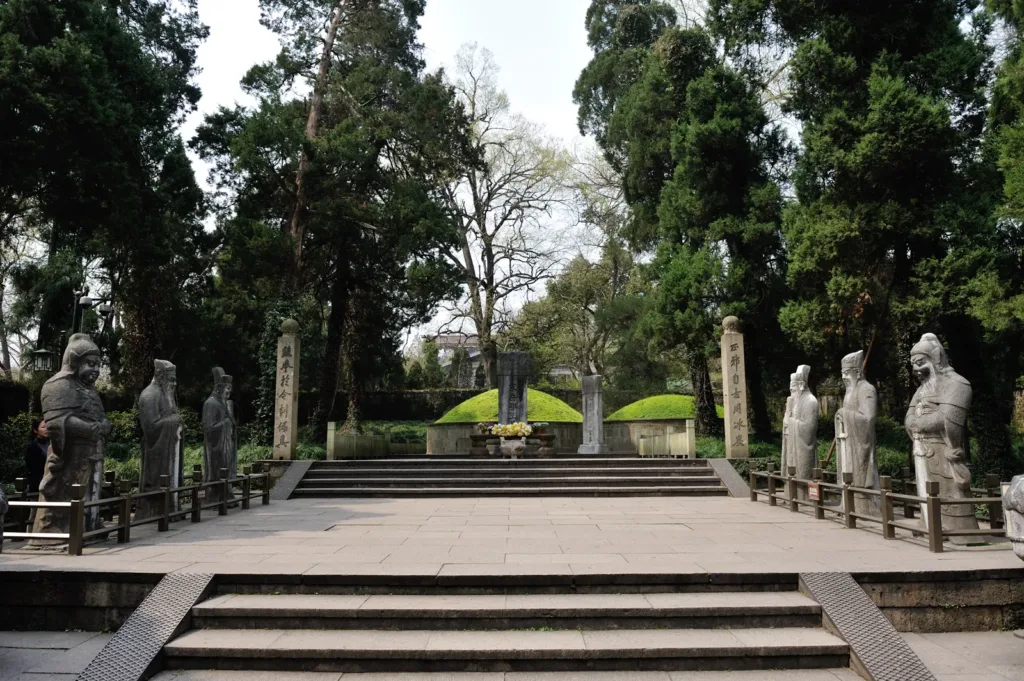 Yue Fei's tomb precinct, framed by stone figures along the approach. Photo: Siyuwj · CC BY-SA 4.0
Yue Fei Temple岳王庙
A lakeside memorial in Hangzhou’s Xihu District honors Song general Yue Fei through shrine halls, a tomb precinct and the sculptural approach to his burial place.
Read the place guide →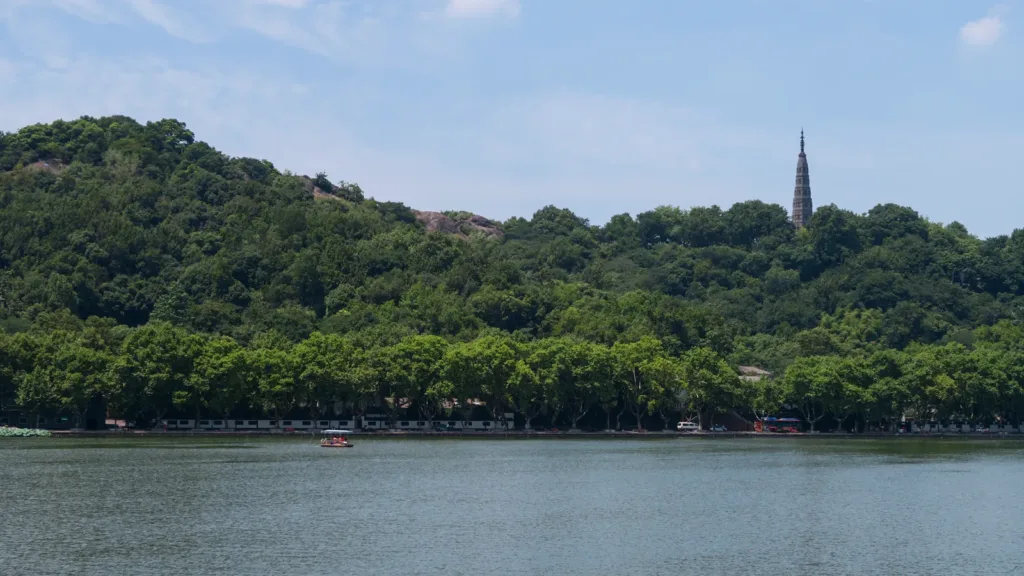 Baochu Pagoda rises above Baoshi Hill across West Lake. Photo: Yinweichen · CC BY-SA 4.0
Baochu Pagoda保俶塔
A slender seven-tier landmark on Baoshi Hill, best experienced as part of a walk above West Lake, where the tower and lake views frame one another.
Read the place guide →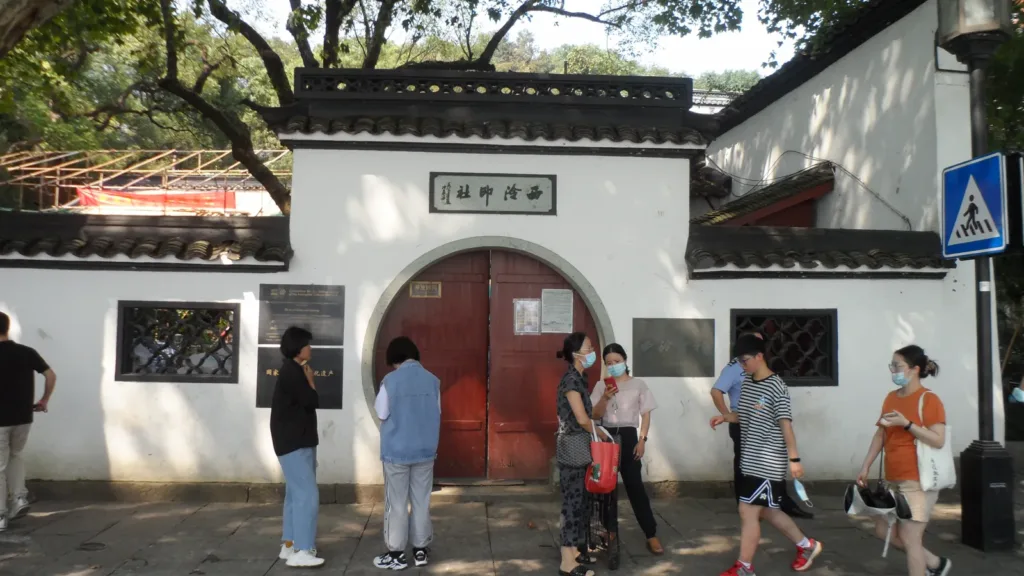 The round Moon Gate at the Xiling Seal Art Society entrance on Gushan Road. Photo: 钉钉 · CC BY-SA 4.0
Xiling Seal Art Society西泠印社
On Hangzhou’s Gushan, Xiling Seal Art Society brings the art of Chinese seal carving into a small lakeside garden of pavilions, stone inscriptions and winding paths. Founded in 1904, it is an academic society as well as a historic place to explore slowly on foot.
Read the place guide →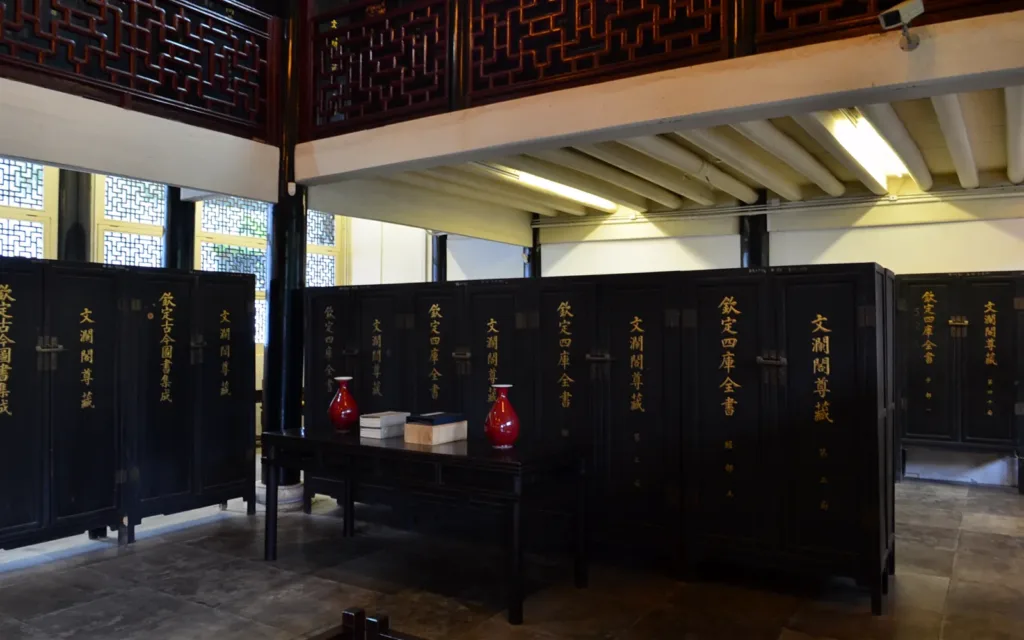 Interior of Wenlan Pavilion at the Gushan Hall site; photographed 2016-10-02. Historic interior display, not a guarantee of current exhibits. Photo: Tyg728 · CC BY-SA 4.0
Zhejiang Provincial Museum浙江省博物馆
Explore Zhejiang’s history through archaeology, ceramics and regional culture at the museum’s large Zhijiang Hall, or pair West Lake scenery with the historic courtyards and library architecture of its separate Gushan Hall. Choose the branch before setting out; they are different visits, not adjacent wings.
Read the place guide → A seasonal flower display at Hangzhou Botanical Garden, photographed in November 2024.
Hangzhou Botanical Garden杭州植物园
A public botanical garden on Hangzhou’s West Lake hills, with themed plant collections, a waterside fish-viewing garden and the seasonal plum landscape at Lingfeng.
Read the place guide → Su Causeway, with Yudai Bridge at Quyuan Fenghe in the background. Photo: zhiyin586@163.com · CC BY 3.0
Spring Dawn at Su Causeway苏堤春晓
Walk West Lake on a north–south causeway of six stone bridges, with willow-and-peach plantings and changing views across Hangzhou’s celebrated cultural landscape.
Read the place guide → A stone arched bridge carrying a double-eaved pavilion, rising above a dense field of lotus leaves with brown seed pods, willow fronds hanging into the right of the frame, under a blank white sky.
Wind and Lotus at the Crooked Courtyard (in Summer)曲院风荷
A West Lake garden of lotus ponds, water pavilions, small bridges and shaded paths, where a historic Southern Song brewery landscape meets one of the lake’s celebrated scenic views.
Read the place guide → Stone lanterns and the lakeside terrace at Pinghu Qiuyue reflected in West Lake at blue hour. Photo: Jeff chenqinyi · CC BY-SA 3.0
Autumn Moon over the Calm Lake平湖秋月
At the western end of Bai Causeway, this small lakeside garden frames West Lake through a projecting stone terrace, pavilion details and open-water reflections. Visit it as a quiet pause on a walk between Broken Bridge and Gushan, rather than as a stand-alone hilltop viewpoint.
Read the place guide →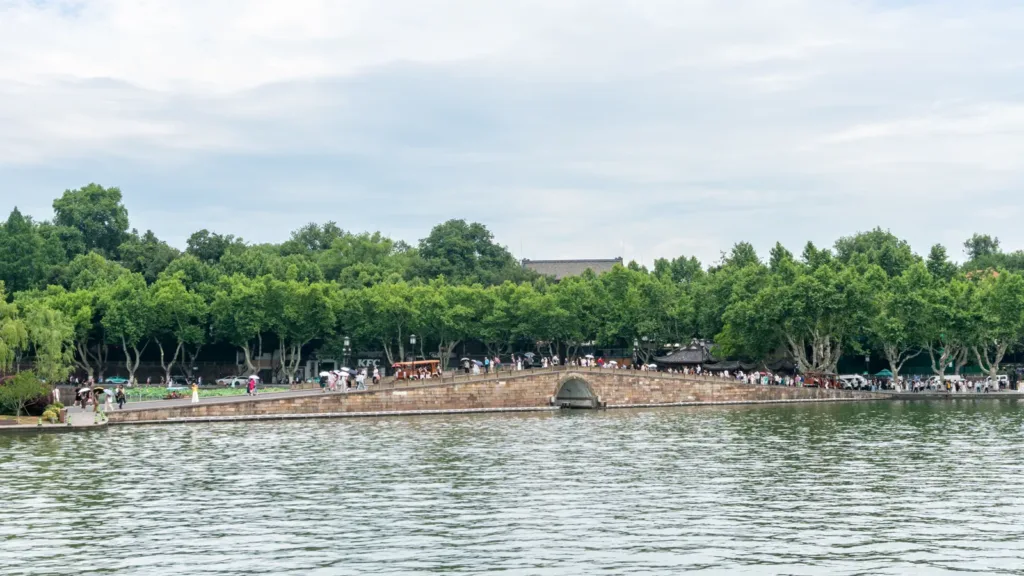 Broken Bridge at West Lake, Hangzhou, viewed from the water in clear weather. Photo: Shujianyang · CC BY-SA 4.0
Lingering Snow on Broken Bridge断桥残雪
At the eastern end of Bai Causeway on Hangzhou’s West Lake, this stone arch bridge is both a working lakeside crossing and one of the lake’s classic views. The name evokes the winter contrast of snow lingering on one side after the sunny side begins to clear.
Read the place guide → Viewing Fish at Flower Pond · 花港观鱼
Viewing Fish at Flower Pond花港观鱼
A lakeside garden on West Lake’s southwest shore, known for its red-carp pond, peony garden and pavilion, open lawns, and shaded paths between the lake and Su Causeway.
Read the place guide → Two carved stone pagoda lanterns standing in bright blue rippled water with a wooded shoreline behind; the third pagoda is out of frame.
Three Ponds Mirroring the Moon三潭映月小瀛洲
Take an island-landing boat from a West Lake pier to Xiaoyingzhou, then walk its bridges and causeways to see a garden of smaller pools framed by the lake and the three stone towers just off its southern shore.
Read the place guide → Evening Bell Ringing on Nanping Hill · 净慈寺南屏晚钟
Evening Bell Ringing on Nanping Hill净慈寺南屏晚钟
At Jingci Temple on West Lake’s southern shore, the “Evening Bell at Nanping Hill” is both a landmark bell tower and one of the lake’s historic ten scenes. Explore the temple precinct for its Buddhist halls, bell tower and old well; the name evokes a cultural tradition, not a promise that visitors will hear a live bell at a set time.
Read the place guide →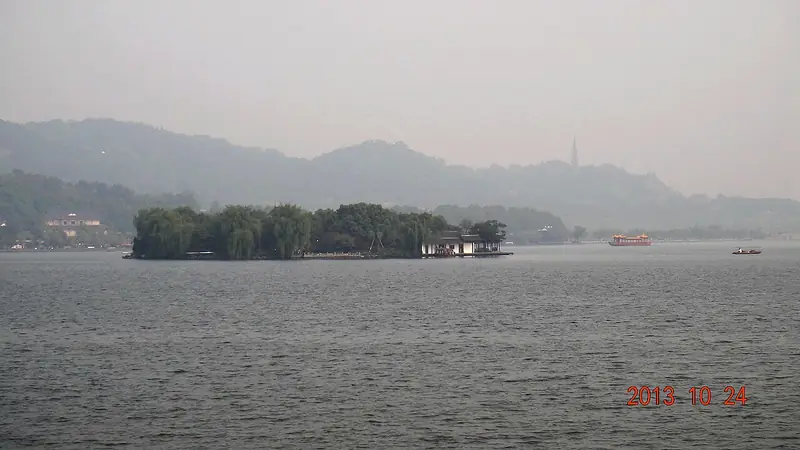 Mid-Lake Pavilion · 湖心亭
Mid-Lake Pavilion湖心亭
A compact historic pavilion island in the open water of West Lake, best understood as one element in Hangzhou’s carefully composed lake landscape. A boat-side view is the dependable way to appreciate it; a landing should not be assumed.
Read the place guide →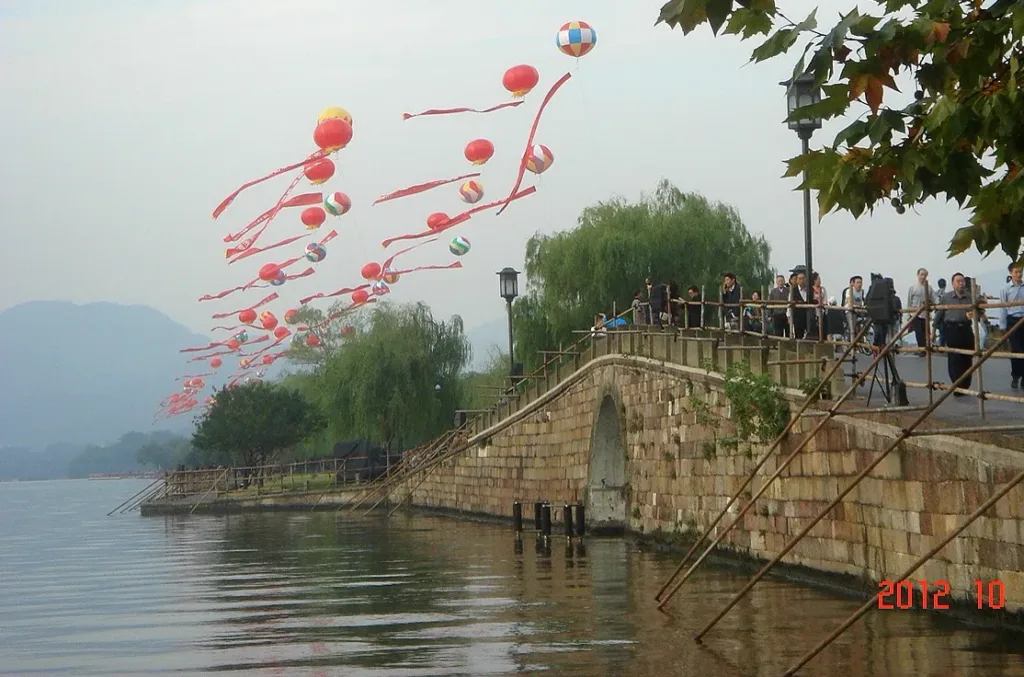 Historical view of Broken Bridge at the east end of Bai Causeway, photographed 13 October 2012; not a depiction of current crowd or access conditions. Photo: zhiyin586@163.com · CC BY 3.0
Bai Causeway白堤
A willow-lined pedestrian embankment across northern West Lake, Bai Causeway links Broken Bridge with the Gushan shore. Walk it for close views of the inner and outer lake, the small Jindai Bridge, and a changing frame of water, trees, islands, and hills.
Read the place guide → AI illustration · AI 示意图(仅供参考,非该地点实拍)
Solitary Hill and Zhongshan Park孤山及中山公园
A quiet, walkable promontory on West Lake where lake views and garden paths meet Hangzhou’s seal-carving and scholarly heritage.
Read the place guide → The tree-lined Yanggong Causeway in Hangzhou · 杨公堤 Photograph date recorded by the source: 18 September 2021.
Yanggong Causeway杨公堤
A quieter west-shore West Lake corridor linking gardens, small inlets, wooded paths and bridges. Explore a section at a time, from Quyuan Fenghe and Hangzhou Flower Nursery to Maoxiab, Wuguitan, Yuhu Bay and Huagang Guanyu.
Read the place guide →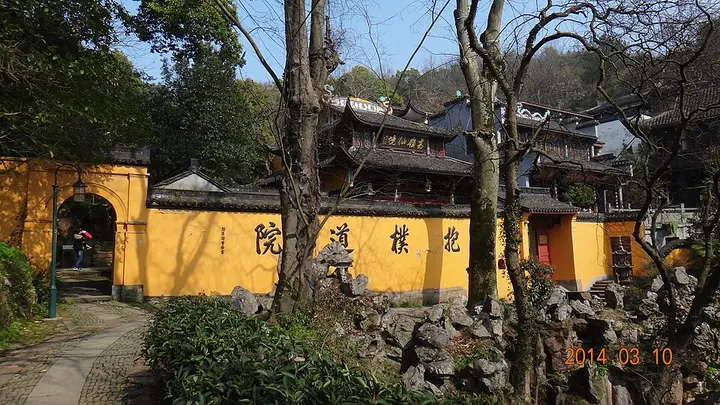 Baopu Taoist Temple on Baoshi Hill, photographed in March 2014 · 抱朴道院 Photograph date recorded by the source: Taken on 10 March 2014.
Baopu Taoist Temple抱朴道院
A compact, active Daoist sanctuary on wooded Geling above West Lake, with Ge Hong’s principal shrine, layered halls, historic inscriptions and a steep hillside approach.
Read the place guide →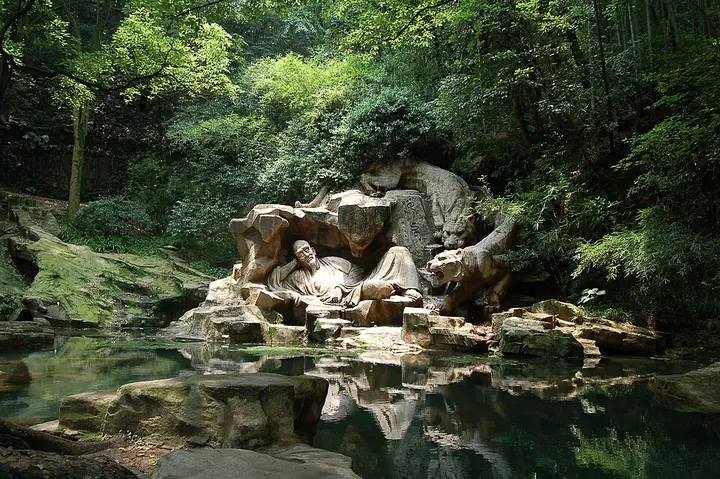 The tiger-and-monk sculptures at Hupao Spring · 虎跑梦泉 Photograph date recorded by the source: 23 June 2007.
Dreaming of the Tiger Spring虎跑梦泉
A shaded hillside walk in Hangzhou’s Xihu District leads to a celebrated spring, a stream-fed landscape, and Buddhist and artistic heritage associated with the former temple grounds.
Read the place guide → The stream and stone crossings on the Jiuxi path. Photo: zhiyin586@163.com · CC BY 3.0
Nine Creeks and Eighteen Gullies九溪十八涧
A shaded valley walk west of the Qiantang River where streams, stepping-stone crossings and tea-growing slopes link Jiuxi with Longjing.
Read the place guide →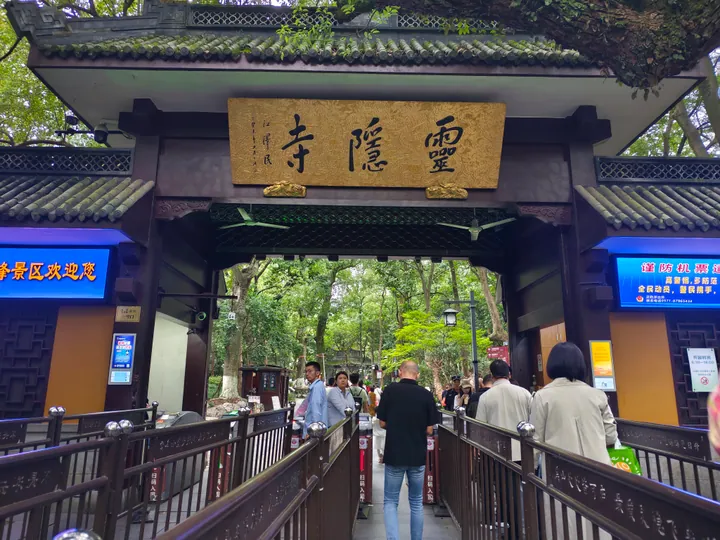 The east gate of the 灵隐飞来峰 scenic area: a dark timber gateway with grey tiled eaves and a gold plaque lettered 靈隱寺, ticket turnstiles and railings leading through it, visitors queuing, and electronic notice screens on both flanking walls beneath the trees.
Lingyin Feilai Peak Scenic Area灵隐寺与飞来峰
Explore Hangzhou’s limestone grottoes, ancient Buddhist carvings and cliff inscriptions, with Lingyin Temple and two neighboring monasteries within the same scenic-area visit.
Read the place guide → Terraced rows of low tea bushes covering a hillside, rising past a white farm building and a small structure on the slope, with a grey stone marker in the foreground lettered 杭州市都市农业示范园区 / 西湖龙井茶——龙井村, and leafy branches overhanging the top corners.
Meijiawu Tea Culture Village龙井村与梅家坞茶山
A lived-in tea village in Hangzhou’s West Lake hills, where Longjing terraces, family tea rooms and a historic mountain footpath make a slower counterpoint to the lakeside city.
Read the place guide →Longwu Tea Garden龙坞茶园
Southwest of central Hangzhou, Longwu is a broad tea-growing landscape of hillside fields, villages and forested paths. Visit to see tea country as a lived-in rural landscape, not as one enclosed garden with a single gate.
Read the place guide →Zhejiang Provincial Museum (Zhijiang Branch)浙江省博物馆之江馆区
A large, modern branch of Zhejiang Provincial Museum inside Zhijiang Culture Center, with a chronological survey of Zhejiang’s past and focused galleries on ceramics, maritime life, Song culture, painting and the guqin.
Read the place guide →Plan your visit
Getting there
Xihu District covers the centre of Hangzhou. Search for 西湖区 in a map app to find stations and your accommodation.
Where to stay →Build your route
West Lake and Lingyin Temple are about 5 km apart (straight-line distance). The linked place guides have entrance and visit details.
Continue with Hangzhou →More in Hangzhou
Sources & geographic information
Administrative names and parent areas: Official geographic directory (dmfw.mca.gov.cn) · Reference date 2026-09-06.
Background text adapted from Xihu, Hangzhou — Wikipedia contributors, under CC BY-SA 4.0. Text has been shortened and reorganized; source revision 1319369833.
Photo: West Lake · Takashishin · CC BY 4.0. Wikimedia Commons image, fitted to the card frame.

Photo: Hangzhou Songcheng Show Park · kanegen · CC BY 2.0. Wikimedia Commons image, fitted to the card frame.

Photo: China National Tea Museum · Fredlyfish4 · CC BY-SA 4.0. Resized for the web; the photo itself has not been edited.

Photo: Hangzhou Botanical Garden · Yumeto · CC BY-SA 4.0. Resized for the web; the photo itself has not been edited.

Photo: Wind and Lotus at the Crooked Courtyard (in Summer) · Unknown author · CC BY-SA 3.0. Resized for the web; the photo itself has not been edited. Thumbnails may show a cropped view.

Photo: Viewing Fish at Flower Pond · lienyuan lee · CC BY 3.0. Resized for the web; the photo itself has not been edited.

Photo: Three Ponds Mirroring the Moon · lienyuan lee · CC BY 3.0. Resized for the web; the photo itself has not been edited. Thumbnails may show a cropped view.

Photo: Evening Bell Ringing on Nanping Hill · Tyg728 · CC BY-SA 4.0. Resized for the web; the photo itself has not been edited.

Photo: Mid-Lake Pavilion · zhiyin586 (Panoramio) · CC BY 3.0. Resized for the web; the photo itself has not been edited.

Photo: Yanggong Causeway · 钉钉 · CC BY-SA 4.0. Resized for the web; the photo itself has not been edited. Thumbnails may show a cropped view.

Photo: Baopu Taoist Temple · zhiyin586 (Panoramio) · CC BY 3.0. Resized for the web; the photo itself has not been edited. Thumbnails may show a cropped view.

Photo: Dreaming of the Tiger Spring · Sh1019 · CC BY-SA 3.0. Resized for the web; the photo itself has not been edited. Thumbnails may show a cropped view.

Photo: Lingyin Feilai Peak Scenic Area · Liuxingy · CC BY-SA 4.0. Resized for the web; the photo itself has not been edited. Thumbnails may show a cropped view.

Photo: Meijiawu Tea Culture Village · Tyg728 · CC BY-SA 4.0. Resized for the web; the photo itself has not been edited. Thumbnails may show a cropped view.

Map data © OpenStreetMap contributors. Pins mark approximate centres, not entrances or boundaries.
Image credits & notes (2)
- A commercial street in Xihu District, Hangzhou. Photograph date recorded by the source: Taken on 31 January 2011.Photo: 江上清风1961 · CC BY 3.0Resized for the web; the photo itself has not been edited. Thumbnails may show a cropped view.
- A tree-lined public promenade on Su Causeway beside West Lake. Photo: David Stanley (Nanaimo, Canada)Photo: CC BY 2.0
