

Wuhan local food
Local dishes, ingredients and the stories behind them.
← Wuhan travel guideAll Hubei food →Food from all of China →
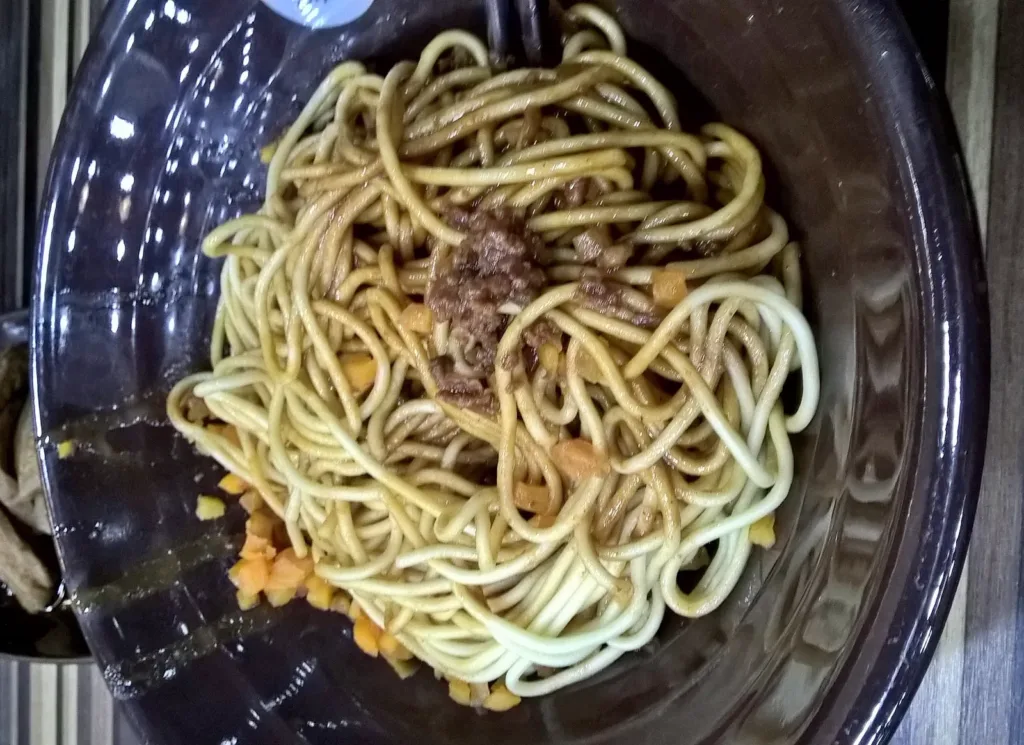
Hot dry noodles 热干面
Hot dry noodles (热干面, règānmiàn) are Wuhan’s warm, sesame-coated breakfast noodles: pre-cooked wheat noodles are reheated, tossed with sesame sauce and savoury condiments, then adjusted with pickled vegetables, scallions and chilli. What makes them distinctive is the firm noodle and thick, aromatic coating, not a bowl of broth.
Read dish guide →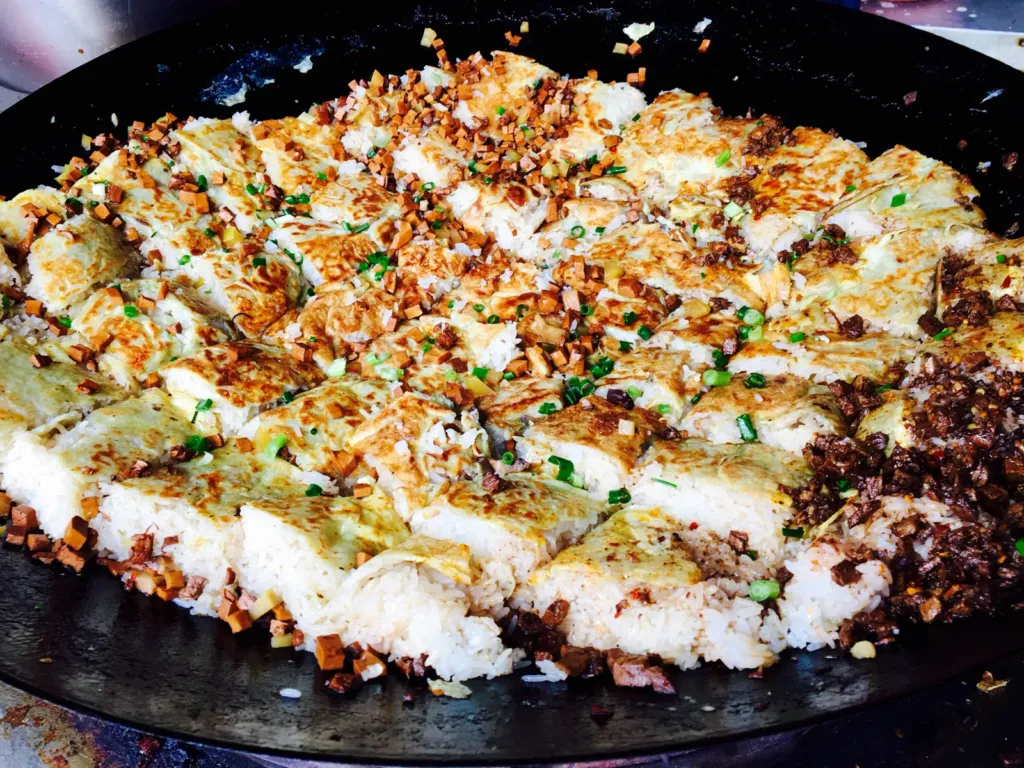
Three-delicacy doupi 三鲜豆皮
Three-delicacy doupi (三鲜豆皮) is a Wuhan breakfast of a thin mung-bean-and-rice wrapper, egg, glutinous rice and diced savoury fillings. Its appeal is the contrast between a browned, lightly crisp skin, soft rice and savoury pieces; the exact “three delicacies” can vary by kitchen.
Read dish guide →
Pork-rib and lotus-root soup 排骨藕汤
Pork-rib and lotus-root soup is a Hubei soup of pork ribs and lotus-root chunks simmered until the meat is tender and the root is either soft and starchy or still slightly crisp. In Wuhan, it is a useful way to taste the province’s preference for fresh lake-country produce and soup served with a shared meal, rather than a dish tied to one named restaurant.
Read dish guide →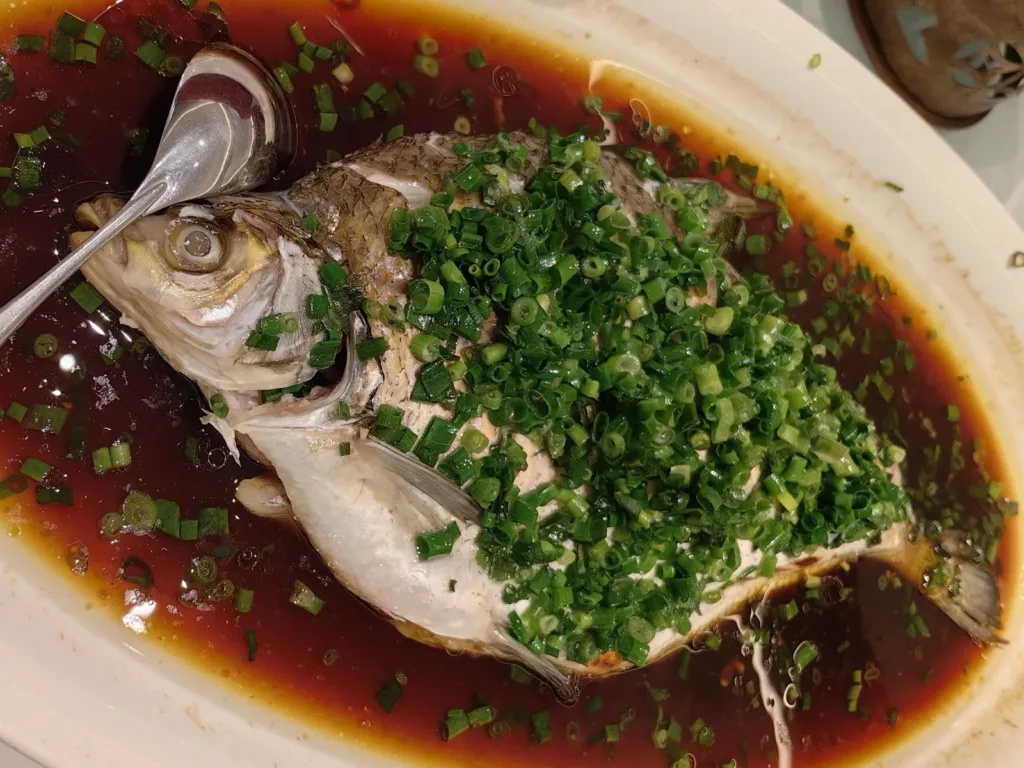
Wuchang fish 武昌鱼
Wuchang fish (武昌鱼) is a Hubei freshwater-fish dish associated with Wuhan, prized for delicate, lightly fatty flesh and for the contrast between clear-soup steaming and fuller braising. Its older geographic story points to the Liangzi Lake–Fankou area by today’s Ezhou, while Wuhan helped turn the name into a widely recognized city dish.
Read dish guide →
Wuhan peppery thick rice-noodle soup 糊汤米粉
Hutang mifen is Wuhan’s breakfast of fine round rice noodles in an opaque, thick fish broth seasoned with pepper. Its distinctive contrast is a smooth, savoury bowl with a crisp youtiao torn off and dipped as you eat.
Read dish guide →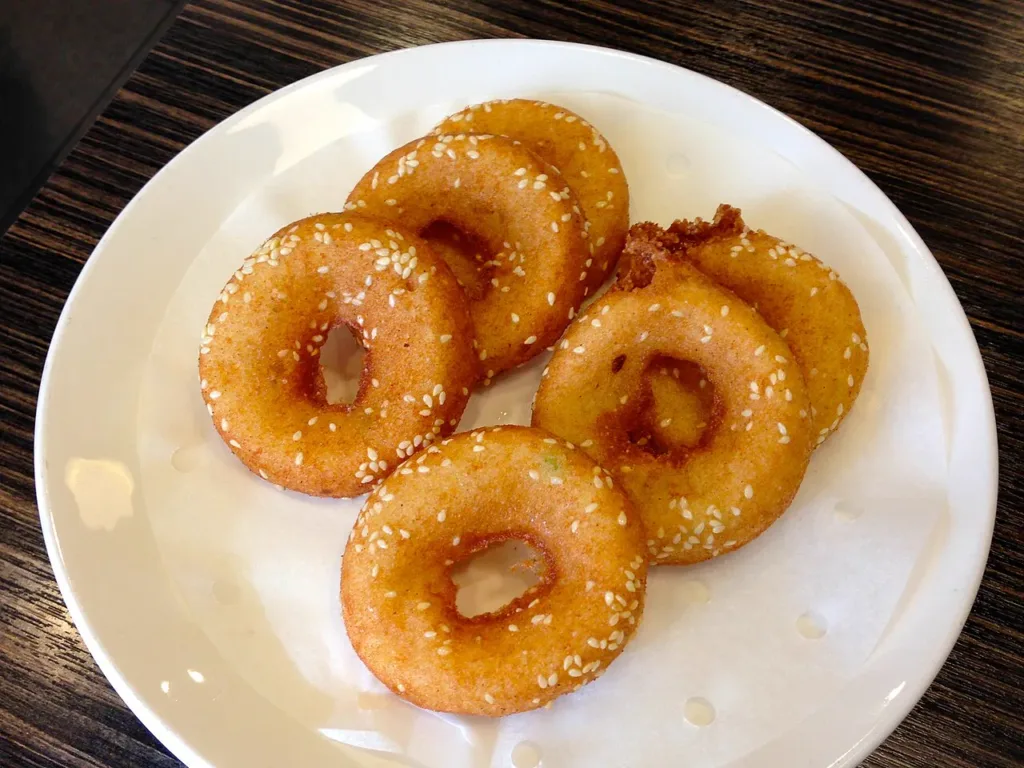
Wuhan savoury rice-batter rings 武汉面窝
Wuhan mianwo is a savoury, deep-fried rice-and-soy breakfast ring. Its special appeal is the contrast between a crisp, thin centre and a softer, thicker rim, shaped in a raised-centre iron spoon and eaten as part of Wuhan’s morning “guozao” tradition.
Read dish guide →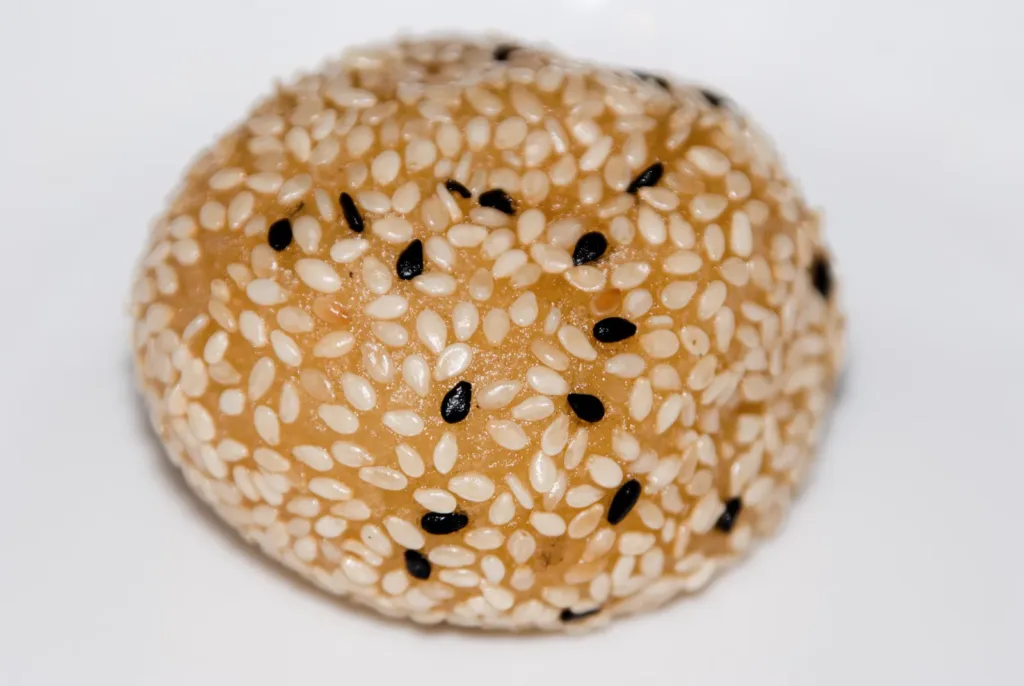
Wuhan sesame-coated rice balls 欢喜坨
Huanxituo (欢喜坨) is a sweet Wuhan breakfast snack made from glutinous-rice dough, rolled in sesame and fried until the outside is crisp. The Wuhan style is especially associated with a light, hollow centre, giving it a less dense bite than a solid sesame ball.
Read dish guide →
Fried flatbread with sticky-rice dumplings 油饼包烧梅
Wuhan’s 油饼包烧梅 pairs a crisp fried flatbread with rich, sticky-rice shaomai—a filling breakfast that turns two familiar components of the city’s “过早” into one handheld bite.
AI illustration · AI 示意图
Read dish guide →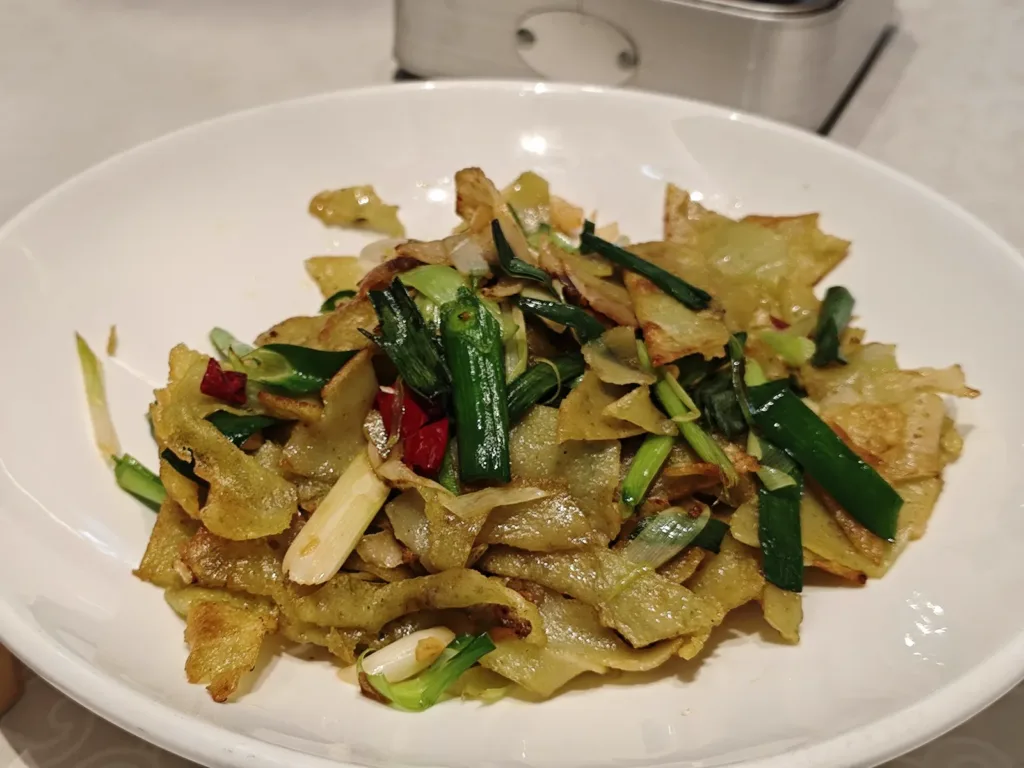
Huangpi bean-and-rice noodles 黄陂豆丝
Huangpi dousi is a Wuhan-area staple made from a rice-and-bean batter cooked into thin sheets and cut into strips. It is especially associated with Huangpi’s New Year food traditions, and its soft, springy texture is unlike wheat noodles.
Read dish guide →
Soup-Filled Steamed Buns 汤包
Soup-filled steamed buns (汤包, tangbao) are thin-wrapped steamed buns that hold minced meat and broth. Wuhan’s best-known local lineage is associated with Siji Mei, where a Jiangsu–Zhejiang technique was adapted to the city’s saltier, richer taste and carried forward as an intangible-heritage craft.
Read dish guide →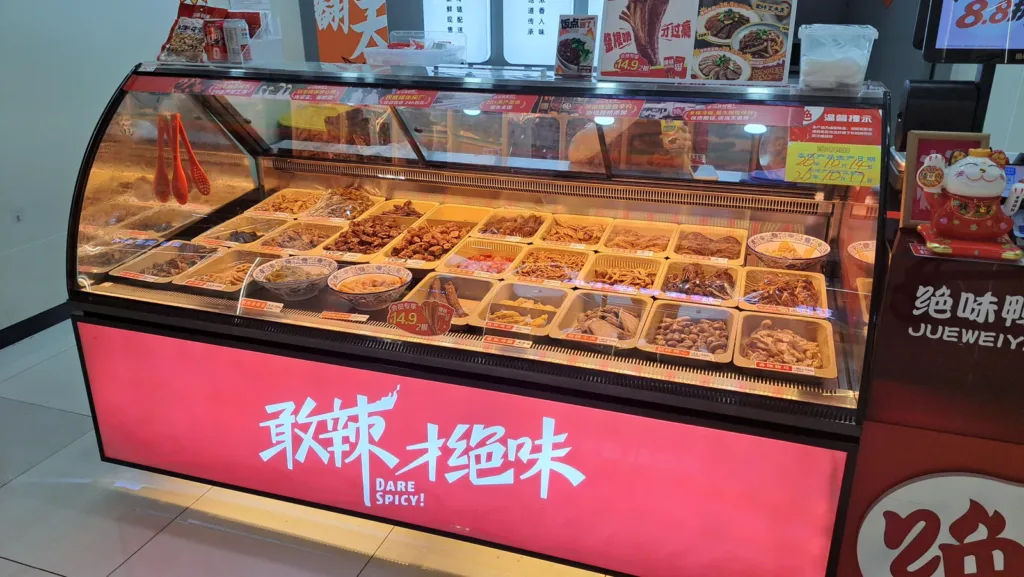
Spiced Braised Duck Necks 鸭脖
Wuhan-style spiced braised duck necks are a Sichuan-influenced local snack linked to Hankou’s Jingwu Road. Their appeal is the chewy meat around the bones, a layered chilli-and-spice braise, and the slow, hands-on way of eating them.
Read dish guide →
Beef Rice Noodles 牛肉粉
Wuhan beef rice noodles (牛肉粉, niurou fen) are a breakfast bowl built around rice noodles, beef or beef offal, and a carefully made broth. What makes the Wuhan version worth seeking out is not one fixed recipe: local shops range from braised-beef bowls to fresh beef quickly blanched in hot stock, with the broth, meat topping and noodle width doing much of the work.
Read dish guide →
Wuhan Fried Glutinous Rice Ball 糯米鸡
Wuhan’s 糯米鸡 (nuomi ji) is a savoury breakfast ball of seasoned glutinous rice, wrapped in flour batter and fried until its uneven crust turns golden. There is no chicken in the dish: the name refers to the crust’s resemblance to chicken skin, while the appeal is the contrast between a crisp shell and a soft, sticky, salty centre.
Read dish guide →
Shaomai Steamed Dumplings 烧麦
Wuhan-style shaomai is an open-topped steamed dumpling built around glutinous rice, pork and shiitake mushrooms. Lard and black pepper give the Hubei version its rich, soft, peppery character; in Wuhan and Hubei, you may also see it written 烧梅 (shaomei).
Read dish guide →
Rice Noodles in Thickened Broth 糊汤粉
Wuhan's hutangfen is a breakfast bowl of round rice noodles under a lightly thickened fish broth. Its signature is the contrast between savoury fish, pepper, and a fried dough stick, with rice flour giving the broth its soft, coating body.
Read dish guide →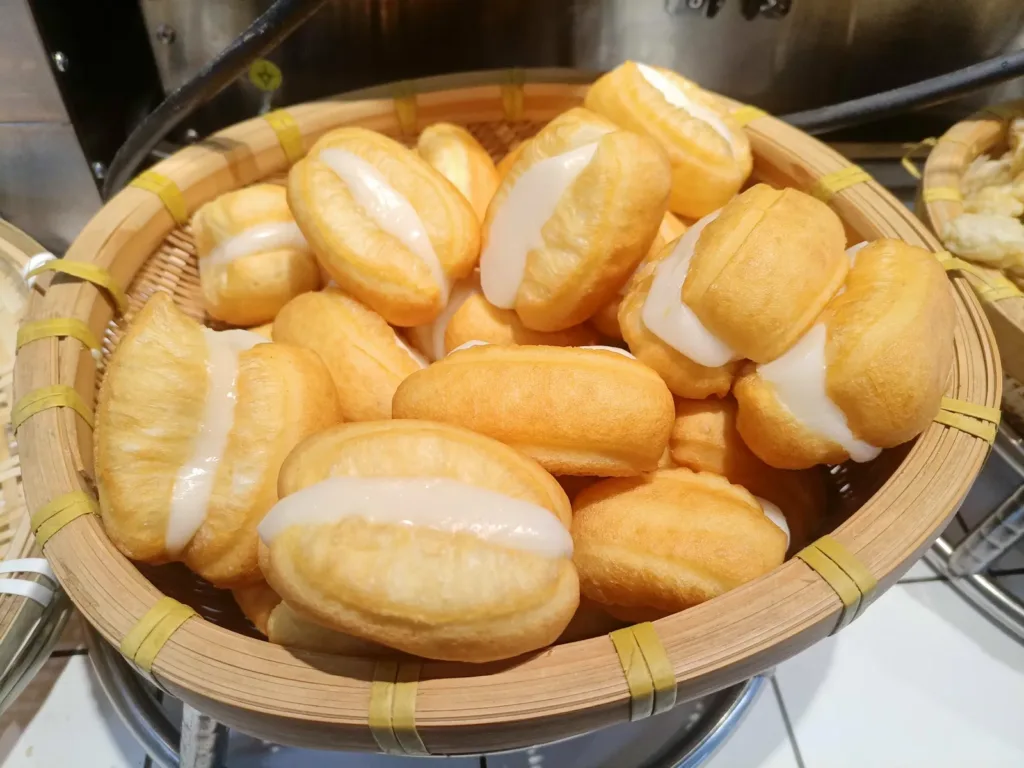
Sticky Rice Wrapped Fried Dough Stick 糯米包油条
In Wuhan, 糯米包油条 (nuomi bao youtiao) is a hot breakfast roll: steamed glutinous rice is pressed around freshly fried youtiao. Its appeal is a clear contrast—soft, springy rice outside and crisp fried dough inside—finished either sweet or savoury. The food belongs to the wider family called cifantuan in Jiangsu and Zhejiang, but Wuhan has its own name and a place for it in the city’s everyday breakfast culture.
Read dish guide →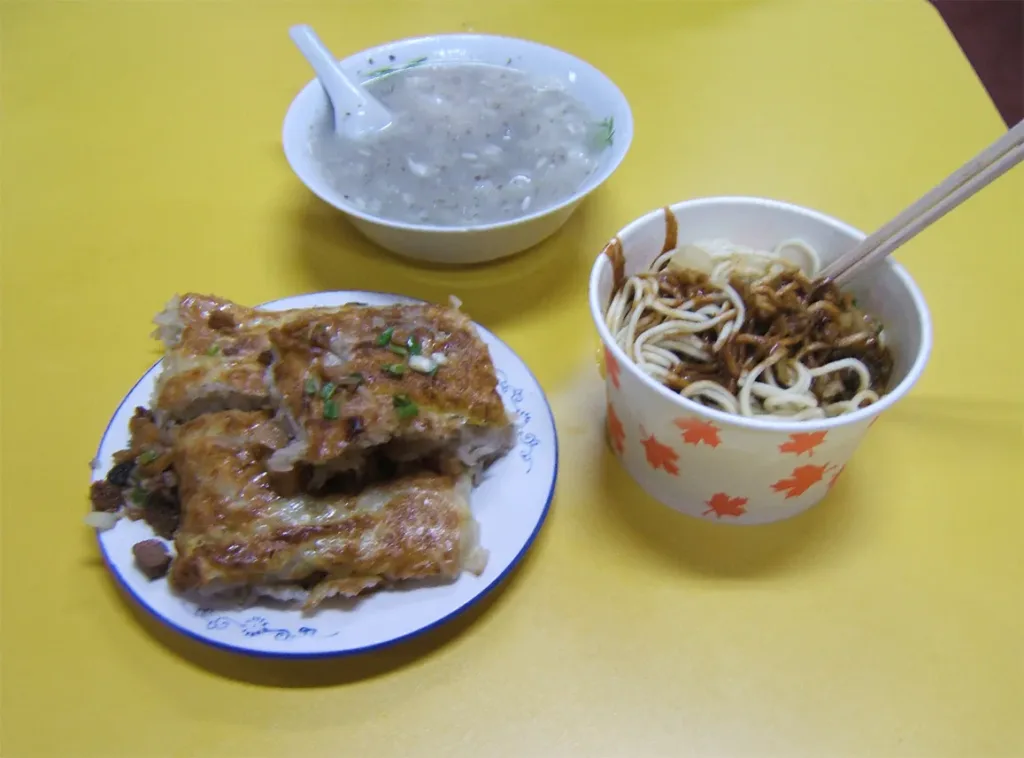
Thickened Fermented Rice Drink 糊米酒
Hu mijiu (糊米酒) is a warm, gently sweet Wuhan breakfast bowl made from fermented glutinous rice, aromatic osmanthus and a thickened soup; small rice balls or soft rice strips may be added. Its appeal is the meeting of light fermentation, floral fragrance and spoonable texture in Wuhan’s everyday guozao culture.
Read dish guide →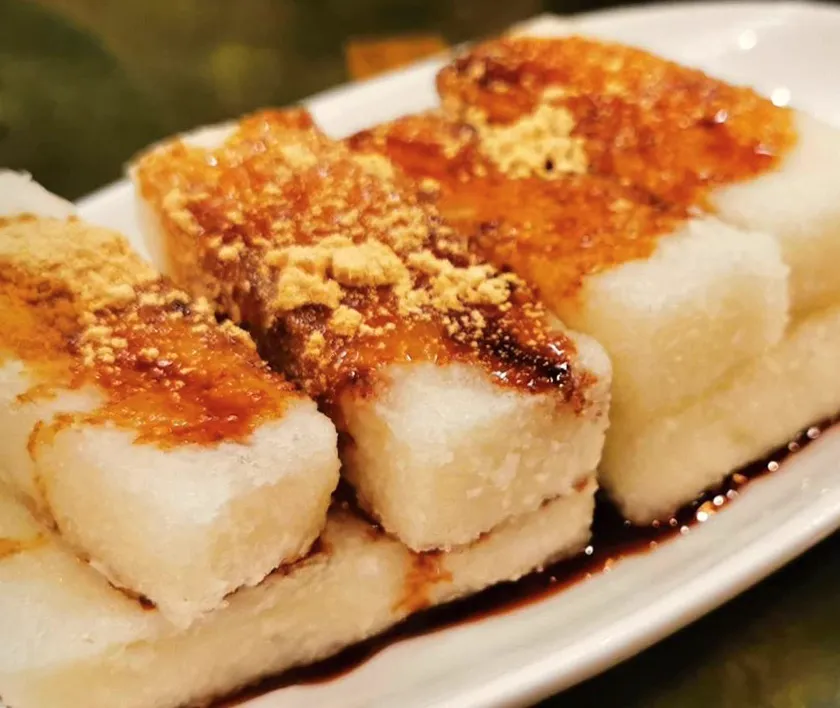
Pounded Glutinous Rice Cakes 糍粑
Ciba is a Hubei-associated pounded glutinous-rice cake, with a particularly clear local connection to Huangpi in northern Wuhan. Its appeal is both the hot, elastic texture and the communal New Year work of turning steamed rice into a cake with wooden mallets.
Read dish guide →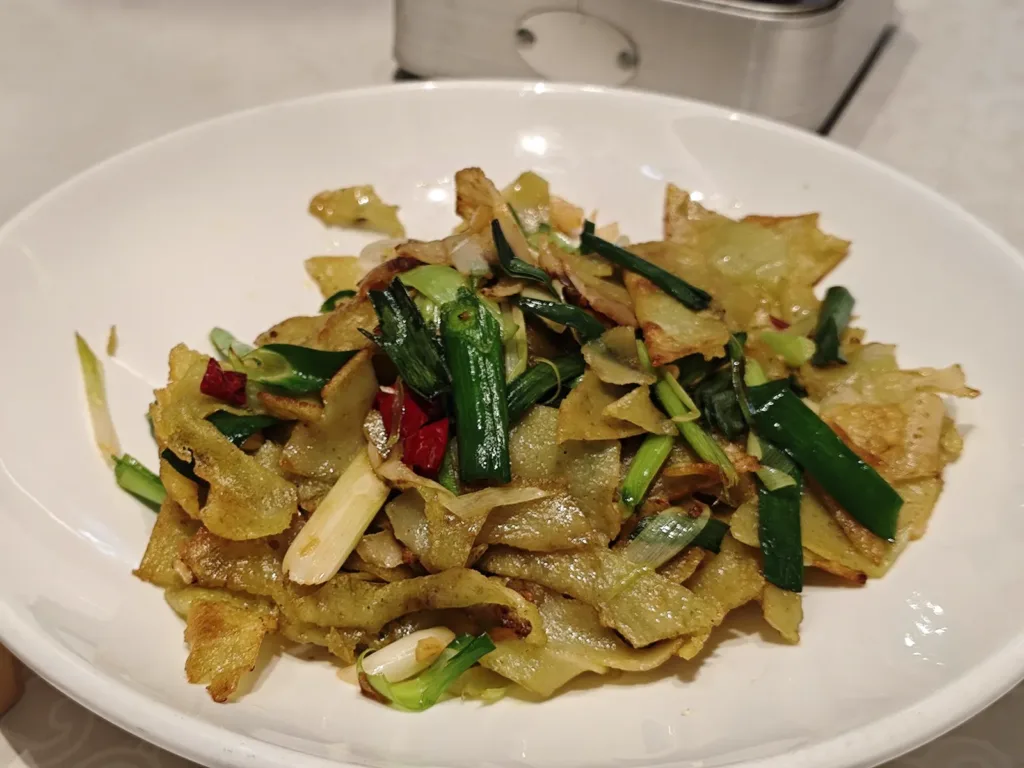
Bean-and-Rice Noodle Strips 豆丝
Dou si (豆丝), also called dougao, douzhe or douba in different parts of central China, is a Hubei food made by spreading a rice-and-bean batter into a thin sheet and cutting it into strips. It is especially associated with Huangpi District in Wuhan, where fresh and dried versions belong to seasonal home cooking and New Year food traditions.
Read dish guide →Hubei · Food stories

Food articles are in progress
Long-form food stories for this topic are being written. Until then, browse the dish guides above or see all Chinese food guides.