

Yinchuan local food
Local dishes, ingredients and the stories behind them.
← Yinchuan travel guideAll Ningxia food →Food from all of China →
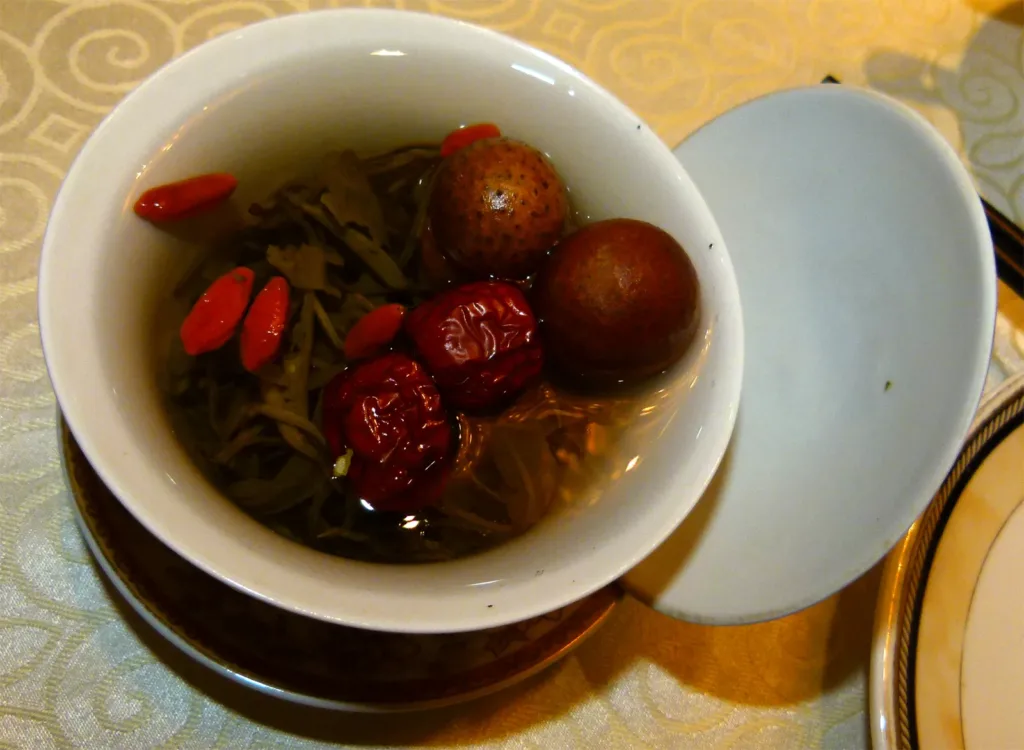
Eight-treasure tea 八宝茶
Eight-treasure tea (八宝茶, bābǎo chá) is a sweet covered-bowl tea associated with Ningxia and northwest China. Tea leaves are brewed with a changing mix of dried fruit, nuts, seeds, flowers or other additions; in Yinchuan it is a practical introduction to the region’s everyday tea-and-snack culture, not a fixed eight-item formula.
Read dish guide →
Ningxia hand-served lamb 手抓羊肉
Ningxia hand-served lamb (手抓羊肉) is a shared, usually bone-in lamb dish from Ningxia: careful simmering keeps the meat tender and lets the lamb's own flavour lead, while salt, vinegar, garlic or dry spices are added according to the kitchen.
Read dish guide →
Ningxia lamb saozi noodles 羊肉臊子面
Ningxia lamb saozi noodles (羊肉臊子面) pairs resilient wheat noodles with a lamb-and-vegetable saozi topping, often carried in a red, aromatic broth. In Yinchuan, it is an everyday Ningxia noodle-shop order: keep the Chinese name handy, ask what vegetables and noodle width are available, and mix the topping through the noodles before eating.
AI illustration · AI 示意图
Read dish guide →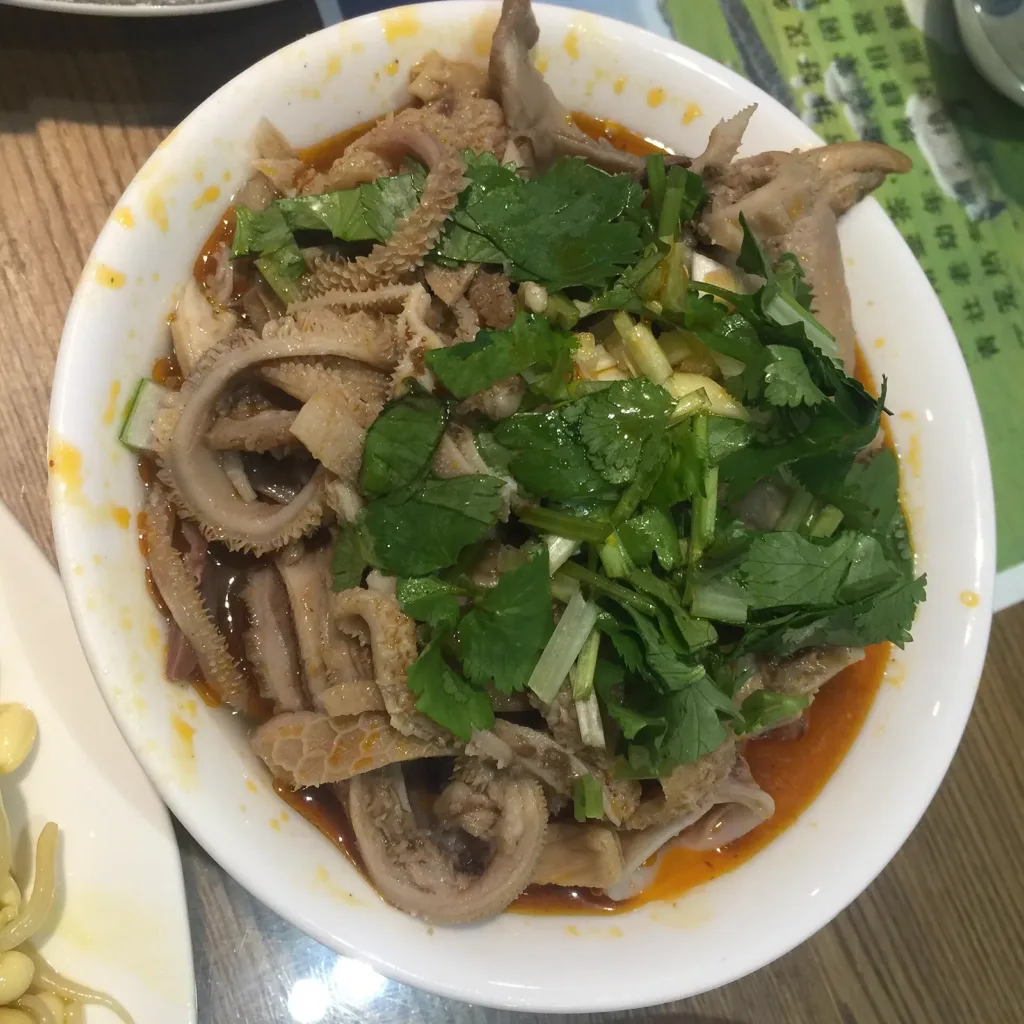
Lamb offal soup 羊杂碎
Yang zasui (羊杂碎) is a Ningxia lamb-offal soup associated with everyday breakfast. Its appeal is the contrast between tender, springy and chewy cuts in a seasoned lamb broth; the exact mix varies, so ask what is in the bowl.
Read dish guide →
Huaiyuan spicy wheat strips 怀远辣条
Huaiyuan spicy wheat strips (怀远辣条) is a chewy wheat-based snack associated with Yinchuan’s Huaiyuan market area. At the night market, it is a small, spicy, oil-seasoned bite rather than a single fixed recipe: start with a small portion, ask about the heat, and check how the stall measures it.
Read dish guide →
Ningxia mixed savoury soup bowl 宁夏烩小吃
Ningxia mixed savoury soup bowl (宁夏烩小吃, Ningxia hui xiaochi) gathers prepared ingredients in a savoury broth. It is best approached as a changing local bowl rather than a fixed recipe: the pleasure is in the contrast between soft, springy, leafy and meaty pieces, and in asking what that kitchen has prepared today.
AI dish illustration / AI 菜品示意图
Read dish guide →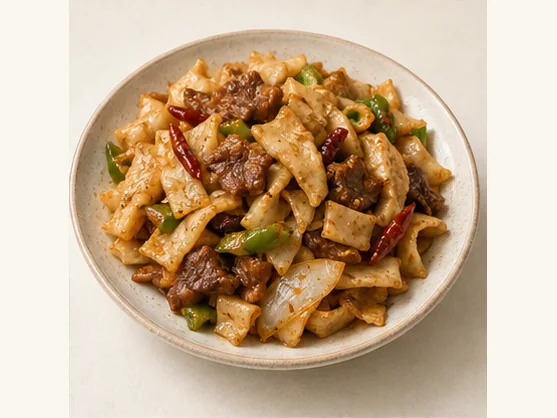
Ningxia stir-braised flatbread strips 宁夏炒糊饽
Ningxia chao hubo is a Ningxia wheat dish made from a partly cooked flatbread cut into strips, then finished in a covered pan with savoury liquid, meat and changing vegetables. It is associated with Ningxia, especially Yinchuan and Wuzhong, but it is not one fixed recipe: the chew of the bread and the broth it absorbs are the useful clues when you order.
AI dish illustration / AI 菜品示意图
Read dish guide →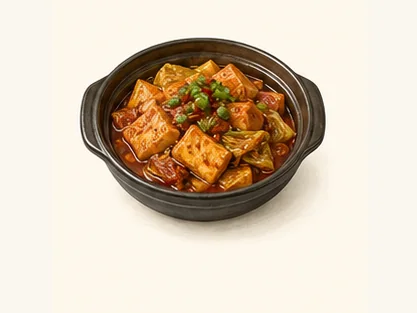
Ningxia lahuhu spicy dipping pot 宁夏辣糊糊
Ningxia lahuhu is a Ningxia street-food pot built around a thick chilli-based sauce. Skewered potatoes, vegetables or meat may be heated, dipped or simmered until the sauce clings to them. The attraction is the contrast between soft, springy or chewy ingredients and direct, aromatic heat; the base, stock and spice level vary from vendor to vendor.
AI dish illustration / AI 菜品示意图
Read dish guide →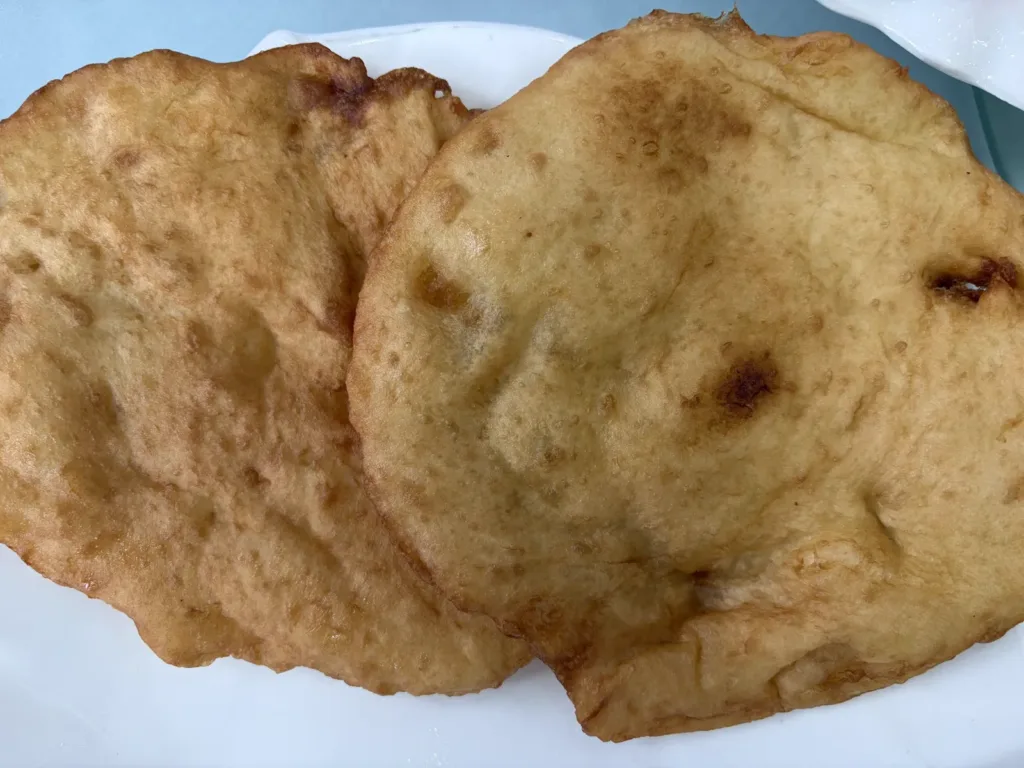
Youxiang fried bread 油香
Youxiang (油香) is a round, deep-fried wheat bread associated with Hui food traditions in Ningxia and the wider northwest. Look for a warm piece with a crisp surface and soft crumb; sweetness and seasonings vary by maker, so it is better understood as a family of local versions than as one fixed recipe.
Read dish guide →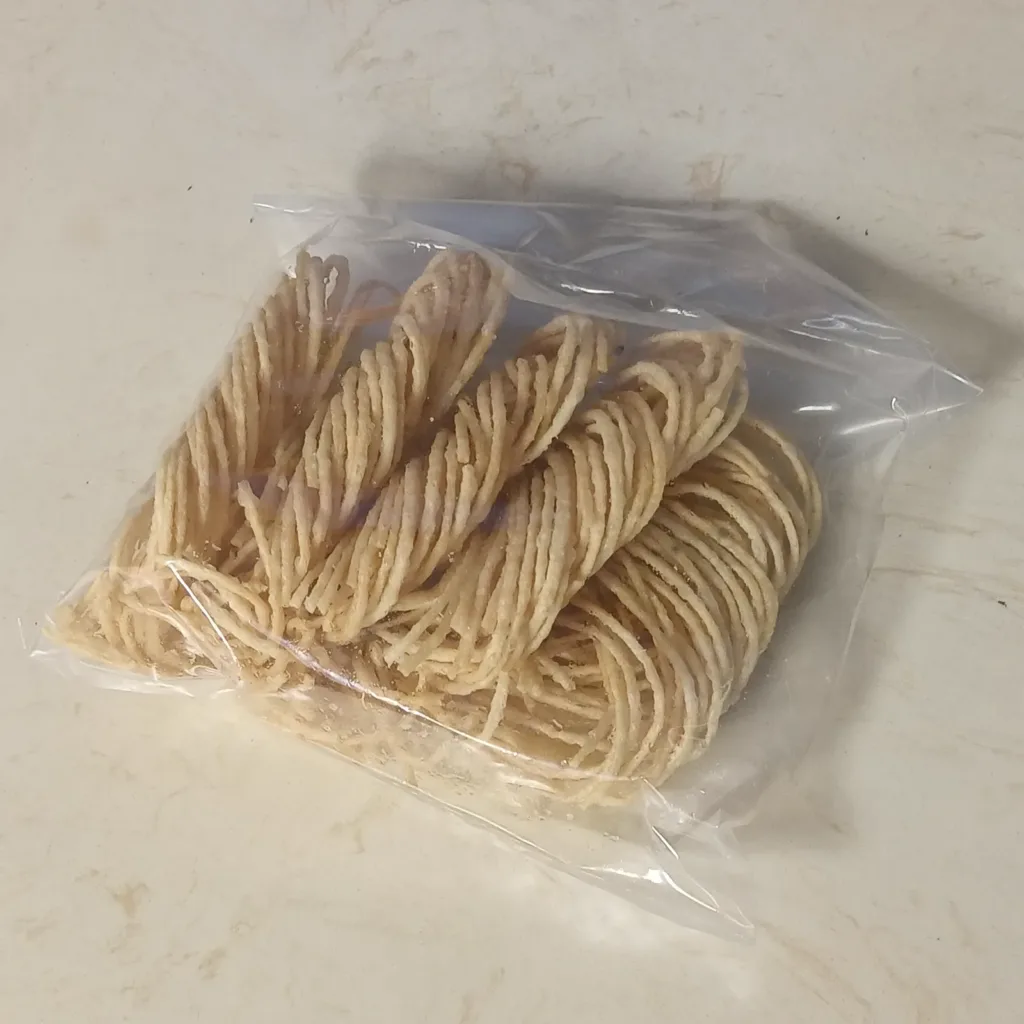
Sanzi fried noodle nests 馓子
Sanzi (馓子) is a crisp fried wheat-dough snack that appears in Ningxia and Qinghai food traditions. In Yinchuan it is best understood as a tea-table and traditional-pastry food: look for a fresh portion, break off small pieces, and ask whether it is available that day.
Read dish guide →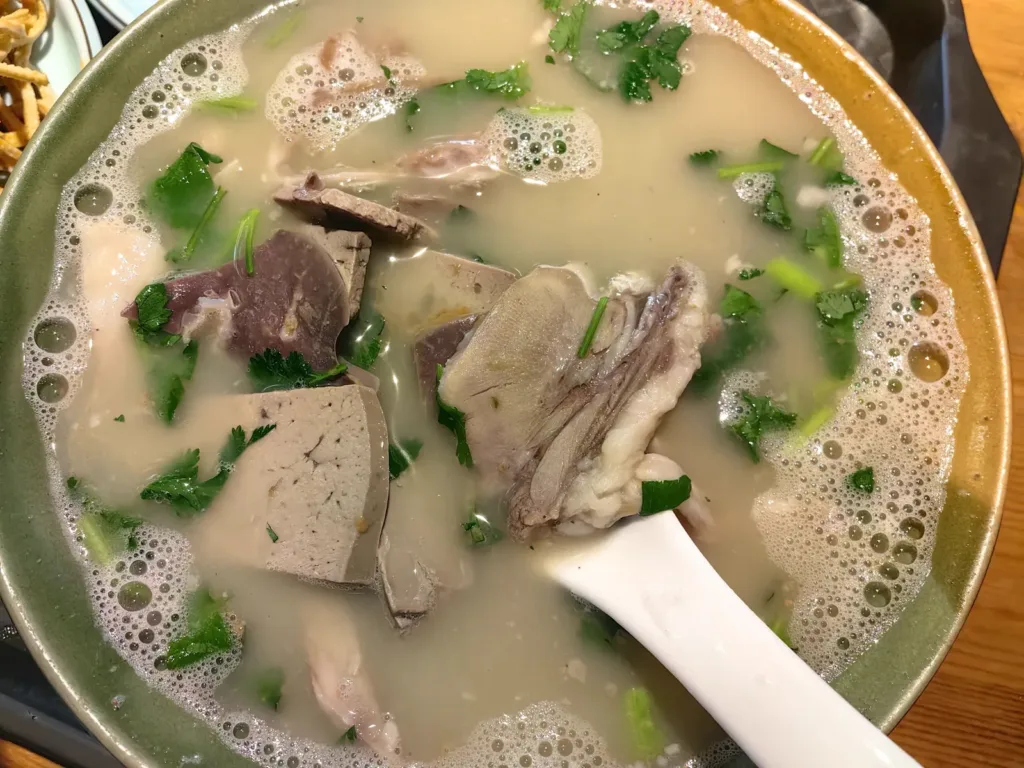
Stewed Sheep Offal 烩羊杂
Stewed sheep offal (烩羊杂, huì yángzá) is a Ningxia bowl of sheep head, heart, liver, lung, stomach and other offal in a seasoned sheep broth. It is made across Ningxia, but Wuzhong is the place most closely associated with the local style: a hot breakfast bowl built around carefully handled offal, deep broth and chilli rather than one fixed recipe.
Read dish guide →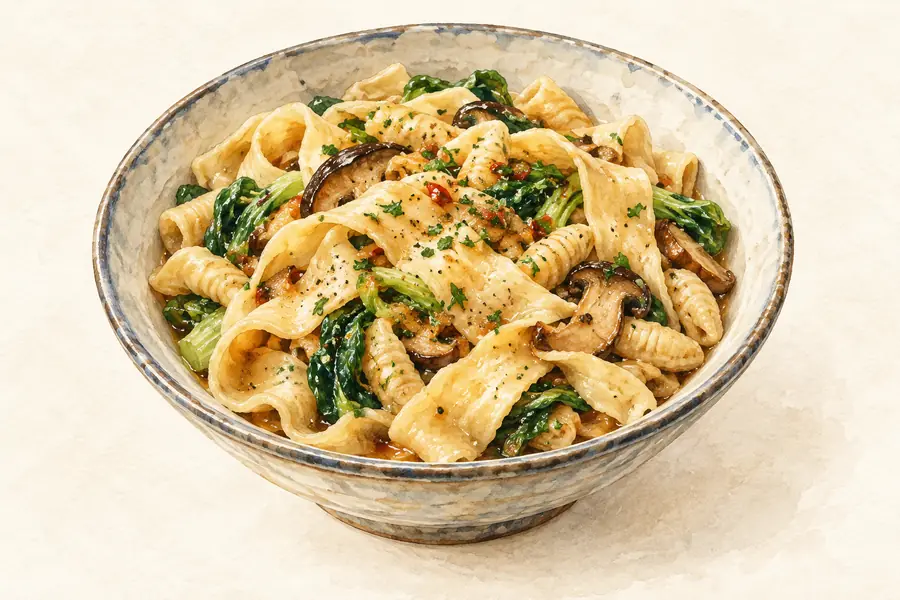
Mutton with Hand-Rolled Noodles 羊肉搓面
Yangrou cuomian (羊肉搓面) is a Yinchuan-associated bowl of hand-rubbed wheat noodles with diced mutton, a lamb-bone broth, vegetables and chilli oil. Its defining texture comes from rubbing rested dough into chopstick-thick noodles rather than cutting or pulling it; order it by the Chinese name and expect local variations.
AI illustration · AI 示意图(仅供参考,非实拍)
Read dish guide →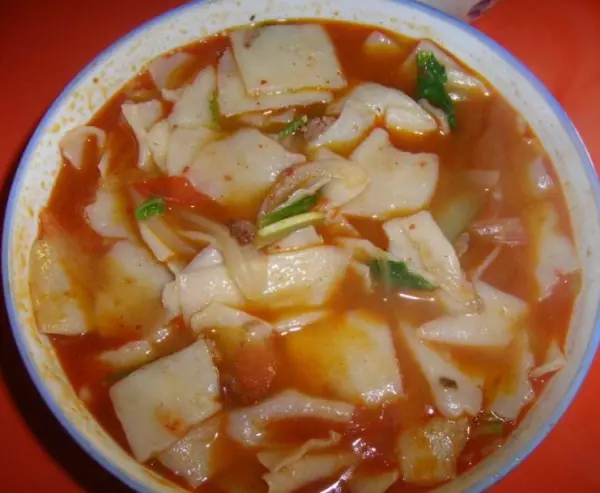
Dumplings in Vermicelli Soup 粉汤水饺
Yinchuan’s 粉汤水饺 (fentang shuijiao) are boiled mutton dumplings served in a hot, savoury soup with starch-jelly cubes and soaked starch noodles. The bowl is especially associated with the Winter Solstice, when the soup is called “头脑” (“brain”) and shared with neighbours; recipes vary between kitchens.
Read dish guide →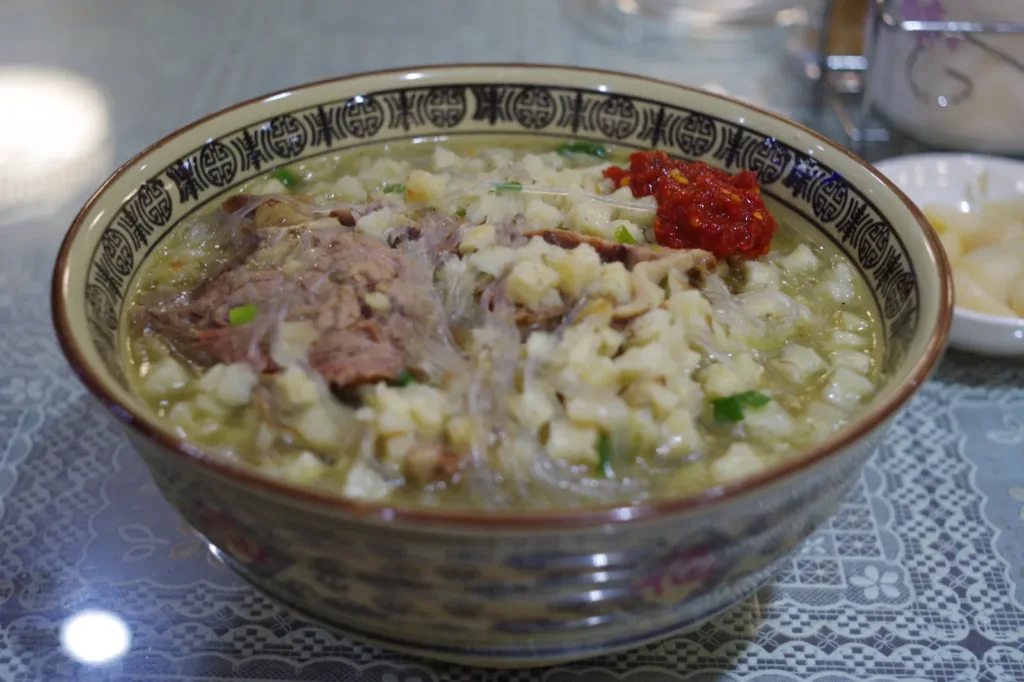
Mutton and Bread Soup 羊肉泡馍
Yinchuan-style 羊肉泡馍 is a breakfast bowl built around Ningxia lamb and a long-simmered lamb-and-bone broth. Vermicelli adds a springy bite; fennel flatbread, sweet pickled garlic, small sides and chilli let you adjust the balance at the table. The documented Yingbinlou version is one local expression, not a single recipe for every Yinchuan kitchen.
Read dish guide →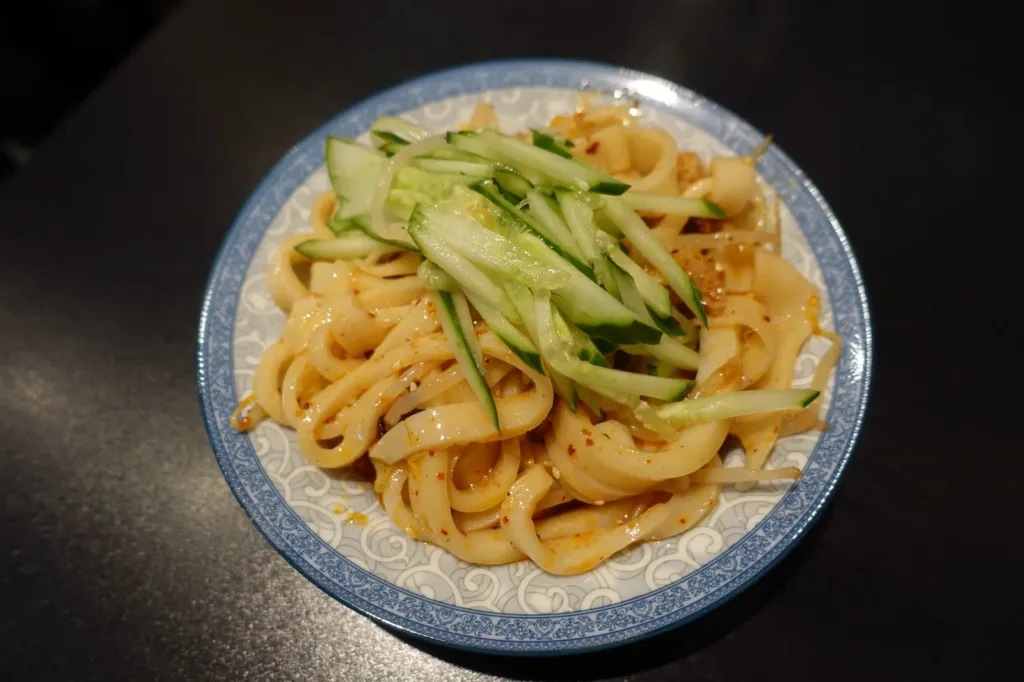
Cold Noodle Sheets 凉皮
Liangpi (凉皮) is a cool, slippery sheet noodle cut into strips and dressed with vinegar, chilli oil and fresh herbs. In Yinchuan, a documented local version is associated with steamed sheets from Tieqiao Julian in Liangtian Town, while the wider dish has wheat- and rice-based forms whose texture and toppings vary.
Read dish guide →
Haozi Noodles 蒿子面
Haozi Noodles (蒿子面), also called Zhongning long noodles (中宁长面), are fine, hand-cut wheat noodles from Zhongning in Ningxia. Powdered sand sagebrush in the dough gives them a springy bite and a faint herbal bitterness; a bowl is usually finished with diced vegetables, meat or another topping, and a seasoned broth.
AI illustration · AI 示意图(仅供参考,非实拍)
Read dish guide →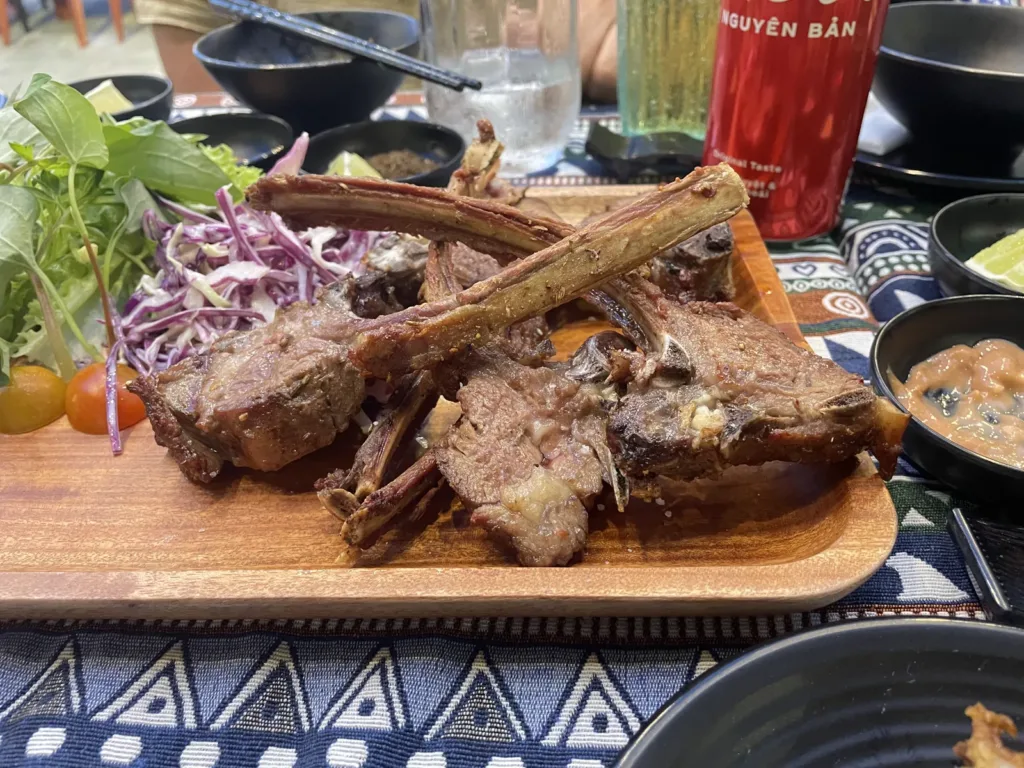
Roast Lamb Ribs 烤羊排
Roast Lamb Ribs (烤羊排, kǎo yángpái) is a lamb-rib dish found in Ningxia’s wider roast-lamb culture and mentioned in visitor accounts of Yinchuan. Treat it as a cut-and-cooking method rather than one fixed recipe: the seasoning, fire, portion size and lamb provenance can vary by venue, so ask before ordering.
Read dish guide →Ningxia · Food stories

Food articles are in progress
Long-form food stories for this topic are being written. Until then, browse the dish guides above or see all Chinese food guides.