


Get to know Sunan Yugur Autonomous County
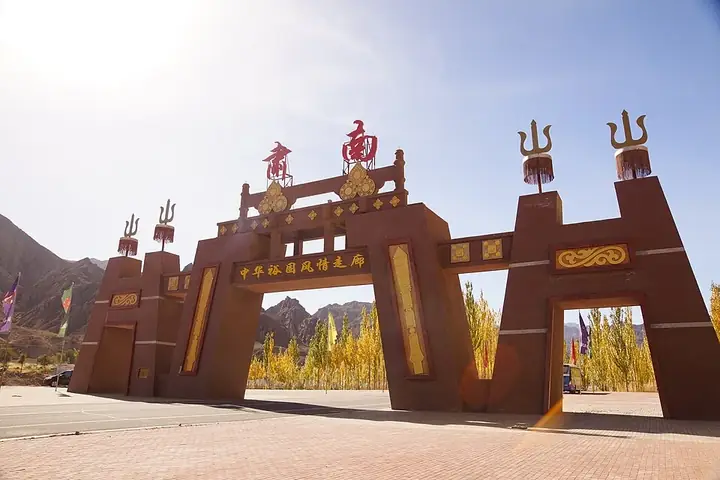
- Administrative area
- Autonomous county · 自治县
- Part of
- Zhangye
- Chinese name
- 肃南裕固族自治县
- Local areas
- Autonomous county guide
Area & population
- Area
- 20,176.70 km²
- Population · 2020
- 27,762
- Administrative seat
- Hongwansi
Source: English Wikipedia, as of the dates shown.
Sunan’s scale is part of its character. The county stretches along the middle Hexi Corridor and is made up of four non-contiguous areas, with the landscape rising from corridor-edge plains to high mountain country. Its official profile describes a county spanning the Gansu–Qinghai border zone, with snow and glaciers, grassland and forest, rivers and deep valleys, as well as Danxia terrain. This is why “Sunan” is best treated as a base and a regional frame: Binggou Danxia, Mati Temple Grottoes, Wenshu Mountain Grottoes, Barsi Snow Mountain and other places are separate outings, not rooms inside one attraction.
The cultural thread is Yugur, but it is not a staged theme added to the scenery. The National Ethnic Affairs Commission notes that Yugur communities in western and eastern parts of the county historically used different Yugur language varieties, alongside Mandarin, while pastoralism shaped daily life. In Hongwansi, the China Yugur Museum provides a compact first introduction through four permanent displays on Yugur culture, local history and ecology; its published address is No. 29 Qifeng Road, Hongwansi Town. Check current opening arrangements before setting out because the museum page gives no timetable.
Food is a useful way to notice this culture without turning residents into a performance. A national cultural reference describes butter-and-milk tea, tsampa, milk skin and qula (dried curd) among Yugur dairy traditions, and a “three teas, one meal” pattern in which tea is taken through the day and an evening meal may include mutton noodles or rice. It also records hand-grabbed mutton, meat sausage and zhiguogan, a sliced preparation made from offal, fried flour and seasonings. These are cultural traditions, not a promise that every café serves them; ask what is available and what it contains, especially if you avoid meat or dairy.
The county’s official tourist listings include the Mati Temple Grottoes, Wenshu Mountain Grottoes, Yugur-style corridor, Binggou Danxia, Yugur folk-custom resort and Qilian Deer Culture Ecotourism Area among its 4A scenic areas. The list is useful for understanding the county’s range, but each site has its own entrance, hours, ticketing and road conditions. Use the individual place name when arranging a visit rather than searching only for “Sunan.”
Getting there and getting back
For a public-transport approach, use a named county destination rather than the county’s large administrative area. A Sunan government travel page published in January 2022 gives this chain: from Zhangye Ganzhou Airport, take the airport shuttle to 张掖汽车西站 and then a coach to 肃南客运站; from Zhangye West Railway Station, it lists a taxi or city bus 6路, 附1路 or 19路 to 张掖汽车西站, then the coach to 肃南客运站. The same page does not publish a current timetable, frequency, fare or guaranteed return departure, so confirm the outward and return legs on the day.
The Gansu transport directory currently marks 肃南县公用型客运站 as operating at 皇城路. The tourist page calls the destination station 肃南客运站, so show both Chinese names when asking locally and confirm that the current vehicle is going to the county seat, not to a scenic entrance. A 2026 county work report says that five customised passenger routes now connect Sunan and Zhangye, but it does not provide tourist-facing departure times. Zhangye’s transport bureau also describes Zhangye West’s passenger hub as a tourist-distribution node; that is useful for onward arrangements, but it is not proof of a particular departure on your date.
For Binggou Danxia, Barsi Snow Mountain, Mati Temple or other remote destinations, arrange a confirmed local vehicle or a venue-specific transfer after checking the individual guide. The county page is not a common-ticket or common-shuttle page. Road and mountain weather can change the practical return, and the public sources read here do not establish a single county-wide scenic shuttle or a fixed taxi fare.
Explore Sunan Yugur Autonomous County
Core places to explore, with English and Chinese names.
Places to explore around Sunan Yugur Autonomous County
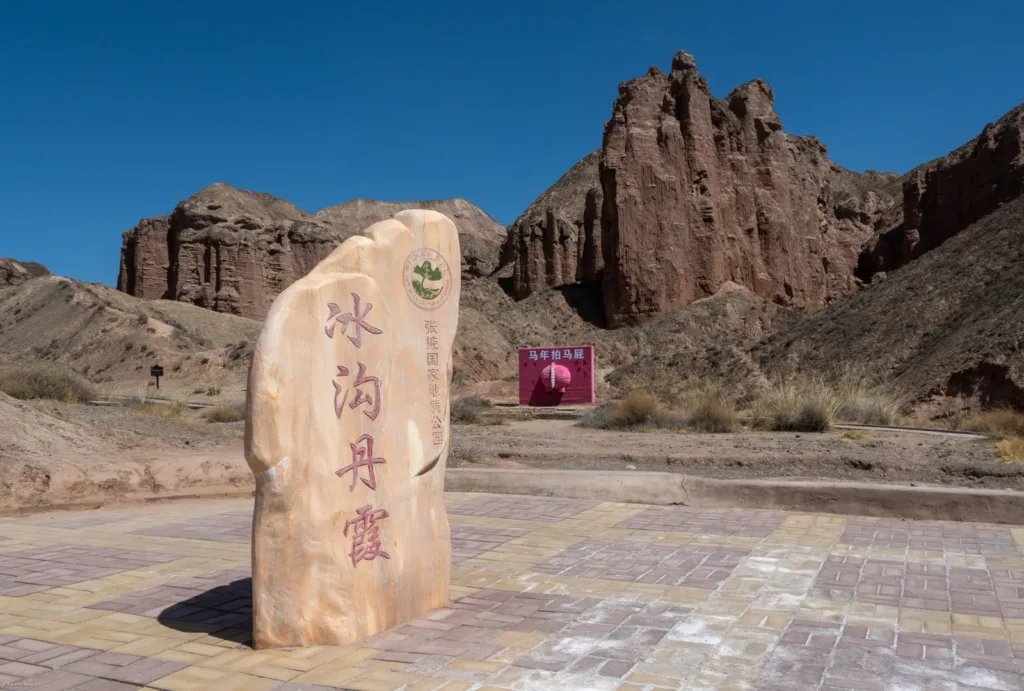 A broad view of Binggou Danxia's red-sandstone cliffs, with the scenic area's stone marker in the foreground. Photo: xiquinhosilva · CC BY 4.0
Binggou Danxia Scenic Area冰沟丹霞
Binggou Danxia is a separate red-sandstone scenic area in Sunan Yugur Autonomous County near Zhangye, known for castle-like walls, pillars and sharply eroded landforms rather than the striped hills of nearby Colorful Danxia.
Read the place guide →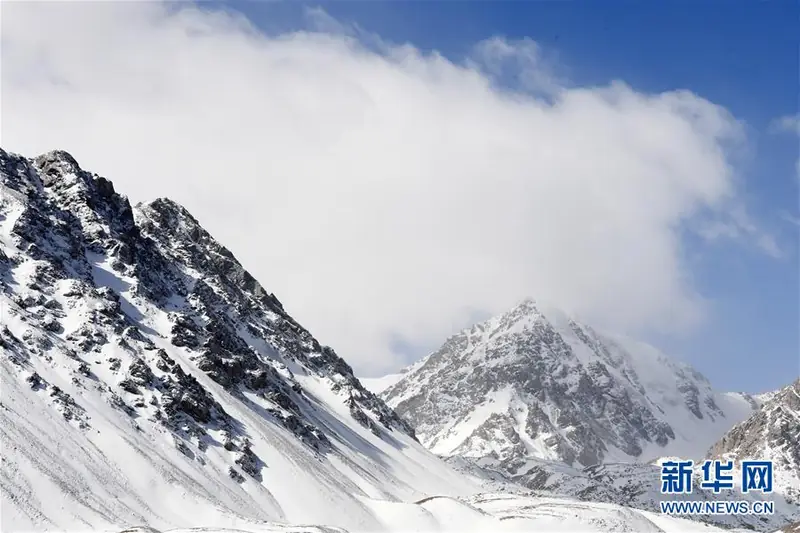 Barsi Snow Mountain Viewing Area · 巴尔斯雪山开放观景区
Barsi Snow Mountain Viewing Area巴尔斯雪山开放观景区
Barsi Snow Mountain is a high-altitude mountain-viewing area in Xichahe Village, Dahe Township, Sunan Yugur Autonomous County, Zhangye. Six snow peaks run east–west around a 5,118-metre main peak, with glacial relics, streams, lakes and alpine grassland. The visit is as much about the high-mountain landscape and the Yugur connection to a sacred mountain as it is about reaching a viewpoint.
Read the place guide →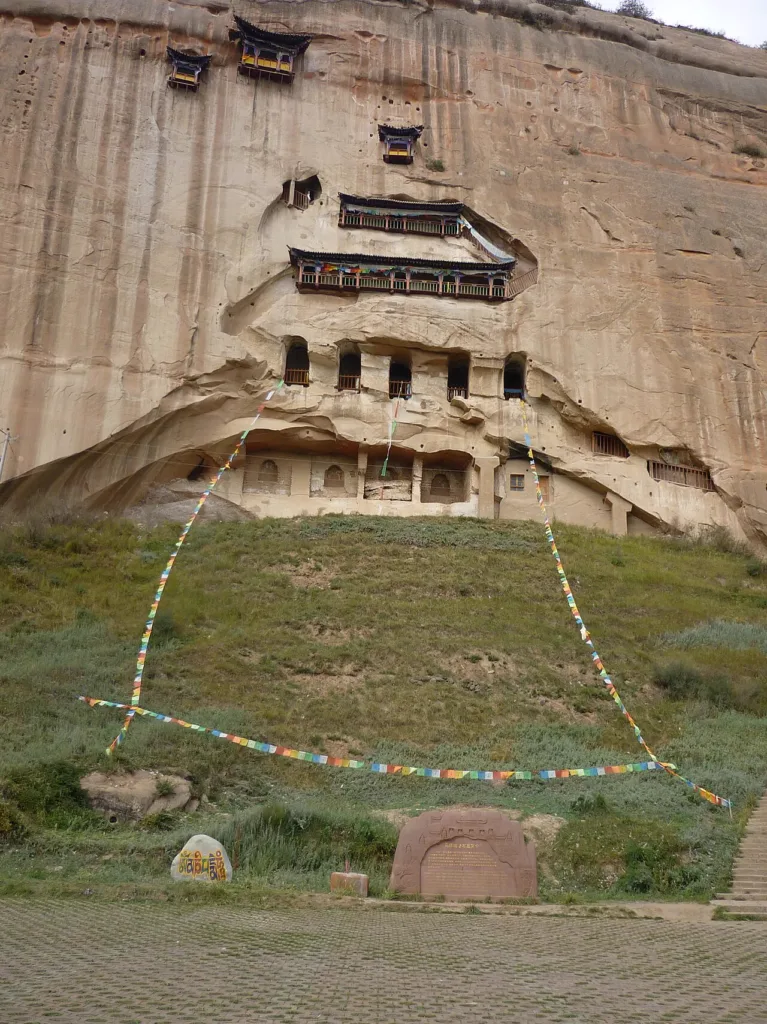 Cliffside cave-temple façades in the Matisi Grottoes (马蹄寺石窟群). Photo: Immanuel Giel · CC BY-SA 3.0
Mati Temple Grottoes马蹄寺石窟
Mati Temple Grottoes (马蹄寺石窟群) are a dispersed group of seven Buddhist cave-temple areas on the Qilian Mountains’ Zhangye side, in Mati Tibetan Township of Sunan Yugur Autonomous County. They are worth the road trip for cliff-built Buddhist spaces, the steep Thirty-Three Heavens sequence at North Mati Temple, and Jinta Temple’s sculpted flying apsaras.
Read the place guide →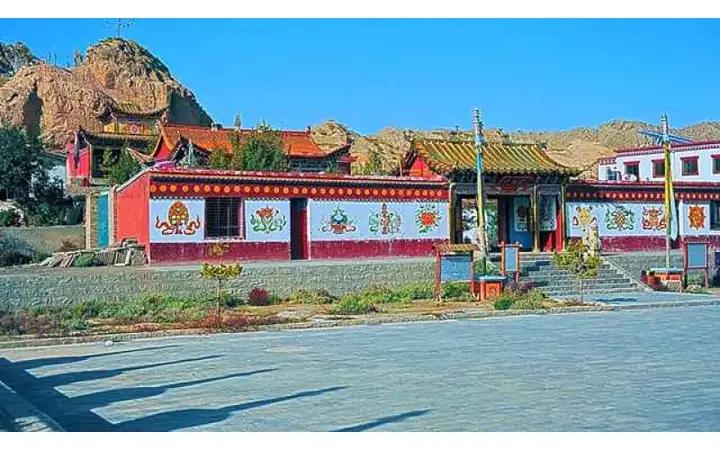 Wenshu Temple Grottoes · 文殊寺石窟
Wenshu Temple Grottoes文殊寺石窟
Wenshu Temple Grottoes (文殊寺石窟群) is a protected Buddhist cave-and-temple complex in Wenshu Village, Qifeng Tibetan Township, Sunan Yugur Autonomous County; its front- and back-mountain areas preserve central-pillar caves, murals and sculpture from the early Hexi tradition across more than 30 documented caves.
Read the place guide → Cliffside cave temples at Mati Temple Grottoes · 马蹄寺石窟群 Photograph date recorded by the source: 11 September 2012, 04:30:17.
Mati Temple Grottoes马蹄寺石窟群
The Mati grottoes occupy several separate cliff complexes in the Qilian foothills. The best-known North Temple section stacks the Thirty-three Heavens caves vertically, linked by narrow internal passages and stairs. Qianfodong…
Read the place guide →Plan your visit
Getting there
Sunan Yugur Autonomous County is about 75 km (straight-line distance) from central Zhangye. Search for 肃南裕固族自治县 in a map app to find stations and your accommodation.
Where to stay →Build your route
Binggou Danxia Scenic Area and Barsi Snow Mountain Viewing Area are both listed here. The linked place guides have entrance and visit details.
Continue with Zhangye →More in Zhangye
Sources & geographic information
Administrative names and parent areas: Official geographic directory (dmfw.mca.gov.cn) · Reference date 2026-09-06.
Background text adapted from Sunan Yugur Autonomous County — Wikipedia contributors, under CC BY-SA 4.0. Text has been shortened and reorganized; source revision 1366003754.
Photo: Barsi Snow Mountain Viewing Area · gansu.gscn.com.cn. Resized for the web; the photo itself has not been edited.
Photo: Wenshu Temple Grottoes · dhlxs.net. Resized for the web; the photo itself has not been edited.
Photo: Mati Temple Grottoes · Immanuel Giel · CC BY-SA 3.0. Resized for the web; the photo itself has not been edited. Thumbnails may show a cropped view.

Map data © OpenStreetMap contributors. Pins mark approximate centres, not entrances or boundaries.
Image credits & notes (1)
- The Sunan gateway to the Chinese Yugur Scenic Corridor and its mountain setting. Photo: 2016-10-17.Photo: Terry Wu · CC BY-SA 2.0Resized for the web; the photo itself has not been edited. Thumbnails may show a cropped view.
