


Get to know Mashan County
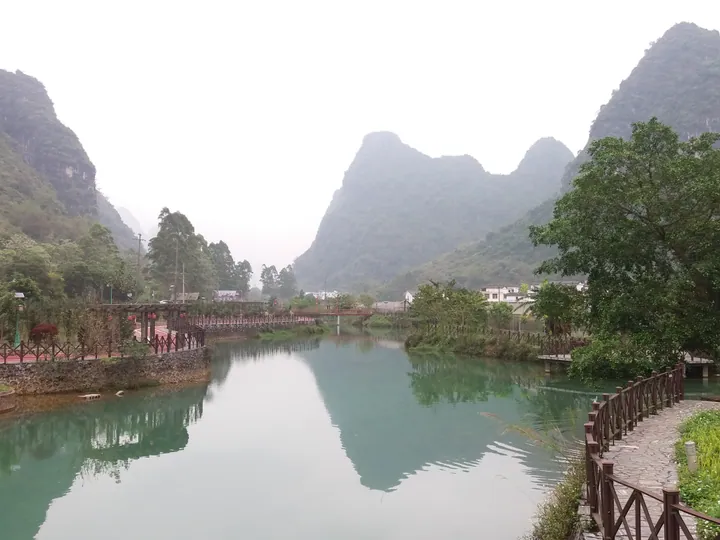
Photo adjustments
Full frame retained; proportionally resized and converted to WebP. No retouching or changes to the photographed subject. Card displays may crop the view.
- Administrative area
- County · 县
- Part of
- Nanning
- Chinese name
- 马山县
- Local areas
- County guide
Area & population
- Area in the source
- 2,345.33 km²
- Population · 2010
- 390,900
- Administrative seat
- Baishan
Source: cited geographic source, as of the dates shown.
Setting and landscape
Mashan's rivers belong to the Xijiang system of the Pearl River basin. The largest, the Hongshui, runs for about 52 kilometres within the county, through Qiaoli (乔利乡), Bailongtan (百龙滩镇) and Jinchai (金钗镇), and the county gazetteer office lists nine main underground rivers. The climate is subtropical, humid and monsoonal. Among the county's useful plants, medicinal species are the most varied.
History and traditions
Mashan County was created in 1952 by merging Nama County (那马县) and Longshan County (隆山县), and its government sits in Baishan Town (白山镇).
Mashan keeps two Zhuang traditions on the national intangible heritage list: Zhuang three-part folk song (壮族三声部民歌) and the Zhuang huigu drum custom (壮族会鼓习俗). In March 2025 the county reported that the Ministry of Culture and Tourism had approved a local singer and a local drummer as national representative bearers of these two items. The Mashan Zhuang shoulder-pole dance (扁担舞), in which dancers strike carrying poles together while miming farm work from planting to harvest, joined the Guangxi heritage list in 2010.
What to see
The county gazetteer office lists three national 4A scenic areas: Shuijin·Shunzhuang (水锦·顺庄), the Nongla eco-natural scenic area (弄拉生态自然风景区) and Xiaodubai (小都百). It also names the Hongshui River "hundred-li gallery" (红水河百里画廊) and the Jinchai stone forest (金钗石林城堡).
Lingyang Temple (灵阳寺) in Guling Town (古零镇) was first built in the Yuanfeng reign of the Song (1078–1085) inside Lizhi Cave (荔枝岩), halfway up Qiandeng Mountain (乾登山). The county tourism bureau calls it a well-known cave Buddhist temple of Guangxi; its seven halls hold 15 white-marble statues brought from Myanmar, and it is a county-level protected cultural relic.
Sanjia climbing town (三甲攀岩小镇), also in Guling, has more than 500 climbing routes and two via ferrata lines, and it hosted the 2017 China–ASEAN elite climbing challenge.
Food and local products
Mashan has raised black goats since the 1960s and calls itself the hometown of Chinese black goats. The breed is black all over, and the county tourism bureau describes its meat as tender with little muttony smell; a whole series of black-goat dishes is served at banquets and family gatherings.
Getting oriented
The county seat is 96 kilometres north of central Nanning and 80 kilometres east of Pingguo (平果). Mashan borders Shanglin (上林) to the east and Wuming (武鸣) to the south, and faces Du'an (都安) across the Hongshui River to the north. National Highways 210 and 355 cross the county, and the Nanning–Guiyang high-speed railway passes through it.
Highlights
- Lingyang Temple 灵阳寺: Cave Buddhist temple first built in 1078–1085 inside Lizhi Cave on Qiandeng Mountain.
- Nongla eco-natural scenic area 弄拉生态自然风景区: One of the county's three national 4A scenic areas.
- Sanjia climbing town 三甲攀岩小镇: More than 500 climbing routes and two via ferrata lines in Guling Town.
- Zhuang three-part folk song 壮族三声部民歌: National intangible heritage item with a national tradition bearer in Mashan.
- Mashan black goat 马山黑山羊: All-black goat raised since the 1960s; the meat is tender with little muttony smell.
Sources for this guide
马山概况 自然地理 - 马山县人民政府门户网站 · Mashan County Local Chronicles Office (Mashan County People's Government portal)
马山概况 行政区划 - 马山县人民政府门户网站 · Mashan County Local Chronicles Office (Mashan County People's Government portal)
扁担舞 - 马山县人民政府门户网站 · Mashan County Bureau of Culture, Radio, Television, Sports and Tourism
马山黑山羊 - 马山县人民政府门户网站 · Mashan County Bureau of Culture, Radio, Television, Sports and Tourism
喜讯!马山县两人获评国家级非物质文化遗产代表性传承人 - 马山县人民政府门户网站 · Mashan County Media Centre (Mashan County People's Government portal)
千年古刹——灵阳寺 - 马山县人民政府门户网站 · Mashan County Bureau of Culture, Radio, Television, Sports and Tourism
三甲攀岩小镇 - 马山县人民政府门户网站 · Mashan County Bureau of Culture, Radio, Television, Sports and Tourism
马山县 - 维基百科,自由的百科全书 · Wikipedia (Chinese) · CC BY-SA 4.0
Original English written from the listed sources and checked sentence by sentence against quoted extracts by a separate reviewer. Updated 2026-09-24.
Explore Mashan County
Core places to explore, with English and Chinese names.
Places to explore around Mashan County
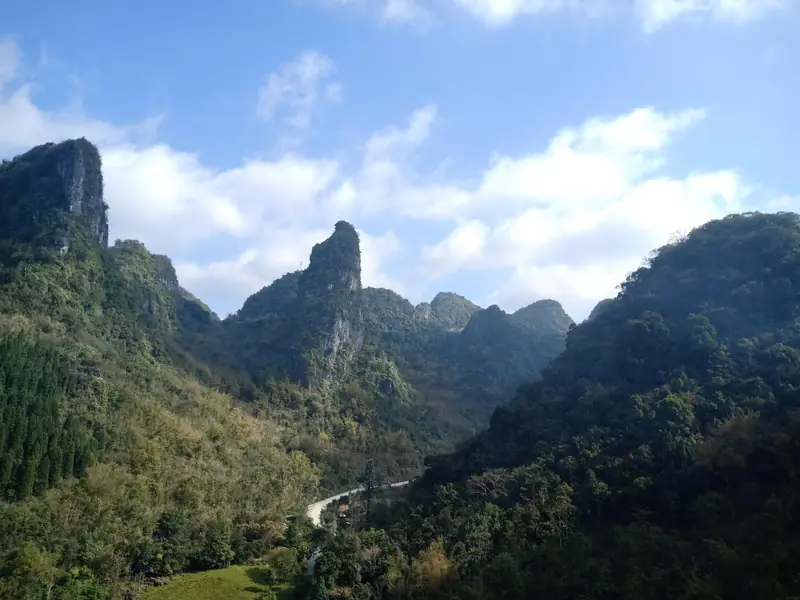 Nongla Scenic Area ·
 Plan your visit
Getting there
Mashan County is about 100 km in a straight line from central Nanning. Search for 马山县 in a map app to find stations and your accommodation.
Where to stay →Build your route
Start with Nongla Scenic Area. The linked place guides have entrance and visit details.
Continue with Nanning →More in Nanning
Sources & geographic information
Administrative names and parent areas: Official geographic directory · Reference date 2026-09-06.
Some facts checked against 马山县 — Wikipedia contributors, CC BY-SA 4.0.
Photo: Nongla Scenic Area · Source photographer · License not provided. EXIF orientation normalized; resized without changing aspect ratio; converted to WebP. No subject edits.
Map data © OpenStreetMap contributors. Pins mark approximate centres, not entrances or boundaries.