

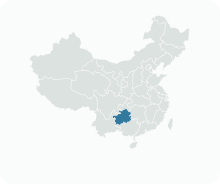
Get to know Taijiang County
- Administrative area
- County · 县
- Part of
- Qiandongnan Miao and Dong Autonomous Prefecture
- Chinese name
- 台江县
- Local areas
- County guide
Area & population
- Area
- 1,108.00 km²
- Population · 2020
- 122,861
- Administrative seat
- Taigong
Source: English Wikipedia, as of the dates shown.
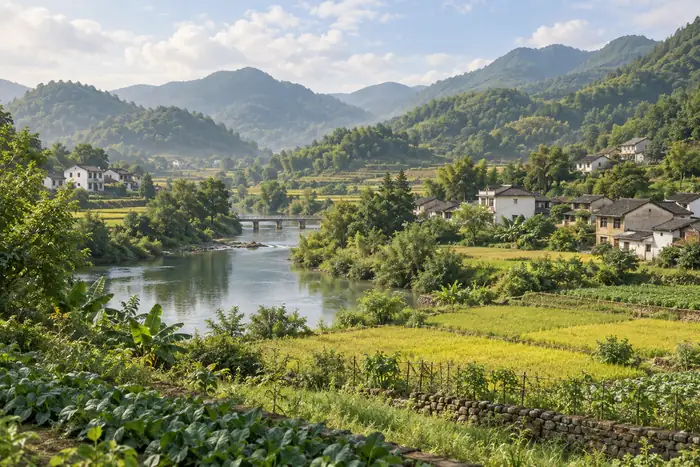
Taijiang County lies in Qiandongnan Miao and Dong Autonomous Prefecture in Guizhou. The useful way to picture it is as a county landscape of a county seat, river valleys and villages rather than one ticketed sight. Its strongest visitor interest is the chance to understand Miao cultural practices in their home setting, especially around the Shidong area, where official heritage records place several of Taijiang’s best-known traditions.
What gives Taijiang its character
The Miao Sisters’ Meal Festival (苗族姊妹节, often called Nong Ga Liang in Miao) is the county’s most recognisable seasonal tradition. The national intangible-heritage record places it in the Laotun and Shidong area and dates its main observance to the 15th–17th days of the third lunar month. It brings together festival dress, silver ornaments, singing, dancing, courtship customs and the exchange of sisters’ rice. The rice is not just a snack: in the official description it is a social gift and a token exchanged between young people.
The Miao dugout dragon-boat festival (苗族独木龙舟节) belongs to a different point in the calendar: the 24th–27th days of the fifth lunar month. The national heritage record identifies the Qingshui River at Tangba Village in Shidong Town as the main race area. The long boats are hollowed from fir trunks, and the event includes its own drum, dress and community rituals. This is a river festival with a strong local ceremonial context, not a daily boat ride or a guaranteed tourist performance.
Taijiang Miao embroidery (苗绣) is another reason to slow down. The national record says the tradition is mainly distributed in Shidong Town and describes nine clothing types, with motifs such as dragons, fish, butterflies, centipedes and bats and techniques ranging from flat embroidery to horsehair and seed stitches. Look for the relationship between a garment, its motifs and its wearer’s community rather than treating every embroidered object as a generic souvenir. Public displays or workshops are the safest places to learn; a village home is not automatically an open studio.
When to go
The lunar dates are useful planning windows, but they are not a promise that a public programme, parade route, ticket or shuttle will exist on the same dates every year. In 2026, CCTV reported a public Sisters’ Festival programme running from 30 April to 10 May, with an opening on 1 May and large costume and singing events in the following days. Those dates describe the 2026 programme that has already passed; they must not be copied into a future itinerary.
Outside the festival periods, do not assume that dragon boats will be racing, that a costume parade will be staged, or that an embroidery demonstration will be running every day. Check the county’s latest notice and the local organiser before paying for a seasonal trip. At festivals, treat the gathering as community life first: ask before close-up portraits, do not handle ceremonial objects, and do not turn residents into a photo backdrop.
A food to look for
Try Taijiang sisters’ rice (台江姊妹饭), also written 姊妹饭 Zǐ Mèi Fàn or 五彩姊妹饭 Wǔ Cǎi Zǐ Mèi Fàn. Xinhua describes it as glutinous rice soaked in plant juice and then steamed into coloured rice. During the Sisters’ Festival, it can be requested and exchanged as a personal message; a hidden object may carry meaning. The plants, colours and accompanying foods can vary, so one coloured serving should not be treated as a single fixed recipe.
For a current place to try it, search the Chinese name 台江姊妹饭 or 五彩姊妹饭 in Meituan (美团) or Amap/Gaode Maps (高德地图). Open nearby results and check the menu, recent reviews, today’s opening information and whether the dish is actually being supplied that day. This is a way to locate a seasonal local food, not an endorsement of a ranking, brand or particular restaurant. Do not assume a festival preparation is vegetarian or free of allergens simply because it is rice; ask about the ingredients and accompanying dishes.
Getting there and moving around
Taijiang has no railway station or airport, so a road connection is part of the trip. A practical rail gateway is Kaili South Railway Station (凯里南站), followed by a coach, taxi or pre-arranged car to the county. A 2020 People’s Daily report, citing Guizhou Daily, recorded a direct passenger service between Taijiang Bus Station (台江汽车站) and the passenger station at Kaili South. Because that report is old, its timetable and fare are historical evidence, not a current promise: confirm the service at both terminals before relying on it.
The Qiandongnan prefecture government’s 2023 urban-transport register lists Taijiang Bus Station at 104 Xiumei Avenue, Taigong Town, Taijiang County (台江县台拱镇秀眉大道104号). Use this Chinese name and address when checking a map or asking locally; the same register also lists county bus and taxi operators, but it does not publish a current intercity timetable.
The Qiandongnan transport authority’s 2025 holiday notice gives a more recent but narrower example: an event-linked coach from Kaili South to the Taipan Village Village BA court, with departures tied to the competition schedule. It is not evidence of a daily transfer to Taijiang county seat. For the county centre, search 台江县 and 台江汽车站 in Amap, confirm the exact road terminal, and ask about the last return service before leaving Kaili. For the Shidong area, search 施洞镇 or 施洞古镇 as the destination and confirm the return connection locally; the county and its outlying towns are not one walkable attraction.
Explore Taijiang County
Core places to explore, with English and Chinese names.
Places to explore around Taijiang County
 Shidong Ancient Town ·
Local life & food
Taijiang County local specialties
台江县特色美食 · 1 specialties to discover
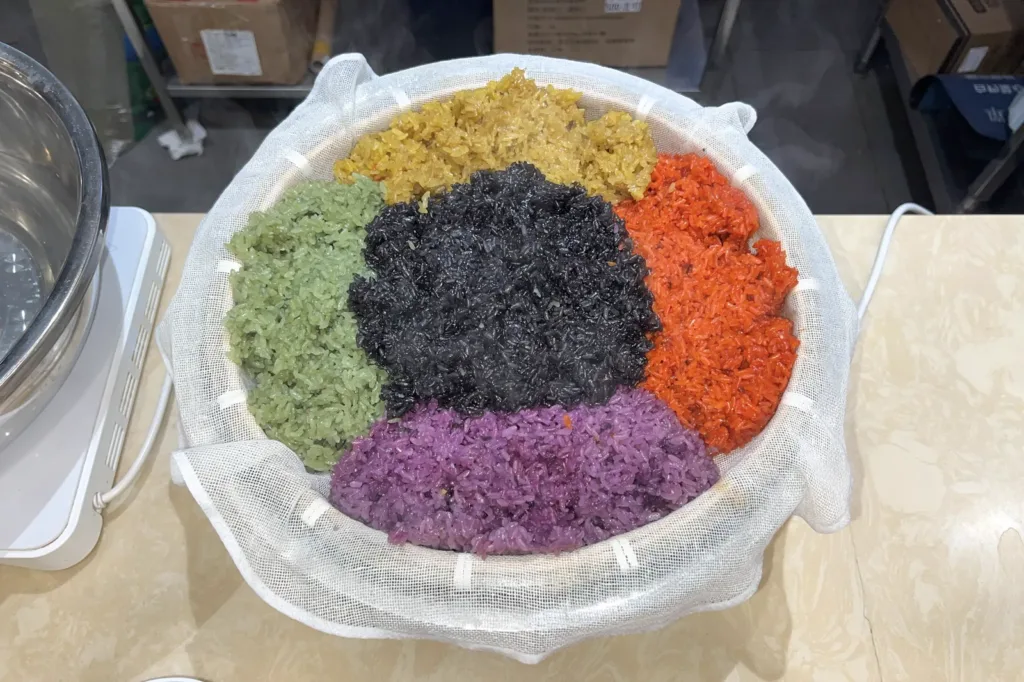 Taijiang Sisters’ rice 台江姊妹饭
Taijiang Sisters’ rice (台江姊妹饭) is a Miao spring and festival food from Taijiang in Qiandongnan: glutinous rice is soaked in plant-derived juices, made into coloured portions, and steamed. Its cultural meaning is tied to the Miao Sisters’ Festival rather than to a generic rainbow dessert.
Source ↗Read the dish guide →All dish names · 全部菜名 (1)
More dishes from across Guizhou are in the Guizhou food guide.
Plan your visit
Getting there
Taijiang County is about 35 km (straight-line distance) from central Qiandongnan Miao and Dong Autonomous Prefecture. Search for 台江县 in a map app to find stations and your accommodation.
Where to stay →Build your route
Start with Shidong Ancient Town. The linked place guides have entrance and visit details.
Continue with Qiandongnan Miao and Dong Autonomous Prefecture →More in Qiandongnan Miao and Dong Autonomous Prefecture
Sources & geographic information
Administrative names and parent areas: Official geographic directory (dmfw.mca.gov.cn) · Reference date 2026-09-06.
Background text adapted from Taijiang County — Wikipedia contributors, under CC BY-SA 4.0. Text has been shortened and reorganized; source revision 1306063520.
Photo: Shidong Ancient Town · hk.trip.com. Resized for the web; the photo itself has not been edited.
Map data © OpenStreetMap contributors. Pins mark approximate centres, not entrances or boundaries.